Mixed Dairy Tradition
Armola may bring together lor, yoghurt, white cheese, whey or other dairy components.
- Base: Dairy
- Typical components: Lor & yoghurt
- Additional element: Cheese






Travel south-west from İzmir toward the coast of Seferihisar and food begins to tell a different story. This is a landscape of olive groves, mandarin orchards, small villages, goat herds, vegetable gardens and deeply rooted Aegean food traditions.
Among the district's most distinctive foods is Armola, a soft and creamy dairy speciality that has long been associated with Seferihisar and its surrounding villages.
Armola is unlike a conventional block of cheese. Rather than being defined simply by curdling fresh milk into a firm cheese, it developed as a way of bringing together different dairy products such as lor, yoghurt, cheese and whey.
Traditional accounts describe villagers combining dairy products and cheese remnants inside a goat-skin tulum, allowing moisture to drain while the mixture developed its characteristic texture and flavour.
Modern examples may be prepared more simply, often combining strained yoghurt, lor and white cheese to create a thick, tangy and spreadable dairy product.
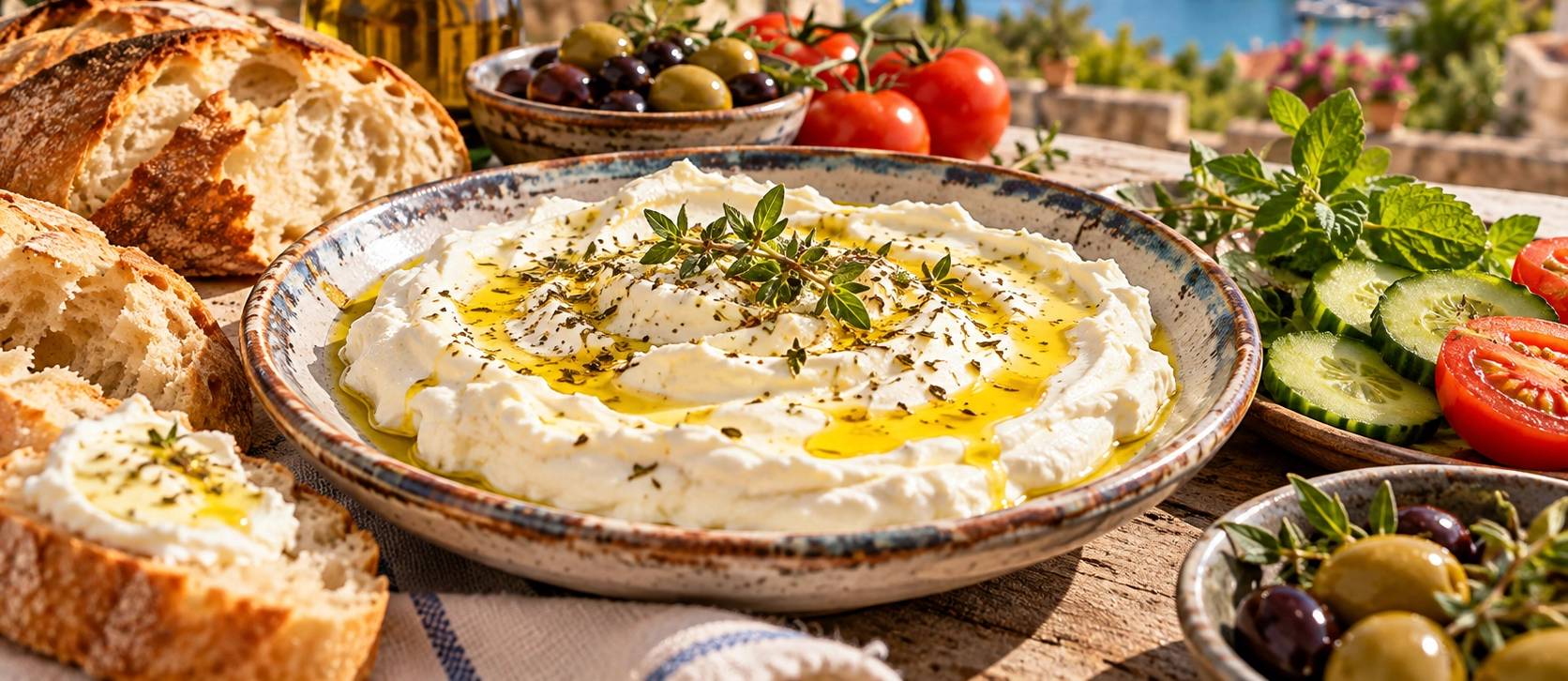
Served with excellent olive oil, bread, tomatoes, herbs and other simple Aegean ingredients, Armola represents exactly the kind of food that makes travelling through western Türkiye so rewarding: humble ingredients transformed through local knowledge.
Armola is one of the dairy foods most closely associated with Seferihisar and its villages.
Unlike firm aged cheeses, Armola is usually soft, moist, tangy and easily spreadable.
Traditional production reflects the practical use of yoghurt, lor, cheese and other valuable dairy ingredients.
One of the classic ways to enjoy Armola is simply with good Aegean olive oil and fresh bread.
Essential information about this unusual dairy speciality from Seferihisar in İzmir Province.
A soft, creamy and spreadable traditional dairy preparation associated with Seferihisar.
Versions commonly include lor, yoghurt or strained yoghurt, white cheese and other dairy components.
Armola is especially delicious served with extra-virgin olive oil, fresh bread and simple Aegean accompaniments.
Look for Armola in Seferihisar, Ulamış and specialist local-product markets around the district.
Open Seferihisar on Google MapsArmola grew from a food culture in which every part of valuable seasonal dairy production had a purpose.
Before modern refrigeration, milk was one of the most valuable yet most perishable foods produced by farming communities. Throughout Anatolia and the Aegean, people developed yoghurt, lor, butter and many different cheeses to extend the life of milk and make full use of each day's production.
The traditional story of Armola belongs to this world of practical village cheesemaking. Rather than treating small amounts of yoghurt, lor, whey or pieces of cheese as leftovers, they could be brought together to create another distinctive food.
Local and academic accounts associate Armola particularly with Seferihisar and its villages, where small-scale livestock farming and dairy production formed part of everyday rural life.
Traditional descriptions tell of dairy ingredients being placed inside a goat-skin tulum. The filled skin could then be hung in a cool and shaded location, allowing liquid to drain while the contents gradually became thicker.
This older method connects Armola with a wider Anatolian tradition of using animal skins not only as containers, but as practical tools in cheesemaking and food preservation.
Today Armola also exists in more modern forms. Local dairies and households may combine strained yoghurt, lor and white cheese without reproducing every stage of historical tulum production.
The result is therefore not one frozen historical recipe. Armola is better understood as a living Seferihisar dairy tradition whose exact texture and composition can vary according to producer and household.
Armola occupies an unusual place on the Aegean table. Its identity comes from bringing several dairy traditions together rather than following the logic of one conventional cheese.
Armola may bring together lor, yoghurt, white cheese, whey or other dairy components.
Armola is eaten as a creamy dairy preparation rather than cut into firm slices like many aged cheeses.
Older descriptions place the dairy mixture inside a prepared goat-skin tulum where liquid gradually drains.
Armola demonstrates how rural households could turn several dairy products into a completely new speciality.
Although similar dairy techniques occur elsewhere, Armola is particularly associated with Seferihisar and its villages.
Armola becomes especially characteristic of the Aegean table when finished with good local olive oil.
The origin of the word Armola is one of the more intriguing parts of the cheese's story.
Local accounts commonly connect the name with the Greek language and the multicultural history of the Aegean. Different explanations have been recorded, including associations with whey, draining or the idea of mixing ingredients together.
Because these explanations are not completely uniform, it is better to treat the exact etymology cautiously. What is clear is that the name has remained strongly attached to the dairy tradition of Seferihisar.
There is no single universal household recipe for Armola. Traditional and modern producers may use slightly different proportions and ingredients.
The recurring idea is the combination of soft dairy products and cheese into a rich, tangy mixture.
Mild lor cheese contributes body while keeping the mixture soft and relatively delicate.
Süzme yoğurt creates creaminess, acidity and a thick consistency.
Beyaz peynir can provide additional salt, structure and a more pronounced cheese flavour.
Traditional descriptions sometimes connect Armola production with whey and other liquids arising during cheesemaking.
Older food traditions could make use of smaller fragments of cheese rather than allowing valuable dairy to go unused.
Salt is used according to the recipe and the saltiness of the cheeses already included.
Traditional Armola production reflects the equipment and conditions available to earlier village households.
Exact recipes differed, but historical descriptions often include a prepared goat-skin tulum used to hold and drain the dairy mixture.
Lor, yoghurt, cheese and other dairy ingredients are collected and combined.
The ingredients are worked together until a relatively even mixture forms.
A properly cleaned and prepared goat skin traditionally serves as the draining container.
The dairy mixture is transferred into the tulum and securely closed.
The container is traditionally kept away from direct sun in a shaded and ventilated environment.
Moisture gradually escapes, concentrating the mixture inside the tulum.
As liquid is lost, the mixture becomes thicker, richer and more cohesive.
The finished Armola is taken from the container and served as a soft dairy speciality.
Travellers should not expect every Armola sold today to have spent weeks inside a traditional goat skin.
Contemporary household and dairy production may simplify the process by combining ingredients such as strained yoghurt, lor and white cheese under hygienically controlled conditions.
Commercial producers can mix the ingredients using food-safe modern containers and equipment.
Süzme yoğurt frequently provides the creamy foundation of contemporary Armola.
Lor gives the mixture substance without making it excessively firm.
Beyaz peynir adds additional dairy character and saltiness.
Recipes, proportions and consistency naturally differ between producers.
Modern Armola remains a moist dairy food and should be handled and refrigerated accordingly.
Armola sits somewhere between the freshness of yoghurt and the savoury depth of cheese.
Its flavour depends heavily on the dairy ingredients used, their proportions, salt level and the production method.
Yoghurt provides the pleasant acidity associated with fermented dairy products.
Its soft consistency creates a smooth and satisfying mouthfeel.
Cheese and salt provide the deeper savoury dimension that distinguishes Armola from plain yoghurt.
Unlike heavily matured hard cheese, Armola generally retains a fresh dairy character.
Combining several dairy ingredients produces greater depth than any one ingredient alone.
Traditional foods vary naturally, so one Armola may be sharper, saltier or thicker than another.
Texture immediately separates Armola from most familiar Turkish cheeses. It is not normally a cheese designed to be cut into neat slices.
The mixture remains substantially softer than aged or brined block cheeses.
Armola works beautifully spread across bread or placed beside other breakfast foods.
Straining and the addition of cheese produce considerably more body than ordinary yoghurt.
Armola retains noticeable moisture and should therefore be treated as a fresh dairy product.
Depending on the lor and cheese used, some examples may retain a delicate curd-like texture.
Homemade, artisanal and dairy-produced versions may differ considerably in consistency.
Armola does not need complicated preparation. Its creamy acidity is especially enjoyable beside the fresh, olive-oil-centred flavours of the Aegean table.
Drizzle high-quality extra-virgin olive oil directly over the Armola before serving.
Fresh crusty bread turns Armola into one of the simplest and most satisfying local snacks.
Serve it alongside tomatoes, cucumbers, olives, eggs and Turkish tea.
Thyme, mint and other aromatic herbs can complement its tangy dairy flavour.
Fresh tomatoes, peppers and cucumbers provide colour, freshness and acidity.
A small bowl of Armola can form part of a larger Aegean-style cold meze table.
Few additions suit Armola better than good extra-virgin olive oil.
The combination captures two fundamental sides of the western Aegean table: rich fermented dairy and the fruity, sometimes peppery character of regional olive oil.
Breakfast may be the easiest way for a traveller to appreciate Armola in its natural culinary setting.
Instead of serving it alone, build a simple Aegean breakfast around the cheese.
One of the most meaningful local combinations pairs Armola with Seferihisar's Ata Ekmeği.
The bread is associated with Topan Karakılçık wheat, a local wheat tradition that has become an important symbol of Seferihisar's efforts to preserve agricultural heritage.
Armola and Ata Ekmeği are regularly celebrated together in Ulamış, bringing dairy heritage and traditional grain culture onto the same table.
Armola represents Seferihisar's pastoral and dairy traditions.
Topan Karakılçık represents another part of the district's rural agricultural identity.
Traditional-style bread provides an ideal base for soft Armola.
Local olive oil links the bread and dairy together through another essential Aegean product.
The village has become particularly associated with events celebrating both traditions.
The combination shows how local agriculture survives most successfully when people continue to eat it.
For travellers interested in Armola, Ulamış is one of the most meaningful names to remember.
Located within Seferihisar district, the village has played an important role in events and projects designed to keep traditional foods visible and economically relevant.
Ulamış preserves strong connections between agriculture, home cooking and seasonal local products.
The village is closely associated with the public celebration and demonstration of traditional Armola.
Traditional bread and local wheat heritage are also important parts of Ulamış's culinary identity.
Local events provide opportunities for producers to sell food directly to visitors.
Food events are often accompanied by music, theatre and other expressions of community culture.
Ulamış can be combined with Seferihisar, Sığacık and other destinations on the peninsula.
Seferihisar has repeatedly celebrated its local bread and cheese traditions through events held in Ulamış.
These gatherings have helped transform foods that might otherwise remain known only inside village kitchens into a visible part of Seferihisar's wider cultural identity.
Traditional Armola preparation has been demonstrated publicly, allowing younger generations and visitors to see how the food is made.
Traditional bread made from local wheat heritage shares the spotlight with Armola.
Markets create opportunities for village producers to present and sell regional foods.
The events bring together food, music, performance and local village life.
Demonstrating production turns a local speciality into a form of cultural education.
Traditional food survives most effectively when there is a living market and community around it.
Seferihisar became internationally known in Türkiye through its connection with the Cittaslow movement.
The movement's emphasis on local identity, regional food, small producers and quality of life created an especially suitable environment for forgotten or endangered foods such as Armola to receive renewed attention.
Armola gives Seferihisar a flavour that cannot easily be separated from the district itself.
Traditional food supports economic activity outside large-scale industrial production.
Recipes preserve techniques that can disappear when they are no longer practised.
Culinary tourism encourages visitors to explore communities beyond coastal resort areas.
Traditional Aegean cuisine remains closely linked with seasonal agricultural products.
Armola rewards travellers who stop, taste and learn rather than simply move quickly between monuments.
Armola may appear to be a simple bowl of soft cheese, yet its story reveals several important characteristics of traditional Aegean cuisine.
Traditional food systems found uses for valuable milk, whey, yoghurt and cheese instead of treating them as disposable ingredients.
Goats and sheep have historically played an important role in the rural economy of the Aegean landscape.
Dairy foods naturally meet olive oil on the Seferihisar table.
Armola is served naturally beside fresh vegetables, herbs and bread rather than complicated sauces.
Much of the food's identity comes from techniques passed between households and generations.
Even the discussion around Armola's name reflects the complex cultural history of western Anatolia.
Travellers encountering Armola for the first time sometimes try to place it into a familiar cheese category. In reality, it overlaps with several different dairy traditions.
A soft Seferihisar dairy speciality that combines multiple dairy ingredients into one product.
A mild whey-style cheese that can itself become one ingredient in Armola.
Süzme yoğurt provides acidity and creaminess, but Armola usually contains additional cheese components.
Beyaz peynir is normally a distinct brined cheese; in Armola it may be incorporated into the mixture.
Many tulum cheeses are matured as distinct cheeses, whereas Armola's traditional tulum is primarily part of its mixing and draining story.
Armola may appear similar in consistency, but its regional history and mixed-cheese composition make it culturally distinct.
Armola can vary substantially between households and producers, which makes asking a few questions especially worthwhile.
Knowing the producer can help distinguish local artisan production from a generic dairy spread.
Find out which cheeses, yoghurt and other dairy ingredients have been used.
Armola is a moist dairy product, so refrigeration and freshness matter.
Expect a soft and thick product rather than a dry block of cheese.
Where sampling is offered, it is the easiest way to compare saltiness, acidity and texture.
Plan how you will refrigerate the product before purchasing it for a long journey.
Armola is most meaningful when tasted close to the community that created it.
Begin with traditional-food shops, markets and local dairy sellers in the district centre.
The village is closely associated with the public celebration of Armola and other local foods.
Local producer stalls can offer opportunities to buy food directly from the people who make it.
Some Seferihisar dairy producers continue to make versions of Armola.
Visitors exploring Sığacık may encounter regional food products from across Seferihisar district.
Some regional-food shops in İzmir may carry Seferihisar products, although availability should never be assumed.
A few simple Turkish expressions can make a visit to a local market or dairy much more rewarding.
Armola contains substantial moisture and should be treated as a fresh refrigerated dairy product.
Always follow the producer's own storage instructions and any date information supplied on the packaging.
Return Armola to appropriate refrigeration as soon as possible after purchase.
Do not leave fresh dairy inside a hot vehicle or exposed to direct summer sun.
A clean spoon helps reduce contamination after the container has been opened.
Keep Armola properly covered to protect it from drying and other refrigerator aromas.
For longer journeys, ask the seller about suitable refrigerated transport.
Storage temperatures, opening guidance and use-by information supplied by the producer always take priority.
Try a small spoonful before adding olive oil or spices so you understand the basic dairy flavour.
Notice how good extra-virgin olive oil changes the texture and aroma.
Two legitimate local Armolas need not taste identical.
Ingredients and proportions can differ, so the producer's explanation is part of the experience.
Village-style bread provides the simplest possible way to enjoy the cheese.
Connecting Armola with village life gives the food far more context.
Regional olive oil completes one of the most natural Seferihisar combinations.
Remember that Armola is far more perishable than a hard mature cheese.
Armola becomes even more interesting when it forms part of a wider exploration of Seferihisar's landscape, archaeology, markets and local agriculture.
Begin with local shops, markets and the everyday culinary life of the district centre.
Connect Armola with village food, Ata Ekmeği and local producer traditions.
Explore another part of Seferihisar's agricultural landscape and its strong connection with local production.
Continue toward the coast for markets, historic streets and the atmosphere of the Aegean shoreline.
Add one of western Anatolia's fascinating ancient cities to the culinary journey.
Finish with seafood, meze and sunset beside the sea.
Traditional foods disappear surprisingly easily. Once a generation stops making a recipe, the practical knowledge behind it can disappear as well.
Armola is therefore significant not because it is elaborate, but precisely because it preserves a local solution developed from ordinary village ingredients.
Armola preserves practical understanding of milk, yoghurt, whey and cheesemaking.
The recipe demonstrates how valuable food could be used fully rather than wasted.
Interest in traditional food can create additional value for small producers.
Armola gives Seferihisar a culinary tradition that is recognisably its own.
Ingredients, names and production methods all preserve fragments of regional history.
Visitors who search for local food discover villages and communities that conventional sightseeing often overlooks.
Armola belongs to a much wider culinary landscape built around olive oil, vegetables, herbs, grains, seafood and regional dairy products.
Explore another important Aegean dairy tradition with a very different texture and maturation style.
Discover the protected tulum-cheese tradition of Bergama and the Kozak Plateau.
Meet the remarkable wild and cultivated greens that shape western Türkiye's vegetable cuisine.
Discover one of the Aegean coast's most celebrated seasonal vegetables.
Explore one of the most delicate dishes of the Aegean summer table.
Continue into the shared-table culture of olive oil, vegetables, yoghurt and seafood.
Discover fish, octopus, calamari and the wider seafood traditions of the Aegean coast.
Explore traditional cooling drinks and sweet refreshments of western Türkiye.
Seferihisar offers far more than food. Armola can easily become part of a full day combining villages, archaeology, markets and the Aegean coast.
Walk through the historic settlement, explore its streets and enjoy the atmosphere of the coast.
Discover the remains of one of ancient Ionia's important cities near modern Sığacık.
Visit a village closely linked with Armola, local bread and Seferihisar's food heritage.
Explore local markets, shops and the everyday rhythm of the district.
Travel into Seferihisar's agricultural interior and discover another side of the peninsula.
The surrounding countryside provides the agricultural landscape behind one of Armola's essential companions.
Combine rural food traditions with beaches, bays and Aegean seaside landscapes.
Markets connect village agriculture directly with travellers looking for authentic regional ingredients.
Armola is a soft and creamy traditional dairy speciality particularly associated with Seferihisar in İzmir Province.
It is generally described as a traditional cheese or dairy speciality, although its mixed composition makes it rather different from a conventional block cheese.
Armola is particularly associated with Seferihisar and its surrounding villages in İzmir Province.
Recipes vary, but common ingredients include lor, strained yoghurt, white cheese and other dairy components. Traditional descriptions also mention whey and cheese remnants.
Goat dairy has an important place in traditional descriptions of Armola, but ingredients can vary between modern producers. Ask the producer if milk type matters to you.
Traditional accounts describe the dairy mixture being placed inside a prepared goat-skin tulum and allowed to drain in a cool, shaded environment.
No. Modern household and commercial production may use contemporary food-safe equipment rather than reproducing the historical tulum method.
It is generally creamy, tangy, savoury and pleasantly rich, although saltiness and acidity vary by producer.
It is normally soft, thick, moist and spreadable rather than firm and sliceable.
A classic way is to serve it with olive oil and bread. It can also appear at breakfast, on meze tables or beside fresh vegetables and herbs.
Extra-virgin olive oil, village bread, tomatoes, cucumber, olives, thyme, mint and chilli flakes all work well.
Yes. Its soft texture and savoury dairy flavour make it very suitable for a Turkish breakfast table.
Ulamış is a Seferihisar village strongly associated with events celebrating Armola, traditional bread and local agricultural heritage.
Seferihisar has held community events in Ulamış celebrating local bread, Armola, producers and village traditions.
Local and academic accounts connect the name with Greek, but explanations vary. It has been associated with whey, draining and the combining of ingredients, so the precise etymology should be treated cautiously.
No. Lor may be one ingredient in Armola, but Armola combines it with yoghurt, cheese or other dairy components.
No. Strained yoghurt can form an important part of the mixture, but Armola generally contains additional cheese ingredients.
No. Although traditional Armola may use a goat-skin tulum during preparation, its soft mixed-dairy character is very different from many mature Turkish tulum cheeses.
Look in Seferihisar, Ulamış, local producer markets, specialist dairies and shops selling regional foods. Availability varies.
Regional-product sellers and markets around Sığacık may offer foods from the wider Seferihisar district, although availability cannot be guaranteed.
Yes. Armola is a moist fresh dairy product and should be stored under appropriate refrigerated conditions.
For longer journeys, ask the seller about refrigerated transport. International travellers should also check the dairy-import regulations of their destination.
That depends on the cheeses and rennet used by the producer. Vegetarian travellers should ask about the specific ingredients.
Traditional Armola ingredients are dairy-based, but anyone with coeliac disease or a serious allergy should verify ingredients and cross-contamination directly with the producer.
Armola is strongly identified with Seferihisar's local food heritage. Travellers should distinguish this cultural association from products carrying a formally registered geographical indication.
It represents village dairying, resourceful use of agricultural products, local food knowledge and the district's continuing effort to preserve distinctive culinary traditions.
Explore local olive oil, Aegean herbs, seasonal vegetables, traditional village bread, mandarins and other foods sold by regional producers.
Armola is visually simple, so the strongest photographs usually connect the cheese with the ingredients and landscapes around it.
Capture fresh extra-virgin olive oil flowing across the creamy surface of Armola.
Place rustic bread beside the bowl to immediately communicate how the cheese is eaten.
Tomatoes, olives, cucumber and tea create a natural local setting.
Thyme or mint adds both colour and a connection with Mediterranean flavours.
A market context tells a much richer story than an isolated packaged dairy product.
Village streets, traditional tables and local producers connect Armola directly with its cultural landscape.
When photographing farmers, market sellers, cheesemakers or village residents, always ask permission before taking close portraits. Traditional food is inseparable from the people who continue to make it.
Combine Seferihisar's village cuisine, local markets, Armola, olive oil, Sığacık and ancient Teos in a private journey through one of İzmir's most distinctive coastal districts.
Custom-designed private touring with professional guiding, comfortable transportation and flexible timing for travellers who want to discover both local food and cultural heritage.
Explore Seferihisar's regional food culture through Armola, local olive oil, village products, seasonal ingredients and the people keeping these traditions alive.
Request This Experience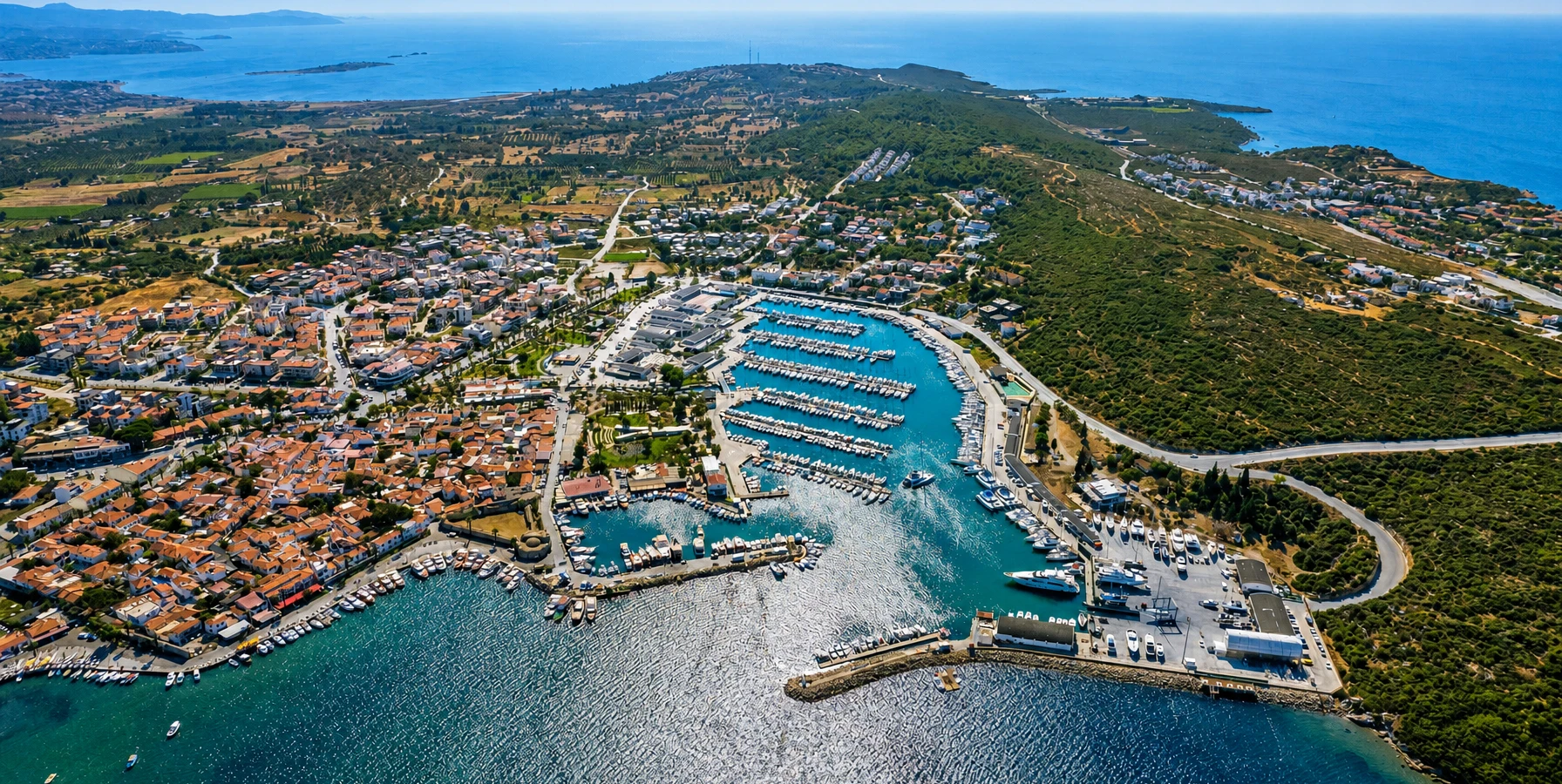
Combine local food traditions with Sığacık's historic atmosphere, the archaeological landscape of Teos and the beautiful Aegean coastline.
Design Your JourneyTravel away from the busiest coastal areas to discover agricultural villages, local producers, traditional breads, olive oil and the rural culture behind Seferihisar's cuisine.
Discover the village closely associated with Armola, Ata Ekmeği, local producers and Seferihisar's living agricultural heritage.
Request This Experience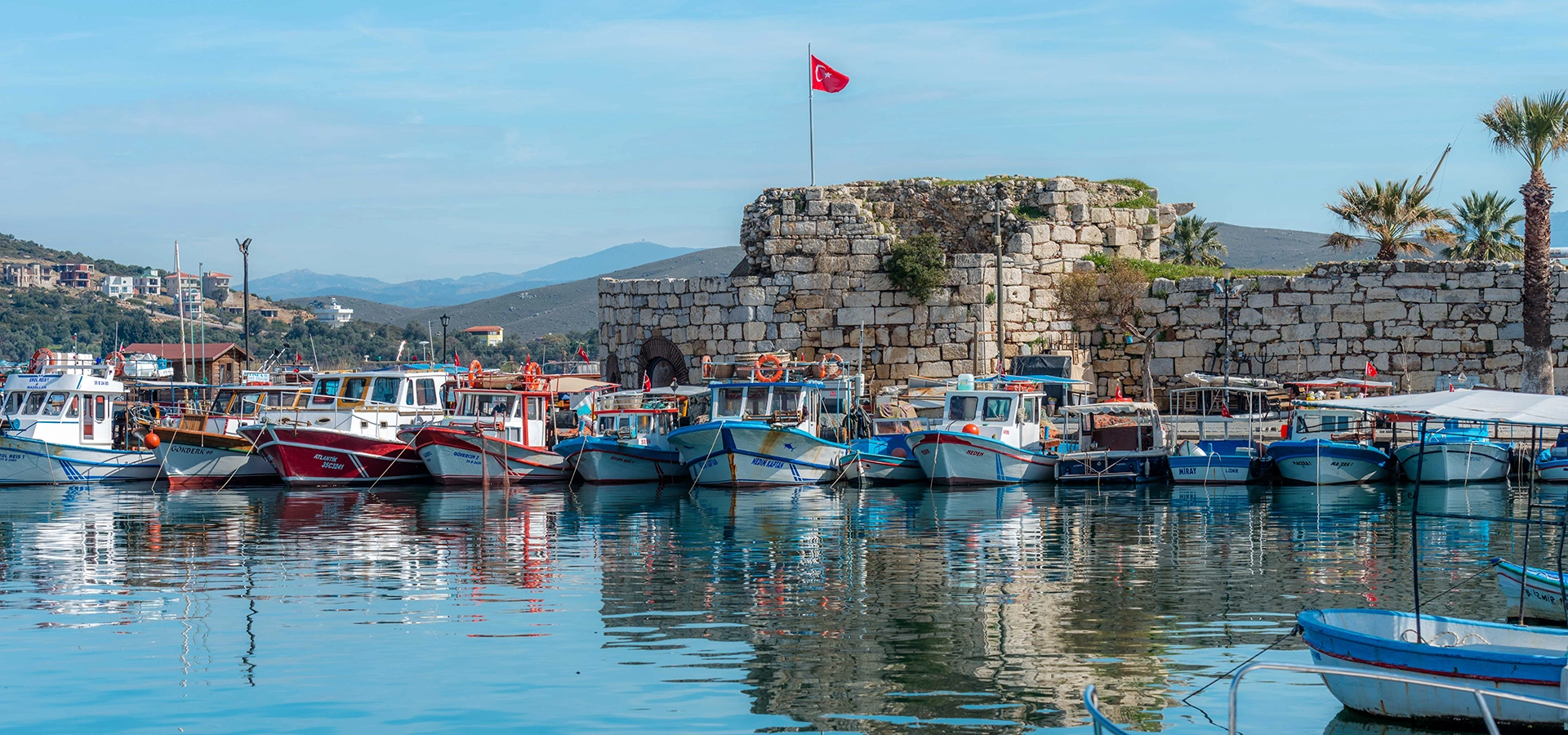
Walk through Sığacık, discover local Aegean flavours and combine the coastal town with nearby Teos and the agricultural traditions of Seferihisar.
Design Your Experience