Deniz Börülcesi
Salty coastal samphire is usually dressed with olive oil, lemon and garlic for an exceptionally fresh Aegean meze.
- Main Ingredient: Samphire
- Style: Cold meze
- Character: Salty and fresh






Few culinary traditions explain İzmir and Türkiye's Aegean coast as beautifully as the meze table. Instead of building a meal around a single dish, meze brings many small plates together so that different flavours, ingredients and textures can be shared across the table.
In İzmir, meze is closely connected with the ingredients of the surrounding landscape. Olive oil, wild Aegean herbs, artichokes, aubergines, peppers, yoghurt, seafood, lemon and seasonal vegetables appear in countless combinations.
The selection changes according to season. Spring may bring tender greens and artichokes, while summer tables become colourful with tomatoes, aubergines, peppers and refreshing yoghurt dishes. Along the coast, seafood adds another dimension through octopus, shrimp, calamari and other delicacies.
But meze culture is about more than food. It represents sharing, conversation, hospitality and taking time over a meal. From İzmir city to Urla, Çeşme, Foça and Sığacık, the Aegean meze table remains one of the most enjoyable ways to experience the region.
Menus change with fresh herbs, vegetables, seafood and ingredients available throughout the year.
Extra virgin olive oil is one of the defining ingredients connecting almost every part of the Aegean table.
Radika, deniz börülcesi and numerous seasonal herbs bring freshness and distinctive flavours.
Several small dishes are placed at the centre so everyone at the table can taste and share.
Essential information for discovering one of the most characteristic traditions of Aegean cuisine.
İzmir lies at the heart of Türkiye's Aegean food culture, where olive oil, vegetables and seafood dominate the table.
Open İzmir on Google MapsOlive oil is fundamental to Aegean mezes, especially vegetable dishes and seasonal greens.
Wild and cultivated herbs are among the most distinctive features of İzmir's meze culture.
Mezes are generally placed in the centre of the table and shared slowly between everyone.
Geography, agriculture, migration and İzmir's cosmopolitan history all contributed to an extraordinarily varied shared-table tradition.
İzmir has been a meeting point between the Anatolian interior and the Aegean Sea for centuries. Its markets, harbour and surrounding agricultural districts brought together vegetables, olive oil, herbs, grains, dairy products and seafood.
The wider Aegean world was also home to diverse communities whose culinary traditions interacted over generations. Turkish, Greek, Cretan, Sephardic, Levantine and Balkan influences all became part of the broader food landscape of İzmir and western Anatolia.
Instead of producing one fixed collection of dishes, this history created a style of eating built around seasonal ingredients and numerous small preparations.
Olive-oil dishes known broadly as zeytinyağlılar became particularly important. Vegetables could be gently cooked in olive oil and served at room temperature, making them ideal companions to salads, herbs, yoghurt dishes and seafood.
İzmir's extraordinary variety of edible Aegean greens added another layer. Leaves and herbs gathered or cultivated according to season could be boiled, sautéed or dressed simply with olive oil and lemon.
Today, the meze table continues to evolve. Traditional vegetable dishes sit beside contemporary interpretations, yet the fundamental idea remains unchanged: many flavours, one table and plenty of time to share them.
Every restaurant has its own selection, but several dishes capture the vegetable-rich character of the İzmir and Aegean table particularly well.
Salty coastal samphire is usually dressed with olive oil, lemon and garlic for an exceptionally fresh Aegean meze.
Wild or cultivated bitter greens are gently cooked before being dressed with good olive oil and fresh lemon.
A smooth broad-bean purée traditionally enriched with olive oil and commonly finished with dill or onion.
Artichokes prepared with olive oil are one of the clearest expressions of İzmir's spring vegetable cuisine.
Fried vegetables, particularly aubergine and peppers, are served with a flavourful tomato-based sauce.
Thick yoghurt combined with herbs and seasonings creates a cooling contrast to vegetables, seafood and hot appetisers.
Meze is not simply a collection of appetisers eaten quickly before the main course. A carefully chosen selection can become the heart of the entire meal.
The pleasure comes from combining contrasting flavours and textures: something creamy beside something acidic, a bitter herb beside a sweet vegetable, seafood beside olive-oil dishes and hot plates beside refreshing cold mezes.
Vegetables, herbs, yoghurt dishes, purées and salads usually form the foundation of the table.
Aegean herbs and vegetables change through the year, making every season slightly different.
Octopus, shrimp and other seafood preparations connect the meze table directly with the Aegean coast.
Calamari, shrimp and warm vegetable dishes may arrive after the cold selection.
Bread is essential for enjoying dips, olive oil, yoghurt dishes and the sauces left on the plates.
Mezes belong in the middle of the table, encouraging everyone to taste several different dishes.
Olive oil is central to İzmir cuisine. Many vegetables are cooked gently with it and served cool or at room temperature, allowing their natural character to remain the focus.
Artichoke hearts cooked with olive oil and vegetables are a celebrated springtime dish.
Green beans cooked slowly with tomato and olive oil create a classic summer preparation.
Borlotti beans cooked with olive oil, carrot, onion and tomato offer a hearty but refreshing cold dish.
Peppers, vine leaves and other vegetables may be filled with rice, herbs and seasonings.
Aubergine appears in numerous preparations accompanied by tomato, peppers, herbs and olive oil.
The finest selection often depends on what local markets provide at that particular time of year.
One of the features that makes İzmir's food culture particularly distinctive is its enthusiasm for otlar – the many edible greens and herbs associated with western Anatolia.
Preparation is often deliberately simple. Greens may be boiled briefly or sautéed and then dressed with olive oil, lemon and occasionally garlic.
Pleasantly bitter greens dressed with olive oil and lemon are one of the most recognisable Aegean preparations.
Coastal samphire introduces a naturally salty flavour that pairs beautifully with seafood.
A prized Aegean plant with a distinctive flavour that may appear in both vegetable and meat preparations.
Restaurants may offer several different local greens depending on season and availability.
Good olive oil and fresh lemon are often all that delicate herbs require.
The selection changes naturally throughout the year rather than remaining identical every season.
Yoghurt provides an important contrast to the olive-oil vegetables, herbs and seafood surrounding it. Garlic, herbs, roasted vegetables and spices can transform yoghurt into numerous different mezes.
Thick strained yoghurt with herbs and seasonings creates one of Türkiye's best-known cold mezes.
Cooked or sautéed carrot combined with yoghurt creates a gently sweet and creamy dish.
Courgette and yoghurt make a particularly refreshing vegetable meze for warm Aegean evenings.
Smoky or cooked aubergine combines beautifully with garlic yoghurt.
Thick yoghurt accompanied by hot dried peppers offers a more intense and spicy flavour.
Garlic yoghurt appears alongside many vegetables and provides balance to richer fried dishes.
The vegetable diversity of western Türkiye gives İzmir meze culture much of its colour. Tomatoes, peppers, courgettes, aubergines, beans and artichokes can all become the centre of a dish.
Fried aubergine and vegetables are served with a tomato-based sauce for a rich Mediterranean-style dish.
Fire-roasted aubergine develops a smoky flavour that works wonderfully in salads and purées.
Sweet peppers may be peeled, dressed with olive oil and garlic and served cold.
İzmir and especially the Urla Peninsula have a particularly strong relationship with seasonal artichokes.
Rice, herbs and seasonings transform peppers, leaves and flowers into delicate shared dishes.
Ripe tomatoes with olive oil and fresh herbs provide a simple but essential summer flavour.
Along the İzmir coast, seafood and meze naturally belong together. Cold seafood salads and hot appetisers can create a bridge between vegetable mezes and a fresh fish main course.
Tender octopus dressed with olive oil, acidity and fresh ingredients is a classic coastal choice.
Grilled octopus adds smoke, texture and a warm seafood element to the table.
Crisp fried calamari is one of the most familiar hot seafood appetisers in Türkiye.
Grilling allows calamari to remain lighter while taking on flavours from the fire.
Shrimp can appear chilled, sautéed or served sizzling as a hot seafood appetiser.
The best seafood additions depend on season, freshness and what reaches the restaurant that day.
Once the cold dishes have been chosen, one or two warm plates can introduce different aromas and textures before the main course.
Fried calamari combines a crisp coating with tender seafood and is ideal for sharing.
Shrimp may arrive hot in a small casserole dish with butter, vegetables and seasonings.
Charred edges and tender seafood create one of the most memorable warm additions to a coastal table.
Aubergines, courgettes or peppers can appear warm with yoghurt or tomato-based accompaniments.
Warm cheese preparations can provide richness between lighter vegetable mezes.
Asking what the kitchen recommends can reveal dishes that do not appear permanently on the menu.
A genuine Aegean table should never look exactly the same throughout the entire year. The ingredients available in markets change continuously, and the meze selection traditionally follows them.
Artichokes, tender herbs and fresh greens become some of the most exciting ingredients of the year.
Tomatoes, peppers, aubergines, courgettes and refreshing yoghurt dishes dominate colourful tables.
Changing vegetables and herbs create a transition toward deeper and more earthy flavours.
Leafy greens, legumes and robust vegetable preparations become particularly comforting.
Fish and seafood choices also change according to availability and fishing conditions.
Instead of ordering only familiar dishes, ask which mezes are particularly good that day.
Many traditional restaurants make choosing mezes part of the experience. You may select from the menu, from a refrigerated display or by listening to the dishes explained at the table.
The most enjoyable table usually combines contrasting dishes rather than ordering many plates with similar flavours.
Choose radika, deniz börülcesi or another seasonal herb to introduce freshness.
An artichoke, bean or vegetable dish brings the unmistakable character of Aegean cooking.
Fava, haydari or another yoghurt-based dish creates contrast.
Roasted aubergine or peppers introduce deeper flavours.
Octopus, calamari or shrimp work especially well when dining near the coast.
One warm dish can add another texture without overwhelming the table.
Mezes are generally ordered as individual shared plates. Because each plate may appear small, it is easy to order more than the table actually needs.
Begin with a manageable selection and add more dishes later if necessary.
Mezes are normally intended to be tasted by several people rather than eaten individually.
Look at the menu or ask the price when selecting dishes from a display.
Seafood mezes and hot seafood appetisers may be priced differently from vegetable dishes.
Some dishes may change according to market prices and availability.
A carefully chosen smaller selection is often more satisfying than ordering every available dish.
Meze culture extends across İzmir Province, from urban restaurants and historic neighbourhoods to fishing towns and peninsula destinations.
Traditional and contemporary restaurants provide easy access to an enormous range of Aegean dishes.
Seafood restaurants along the coast combine mezes with fresh fish and a relaxed seaside atmosphere.
One of İzmir's most exciting culinary areas, combining local vegetables, olive oil, seafood and contemporary gastronomy.
Summer dining culture brings mezes, seafood and local ingredients together around the peninsula.
A historic fishing town where the harbour provides a natural setting for seafood and Aegean mezes.
Local producer culture, seafood and a relaxed harbour atmosphere make Sığacık particularly appealing to food travellers.
The most interesting plate may be something available for only a short period of the year.
If the restaurant has a meze counter, take time to see the dishes before ordering.
Combine herbs, vegetables, yoghurt, olive-oil dishes and seafood rather than choosing similar plates.
Small plates add up surprisingly quickly when several arrive together.
Seasonal Aegean herbs are among the easiest ways to discover something genuinely regional.
Excellent olive oil transforms even the simplest boiled greens or vegetables.
Octopus, calamari or shrimp can complete the table beautifully in coastal areas.
Meze culture makes most sense when the meal is allowed to unfold slowly.
The meze table brings together many of the elements that define İzmir cuisine: seasonality, olive oil, fresh produce, coastal ingredients, simplicity and sharing.
Ingredients follow the natural rhythm of the fields, markets and Aegean coast.
The defining fat of western Anatolian cuisine links vegetables, salads and herbs together.
Vegetables can become the central attraction rather than merely an accompaniment.
Fish and seafood enrich the table throughout İzmir's coastal communities.
Food belongs in the middle of the table rather than remaining confined to individual plates.
Meze encourages a slower style of dining in which eating and socialising become inseparable.
A traditional meze dinner can become the finale to a full day discovering İzmir's markets, waterfront and culinary traditions.
Travellers particularly interested in regional cuisine can turn the meze table into part of a wider journey through İzmir Province.
Explore Kemeraltı, traditional markets, the Kordon and the city's extensive restaurant culture.
Combine seafood with mezes and coastal dining close to central İzmir.
Discover olive oil, artichokes, seasonal vegetables and one of Türkiye's most exciting culinary scenes.
Combine beaches and historic streets with seafood, vegetables and long Aegean dinners.
Enjoy mezes beside a fishing harbour in one of İzmir's most atmospheric coastal towns.
Discover producer markets, local ingredients and relaxed food culture around the historic harbour.
Meze expresses one of the central ideas behind Aegean food: the meal should reflect the landscape, the season and the people sharing the table.
Vegetables, olives, herbs and legumes connect the table directly with the productive landscapes surrounding İzmir.
Seafood gives the shared table another identity in towns facing the Aegean.
Traditional dishes change naturally throughout the year.
Generations of interaction around the Aegean contributed to a remarkably diverse regional cuisine.
Sharing plates transforms a meal into a collective experience.
Meze culture remains vibrant in homes, markets, neighbourhood restaurants and contemporary kitchens.
Understanding meze opens the door to İzmir's wider food culture. Continue exploring the region through its vegetables, herbs, seafood, street foods and desserts.
Discover the remarkable edible greens and plants that form one of the foundations of Aegean cuisine.
Explore one of the most recognisable coastal mezes of western Türkiye.
Discover bitter Aegean greens traditionally dressed with olive oil and lemon.
Meet one of the most distinctive plants associated with İzmir and Aegean cooking.
Discover İzmir's strong springtime enginar tradition, particularly around Urla.
Delicate flowers filled with fragrant rice and herbs are a classic expression of Aegean cuisine.
Explore the fresh fish, calamari, octopus and coastal traditions that naturally accompany the meze table.
Finish your culinary journey with one of İzmir's most beloved traditional desserts.
A meze-focused culinary experience can easily be combined with İzmir's historic districts, markets, waterfront and coastal towns.
Explore İzmir's historic commercial centre and discover the ingredients behind the city's food culture.
Walk beside the Aegean before settling into a leisurely evening meal.
Combine markets, vineyards, olive groves, artichokes and one of Türkiye's most exciting culinary destinations.
Enjoy historic streets, beaches, marinas and the food culture of the western İzmir Peninsula.
Discover a beautiful fishing harbour where seafood and mezes feel perfectly at home.
Combine local producers, a historic fortified settlement and relaxed harbour atmosphere.
Meze refers to small dishes served for sharing. A meze table can include vegetables, herbs, yoghurt dishes, seafood, dips, salads and hot appetisers.
Yes. İzmir's strong Aegean culinary traditions, olive-oil culture, seafood and extraordinary variety of vegetables and herbs make mezes an important part of local dining.
Good choices include deniz börülcesi, radika, fava, haydari, artichokes, şakşuka and seasonal Aegean greens, together with seafood mezes along the coast.
Deniz börülcesi is samphire, a naturally salty coastal plant commonly served with olive oil, lemon and garlic.
Radika is a pleasantly bitter green traditionally boiled or blanched and served with olive oil and lemon.
Fava is a smooth broad-bean purée usually prepared with olive oil and often garnished with dill or onion.
Haydari is a thick yoghurt-based meze seasoned with herbs and other flavourings.
Şakşuka is a vegetable dish commonly made with fried aubergine and peppers accompanied by a tomato-based sauce.
Many traditional Aegean mezes are based entirely on vegetables, herbs, legumes or yoghurt, although seafood and other non-vegetarian options are also common.
Extremely. Olive oil is one of the defining ingredients of western Türkiye and plays a major role in vegetable dishes, salads and Aegean greens.
Zeytinyağlı dishes are foods prepared with olive oil, particularly vegetables, legumes and stuffed dishes that are often served cool or at room temperature.
Yes. Seasonal vegetables, herbs and seafood are fundamental to traditional Aegean cooking, so the most interesting dishes change throughout the year.
Octopus salad, grilled octopus, calamari and shrimp dishes are popular choices in seafood restaurants along the İzmir coast.
You can find excellent meze culture throughout İzmir city as well as coastal destinations such as Güzelbahçe, Urla, Çeşme, Foça and Sığacık.
Yes. Urla is particularly associated with olive oil, artichokes, vegetables, local produce and a dynamic contemporary culinary scene.
It depends on the number of diners and whether you plan to order hot dishes or a main course. Starting with a modest selection and adding more later is usually sensible.
Yes. Mezes are generally placed in the centre of the table so that everyone can taste several different dishes.
Fresh bread, salads, seasonal vegetables and seafood work naturally with an Aegean meze selection. A fresh fish main course is especially common at coastal restaurants.
Try boyoz, gevrek, kumru, İzmir köfte, Tire köfte, Ödemiş köfte, lokma, seafood, stuffed zucchini flowers, artichokes and İzmir's remarkable range of Aegean herbs.
Few subjects represent Aegean cuisine more beautifully than a colourful table filled with small plates, fresh herbs, vegetables, seafood and olive oil.
Photograph several different dishes together to capture the abundance and sharing that define meze culture.
Radika, deniz börülcesi and seasonal herbs provide vibrant natural colours and textures.
Spring artichoke dishes provide one of the most recognisable images of İzmir's vegetable cuisine.
Close photographs of vegetables glistening with olive oil beautifully communicate the character of Aegean cooking.
Octopus, calamari and shrimp introduce contrasting colours and textures to the table.
A table of mezes beside the Aegean at sunset creates a perfect visual summary of İzmir's coastal lifestyle.
When photographing restaurant staff, market sellers, chefs or other diners, always ask permission before taking close portraits. The people preparing and serving these dishes are an essential part of İzmir's living culinary culture.
Discover İzmir through markets, seasonal ingredients, olive oil, Aegean herbs, mezes, seafood and the traditions of sharing food around the table.
Custom-designed private touring with professional guiding, comfortable transportation and flexible timing for travellers who want to understand İzmir through its markets, neighbourhoods and extraordinary Aegean food culture.
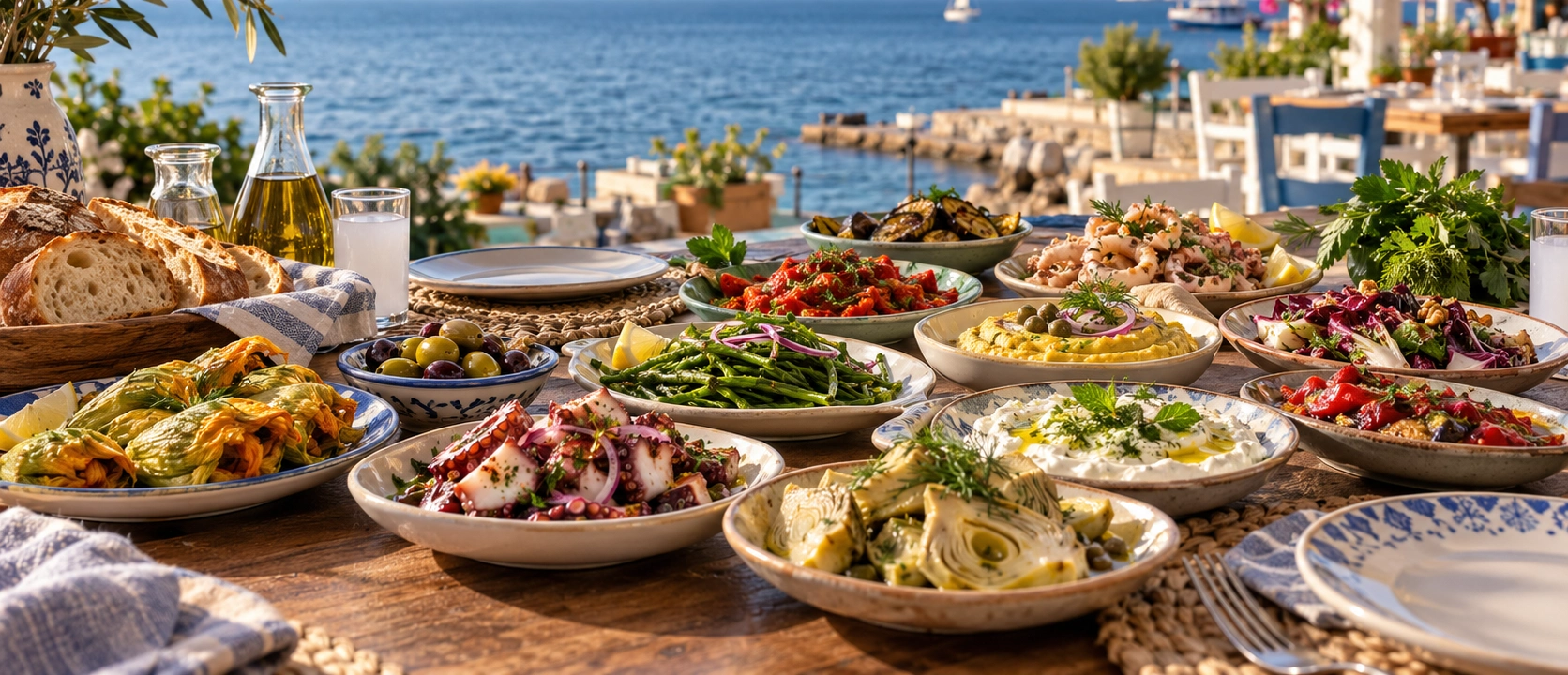
Explore İzmir's markets and food culture while discovering seasonal Aegean greens, olive-oil dishes, traditional mezes, seafood and local ingredients.
Request This Tour
Combine Konak, Kemeraltı, ancient Smyrna and the Kordon with local markets, street food, Aegean dishes and İzmir's famous shared-table culture.
Design Your ExperienceExtend your culinary journey through Urla, Çeşme, Foça and Sığacık, combining meze culture, local produce, seafood, olive oil, markets and spectacular coastal landscapes.
Discover the İzmir Peninsula through seasonal vegetables, artichokes, olive oil, seafood, mezes, markets and the culinary culture of Urla.
Design Your Journey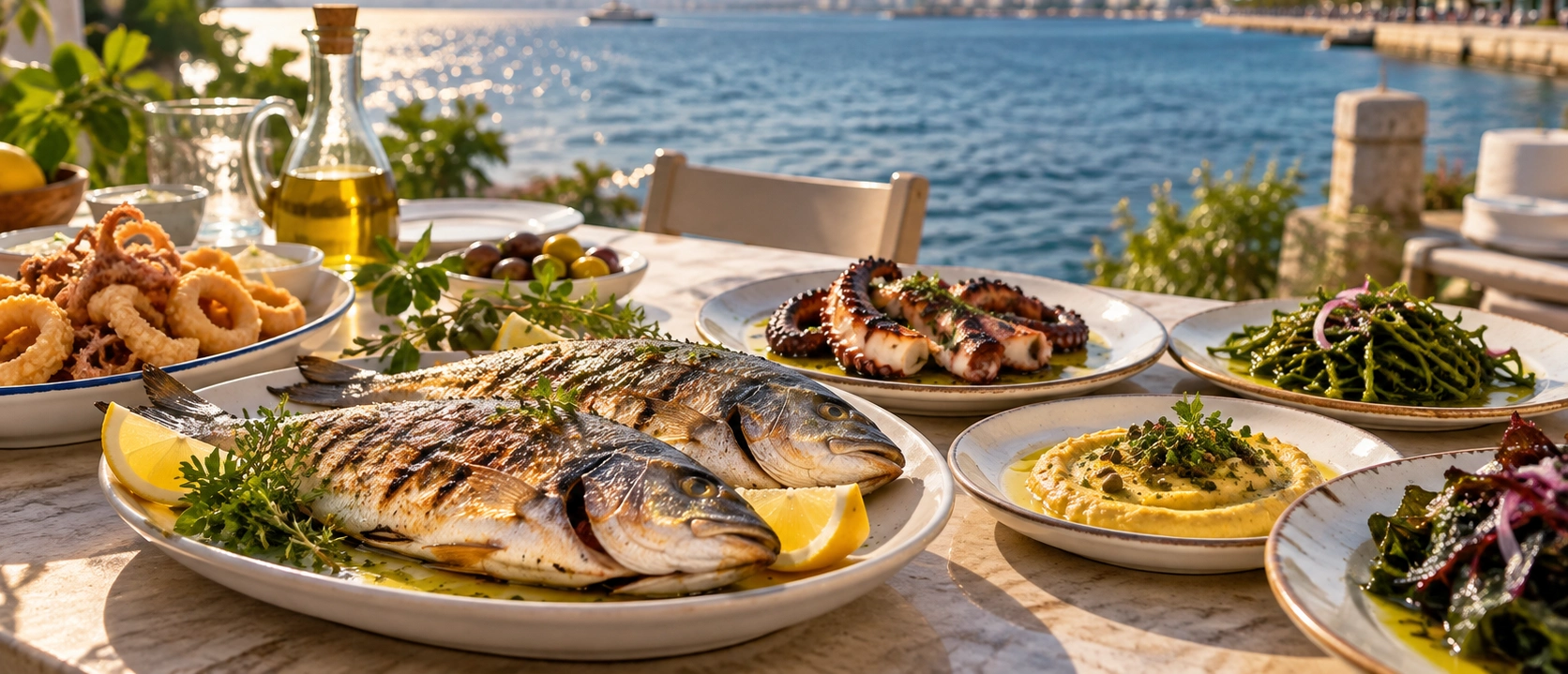
Combine fresh Aegean fish with seasonal herbs, vegetable mezes, calamari, octopus and the relaxed atmosphere of İzmir's coast.
Request This Tour