Kozak Plateau Connection
The registered cheese is closely connected with animals grazing within the Kozak Plateau landscape north of Bergama.
- Region: Bergama
- Landscape: Kozak Plateau
- Mountains: Madra Mountains






Travel north from İzmir toward historic Bergama and the landscape begins to change. Beyond the ancient city rise the Madra Mountains and the highlands of the Kozak Plateau, a rural landscape of forests, villages, grazing animals and long-established agricultural traditions.
It is from this landscape that one of Bergama's most characteristic foods emerges: Bergama Tulum Peyniri.
Bergama Tulum is a full-fat, semi-hard and characteristically porous matured cheese. Its protected production specification allows it to be made either entirely from cow's milk or from a carefully defined mixture of cow, sheep and goat milk obtained from animals associated with the Kozak Plateau.
Its story reaches beyond flavour. The tradition is linked with the Yörük communities who settled around Bergama after migrations into Anatolia. Historically the cheese was packed into animal-skin tulums, giving the cheese its name. Modern registered Bergama Tulum, however, is matured in tins with brine.
After production and an important preliminary maturation stage known locally as “göz açma”, the cheese is sealed with brine and matured under cool conditions for at least four months. The result is a structured, aromatic cheese intimately connected with Bergama's pastoral countryside.
The protected cheese is closely connected with milk from animals grazing in Bergama's Kozak Plateau.
The cheese tradition is historically associated with Yörük communities who settled around Bergama.
Bergama Tulum must mature for at least four months before completing its registered production process.
Bergama Tulum Peyniri has its own Turkish geographical-indication registration.
Essential information about this distinctive cheese from northern İzmir Province.
A full-fat, semi-hard and porous cheese matured in brine.
It may be produced from cow's milk or a registered mixture of cow, sheep and goat milk.
The registered cheese is matured for a minimum of four months.
Discover the cheese in Bergama and combine it with the markets, villages and landscapes of northern İzmir.
Open Bergama on Google MapsBergama Tulum is part of a much older relationship between pastoral communities, seasonal milk, mountain landscapes and food preservation.
Long before refrigeration, communities throughout Anatolia developed ways of transforming highly perishable milk into foods that could survive for months. Cheese became one of the most important solutions.
The history associated with Bergama Tulum Peyniri is particularly connected with Yörük communities who migrated into Anatolia and eventually settled around Bergama. Livestock raising, seasonal movement and dairy production formed an important part of this way of life.
The word tulum traditionally refers to a skin bag. Historically, Bergama's cheese was pressed into animal skins for maturation, which explains why the tulum name remained attached to it.
Production gradually changed. The modern registered form is no longer defined by maturation inside animal skin. Instead, the cheese is prepared in blocks, placed into tins, subjected to a preliminary maturation process and eventually covered with brine for its long maturation period.
The landscape is equally important. The protected specification closely connects the cheese with the Kozak Plateau in the Madra Mountains, where cattle, sheep and goats graze within a diverse highland environment.
In this way, Bergama Tulum represents far more than one regional food. It brings together pastoral history, Yörük heritage, dairy knowledge, mountain agriculture and modern geographical-indication protection.
Not every cheese carrying the word “tulum” is the same. Bergama Tulum has its own geographical origin, milk rules, preparation, texture and maturation method.
The registered cheese is closely connected with animals grazing within the Kozak Plateau landscape north of Bergama.
Unlike a cheese defined by only one milk composition, Bergama Tulum can follow two registered approaches.
The cheese develops a firm structure together with characteristic openings in the interior.
An important preliminary maturation stage encourages the formation of small characteristic openings within the cheese.
Modern protected Bergama Tulum is matured in tins with brine, rather than being defined by skin-bag maturation.
The protected specification specifically associates the cheese's aromatic character with the vegetation encountered by grazing animals on the Kozak Plateau.
Bergama Tulum Peyniri is officially registered in Türkiye as a Mahreç İşareti. The registration protects its recognised connection with Bergama, its ingredients and the production characteristics that distinguish it from other tulum cheeses.
The official geographical boundary is the Bergama district of İzmir Province, and the registered specification requires the production stages associated with the cheese to take place within this geographical area.
1597
6 June 2024
15 January 2020
Mahreç İşareti
Bergama Chamber of Commerce
Bergama district, İzmir Province
To understand Bergama Tulum, it helps to look beyond the dairy and toward the landscape itself. The protected cheese is closely associated with the Kozak Plateau, extending through the Madra Mountains north of Bergama.
The plateau generally lies hundreds of metres above sea level and is characterised by forested uplands, villages, agricultural land and grazing areas. Its best-known landscape feature is its extensive stone-pine woodland.
The official registration also emphasises the remarkable botanical diversity of the Kozak landscape and connects grazing vegetation with aromatic compounds found in the finished cheese.
Kozak occupies the uplands of the Madra Mountains north of historic Bergama.
Cattle, sheep and goats graze within the regional vegetation used to define the cheese's geographical connection.
The plateau is famous for landscapes dominated by fıstık çamı, or Turkish stone pine.
The official registration documents exceptionally diverse vegetation within the Kozak Plateau.
Livestock farming connects the forests and grazing landscape directly with Bergama's dairy traditions.
Bergama Tulum demonstrates how a regional food can express the ecology and agricultural history of its landscape.
One of the most interesting characteristics of Bergama Tulum is that its registered specification does not require one single milk formula.
The cheese may be produced entirely from cow's milk, or it may be made from a defined combination of cow, sheep and goat milk.
One recognised method uses cow's milk from cattle associated with the Kozak Plateau grazing landscape.
When mixed milk is used, cow milk forms approximately 40–50% of the registered blend.
Sheep milk represents approximately 30–40% of the registered mixed-milk formula.
Goat milk forms approximately 20–30% of the mixed-milk formulation.
The animals' relationship with Kozak vegetation forms an important part of the cheese's registered regional identity.
Because legitimate Bergama Tulum may use different permitted milk compositions, flavour can vary naturally between producers and batches.
The protected production process involves far more than simply coagulating milk. Temperature, curd structure, pressing, salting, preliminary maturation, brining and cool storage all contribute to the finished cheese.
Cow milk or the permitted cow, sheep and goat milk mixture is obtained from animals connected with the Kozak Plateau.
The milk is filtered and receives controlled heat treatment before cheesemaking begins.
The heated milk is cooled to the appropriate temperature for coagulation.
Cheese rennet is added and the milk is allowed to form a firm curd.
The curd is cut into pieces approximately the size of chickpeas.
Controlled hot-water addition helps the curds contract and release additional whey.
The curds are collected in cloth and pressed so that excess whey can escape.
The pressed cheese mass is divided into characteristic blocks and cooled.
The cheese blocks receive dry salting before the preliminary maturation stage.
The cheese undergoes approximately three to five days of preliminary maturation while characteristic small openings develop.
Brine is added to the tins once the preliminary maturation stage has been completed.
The sealed cheese is stored under cool conditions and matured for at least four months.
One of the most distinctive elements described in the registered Bergama Tulum process is a preliminary maturation stage known as göz açma.
The expression literally evokes the idea of the cheese “opening its eyes”. During this stage, small openings develop within the cheese mass before the final long maturation in brine.
The word tulum traditionally refers to an animal-skin bag or sack. Across Anatolia, such skins were historically used for storing and maturing different cheeses.
Bergama's cheese tradition was historically associated with cheese pressed into animal skins. That older technique explains why the name survives.
Today, however, the protected Bergama Tulum specification describes a tin-and-brine maturation system. The name therefore preserves the memory of an older tradition even though the modern registered production method has evolved.
Bergama Tulum is a matured cheese rather than a mild fresh dairy product. Its salt, fat, milk composition and months of maturation create a fuller and more persistent flavour.
Exact flavour naturally varies according to milk mixture, season, producer and maturation, making tasting different examples part of the experience.
Salt and prolonged maturation create the assertive savoury character expected from mature tulum cheese.
The full-fat composition gives Bergama Tulum satisfying body and depth.
Pasture, milk composition and maturation all contribute to its characteristic aroma.
Months of ageing create flavours considerably more developed than those of fresh breakfast cheese.
The registered description associates certain aroma compounds in the cheese with fruity characteristics.
A relatively small piece can leave a long-lasting flavour, making the cheese particularly satisfying with simple accompaniments.
Texture is one of the easiest ways to recognise Bergama Tulum. The registered description classifies it as a semi-hard and porous cheese.
The matured cheese retains enough firmness to cut into defined pieces or slices.
Small openings within the cheese form an important part of its characteristic structure.
Pressing removes whey and helps produce a dense, structured cheese body.
Its relatively rich composition gives the cheese body as well as flavour.
Firmness, moisture and flavour continue to develop throughout the maturation process.
Natural differences in milk and maturation mean that artisanal examples need not look or taste completely identical.
The registered history of Bergama Tulum associates the cheese with Yörük communities that migrated into Anatolia and settled around Bergama.
Pastoral communities depended heavily on animals for milk, yoghurt, cheese, meat, wool and other essential products. Converting seasonal milk into mature cheese therefore had practical importance long before regional foods became objects of culinary tourism.
Cattle, sheep and goats formed valuable sources of milk within pastoral agricultural life.
Cheesemaking transformed seasonal milk production into food that could be kept for much longer periods.
Yörük history is closely associated with pastoral movement between grazing landscapes and seasonal settlements.
Salting and maturation allowed milk to be stored in a far more durable form.
Cheese production represents practical knowledge refined through generations rather than a single written recipe.
Modern geographical-indication protection helps connect today's product with the cultural story behind its development.
Like many mature Turkish cheeses, Bergama Tulum works beautifully when served simply. Its assertive flavour means that a small amount can become the focal point of an entire plate.
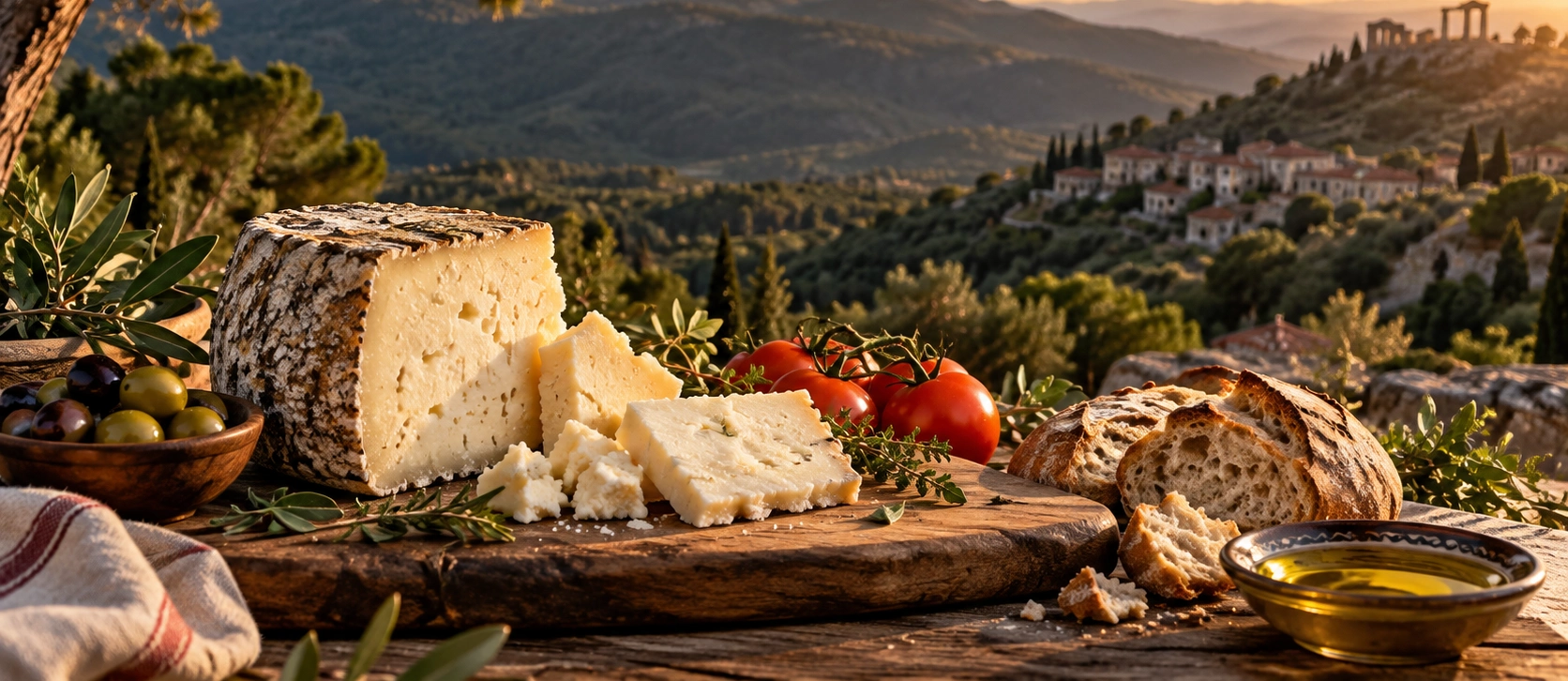
Serve small pieces alongside tomatoes, cucumber, olives, bread, eggs and tea.
Good rustic bread provides the simplest possible partner for a mature regional cheese.
Sweet, ripe tomatoes provide freshness and acidity against the cheese's savoury character.
A little northern Aegean extra-virgin olive oil creates a distinctly regional combination.
Serve small pieces beside olives, roasted vegetables, herbs and other cold Aegean dishes.
Cheese, bread, tomatoes and seasonal fruit create a simple meal suited to a countryside excursion.
Strong regional cheese rarely needs complicated preparation. Fresh and seasonal ingredients often provide the most satisfying balance.
Ripe tomatoes add moisture, sweetness and refreshing acidity.
Northern Aegean olives make a natural companion to the mature cheese.
Good regional olive oil brings two important Bergama and Aegean agricultural traditions together.
Crusty village bread provides texture without overwhelming the cheese.
Rocket, parsley and seasonal greens bring freshness to a rich cheese plate.
Fresh grapes create a pleasant sweet contrast against savoury matured cheese.
Fresh or dried figs pair beautifully with mature cheese and northern Aegean flavours.
Earthy walnuts add crunch and complement the depth of aged dairy flavours.
A very small amount of honey can create an appealing sweet-and-salty contrast.
Kozak is famous for stone-pine landscapes, making pine nuts an evocative regional addition to a Bergama-inspired table.
Breakfast offers one of the easiest and most natural ways to appreciate regional cheese in Türkiye. Rather than disguising Bergama Tulum under heavy sauces, allow its mature flavour to stand beside simple fresh ingredients.
Different tulum cheeses are sold throughout Türkiye, so travellers specifically interested in Bergama's protected tradition should examine labels and ask sellers about origin, milk and maturation.
Look specifically for the name Bergama Tulum Peyniri when regional authenticity matters.
The protected geographical area is Bergama district in İzmir Province.
Find out whether the cheese is cow-milk Bergama Tulum or the permitted mixed-milk version.
The protected cheese must mature for at least four months, while individual products may differ beyond that point.
Look at texture, openings, firmness and aroma when comparing different producers.
Where tasting is offered, sampling before buying is the easiest way to understand differences between cheeses.
Bergama itself is naturally the most meaningful place to begin. Buying the cheese close to its region of production allows travellers to connect the flavour with the landscapes and community behind it.
Traditional food shops and delicatessens in Bergama are natural places to search for regional cheese.
Markets reveal how tulum fits beside olives, vegetables, breads and other everyday foods from the surrounding countryside.
Specialist şarküteri shops provide opportunities to compare producers and maturation styles.
Travellers exploring the plateau can gain a deeper appreciation of the agricultural landscape behind the cheese.
Regional-food specialists in İzmir city may also carry Bergama Tulum alongside other Aegean cheeses.
When buying outside Bergama, ask where the cheese was produced rather than assuming every tulum is Bergama Tulum.
A few simple expressions make exploring markets and cheese counters much easier.
Mature cheese still requires proper handling, particularly during warm western Turkish weather. Always prioritise the producer's own storage instructions.
Store the cheese under appropriate chilled conditions after purchase.
Suitable wrapping helps prevent excessive drying and limits strong cheese aromas spreading to other foods.
Do not leave dairy products for long periods inside a hot vehicle or in direct summer sun.
Ask specialist sellers whether vacuum packing is available when travelling with the cheese.
Ask the producer for suitable cold-transport advice when carrying cheese over significant distances.
Packaging dates, refrigeration instructions and use-by guidance supplied with the product should always take priority.
Mature tulum has much more intensity than a mild fresh cheese.
Try the cheese before adding bread, fruit or olive oil so you understand its original flavour.
Cow-milk and mixed-milk examples can provide an interesting comparison.
Maturation affects aroma, salt perception, moisture and firmness.
Its porous interior is part of the characteristic Bergama Tulum structure.
Regional cheese is especially interesting when several legitimate examples are tasted side by side.
The cheese becomes more meaningful when connected with the town and countryside that created it.
A journey into the plateau reveals the agricultural and ecological landscape behind the protected cheese.
Because Bergama lies within İzmir Province, travellers can understandably assume that Bergama Tulum and İzmir Tulum are simply two names for the same cheese.
They are not. Today each possesses its own registered geographical indication and production specification.
Protected specifically within Bergama district and closely connected with the Kozak Plateau.
A separately registered tulum-cheese tradition with its own geographical area and defined production method.
May use 100% cow milk or a defined cow, sheep and goat milk mixture.
Its registered formula follows a different defined sheep, goat and cow milk composition.
The Kozak Plateau and Bergama's Yörük heritage form central parts of the cheese's story.
Read our complete guide to İzmir Tulum and compare the two protected Aegean cheese traditions.
The word tulum appears in cheese traditions across Türkiye, but it should never be interpreted as one standard national recipe.
Different regions use different milk, containers, salting methods, textures and maturation systems.
A northern Aegean tradition associated with Bergama, Kozak Plateau milk, porous structure and brine maturation.
A separate western Anatolian geographical indication with its own milk composition and production rules.
An eastern Anatolian tulum tradition with a different geographical identity and production heritage.
Regional tulum cheeses may use sheep, goat, cow or carefully defined mixtures of several milks.
Historic skin traditions, modern tins and other maturation practices vary from one regional cheese to another.
Pasture, milk, salt, microorganisms, temperature and maturation all shape the final result.
Bergama is internationally famous for ancient Pergamon, yet the district's living heritage extends far beyond archaeological monuments.
Bergama Tulum reveals another side of the region: a landscape shaped by villages, farming, livestock, markets, olive groves, pine forests and inherited culinary knowledge.
Cheese connects Bergama's cuisine directly with cattle, sheep and goat farming.
The upland landscape gives Bergama Tulum an unusually clear connection between food and place.
The cheese preserves memories of pastoral communities whose traditions contributed to regional food culture.
Salting and maturation reflect technologies developed to preserve valuable seasonal milk.
Regional cheese connects village production with town markets and everyday household cuisine.
Bergama's culinary traditions continue alongside its much older Greek, Roman, Byzantine and Ottoman historical layers.
A tasting of Bergama Tulum can easily become part of a much wider exploration of one of western Türkiye's most fascinating historic districts.
Food lovers can use Bergama Tulum as the starting point for a broader journey through northern Aegean agriculture, landscapes and culinary traditions.
Begin with local markets, traditional dishes and the extraordinary archaeological heritage of Pergamon.
Explore the highland landscape associated with the milk and pastoral identity behind Bergama Tulum.
Rural settlements reveal a quieter side of northern İzmir shaped by farming, forests and traditional livelihoods.
Discover the distinctive pine landscapes for which Kozak has long been famous.
Continue toward the Aegean coast for seafood, coastal agriculture and seaside landscapes.
Complete the journey in İzmir city, comparing Bergama Tulum with other cheeses and foods from across the province.
Traditional cheese is more than a recipe. It exists at the meeting point of animals, pasture, climate, human knowledge, local economics and cultural memory.
Protecting Bergama Tulum therefore helps preserve a relationship between food and place that could otherwise be weakened by increasingly standardised production.
Cheesemaking preserves practical skills developed and refined through generations.
Protected food can create additional value for locally produced milk and agricultural livelihoods.
The cheese draws attention to the agricultural importance of grazing landscapes around the Kozak Plateau.
Regional products allow Bergama's cuisine to remain distinctive rather than becoming completely standardised.
The tulum name itself preserves the memory of an older cheese-maturation tradition.
Regional food encourages visitors to look beyond famous archaeological sites and engage with living communities.
Bergama Tulum is one part of a much wider culinary landscape. Continue exploring the traditional foods of Bergama and İzmir Province.
Discover Bergama's famous eggplant, pepper, tomato and garlic dish, another protected speciality of the district.
Compare Bergama Tulum with İzmir's separately registered and equally fascinating tulum-cheese tradition.
Discover İzmir's famous flaky pastry and its remarkable culinary history.
Explore the crisp sesame-covered bread ring found throughout İzmir.
Discover İzmir's celebrated sesame-covered sandwich and its traditional cold version.
Meet the extraordinary edible greens that form an essential part of western Türkiye's cuisine.
Explore the vegetables, olive oil, yoghurt, seafood and shared-table traditions of the Aegean.
Continue toward the Aegean coast and discover the region's fish and seafood culture.
Few culinary destinations offer the historical depth of Bergama. A regional-cheese tasting can be combined with some of Türkiye's most remarkable archaeological and cultural sites.
Explore the dramatic ancient city above modern Bergama and discover one of antiquity's great cultural centres.
Visit the ancient healing sanctuary associated with the medical traditions of Pergamon.
Discover one of Bergama's most monumental surviving Roman-period structures.
Place the archaeological landscape into context through artefacts from Pergamon and its surroundings.
Walk through traditional streets, markets and neighbourhoods within the modern town.
Travel into the rural landscape most closely associated with Bergama Tulum's milk and regional identity.
Experience the characteristic woodland landscape surrounding villages of the Kozak highlands.
Combine Bergama's inland history and food culture with the nearby northern Aegean coast.
Bergama Tulum Peyniri is a full-fat, semi-hard and porous regional cheese produced in Bergama and matured in brine.
It comes from Bergama district in İzmir Province, with an especially strong connection to the Kozak Plateau in the Madra Mountains.
The registered specification allows either 100% cow milk or a mixture containing approximately 40–50% cow milk, 30–40% sheep milk and 20–30% goat milk.
No. The protected specification allows either cow's milk alone or the registered cow, sheep and goat milk mixture.
The registered cheese must be matured for at least four months.
It is officially described as a semi-hard and porous cheese.
It is a rich, savoury and aromatic mature cheese. Exact flavour varies according to milk composition, season, producer and maturation.
Kozak is the highland landscape in the Madra Mountains north of Bergama, known for its rural villages, grazing areas, stone-pine forests and agricultural traditions.
The geographical-indication specification connects the cheese with milk obtained from animals grazing within the Kozak Plateau landscape and its diverse vegetation.
“Tulum” traditionally means a skin bag. Bergama's cheese was historically packed into animal skins, which explains the survival of the name.
The current protected production specification describes maturation in tins with brine, rather than maturation inside animal skin.
Göz açma is a preliminary maturation stage during which characteristic small openings develop within the cheese before brine is added.
The registered production method describes a period of approximately three to five days, depending partly on seasonal conditions.
Yes. Bergama Tulum Peyniri is registered in Türkiye as a Mahreç İşareti.
Its Turkish geographical-indication registration number is 1597.
The geographical indication was formally registered on 6 June 2024.
The geographical indication is registered by the Bergama Chamber of Commerce.
The registered geographical boundary is Bergama district in İzmir Province.
No. Although both belong to the wider Aegean tulum-cheese tradition, Bergama Tulum and İzmir Tulum possess separate geographical indications and different registered production specifications.
It can be eaten at Turkish breakfast, with fresh bread, tomatoes, olives and olive oil or as part of a regional cheese and meze plate.
Tomatoes, olives, olive oil, bread, grapes, figs, walnuts, fresh herbs and small amounts of honey all work well with mature tulum cheese.
Bergama's food shops, markets and specialist delicatessens are natural places to begin looking. Regional-food shops elsewhere in İzmir may also carry it.
Some specialist sellers may provide vacuum packing. Ask the seller directly when purchasing cheese for travel.
That depends on the food-import regulations of your destination. Always check current customs and dairy-product restrictions before travelling internationally with cheese.
Yes. Follow the storage instructions supplied by the producer and keep the cheese properly refrigerated.
That depends on the type of rennet and ingredients used by the individual producer. Vegetarian travellers should ask the producer directly.
Traditional cheese production does not normally require wheat flour, but travellers with coeliac disease or serious allergies should always check ingredients and cross-contamination information with the producer.
Bergama Çığırtması is another important protected speciality of the district. Visitors can also explore local olives, olive oil, village breads, seasonal produce and other foods of northern Aegean cuisine.
Bergama Tulum becomes especially photogenic when the cheese is connected visually with the markets, ingredients and rural landscapes behind it.
Photograph a freshly cut piece so its semi-hard structure and characteristic openings are visible.
Regional cheeses displayed together tell a richer culinary story than an isolated packaged product.
Combine Bergama Tulum with bread, olives, tomatoes and tea for a natural Turkish setting.
Cheese beside northern Aegean olive oil visually connects two important regional products.
Stone-pine forests and upland countryside create a powerful visual connection between cheese and place.
Historic streets and views toward Pergamon place the cheese inside the wider story of the district.
When photographing producers, farmers, market traders or shopkeepers, always ask permission before taking close portraits. The people behind a regional food are an essential part of its living heritage.
Combine the extraordinary archaeological landscape of ancient Pergamon with Bergama's markets, regional foods, rural traditions and the mountain landscapes of the Kozak Plateau.
Custom-designed private touring with professional guiding, comfortable transportation and flexible timing for travellers who want to discover both the ancient monuments and living culture of Bergama.
Explore Bergama's historic centre and regional food culture while discovering Bergama Tulum, local markets, northern Aegean ingredients and the stories behind the district's culinary heritage.
Request This Experience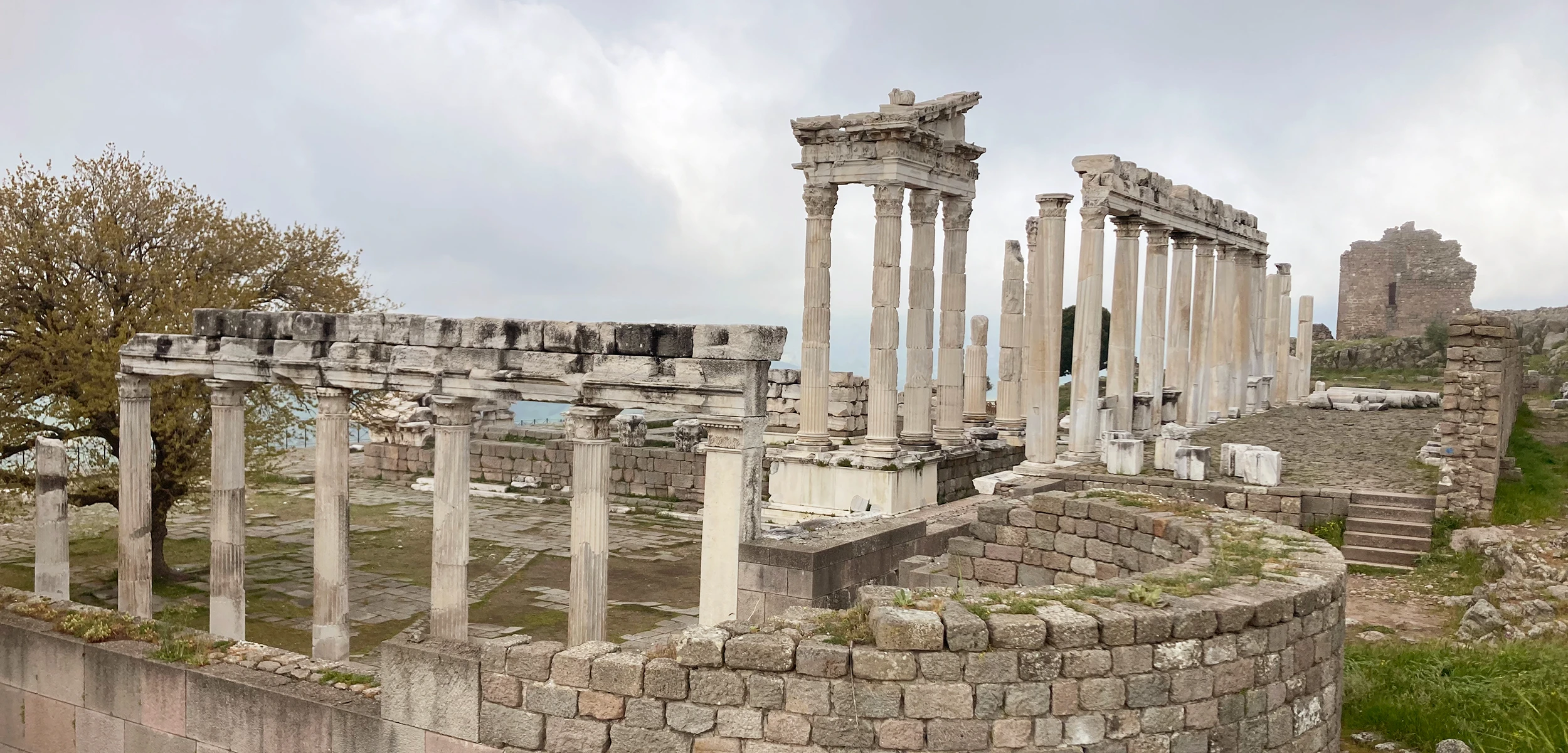
Combine ancient Pergamon with Bergama Tulum, Bergama Çığırtması, local markets and the traditional flavours of northern İzmir Province.
Design Your JourneyTravel beyond ancient Bergama into its rural landscape for a deeper understanding of stone-pine forests, grazing lands, village traditions and the countryside behind Bergama Tulum.
Explore the Acropolis, Asklepion, Red Basilica and historic Bergama before discovering the food traditions that continue around the ancient city today.
Request This Tour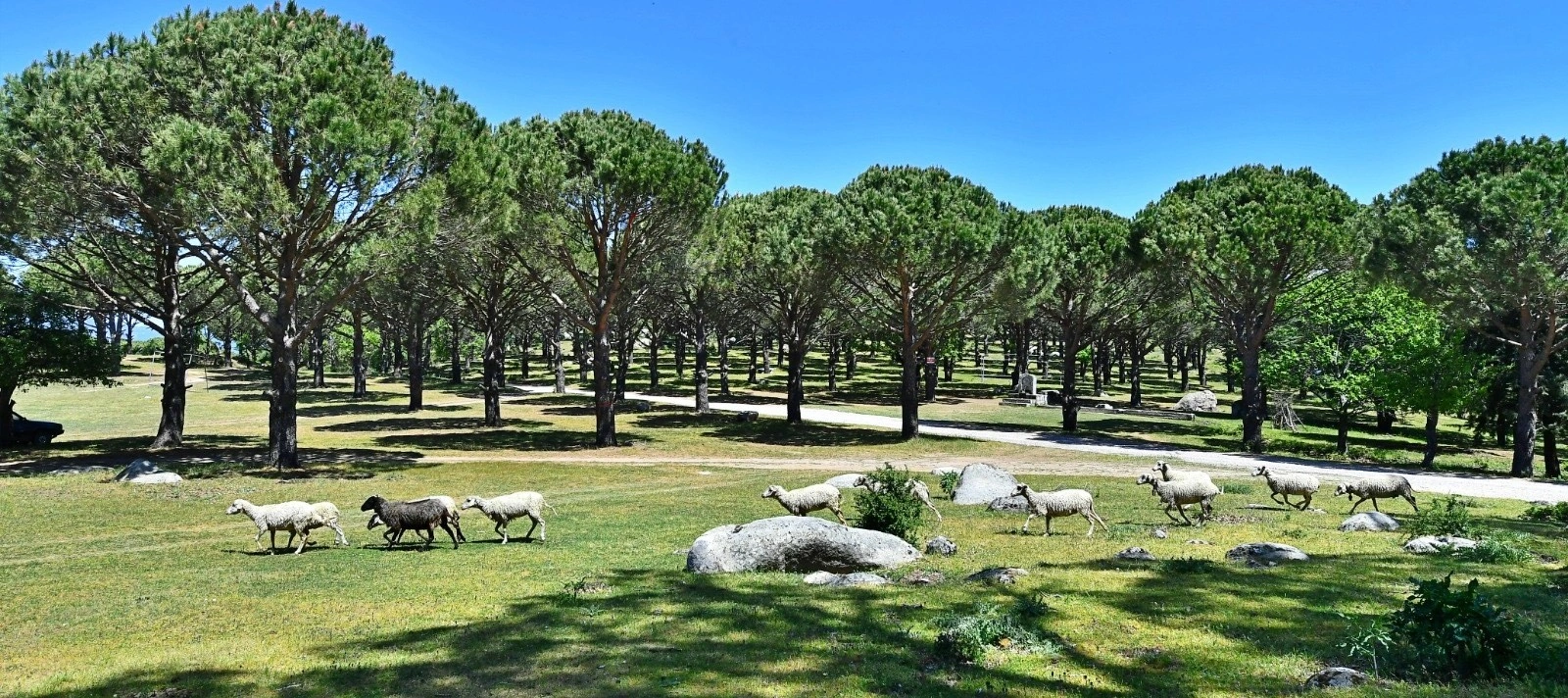
Follow the story of Bergama Tulum into the Madra Mountains through rural landscapes, stone-pine country and the agricultural world surrounding the Kozak Plateau.
Design Your Experience