Zeytinyağlı Enginar
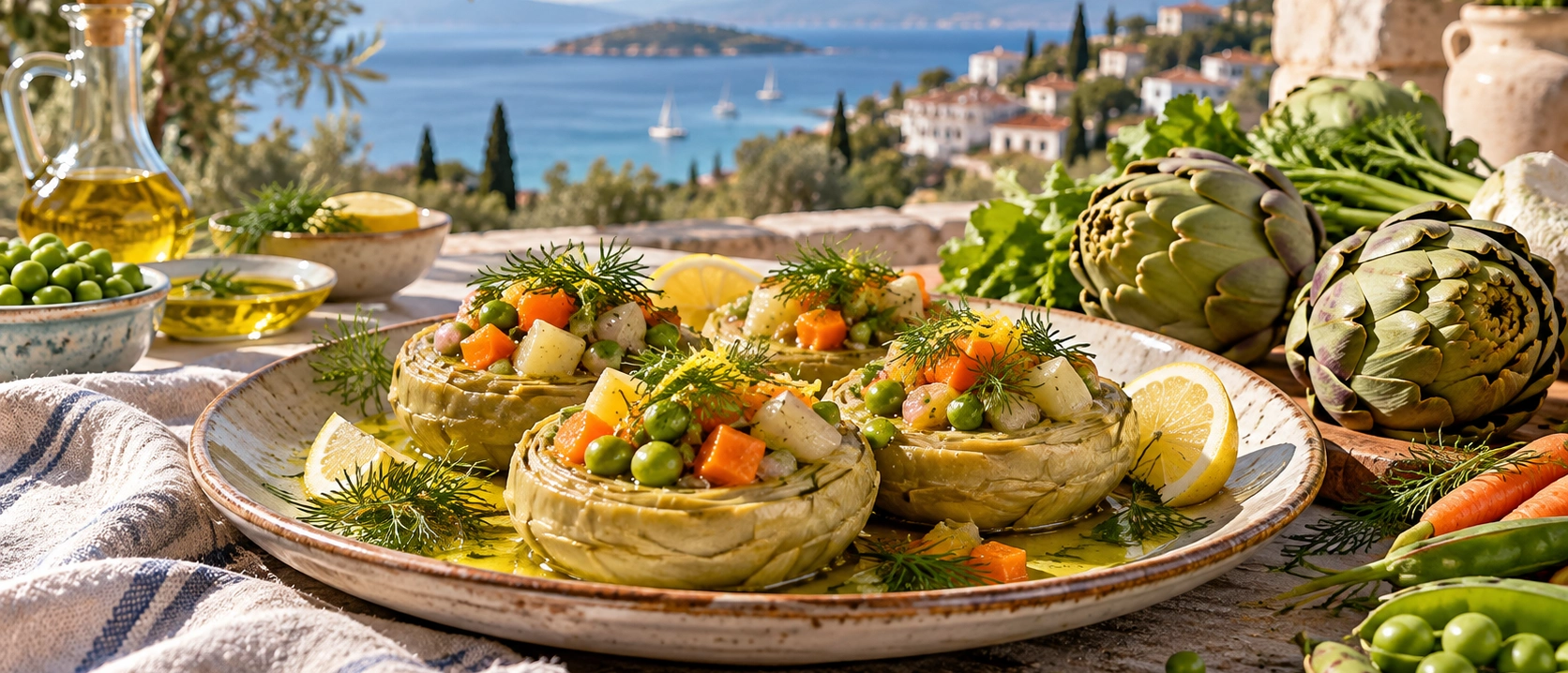
The classic Aegean preparation combines tender artichoke bottoms with olive oil and colourful vegetables.
- Style: Olive-oil dish
- Character: Light and fresh
- Serving: Often cool or room temperature






Few vegetables express the seasonal character of İzmir's cuisine as beautifully as the artichoke — enginar. When spring arrives across the Aegean coast, fresh artichokes begin appearing in markets, home kitchens and restaurant menus throughout İzmir Province.
The vegetable is particularly associated with Urla and the Çeşme Peninsula, where fertile agricultural landscapes, olive groves and a strong tradition of seasonal cooking have made artichokes an important symbol of local gastronomy.
Perhaps the best-known preparation is zeytinyağlı enginar: carefully cleaned artichoke bottoms cooked with olive oil and vegetables such as carrots, potatoes and peas, then usually served cool or at room temperature.
Yet İzmir's artichoke culture reaches much further. Artichokes may be combined with fresh broad beans, dill, peas, rice, herbs or other spring vegetables, stuffed, incorporated into mezes or transformed by contemporary Aegean chefs.
Fresh artichokes are closely associated with the abundant produce of the Aegean spring.
Urla is particularly celebrated for artichoke cultivation and seasonal artichoke cuisine.
Artichokes are one of the defining vegetables of İzmir's zeytinyağlı tradition.
They can be served whole, stuffed, as tender hearts or combined with numerous spring vegetables.
Essential information about one of the Aegean coast's most celebrated seasonal vegetables.
İzmir and especially Urla on Türkiye's western Aegean coast.
Open İzmir on Google MapsArtichoke is known as enginar in Turkish.
Frequently prepared as a zeytinyağlı dish with generous Aegean olive oil.
Fresh artichokes are particularly associated with the spring months.
A vegetable shaped by Mediterranean agriculture, local farming and generations of seasonal cooking.
İzmir lies within one of Türkiye's richest Mediterranean agricultural regions. Its climate supports olives, grapes, citrus fruits, vegetables, edible herbs and a remarkable variety of seasonal produce.
Within this landscape, the artichoke has developed a particularly strong association with İzmir. Fields across the peninsula west of the city — especially around Urla — have helped make enginar one of the region's most recognisable spring ingredients.
Traditional Aegean cooks found numerous ways to use the tender heart of the artichoke while preserving its characteristic flavour. Olive oil became its natural culinary partner, often accompanied by lemon, dill and vegetables harvested during the same season.
Artichokes consequently became part of the large family of zeytinyağlı dishes that define western Türkiye's vegetable-focused table.
They also demonstrate one of the most important principles of Aegean cooking: allowing a seasonal ingredient to remain recognisable rather than covering it beneath heavy sauces or excessive seasoning.
Today artichokes appear in İzmir's home cooking, traditional restaurants, meze displays and some of the region's most creative contemporary kitchens.
From simple olive-oil preparations to elegant spring combinations, artichokes appear in many forms across the Aegean table.
The classic Aegean preparation combines tender artichoke bottoms with olive oil and colourful vegetables.
Artichokes and fresh broad beans create one of the most characteristic combinations of the Aegean spring.
Whole or partially prepared artichokes may be filled with aromatic rice and herbs for an impressive stuffed version.
Cleaned artichoke bottoms create natural edible cups for peas, carrots, potatoes and herbs.
Tender hearts can appear in salads and contemporary mezes alongside herbs, citrus and olive oil.
Contemporary chefs use the region's artichokes in creative dishes while preserving their connection with seasonal produce.
Enginar is the Turkish word for artichoke. The edible artichoke is actually the immature flower bud of a plant belonging to the thistle family.
Beneath its firm outer leaves are tender portions that eventually lead toward the prized artichoke heart. In many İzmir dishes, the artichoke is carefully trimmed until the tender heart or bottom remains.
Tough protective leaves surround the tender interior of the artichoke.
The tender central portion is the most prized part in many Aegean recipes.
A cleaned artichoke bottom provides the familiar round base used in zeytinyağlı enginar.
Properly trimmed tender portions of the stem may also be edible.
Fresh local artichokes are closely connected with the abundance of spring.
Cleaning an artichoke requires removing tougher portions before cooking the tender centre.
A journey into İzmir's artichoke culture naturally leads west from the city toward Urla. This fertile peninsula district has become one of the places most closely identified with the vegetable.
Urla combines favourable growing conditions with a strong agricultural identity, extensive olive cultivation, village traditions and an increasingly celebrated food culture built around local ingredients.
Vegetable cultivation forms an important part of the agricultural landscape surrounding Urla.
The arrival of fresh artichokes marks one of the most distinctive moments in the local food calendar.
Local olive culture gives artichokes their natural partner: high-quality olive oil.
Seasonal produce creates a direct connection between nearby farms and local kitchens.
Artichoke recipes remain part of home-style Aegean culinary knowledge.
Urla's contemporary restaurants continue exploring new expressions of regional ingredients.
Artichokes are one of the clearest reminders that traditional Aegean cooking follows the agricultural calendar.
Although availability can vary according to cultivar, weather and growing conditions, spring is the season most strongly associated with fresh artichokes in İzmir.
The elegant simplicity of an artichoke dish hides a considerable amount of preparation. Before cooking can begin, the vegetable must often be carefully trimmed to expose its tender edible centre.
For many travellers, zeytinyağlı enginar is the essential introduction to İzmir's artichoke culture.
The cleaned artichoke bottom is gently cooked in olive oil, frequently with vegetables such as peas, carrot, potato or onion. Fresh dill often provides the final aromatic note.
The tender heart remains the unmistakable centre of the dish.
Generous olive oil produces the smooth richness characteristic of zeytinyağlı cooking.
Small pieces of carrot bring sweetness and bright colour.
Fresh green peas reinforce the dish's spring character.
Some versions add potato for greater substance and a soft contrasting texture.
Fresh dill is a classic aromatic partner for artichokes and olive oil.
One of the most beautiful seasonal combinations in western Türkiye brings together artichokes and fresh broad beans — iç bakla.
Both ingredients reach the kitchen during spring, making their pairing a natural expression of the local agricultural calendar rather than an arbitrary recipe combination.
The mild artichoke provides the tender foundation of the dish.
Young broad beans introduce a green, slightly earthy spring flavour.
The ingredients are united by the characteristic richness of Aegean olive oil.
Dill contributes one of the most recognisable aromas associated with the combination.
Fresh acidity balances the vegetable sweetness and olive oil.
The dish captures several ingredients naturally available during the same season.
Artichokes can also become the structure for a filling. In enginar dolması, the vegetable is prepared so that seasoned ingredients can be placed within or between its edible portions.
Recipes differ greatly between families and regions, but rice, onion, herbs and olive oil are natural companions in meat-free Aegean versions.
Artichokes have a distinctive yet gentle flavour. Their character is vegetal and subtly earthy, sometimes with a mild sweetness that becomes especially elegant when balanced by lemon, fresh herbs and olive oil.
Fresh artichokes have a refined flavour that can easily be overwhelmed by heavy sauces.
The flavour clearly reflects the plant itself and its Mediterranean character.
A gentle earthy quality adds complexity to the tender heart.
Lemon and herbs can make the finished dish particularly bright.
Good olive oil adds body without hiding the vegetable.
Proper cooking produces a soft heart that still retains enough structure.
Few combinations demonstrate the philosophy of İzmir cuisine as clearly as fresh artichokes and olive oil.
Rather than covering the artichoke, olive oil enriches it. Lemon and herbs then provide enough brightness to keep the finished dish fresh and balanced.
Olive oil contributes fruitiness and richness to the mild vegetable.
Gentle cooking in olive oil helps create a soft and satisfying result.
Lemon and herbs prevent the richness from becoming heavy.
Olive cultivation is fundamental to the agricultural landscape of western Türkiye.
Artichokes belong naturally within the great family of Aegean olive-oil vegetables.
A fresh spring vegetable is paired with one of the region's most important year-round ingredients.
Traditional artichoke dishes tend to use seasoning carefully, allowing the natural flavour of the vegetable to remain recognisable.
One of the most familiar herbs accompanying olive-oil artichoke dishes.
Fresh parsley may add colour and a clean herbal note.
Acidity brightens the finished dish and also helps protect cut artichokes from browning.
Slowly cooked onion provides sweetness and depth.
The defining fat gives the vegetable richness while keeping the preparation distinctly Aegean.
Peas, carrots and broad beans create natural seasonal combinations.
Many of İzmir's best-known artichoke preparations belong to the zeytinyağlı tradition and therefore do not need to arrive at the table piping hot.
They can be enjoyed as part of a long lunch or a larger selection of Aegean vegetable dishes and mezes.
Many of the most characteristic Aegean artichoke recipes rely entirely on vegetables, herbs and olive oil, making them naturally suitable for plant-focused eating.
Individual recipes nevertheless vary, particularly with stuffed dishes or modern restaurant interpretations, so travellers with strict dietary requirements should always confirm the ingredients.
The vegetable itself remains the centre of the traditional dish.
Traditional richness comes from plant-based olive oil rather than butter.
Carrot, peas, potato, onion and broad beans may complete the preparation.
Dill and other herbs add aroma without requiring heavy sauces.
Stuffed or contemporary versions may contain additional ingredients.
Confirm the recipe directly when vegan, vegetarian or allergy requirements are strict.
Enginar becomes even more rewarding when tasted as part of a broader Aegean meal built around vegetables, herbs, olive oil and seasonal produce.
Stuffed zucchini flowers continue the delicate vegetable and olive-oil character of the table.
Broad-bean purée offers a creamy contrast to tender artichoke hearts.
Borlotti beans cooked with olive oil add greater richness and substance.
Boiled or sautéed wild greens dressed with lemon and olive oil provide freshness.
Stuffed vine leaves introduce another classic olive-oil preparation.
Artichokes and vegetable mezes make a natural beginning to a coastal fish meal.
Visiting a local market during artichoke season provides perhaps the clearest explanation of why enginar occupies such a special place in İzmir cuisine.
Stalls may display entire fresh artichokes alongside spring greens, broad beans, peas, lemons, herbs and other ingredients that naturally find their way into the same dishes.
The natural starting point for travellers interested specifically in İzmir's artichoke tradition.
Peninsula markets reveal the close relationship between herbs, vegetables and seasonal Aegean cooking.
Producer culture and nearby farms create a strong connection with seasonal ingredients.
Its famous traditional market reveals the agricultural diversity of inland İzmir Province.
The fertile Küçük Menderes basin produces an extraordinary range of vegetables and local foods.
Neighbourhood markets provide a window into the produce used by everyday city kitchens.
Knowing a few Turkish food terms makes exploring İzmir's seasonal restaurants and meze counters considerably easier.
Rather than searching for only one permanent restaurant dish, look for places where the menu changes according to the season. Freshness is particularly important when discovering İzmir's vegetable cuisine.
The essential destination for travellers particularly interested in İzmir's artichoke culture.
Traditional restaurants around the historic bazaar offer home-style vegetable and olive-oil dishes.
Meze restaurants provide an opportunity to compare artichokes with many other Aegean flavours.
The town's culinary identity is closely connected with seasonal herbs and vegetables.
Artichoke and vegetable mezes complement the peninsula's famous seafood culture.
Local produce and village traditions make the district rewarding for seasonal food exploration.
Because artichokes are usually prepared relatively simply, ingredient quality and careful cooking become immediately noticeable.
Good seasonal vegetables provide the foundation before any seasoning is added.
The heart should be tender without collapsing into an indistinct purée.
The oil should taste pleasant and fruity rather than simply greasy.
Lemon should brighten the vegetable without overwhelming its delicate character.
Dill and other herbs should remain fragrant and clean.
Accompanying peas, beans and vegetables should complement rather than hide the artichoke.
The artichoke experience is particularly rewarding when fresh local vegetables are naturally abundant.
Include Urla if understanding the agricultural story behind the ingredient matters to you.
Seasonal dishes may change daily according to what arrives from producers.
Compare classic zeytinyağlı enginar with broad-bean, stuffed or contemporary interpretations.
Good olive oil should remain an identifiable part of the finished flavour.
Seeing whole artichokes makes the craftsmanship required to clean them much easier to appreciate.
Enginar makes more sense when experienced beside other Aegean vegetables and herbs.
A relaxed lunch is the ideal setting for discovering the rhythm of the Aegean table.
Artichokes reveal several principles that appear repeatedly across the cuisine of İzmir: seasonality, agriculture, olive oil, restraint and respect for vegetables.
Traditional dishes appear when the landscape naturally provides their ingredients.
The final plate remains visibly connected with fields and local producers.
A vegetable can occupy the centre of the culinary experience rather than serving merely as a side dish.
Regional olive cultivation shapes both flavour and cooking technique.
Good ingredients need relatively little interference to become memorable.
Artichokes naturally join a wider collection of dishes designed to be enjoyed together.
A culinary day in İzmir can connect seasonal artichokes with the historic neighbourhoods, markets and waterfront that shape the city's food culture.
Travellers visiting during spring can go beyond simply tasting artichokes and explore the landscape that produces them.
Artichokes can become one part of a much wider culinary journey connecting İzmir's coastline, fertile valleys and traditional market towns.
Begin with Kemeraltı, neighbourhood restaurants, traditional mezes and the historic waterfront.
Explore artichoke country alongside olive groves, vineyards and contemporary Aegean gastronomy.
Discover the Çeşme Peninsula's famous culture of herbs and seasonal vegetables.
Combine vegetable mezes with fresh fish and the flavours of the Aegean Sea.
Experience producer markets, village food traditions and nearby agricultural landscapes.
Travel inland to one of İzmir Province's great traditional agricultural markets.
The importance of enginar reaches beyond a single recipe. Artichokes connect İzmir's contemporary restaurant culture with agriculture, traditional home cooking and the rhythms of the Mediterranean seasons.
Artichokes preserve a visible relationship between the kitchen and the surrounding farmland.
The vegetable has become strongly connected with one of İzmir's most distinctive agricultural districts.
Traditional cooks understand when the vegetable is at its most abundant and rewarding.
Artichokes demonstrate how olive oil shapes the cooking traditions of western Anatolia.
The dish shows the importance Aegean cooking places on vegetables in their own right.
Enginar continues moving between home kitchens, markets and contemporary restaurants.
Artichokes reveal the seasonal vegetable side of İzmir cuisine. Continue exploring the city's remarkable culinary culture with its herbs, stuffed vegetables, breads, street foods and desserts.
Discover delicate kabak çiçeği dolması filled by hand with fragrant rice, herbs and olive oil.
Explore the wider zeytinyağlı tradition of vegetables, beans, stuffed foods and Aegean mezes.
Discover radika, cibez, arapsaçı, şevketi bostan and İzmir's extraordinary green cuisine.
The city's famous layered pastry and one of the defining flavours of an İzmir breakfast.
A crisp sesame-covered bread ring deeply connected with İzmir's street-food tradition.
Distinctive sesame bread transformed into one of the city's most recognisable sandwiches.
Seasoned meatballs cooked with potatoes, peppers and tomato sauce.
A beloved fried syrup dessert connected with neighbourhood celebrations and sharing.
A modern city favourite with a thin pastry shell surrounding a rich chocolate centre.
Exploring artichoke cuisine can easily become part of a wider journey through İzmir's historic districts, archaeological sites, coastal towns and agricultural landscapes.
Explore İzmir's historic commercial heart together with traditional restaurants, cafés and food shops.
Discover the archaeological remains of ancient Smyrna in the centre of modern İzmir.
Experience the region most closely connected with İzmir's celebrated artichoke culture.
Explore historic stone streets together with the herb and vegetable culture of the peninsula.
Combine Aegean seafood with vegetable-rich meze traditions beside the coast.
Discover local producers, markets, coastal villages and seasonal agricultural traditions.
Artichoke is called enginar in Turkish.
Yes. Artichokes are strongly associated with the seasonal vegetable cuisine of İzmir and particularly with the Urla Peninsula.
Urla is the district most closely associated with İzmir's artichoke-growing and culinary traditions.
Fresh artichokes are particularly associated with spring, although the exact beginning and length of the season can vary according to growing conditions and variety.
Zeytinyağlı enginar is an olive-oil artichoke preparation commonly made with cleaned artichoke bottoms and vegetables such as peas, carrot or potato.
Zeytinyağlı literally refers to food prepared with olive oil and describes an important category of Turkish vegetable and legume dishes.
It is a seasonal preparation combining artichokes with fresh shelled broad beans, usually together with olive oil and herbs such as dill.
Enginar dolması is stuffed artichoke. Preparation and filling vary, but rice, herbs, onion and olive oil may appear in traditional meat-free versions.
Artichokes have a delicate vegetable flavour with subtly earthy and slightly sweet qualities. Olive oil, lemon and herbs complement them particularly well.
Many traditional olive-oil artichoke dishes are naturally vegetarian because they are prepared primarily with vegetables, herbs and olive oil.
Many zeytinyağlı versions can be entirely plant based. Individual restaurant recipes should still be confirmed when strict dietary requirements matter.
Olive-oil artichoke dishes are frequently enjoyed cool or at room temperature, although serving styles vary according to the preparation.
Lemon provides fresh acidity and can also help reduce the rapid browning that occurs when cleaned artichokes are exposed to air.
Dill is one of the most characteristic companions, while parsley and other fresh herbs may also appear depending on the recipe.
Recipes vary, but peas, carrots, potatoes, onion and fresh broad beans are among the vegetables commonly paired with artichokes.
Look for seasonal home-style restaurants, meze restaurants and produce-focused kitchens in İzmir city, Urla, Alaçatı, Çeşme and surrounding districts.
Some forms may be available outside the main season, but the most authentic experience of freshly harvested local artichokes is closely linked with spring.
Try them with stuffed zucchini flowers, Aegean herbs, fava, barbunya pilaki, stuffed vine leaves and other olive-oil mezes.
Yes. Urla combines agriculture, olive oil, vineyards, seasonal produce and both traditional and contemporary approaches to Aegean cuisine.
Try boyoz, gevrek, kumru, İzmir köfte, kokoreç, lokma, İzmir Bombası, stuffed zucchini flowers, Aegean herbs and the region's many olive-oil dishes.
Artichokes are exceptionally photogenic, from the sculptural shape of the whole vegetable to the colourful arrangement of peas, carrots, broad beans, dill and golden olive oil on the finished plate.
Photograph fresh artichokes before cleaning to reveal the extraordinary natural architecture of the vegetable.
Seasonal market stalls create a strong visual connection between the dish and İzmir's agriculture.
Artichoke bottoms arranged before cooking show the transformation required in the kitchen.
Colourful peas, carrots and dill make classic olive-oil artichokes especially attractive.
The combination of pale artichoke hearts and bright green broad beans beautifully communicates spring.
Photograph enginar beside several vegetable mezes to place the dish within its wider culinary context.
When photographing farmers, market vendors, cooks or restaurant staff, always ask permission before taking close portraits. The growers and cooks preserving İzmir's artichoke traditions are an important part of the story.
Discover İzmir through its artichokes, seasonal vegetables, traditional markets, olive oil, historic neighbourhoods and extraordinary Aegean landscapes.
Custom-designed private touring with professional guiding, comfortable transportation and flexible timing for travellers who want to understand the connection between İzmir's food, agriculture, history and culture.
Explore markets, seasonal produce and traditional Aegean dishes while discovering artichokes, herbs, olive oil and the agricultural traditions behind İzmir's cuisine.
Request This Tour
Combine Konak, Kemeraltı, ancient Smyrna and İzmir's waterfront with traditional markets, seasonal artichokes and the vegetable-rich cuisine of the Aegean.
Design Your ExperienceExtend your culinary journey through İzmir Province with Urla's agricultural landscapes, village markets, olive groves, coastal towns and regional food traditions.

Combine one of Türkiye's greatest archaeological sites with İzmir's markets, coastal landscapes and distinctive Aegean culinary traditions.
Request This Tour
Create a personalised route through Urla and İzmir combining artichokes, local markets, olive groves, herbs, seasonal vegetables and the beautiful landscapes of the Aegean.
Design Your Journey