Whole Eggplant
Traditional Bergama Çığırtması keeps the eggplant whole throughout preparation rather than cutting it into ordinary pieces.
- Form: Whole
- Preferred: Thin and tender
- Colour: Mottled or purple






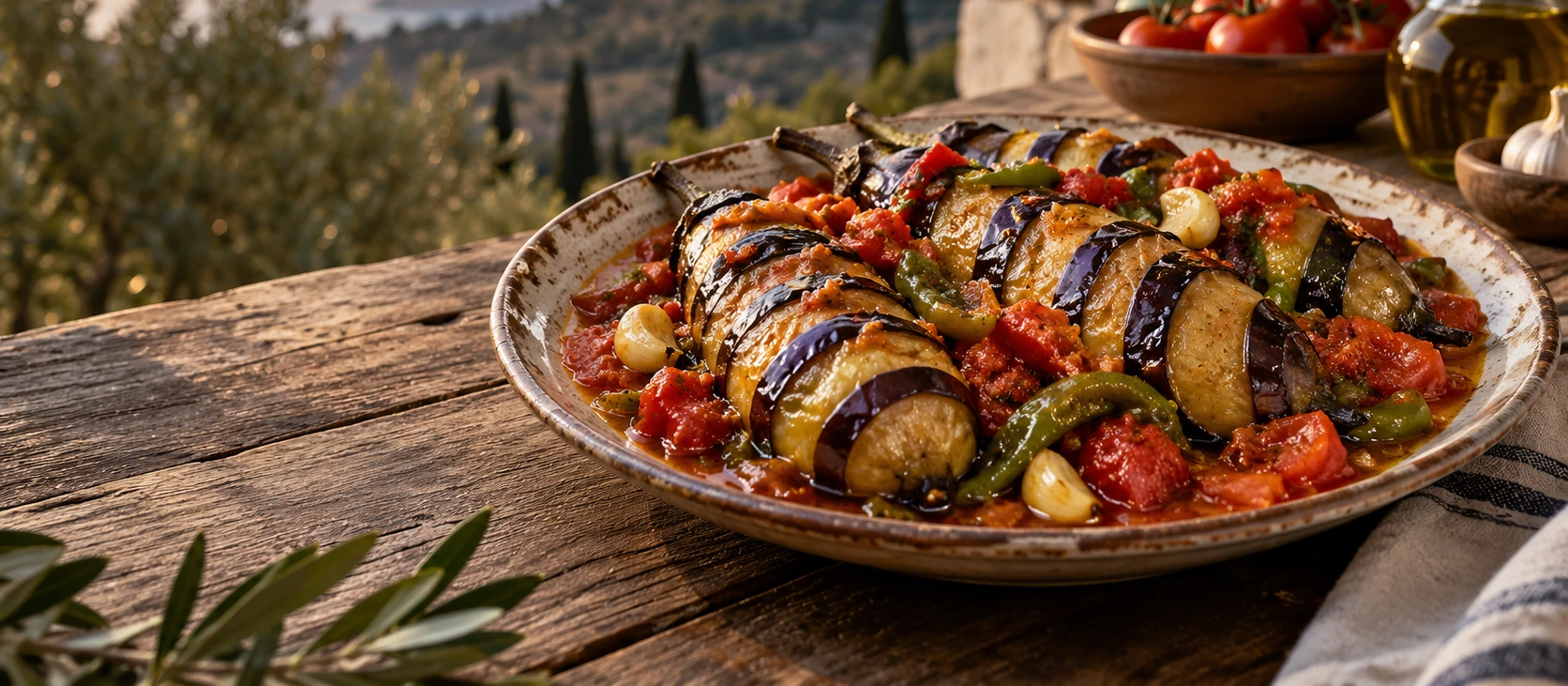
Bergama Çığırtması is one of the best-known traditional dishes of Bergama in northern İzmir Province. At first glance it may resemble a simple Aegean eggplant preparation, but its identity comes from a highly distinctive method: the eggplants are kept whole, peeled in lengthwise stripes and scored continuously in a shallow spiral before being fried in olive oil.
The cuts help the eggplant cook evenly and absorb the garlicky tomato mixture added later. Peppers are fried separately, garlic and tomato are briefly cooked in the same pan, and everything is brought together for a final cooking stage either in the oven or on the stovetop.
The name “Çığırtma” is traditionally associated with the sound the eggplants make when they meet the hot pan. The dish can be served warm or cold, making it a particularly characteristic expression of Bergama’s vegetable-rich, olive-oil-based culinary culture.
The eggplants remain whole rather than being diced, sliced or mashed.
A continuous shallow spiral cut is the most distinctive preparation technique.
Eggplant and peppers are traditionally fried in olive oil before the final cooking stage.
Bergama Çığırtması received geographical-indication registration in Türkiye in 2024.
Essential information about one of Bergama’s most recognisable traditional dishes.
Bergama district in İzmir Province, western Türkiye.
Open Bergama on Google MapsWhole thin eggplants, traditionally mottled or purple varieties.
Striped peeling followed by shallow spiral scoring from one end to the other.
Registered in Türkiye as a Mahreç İşareti geographical indication in 2024.
A humble eggplant dish transformed into one of the culinary signatures of historic Bergama.
Bergama stands in the fertile Bakırçay Basin of northern İzmir Province, where agriculture, olive cultivation, livestock, village markets and seasonal cooking have shaped everyday food culture for generations.
Within this landscape, Bergama Çığırtması became one of the district’s most strongly identified local dishes. Its ingredients are familiar throughout the Aegean—eggplant, pepper, tomato, garlic and olive oil—but Bergama developed a preparation method distinctive enough to give the dish its own local identity.
The most important feature is the treatment of the eggplant. Instead of cutting it into ordinary rounds or cubes, the whole eggplant is peeled in alternating lengthwise strips and then turned continuously while shallow cuts are made in a spiral from one end to the other.
This technique allows the eggplant to soften evenly while creating channels that take in the garlic-and-tomato mixture added later. The result is a dish that keeps the visual form of the whole eggplant while becoming tender and richly flavoured inside.
Local tradition also connects the name Çığırtma with the lively sound made when the prepared eggplants are placed into the hot oil. The name therefore captures not only the finished dish but also the moment of cooking itself.
The dish has long been associated with Bergama’s home kitchens and local restaurants and is regularly presented as one of the foods visitors should experience alongside other regional specialities such as Bergama Köftesi and Bergama Tulum Peyniri.
Its local reputation was formally recognised when Bergama Çığırtması received geographical-indication registration in 2024, documenting the preparation technique, ingredients, cooking method and connection with Bergama.
Whole eggplants, spiral scoring, olive-oil frying and a garlicky tomato finish define the Bergama style.
Traditional Bergama Çığırtması keeps the eggplant whole throughout preparation rather than cutting it into ordinary pieces.
The eggplant skin is removed in alternating lengthwise strips, leaving part of the skin intact.
The peeled eggplant is rotated while a shallow continuous cut is made from one end to the other.
The prepared whole eggplants are fried in hot olive oil, turning occasionally so they cook evenly.
Peppers are prepared separately in the same culinary sequence and combined with the eggplants before the final cooking stage.
Garlic is a central flavouring and is briefly cooked before the tomato is added to the pan.
Tomato is cooked with garlic and then spooned over the fried eggplants before the final cooking stage.
Unlike many fried dishes, Bergama Çığırtması is traditionally suitable for serving either warm or cold.
Bergama Çığırtması is a traditional vegetable dish from Bergama prepared with whole thin eggplants, peppers, garlic, tomato, salt and olive oil. The eggplants are partly peeled, shallow-scored in a spiral, rested briefly in salted water, fried and then finished with the other vegetables and tomato mixture.
What makes the dish especially distinctive is not simply the ingredient list but the spiral-cut cooking technique. The cuts help the whole eggplant cook more evenly and absorb the garlicky tomato juices without losing its characteristic shape.
The dish has a strong culinary association with the Bergama district of İzmir Province.
Eggplant, pepper, tomato and garlic create the heart of the traditional preparation.
The eggplant remains whole rather than being cut into ordinary slices or cubes.
A continuous shallow spiral cut is made from one end of the eggplant to the other.
The eggplants and peppers are traditionally cooked in olive oil before final assembly.
The completed dish may be served warm or allowed to cool before eating.
Bergama Çığırtması is officially registered in Türkiye as a geographical indication, recognising its established reputation, distinctive preparation method and strong connection with Bergama.
The registration is particularly valuable for travellers because it documents the techniques that distinguish the Bergama version: keeping the eggplants whole, peeling them in stripes, making the shallow spiral cuts, frying in olive oil and completing the dish with peppers, garlic and tomato.
The registered specification also states that the production stages associated with the protected name should take place within the Bergama geographical boundary.
The dish relies on a small group of ingredients whose flavour is transformed by careful cutting, frying and final cooking.
The official preparation for roughly five servings specifies five thin long eggplants or ten thin short eggplants, about 500 g of peppers, 10–12 cloves of garlic and 125 ml of olive oil. Restaurant and household quantities naturally vary according to the size of the vegetables and the number of diners.
The shallow spiral scoring is the most important identifying technique of Bergama Çığırtması. It is functional as well as visual.
The cuts allow heat to reach the flesh more evenly while the eggplant remains whole.
The shallow openings help the eggplant absorb the garlic-and-tomato juices during the final cooking stage.
The technique softens the vegetable without requiring it to be chopped into smaller pieces.
The spiral pattern helps distinguish an authentic Bergama-style preparation from ordinary fried eggplant.
The knife marks should open the flesh without cutting the eggplant into separate sections.
The eggplant is rotated steadily while the cut travels from one end to the other.
Traditional preparation requires more technique than the simple ingredient list might suggest.
Because the eggplants remain whole, size and tenderness matter more than they do in recipes where the vegetable is diced or mashed.
Slender vegetables cook more evenly and are easier to handle as whole pieces.
Young, soft eggplants are better suited to the traditional spiral-scored preparation.
Kırçıllı, or mottled, eggplants are specifically associated with the registered preparation.
Ordinary purple eggplants may also be used when they are appropriately thin and tender.
A straight or gently curved eggplant is easier to rotate while making the spiral cut.
Summer and early-autumn produce can offer especially good flavour for this vegetable-focused dish.
After peeling and spiral scoring, the eggplants are traditionally rested briefly in salted water before frying.
The registered preparation describes a short resting period rather than a long soak.
The eggplants enter the salted water only after the striped peeling and spiral scoring are complete.
Excess salted water should be removed before the eggplants reach the hot oil.
Drying reduces dangerous splattering when wet vegetables are added to hot olive oil.
The eggplants stay intact throughout the process despite the shallow cuts in their flesh.
Once drained and dry, they can be fried while being turned periodically for even cooking.
Olive oil is central to the registered method and helps place the dish firmly within the wider Aegean cooking tradition.
After the eggplants and peppers have been fried, the same pan becomes the base for the aromatic tomato mixture that completes the dish.
The garlic is briefly turned in the pan rather than heavily browned.
Sliced tomato is added after the garlic and cooked until it begins to soften.
The official method describes roughly five minutes of pan cooking for the tomato stage.
Salt allows the vegetables, garlic and olive oil to remain the dominant flavours.
The finished tomato mixture is added directly over the fried vegetables.
The spiral openings help the garlicky tomato juices move into the tender eggplant flesh.
Once the fried eggplants, peppers and tomato mixture are assembled, Bergama Çığırtması receives a final cooking stage that brings the flavours together.
Bergama Çığırtması is a generous vegetable dish whose appeal comes from presenting the soft whole eggplants together with peppers and their intensely flavoured tomato-and-garlic juices.
The recognisable whole spiral-cut form should remain visible on the plate.
The fried peppers are served as part of the same dish rather than as a separate garnish.
Soft tomato and garlic settle over and around the eggplants after the final cooking stage.
The savoury cooking juices are part of the pleasure of the dish and should not be discarded.
Served soon after cooking, the garlic and tomato aromas are especially pronounced.
After cooling, the dish becomes an excellent example of the Aegean love of olive-oil vegetables.
Bergama Çığırtması combines soft eggplant, sweet pepper, fresh tomato, assertive garlic and the rounded richness of olive oil.
Frying and final cooking give the whole eggplant a soft, almost creamy interior.
The generous use of garlic is one of the most immediately recognisable flavours.
Fresh tomato brings acidity, moisture and natural sweetness to the fried vegetables.
Fried pepper adds another layer of sweetness and savoury depth.
The cooking method gives the vegetables a distinctly Aegean richness without relying on meat.
The dish depends more on vegetables, garlic and cooking technique than on heavy spice.
Bergama Çığırtması is sometimes visually compared with other Turkish fried-vegetable dishes, but its structure and technique are quite different from ordinary şakşuka.
The most meaningful place to experience the dish is naturally Bergama itself, where çığırtma remains part of the district’s recognised local food identity.
Traditional restaurants and local eateries in the centre are the natural starting point for trying the dish.
Use the local name rather than simply asking for fried eggplant if you want the Bergama-style preparation.
The recognisable whole form is one of the easiest visual clues to the traditional style.
The shallow spiral scoring is a more important sign of authenticity than elaborate presentation.
A meal can also include Bergama Köftesi, Bergama Tulum Peyniri or other local specialities.
As an eggplant-based dish, it can be especially appealing when summer vegetables are at their best.
The registered traditional preparation is entirely vegetable based, but restaurant additions and kitchen practices can vary.
The protected preparation is based on eggplant, pepper, tomato, garlic, olive oil and salt.
No animal-derived ingredient is required in the registered preparation itself.
The registered recipe does not require flour, breadcrumbs or another wheat-based component.
Some restaurants or diners may serve yoghurt separately, which changes the vegan status of the plate.
Travellers with serious allergies should ask whether the same oil or equipment is used for other foods.
Restaurant versions can differ, so dietary requirements should always be checked directly.
The dish is most meaningful when eaten in the district whose culinary identity it represents.
The whole shape and spiral scoring tell you more about the preparation than decorative plating.
Çığırtma is fundamentally a vegetable speciality despite being filling and richly flavoured.
Warm service emphasises the fragrance of garlic, tomato and freshly cooked olive oil.
Cold or room-temperature service reveals its connection with the wider Aegean olive-oil tradition.
The tomato-and-olive-oil juices are too good to leave behind.
A çığırtma lunch fits naturally between visits to Bergama’s archaeological and historic sites.
Bergama Köftesi, tulum cheese and Kozak pine-nut traditions reveal another side of the district.
Bergama’s cuisine reflects the agricultural landscape of the Bakırçay Basin, the pastoral traditions of nearby uplands and the olive-growing culture of the northern Aegean.
Çığırtma belongs naturally within this world. It transforms familiar summer vegetables into a dish whose identity comes from local technique rather than expensive ingredients.
A separate protected local speciality and one of the district’s best-known meat dishes.
A regional cheese tradition connected with the pastoral culture of Bergama and the Kozak area.
The nearby Kozak landscape is famous for pine-nut production and distinctive local food traditions.
A local tea tradition in which pine nuts may be served with or added to tea.
Olive cultivation gives vegetable dishes such as çığırtma an especially natural place on the regional table.
Fresh vegetables, dairy products and local produce remain central to everyday food culture in the district.
Few towns in western Türkiye combine archaeology, living urban heritage and regional food as naturally as Bergama. A çığırtma lunch fits beautifully into a full cultural day.
One of the pleasures of eating Bergama Çığırtması in its home town is the extraordinary historical setting around it. Modern Bergama grew beneath ancient Pergamon, whose multi-layered cultural landscape is recognised on the UNESCO World Heritage List.
The ancient Acropolis rises above the Bakırçay Plain, while the wider heritage landscape includes the Asklepion, historic urban fabric, monuments from later periods and other archaeological components around the town.
Explore the dramatic hilltop capital of the Hellenistic Attalid dynasty.
Visit one of antiquity’s most famous centres of healing and medicine.
Discover the monumental Roman complex that later acquired important Christian associations.
Walk through Bergama’s later Ottoman-era streets and traditional urban quarters.
Use the midday break to experience the district through food rather than sightseeing alone.
Bergama is especially rewarding when archaeology, living culture and regional cuisine are explored together.
Bergama Çığırtması demonstrates how a very small number of everyday ingredients can become a powerful regional signature when technique, memory and place come together.
The dish is one of the foods most consistently associated with Bergama.
The spiral-scoring method gives the recipe an identity far beyond ordinary fried eggplant.
Eggplant, pepper, tomato, garlic and olive oil express the vegetable-rich cuisine of western Türkiye.
The dish represents the value of household culinary knowledge as much as restaurant tradition.
Çığırtma is promoted as one of the characteristic tastes visitors should seek out in Bergama.
Geographical-indication registration formally documents the link between the dish and Bergama.
Çığırtma may be Bergama’s best-known vegetable speciality, but the district has a much broader culinary identity shaped by farming, animal husbandry, olive cultivation and the Kozak highlands.
A protected local meatball speciality and one of the district’s most recognisable restaurant dishes.
A geographically registered regional cheese associated with Bergama’s pastoral traditions.
Protected pine nuts from the Kozak region, prized for their size and quality.
A local sweet tradition using the pine nuts of the nearby Kozak landscape.
A distinctive local tea experience connected with roasted pine nuts.
Bergama’s markets and agricultural surroundings support a strong tradition of vegetable-based cooking.
Bergama Çığırtması represents northern İzmir’s vegetable-rich food culture, while the wider province offers an extraordinary range of pastries, meat dishes, street foods and regional specialities.
Neighbouring Tire’s famous slender köfte, traditionally cooked on skewers and finished in butter.
Long cylindrical meatballs made with beef and semolina, grilled over charcoal and served with seasoned bread.
Seasoned meatballs cooked with potatoes, peppers and tomato sauce.
The city’s celebrated layered pastry and one of the defining flavours of an İzmir breakfast.
A particularly crisp sesame-coated bread ring associated with İzmir’s morning food culture.
Distinctive sesame-covered bread transformed into one of İzmir’s best-known sandwiches.
İzmir’s finely chopped interpretation of Türkiye’s famous charcoal-grilled offal speciality.
A distinctive cold preparation of cooked lamb-head meats with vegetables and seasoning.
Bergama is one of the easiest places in the Aegean to combine regional food with major archaeological sites and a living historic town.
Explore monumental remains high above the Bakırçay Plain and some of the ancient city’s most dramatic architecture.
Visit the renowned ancient healing sanctuary associated with medicine, ritual and therapy.
Discover one of Bergama’s most imposing Roman monuments within the modern town.
See archaeological finds that help place Pergamon and the wider region into historical context.
Walk through traditional neighbourhoods, old commercial areas and the multi-layered urban fabric below the Acropolis.
Extend the journey into a rural landscape of pine forests, villages and celebrated pine-nut production.
Bergama Çığırtması is a traditional Bergama dish made from whole thin eggplants, peppers, garlic, tomato, olive oil and salt, using a distinctive spiral-scoring technique before frying.
It is associated specifically with the Bergama district of İzmir Province in western Türkiye.
Yes. Bergama Çığırtması is registered in Türkiye as a Mahreç İşareti geographical indication.
Its geographical-indication registration date is 9 May 2024 under registration number 1588.
The geographical indication was registered by the Bergama Chamber of Commerce.
The traditional explanation is that the name comes from the sound the eggplants make when they are placed into the hot pan.
Thin, tender mottled or purple eggplants are preferred for the registered preparation.
No. One of the defining features is that the eggplants remain whole while being partly peeled and shallow-scored in a spiral.
The spiral scoring helps the whole eggplant cook evenly and absorb the garlic-and-tomato mixture during the final cooking stage.
Yes. The eggplants and peppers are traditionally fried in olive oil before being combined with the tomato and garlic mixture.
Yes. Garlic is a central ingredient in the traditional registered preparation.
Yes. Tomato is cooked with garlic and added over the fried vegetables before the final cooking stage.
Not necessarily. The traditional identity comes from eggplant, pepper, garlic, tomato and olive oil rather than from hot spices.
Yes. The registered method allows the assembled dish to be finished in an approximately 200°C oven for around 20–25 minutes.
Yes. A covered stovetop finish of roughly 7–8 minutes is also described in the registered method.
Both are traditional options. It may be served warm or allowed to cool before eating.
Yes. The registered traditional preparation contains no meat.
The registered preparation is vegan because it uses vegetables, olive oil and salt. Restaurant accompaniments such as yoghurt should be checked separately.
The registered recipe contains no wheat ingredient, but anyone with coeliac disease or a serious allergy should still ask about kitchen cross-contact.
No. Şakşuka usually uses chopped fried vegetables, while Bergama Çığırtması is defined by whole eggplants that are striped and shallow-scored in a spiral.
Bergama itself provides the most meaningful experience, especially at local restaurants that feature regional Bergama dishes.
Bergama Köftesi, Bergama Tulum Peyniri, Kozak pine-nut products and other regional specialities are worth exploring alongside çığırtma.
The Pergamon Acropolis, Asklepion, Red Basilica, Bergama Museum and the historic streets of the town can all be combined with a local food experience.
For travellers interested in regional Turkish food, it is a particularly good example of how local technique can transform simple seasonal vegetables into a protected culinary identity.
Whole glossy eggplants, visible spiral cuts, green peppers, red tomato and golden olive-oil juices make Bergama Çığırtması especially attractive for food photography.
Frame the dish so viewers immediately understand that the eggplants are cooked whole.
A close angle can reveal the shallow cuts that define the Bergama technique.
Red tomato provides a strong natural contrast against the dark eggplant skin.
Green peppers add shape and colour while showing the complete traditional dish.
A lower angle can highlight the olive-oil and tomato juices gathered around the vegetables.
A traditional restaurant table or historic-town setting gives the image a stronger regional sense of place.
When photographing inside local restaurants, avoid disturbing other diners and always ask permission before clearly photographing staff or customers.
Discover Bergama Çığırtması as part of a private journey through Pergamon, the historic town, local food traditions and the landscapes of the Bakırçay region.
Custom-designed private touring with professional guiding, comfortable transportation and flexible timing for travellers who want to combine archaeology with the living culture and cuisine of Bergama.
Explore Bergama’s historic centre and regional food culture before enjoying traditional Bergama Çığırtması and other local specialities.
Request This Tour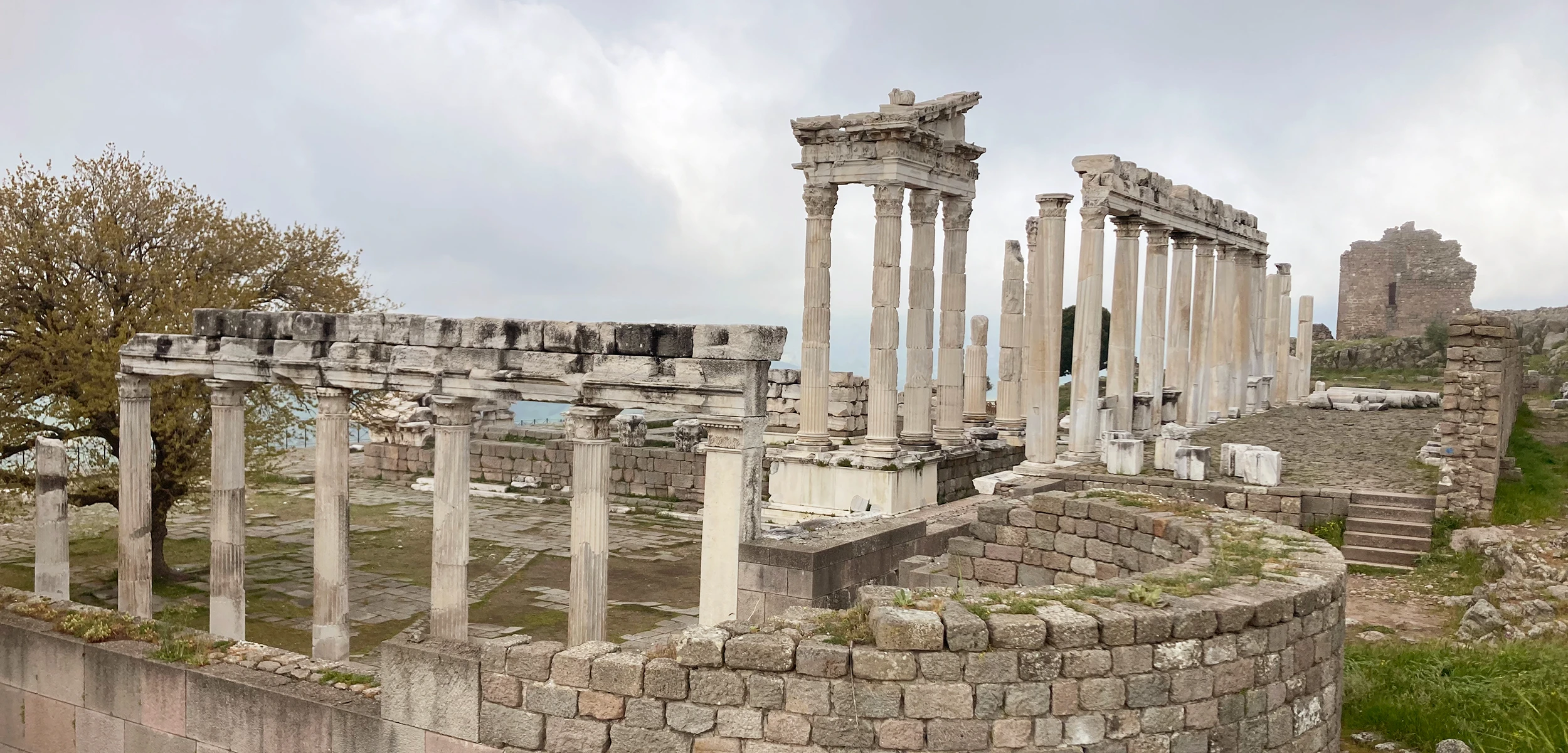
Combine the Acropolis, Asklepion and the historic town with a relaxed local lunch featuring the characteristic flavours of Bergama.
Design Your ExperienceCombine Bergama with the Bakırçay region, Kozak Plateau and the archaeological and culinary landscapes of northern İzmir Province.
Explore the Acropolis, Asklepion and the ancient city with a professional guide, with time for a regional Bergama lunch.
Request This Tour
Create a personalised route combining Bergama, local foods, traditional landscapes and the wider culinary culture of İzmir Province.
Design Your Journey