Beef-Based Köfte
The traditional registered preparation is based on beef, preferably from cattle raised in Ödemiş and the surrounding region.
- Base: Beef
- Texture: Firm and cohesive
- Character: Savoury and grilled






Ödemiş Köftesi is one of the defining regional foods of inland İzmir Province and one of the dishes most closely associated with the historic town of Ödemiş. Its long cylindrical form may appear simple, but the traditional preparation depends on a distinctive mixture of beef, semolina and carefully measured spices.
After thorough mixing, the köfte mixture is shaped into long cylinders and rested for several hours under refrigeration. The meatballs are then cooked over wood charcoal, developing a browned exterior and a gently smoky aroma.
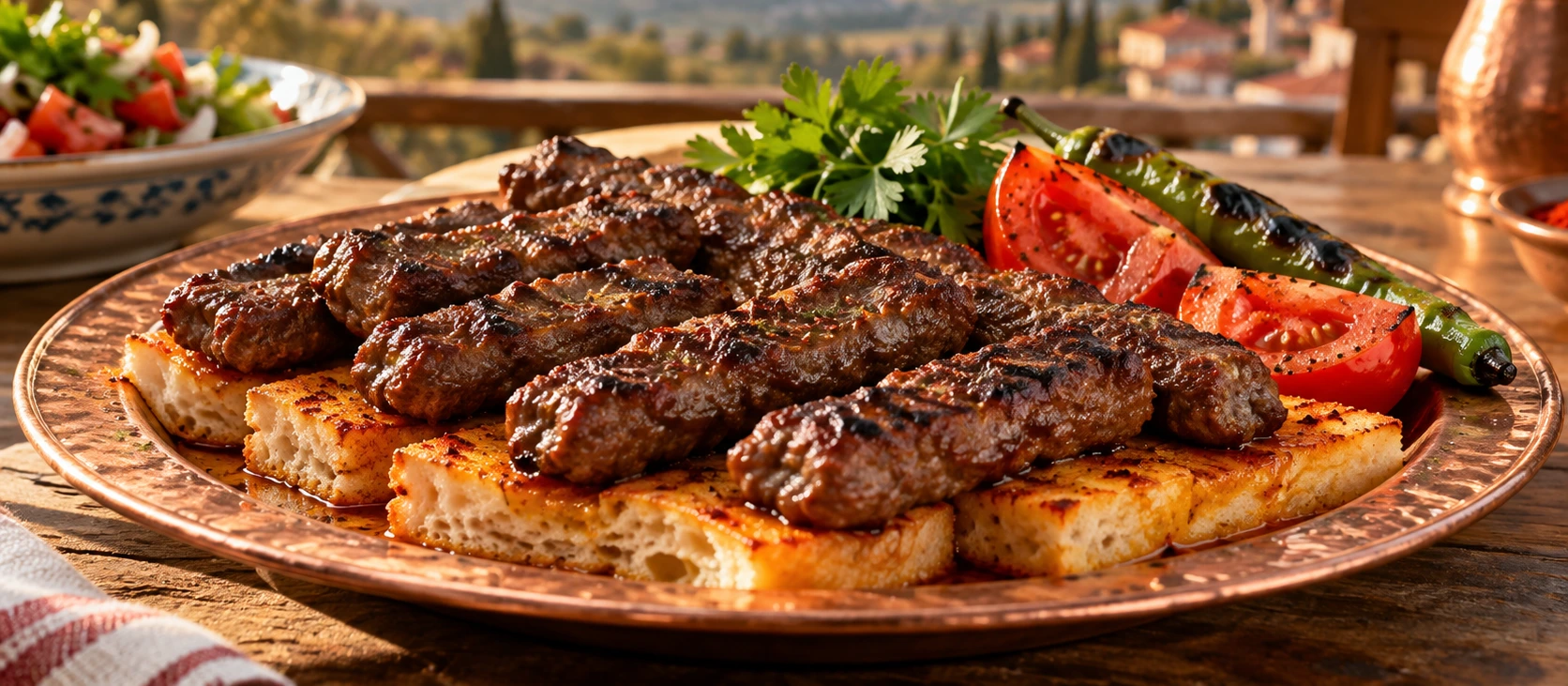
The serving style is just as important as the köfte itself. Bread is traditionally dipped in melted butter flavoured with sweet red pepper and placed beneath the meatballs. Tomato, grilled pepper and parsley may complete the plate, traditionally presented on a tinned copper dish.
Semolina is one of the defining ingredients that distinguishes Ödemiş Köftesi from many other Turkish meatballs.
The long cylindrical köfte are traditionally cooked over a wood-charcoal fire.
Bread dipped in butter flavoured with sweet red pepper forms an essential part of the traditional plate.
Ödemiş Köftesi received geographical-indication registration in Türkiye in 2021.
Essential information about one of the most celebrated traditional foods of Ödemiş.
Ödemiş district in İzmir Province, western Türkiye.
Open Ödemiş on Google MapsBeef and semolina seasoned traditionally with salt, cumin, black pepper and thyme.
Long cylindrical köfte rested under refrigeration and grilled over wood charcoal.
Registered in Türkiye as a Mahreç İşareti geographical indication in 2021.
A regional meatball tradition shaped by migration, craftsmanship and the food culture of the Küçük Menderes Basin.
Ödemiş lies in the fertile Küçük Menderes Basin east of İzmir, an agricultural region historically associated with livestock, dairy products, vegetables, potatoes, grains, markets and rural food traditions.
Within this culinary landscape, Ödemiş Köftesi developed into one of the town’s most recognisable foods. Local historical accounts connect the beginnings of the speciality with migrant culinary traditions arriving in Ödemiş from the Balkans.
A historical account published by the Ödemiş Chamber of Commerce associates the early tradition with a kebab master remembered as Kebapçı Hafız, who came to Ödemiş from Bulgaria and introduced his preparation to local diners around the Küçük Cami area.
Over generations, local kebab and köfte masters developed and preserved the distinctive preparation. The use of semolina, elongated cylindrical shape, resting period, charcoal grilling and characteristic buttered bread became identifying features of the Ödemiş style.
Rather than being served simply as grilled meat, the finished köfte became part of a complete plate. Bread is dipped in melted butter seasoned with mild red pepper, while tomato, grilled pepper and parsley may accompany the meat.
The dish became sufficiently associated with Ödemiş that its reputation extended beyond the district, particularly throughout İzmir Province.
This relationship was formally recognised when Ödemiş Köftesi received geographical-indication registration in 2021, documenting its ingredients, preparation, shape, resting, grilling and traditional presentation.
Semolina, careful mixing, long resting, charcoal grilling and buttered bread create its distinctive regional identity.
The traditional registered preparation is based on beef, preferably from cattle raised in Ödemiş and the surrounding region.
The use of semolina is one of the most important characteristics distinguishing Ödemiş Köftesi from many other regional meatballs.
The registered recipe combines restrained quantities of familiar Turkish köfte spices.
Before cooking, Ödemiş Köftesi is characteristically formed into narrow cylindrical pieces approximately 14–15 cm long.
After shaping, the köfte are traditionally rested under refrigeration before grilling.
The rested köfte are cooked over a traditional charcoal fire rather than simply fried in an ordinary pan.
Bread dipped in melted butter flavoured with mild red pepper is one of the defining components of the traditional serving style.
Traditional descriptions specifically associate Ödemiş Köftesi with service on a kalaylanmış, or tinned, copper plate.
Ödemiş Köftesi is a traditional regional meatball originating in Ödemiş, a historic agricultural town in İzmir Province. It consists of seasoned beef mixed with semolina, formed into long cylindrical pieces, rested and grilled over charcoal.
What makes it particularly distinctive is that the köfte is only one element of the complete traditional presentation. Buttered bread flavoured with mild red pepper forms the base of the plate, while grilled or butter-cooked vegetables may accompany the meat.
The dish has a strong historical and cultural association with the district of Ödemiş.
Semolina forms a defining component of the traditional meat mixture.
The mixture is formed into long narrow pieces rather than round or flattened meatballs.
The shaped köfte traditionally rest for approximately 8–12 hours under refrigeration.
The meatballs are cooked over a wood-charcoal grill at moderate heat.
Buttered red-pepper bread and traditional accompaniments complete the dish.
Ödemiş Köftesi is officially registered in Türkiye as a geographical indication, recognising its established reputation, preparation method and connection with the district of Ödemiş.
For food-loving travellers, the registration provides an especially useful reference because it documents not only the ingredients but also the shape, resting temperature, grilling method and traditional service of genuine Ödemiş Köftesi.
The geographical-indication specification documents a particularly distinctive mixture in which semolina plays a central role alongside the beef.
The registered specification lists precise production quantities for commercial preparation. Restaurant and home interpretations may vary, but semolina remains one of the principal identifying characteristics of the authentic Ödemiş tradition.
Many Turkish meatballs use bread, breadcrumbs, onion or other ingredients to influence texture. Ödemiş Köftesi is immediately recognisable for its traditional use of semolina.
The official geographical-indication description specifically identifies semolina as a characteristic feature of the dish.
Thorough mixing integrates the semolina into the meat until it is no longer visibly separate.
The mixture is worked carefully so that the beef and semolina become homogeneous.
The long refrigerated resting period helps the shaped köfte develop its characteristic consistency.
The registered recipe does not depend on the ordinary breadcrumb mixture familiar from many home-style meatballs.
Semolina has become one of the easiest ways to distinguish Ödemiş Köftesi from neighbouring köfte traditions.
The traditional production method involves considerably more than simply shaping seasoned minced meat and placing it on a grill.
Shape is not merely decorative. The official description specifically defines Ödemiş Köftesi as a long cylindrical meatball.
Ödemiş Köftesi is noticeably more elongated than the round or flattened forms found in many Turkish meatball dishes.
The registered preparation specifies a raw length of approximately 14–15 centimetres.
As moisture is lost during grilling, the finished köfte becomes shorter.
The cylindrical form helps create relatively even cooking along the length of each piece.
Several narrow köfte arranged over bread create the immediately recognisable Ödemiş presentation.
The registered serving description specifies seven pieces of köfte in a traditional portion.
One of the easily overlooked characteristics of authentic Ödemiş Köftesi is the long resting period between shaping and grilling.
The cylindrical meatballs are arranged on trays before being transferred into refrigeration.
The registered method specifies a controlled cold environment rather than room-temperature resting.
The köfte traditionally remain refrigerated for approximately eight to twelve hours.
The resting period allows the mixture to become firmer and more cohesive before grilling.
Resting complements the earlier mixing stage in which the semolina becomes fully incorporated into the meat.
The resting conditions are documented as part of the registered production process.
Once rested, the cylindrical köfte are traditionally cooked over a grill fired with wood charcoal.
For an authentic Ödemiş Köftesi plate, the bread deserves almost as much attention as the meatballs themselves.
Traditional preparation uses melted butter mixed with mild red pepper. Rectangular pieces of bread are dipped into this richly flavoured butter and served beneath or beside the grilled köfte.
The bread is traditionally cut into vertical rectangular pieces suitable for arranging beneath the köfte.
Butter provides the rich base for the characteristic bread preparation.
Mild red pepper flavours and colours the butter without making the dish aggressively hot.
The bread absorbs the seasoned butter before reaching the plate.
Once beneath the meat, the bread can absorb additional juices released by the freshly grilled köfte.
Grilled köfte and seasoned buttery bread together create the complete traditional eating experience.
The registered presentation combines grilled meat, richly flavoured bread and optional vegetables to create a plate that is instantly recognisable in Ödemiş.
Although the köfte and buttered bread remain the heart of the dish, several simple accompaniments balance its richness.
Tomato slices may be gently cooked in butter while retaining enough firmness to remain recognisable on the plate.
A whole grilled pepper adds sweet roasted flavour and a classic Turkish charcoal-grill character.
Chopped parsley may be scattered over or beside the finished plate for freshness and colour.
Some local restaurant traditions may accompany the köfte with onion and sumac, adding acidity and freshness.
Some local establishments also serve yoghurt alongside their interpretation of the Ödemiş köfte plate.
Additional bread is useful for enjoying the buttery red-pepper juices left on the plate.
Ödemiş Köftesi combines savoury grilled beef with gentle spice, charcoal aroma and the richness of buttered red-pepper bread.
Beef remains the principal flavour despite the distinctive use of semolina in the mixture.
Cumin, black pepper and thyme create aroma without overwhelming the meat.
The wood-charcoal fire gives the surface a roasted, lightly smoky character.
The seasoned bread provides much of the richness associated with the complete dish.
Mild red pepper in the butter adds colour and flavour rather than aggressive heat.
Tomato, grilled pepper, parsley or onion can balance the richness of the meat and bread.
Ödemiş and Tire are neighbouring districts in the Küçük Menderes region, and both possess famous meatball traditions. Their preparation methods, however, are very different.
Both are excellent examples of how neighbouring Aegean towns developed completely different culinary identities from similar foundations of meat, grilling and local restaurant craftsmanship.
The most meaningful place to experience the dish is naturally Ödemiş itself, where generations of kebab and köfte restaurants have preserved the local tradition.
The central commercial streets contain traditional restaurants where the speciality remains part of everyday local food culture.
Look for long-established establishments where Ödemiş Köftesi is a speciality rather than one item among dozens of unrelated dishes.
A köfte lunch fits naturally into a day exploring Ödemiş’s market, Arasta, museums and surrounding towns.
Combining Ödemiş Köftesi with the enormous Saturday market creates an especially rewarding local experience.
The butter-and-red-pepper bread is an important clue that the restaurant respects the traditional style.
A traditional wood-charcoal grill contributes significantly to the character of the finished köfte.
Ödemiş Köftesi contains several ingredients that travellers with food allergies or dietary restrictions should be aware of.
Traditional Ödemiş Köftesi is beef based and is neither vegetarian nor vegan.
Semolina is produced from wheat and is a defining ingredient of the registered preparation.
The semolina itself contains gluten, and the dish is also traditionally served with bread.
The traditional bread preparation uses butter and therefore contains dairy.
Some establishments may use additional ingredients or side dishes not specified in the registered preparation.
Anyone with a serious allergy should confirm ingredients and kitchen practices directly with the restaurant.
The dish makes the greatest cultural sense when experienced in the town whose name and culinary identity it carries.
The mild red-pepper buttered bread is a defining part of the dish rather than a simple side.
The characteristic texture distinguishes Ödemiş Köftesi from ordinary all-meat or breadcrumb-based meatballs.
The gently smoky aroma reflects the traditional wood-charcoal cooking method.
Simple vegetables provide an excellent fresh contrast to the butter-rich bread.
The köfte and seasoned bread are best enjoyed immediately while the meat is freshly grilled.
Ödemiş’s huge Saturday market turns a köfte lunch into a complete regional food-and-market experience.
Ödemiş is an excellent base for exploring Birgi, Gölcük, Bozdağ and the landscapes of the Küçük Menderes Basin.
Ödemiş stands at the centre of one of western Anatolia’s richest agricultural landscapes. The surrounding Küçük Menderes Basin supports livestock, dairy production, vegetables, potatoes, grains, orchards and a remarkably strong market culture.
Ödemiş Köftesi belongs naturally within this environment. It is a restaurant speciality, but its identity is inseparable from the farming, trading and food traditions surrounding the town.
Discover the town, its markets, museums, Arasta, regional culture and surrounding landscapes.
One of the region’s largest open-air markets fills the town with agricultural produce, clothing, household goods and local life.
The Küçük Menderes Basin is particularly important for livestock and dairy production.
Another geographically recognised product that demonstrates the agricultural identity of the district.
Chickpea-yeast bread provides another fascinating example of Ödemiş’s protected food heritage.
Generations of local kebab and köfte masters have helped preserve the regional meatball tradition.
A traditional köfte lunch can become the centrepiece of a rewarding cultural day through Ödemiş and the surrounding Küçük Menderes region.
For travellers able to choose their visiting day, Saturday offers one of the most atmospheric ways to understand Ödemiş.
The town’s famous Saturday market spreads through central streets with vegetables, fruit, dairy products, herbs, clothing, household goods and numerous products arriving from Ödemiş and the surrounding villages.
The market is particularly rewarding while produce displays are full and local shopping activity is at its busiest.
Notice potatoes, vegetables, cheeses, herbs and seasonal products from the fertile Küçük Menderes Basin.
Moving beyond the largest market lanes reveals shops, cafés and glimpses of everyday town life.
A traditional Ödemiş Köftesi lunch provides the perfect break after a busy morning in the market.
The historic town near Ödemiş provides an excellent cultural continuation for the afternoon.
Market day connects agriculture, local commerce and regional cuisine in a way conventional sightseeing rarely can.
Ödemiş Köftesi demonstrates how local ingredients, specialist craftsmanship and a distinctive serving ritual can transform a simple meatball into a powerful symbol of place.
The dish carries the name of Ödemiş and is one of the foods most strongly associated with the district.
The use of semolina immediately distinguishes the mixture from many neighbouring köfte traditions.
Thorough mixing, cylindrical shaping, refrigeration and charcoal grilling define the preparation.
Local kebab and köfte specialists have transmitted the tradition from one generation to another.
The fame of Ödemiş Köftesi extends well beyond the town throughout İzmir and western Türkiye.
Geographical-indication registration formally documents the connection between the dish and Ödemiş.
Ödemiş Köftesi reveals the inland culinary character of İzmir Province, while the wider region offers an extraordinary collection of meat dishes, pastries, street foods and Aegean flavours.
Neighbouring Tire’s famous slender köfte, traditionally cooked on skewers and finished in butter.
Seasoned meatballs cooked with potatoes, peppers and tomato sauce.
The city’s celebrated layered pastry and one of the defining flavours of an İzmir breakfast.
A particularly crisp sesame-coated bread ring associated with İzmir’s morning food culture.
Distinctive sesame-covered bread transformed into one of İzmir’s best-known sandwiches.
İzmir’s finely chopped interpretation of Türkiye’s famous charcoal-grilled offal speciality.
A distinctive cold preparation of cooked lamb-head meats with vegetables and seasoning.
A dense syrup-soaked semolina dessert strongly associated with İzmir’s street-food culture.
One of the pleasures of eating Ödemiş Köftesi in its home town is the opportunity to combine regional food with history, traditional markets and mountain landscapes.
Explore the town centre, historic commercial districts, markets and cultural heritage of the Küçük Menderes Basin.
Walk through the historic commercial quarter traditionally associated with different crafts and trades.
Experience one of western Türkiye’s great open-air market traditions.
Explore one of the region’s most important historic settlements with traditional houses, mosques and monumental architecture.
Continue into the mountains above Ödemiş for lake scenery, cool air and beautiful rural landscapes.
Discover the high mountain landscapes rising above the Küçük Menderes plain.
Explore one of the most atmospheric old mountain settlements in the wider Ödemiş region.
Extend your regional food journey with the extraordinary weekly market tradition of neighbouring Tire.
Ödemiş Köftesi is a traditional cylindrical meatball from Ödemiş in İzmir Province, prepared from beef, semolina and seasonings before resting and charcoal grilling.
It is associated specifically with the Ödemiş district of İzmir Province in western Türkiye.
Yes. Ödemiş Köftesi is registered in Türkiye as a Mahreç İşareti geographical indication.
Its geographical-indication registration date is 12 April 2021 under registration number 720.
The geographical indication was registered by the Ödemiş Chamber of Commerce.
The registered preparation uses beef, with meat from cattle raised in Ödemiş and the surrounding region preferred.
Yes. Semolina is one of the defining ingredients of the registered Ödemiş Köftesi preparation.
Semolina contributes to the distinctive structure and texture of the meat mixture and is specifically identified as a characteristic feature in the geographical-indication specification.
Breadcrumbs are not part of the registered traditional recipe. Semolina provides the characteristic cereal component instead.
Yes. Cumin forms part of the seasoning specified in the registered recipe.
Yes. Black pepper is traditionally included together with cumin, thyme and salt.
Yes. Thyme is one of the seasonings documented in the geographical-indication preparation.
It is seasoned but not normally hot. The traditional buttered bread uses mild red pepper rather than strongly hot chilli.
The registered preparation describes the uncooked köfte as approximately 14–15 cm long and the finished grilled pieces as approximately 9–11 cm.
The shaped meatballs are traditionally refrigerated for approximately 8–12 hours, helping the mixture become cohesive before grilling.
Traditional Ödemiş Köftesi is grilled over wood charcoal at moderate heat.
No. Unlike neighbouring Tire Şiş Köfte, Ödemiş Köftesi is traditionally formed as long cylindrical pieces and grilled without being shaped around skewers.
Yes. Bread dipped in melted butter flavoured with mild red pepper is one of the most distinctive elements of the traditional presentation.
Mild red pepper is traditionally mixed into melted butter before the bread is dipped into it, giving the bread colour and flavour.
The geographical-indication specification describes a traditional portion as containing seven pieces of köfte.
Yes. Three or four tomato slices may traditionally be cooked in butter and added to the serving plate.
A grilled pepper is one of the traditional optional accompaniments documented for the dish.
Yoghurt is encountered in some local restaurant presentations, although it is not a required component of the registered serving specification.
It is savoury and charcoal-grilled with gentle cumin, pepper and thyme notes, while the buttered red-pepper bread adds richness.
No. Semolina is made from wheat and therefore contains gluten. The dish is also traditionally served with bread.
The köfte mixture itself is centred on meat, semolina and seasonings, but the traditional serving uses butter and therefore contains dairy.
No. Traditional Ödemiş Köftesi is a beef-based dish.
No. It contains meat, and the traditional serving also includes butter.
No. Tire Şiş Köfte is formed around skewers and uses a very restrained meat mixture, while Ödemiş Köftesi contains semolina and spices and is formed into free-standing cylindrical pieces.
No. İzmir Köfte is generally prepared with meatballs, potatoes, peppers and tomato sauce, while Ödemiş Köftesi is a charcoal-grilled regional speciality served with seasoned buttery bread.
Ödemiş itself provides the most meaningful experience, particularly at established local restaurants specialising in the town’s traditional kebab and köfte culture.
The famous main Ödemiş market is held on Saturday and spreads through a large area of the town centre.
Yes. Exploring the market in the morning and stopping for a traditional köfte lunch is one of the best ways to experience Ödemiş’s local food culture.
Ayran, mineral water or ordinary water are natural choices alongside the charcoal-grilled meat and buttered bread.
Birgi, Gölcük, Bozdağ and the rural landscapes of the Küçük Menderes Basin can all be combined with a visit to Ödemiş.
For travellers interested in regional Turkish food, it is an excellent example of a dish whose identity comes from a distinctive ingredient, traditional preparation method and strong connection with its place of origin.
The browned cylindrical köfte, golden-red buttered bread, grilled vegetables and traditional copper serving plate make Ödemiş Köftesi particularly attractive for food photography.
Photograph the elongated meatballs closely enough to show their browned charcoal-grilled exterior.
The red-and-golden bread beneath the meat is one of the most visually distinctive details of the dish.
A traditional tinned copper plate creates an especially strong visual connection with Ödemiş culinary heritage.
Red tomato and green grilled pepper add natural colour beside the brown meat and golden bread.
If appropriate, photograph the cylindrical köfte cooking over charcoal to communicate the traditional preparation method.
A traditional restaurant or market-day background gives the image a stronger regional sense of place.
When photographing inside local restaurants, avoid disturbing other diners and always ask permission before clearly photographing staff or customers.
Discover Ödemiş Köftesi as part of a private journey through Ödemiş, Birgi, traditional markets, mountain landscapes and the agricultural culture of the Küçük Menderes Basin.
Custom-designed private touring with professional guiding, comfortable transportation and flexible timing for travellers who want to explore the cultural and culinary heritage of inland İzmir.
Explore Ödemiş’s historic commercial centre, traditional markets and regional food culture before enjoying authentic Ödemiş Köftesi in its home district.
Request This Tour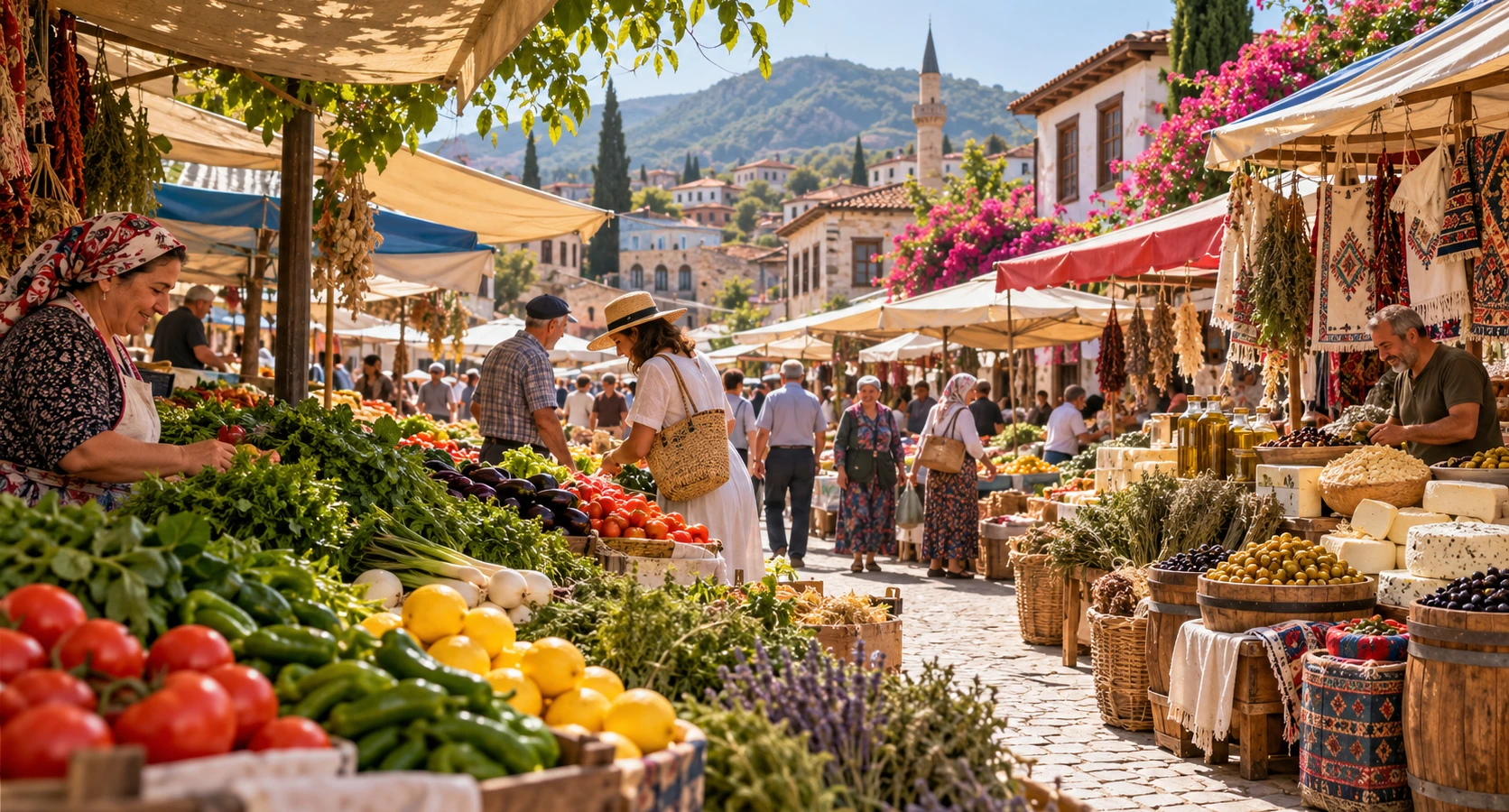
Visit Ödemiş on Saturday and combine the extraordinary open-air market with regional produce, historic streets and a traditional Ödemiş Köftesi lunch.
Design Your ExperienceCombine Ödemiş with Birgi, Gölcük, Bozdağ, Tire and the remarkable rural and culinary landscapes of inland İzmir Province.
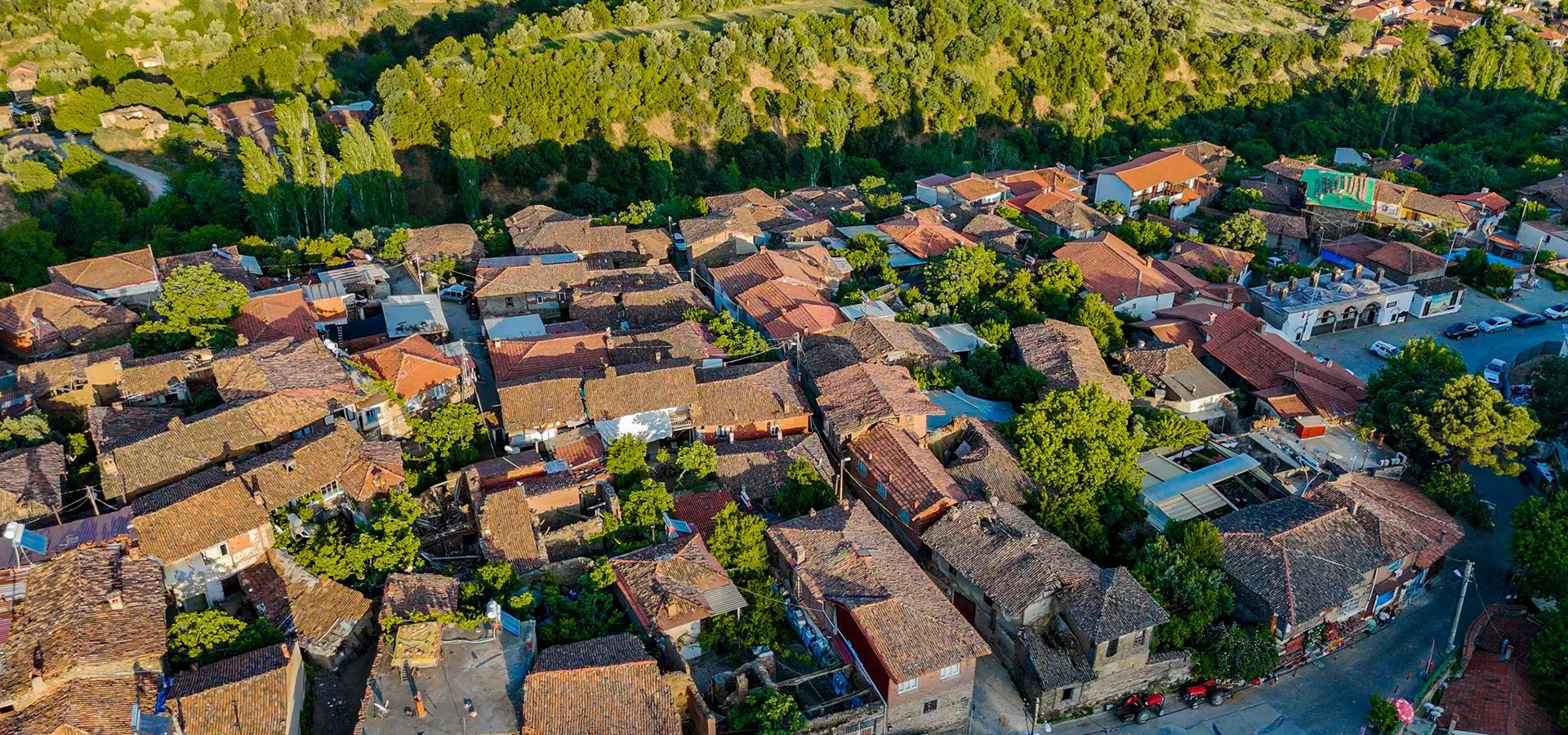
Discover Ödemiş, historic Birgi, traditional markets, agricultural landscapes and the food heritage of one of inland İzmir’s most fascinating regions.
Explore the Region
Create a personalised route combining Ödemiş, Tire, local markets, village landscapes and the distinctive food traditions of the wider İzmir region.
Design Your Journey