Private Zeus Cave & Dilek Peninsula Tour
Visit the turquoise pool of Zeus Cave before continuing through the mountains, forests and selected Aegean bays of Dilek Peninsula National Park at a relaxed private pace.
Request Your Private Zeus Cave Tour





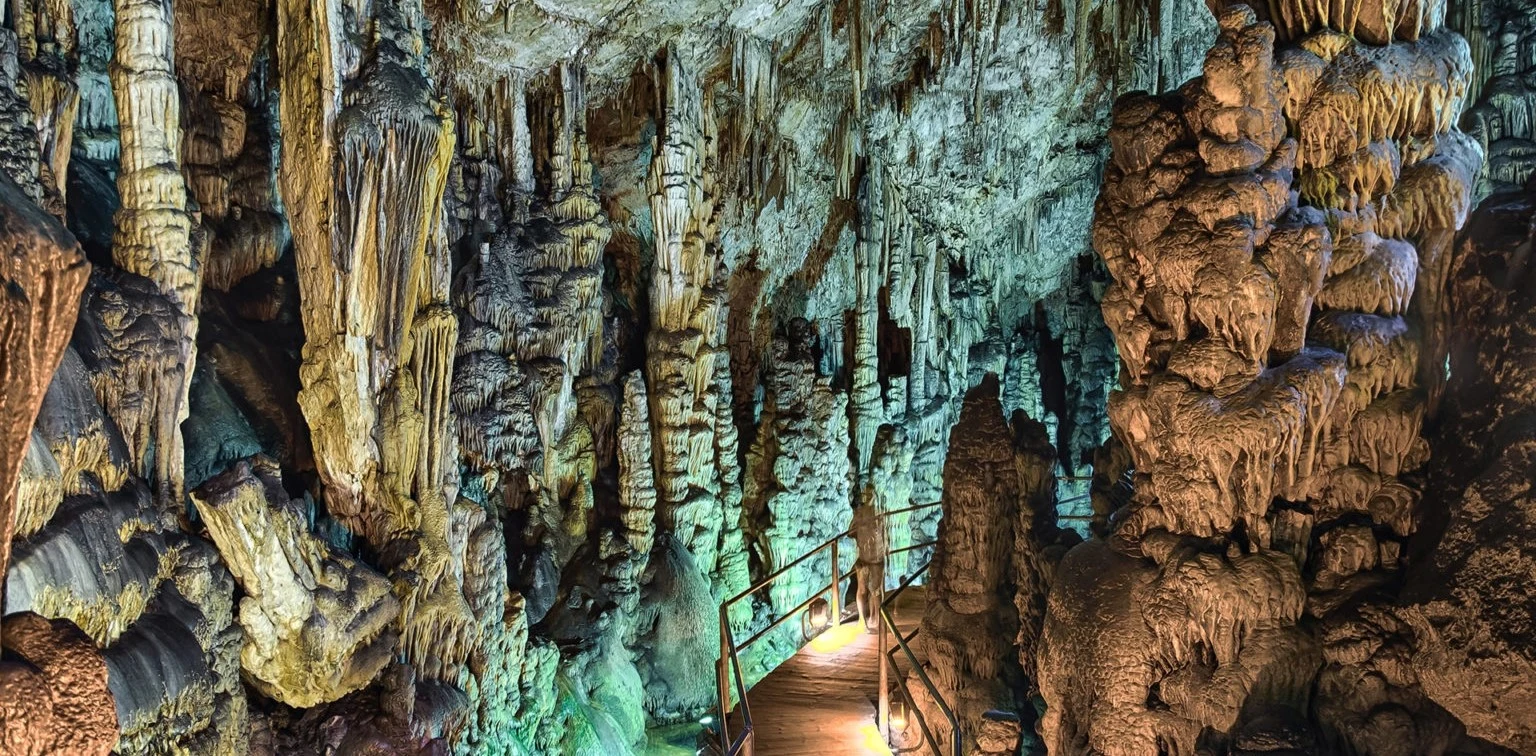
Zeus Cave, known in Turkish as Zeus Mağarası, is one of the most unusual natural attractions around Kuşadası. Hidden among vegetation at the foot of the Dilek Mountains near Güzelçamlı, the cave contains a remarkably clear blue-green natural pool enclosed by rugged limestone walls.
The cave lies only a short walk from the entrance area of Dilek Peninsula–Büyük Menderes Delta National Park, making it a natural first or final stop when exploring the peninsula.
Yet Zeus Cave is more than a beautiful pool. Generations of local stories have connected it with Zeus, Poseidon and Aphrodite, while another local tradition associates the water with the Virgin Mary.
These stories belong to the cave's rich folklore rather than documented archaeological history. Official cultural descriptions note that archaeological investigation has not identified surface cultural remains within the cave itself.
What is unquestionably real is the dramatic natural setting: cool water, shadowed rock, Mediterranean vegetation and the mountains of ancient Mycale rising immediately behind Güzelçamlı.
See the striking blue-green water that fills the rocky interior of the cave.
Discover the local story in which Zeus sheltered here from the anger of his brother Poseidon.
Visit the cave beside one of western Türkiye's most spectacular protected coastal landscapes.
Combine the cave with beaches, ancient Ionian history and the relaxed coastal atmosphere of Güzelçamlı.
Essential information about one of the best-known natural attractions near Güzelçamlı and Dilek Peninsula National Park.
Güzelçamlı, Kuşadası District, Aydın Province, beside the entrance area of Dilek Peninsula National Park.
Open on Google MapsA deep natural cave pool with unusually clear blue-green water surrounded by limestone rock.
Named after Zeus, ruler of the Olympian gods in ancient Greek mythology.
Extremely cool water fed through the surrounding rock and underground water system.
At the foot of the Dilek Mountains, part of the ancient Mount Mycale landscape.
Nature, mythology, photography, short walks and visits to Dilek Peninsula.
Zeus Cave brings together geology, landscape, mythology and the cultural memory of the Aegean within one compact natural setting.
At first sight, Zeus Cave appears to be a simple rocky grotto containing a natural pool. Yet its location makes it much more interesting.
The cave stands at the foot of the Dilek Mountains beside Güzelçamlı, exactly where the coastal settlement gives way to one of western Türkiye's most impressive protected mountain landscapes.
Its blue-green water immediately creates a visual contrast with the darker rock surrounding the pool. Sunlight entering from the open side of the cave changes the colour of the water according to time of day, season and weather.
The setting also belongs to the wider historical landscape of ancient Ionia. The Panionion, the traditional meeting sanctuary associated with the Ionian League, is situated in the wider Güzelçamlı area above the cave.
Over time, mythology became closely attached to this striking natural place. Stories of Zeus escaping Poseidon's anger, Aphrodite bathing in the water and other local traditions gave the cave the legendary identity visitors encounter today.
The result is one of the most memorable short stops around Kuşadası: a place where natural scenery and storytelling are almost impossible to separate.
Zeus Cave is fundamentally a natural geological formation shaped within the limestone environment of the Dilek Mountains.
Water moving through fractures and openings in soluble rock gradually creates cavities, channels and depressions typical of karst landscapes.
At Zeus Cave, this process produced a large rock cavity containing a deep natural pool. Rather than resembling a long underground tunnel filled with stalactites, the attraction is better understood as a partially open grotto or sinkhole-like chamber dominated by water.
Water reaches the cave through the surrounding rock and underground drainage system. Regional tourism descriptions also associate the unusual character of the pool with the interaction of fresh mountain water and saline water connected with the nearby coast.
The cave developed within the rocky geology of the Dilek mountain environment.
The broad chamber creates an open grotto rather than the narrow passageways found in many show caves.
Water enters through the surrounding rock and underground hydrological system.
Much of the visible interior is occupied by water, giving the cave its distinctive appearance.
Sunlight entering the cave transforms the colour of the water from dark blue to brilliant turquoise and green.
The cave should be understood as part of the larger geology of the Dilek Peninsula rather than as an isolated attraction.
The most striking feature of Zeus Cave is its remarkably clear blue-green water.
The colour is created by a combination of water clarity, mineral-rich rock, depth, shadow and the changing angle of sunlight entering the cave.
In bright conditions the shallower edges can appear vivid turquoise, while the deeper and more shaded sections become dark blue or almost black.
Official regional descriptions emphasise the exceptionally cool character of the water. Kuşadası Municipality describes an average temperature of approximately 5°C, explaining why entering the pool can feel dramatically colder than swimming in the nearby Aegean Sea.
Because the pool is deep and the temperature can produce an immediate cold-water response, visitors should never treat the cave like an ordinary swimming pool.
The brightest areas appear blue-green where natural light reaches the clear water.
The cave remains significantly cooler than the surrounding summer environment.
The pool becomes considerably deeper away from the rocky edges.
Submerged rock surfaces and irregular terrain can be visible through clearer sections of the water.
The appearance changes constantly according to sunlight, cloud cover and the position from which you view the cave.
Cold temperature, depth and natural rock surfaces require far more caution than a conventional swimming environment.
The cave's modern identity is inseparable from a popular local myth involving the brothers Zeus and Poseidon.
According to the story told around Güzelçamlı, Zeus sometimes angered Poseidon, god of the sea. Poseidon would respond by raising his trident, disturbing the water and creating violent storms.
Zeus supposedly escaped from his brother's anger by retreating into the cave at the foot of the mountains. There he could shelter, rest and bathe while waiting for Poseidon's fury and the sea outside to become calm again.
The image is particularly appropriate to the cave's geography. The protected pool lies in the shadow of the mountains only a short distance from the Aegean coastline, creating a natural contrast between the turbulent open sea and the enclosed water of the grotto.
There is no archaeological evidence demonstrating that the cave was historically used as a sanctuary of Zeus. The story should therefore be enjoyed as local mythology and folklore rather than as established ancient history.
The supreme Olympian deity and god associated with the sky, thunder and lightning.
Brother of Zeus and powerful god of the sea, earthquakes and horses in Greek mythology.
Local storytelling imagines Poseidon's anger transforming the nearby Aegean Sea into a violent landscape.
Zeus retreats into the quiet cave and waits beside or within its protected water.
Zeus is not the only mythological figure associated with the cave.
Another local tradition says that Aphrodite, goddess of beauty and love, bathed in the waters of Zeus Cave.
Over time, this story helped create a belief that the water possessed a beautifying quality, particularly for the skin.
Such traditions are common around unusual springs, caves and thermal waters throughout Anatolia and the Mediterranean, where striking natural features often accumulated stories explaining their unusual appearance or supposed properties.
At Zeus Cave, the exceptionally clear water and hidden grotto setting make it easy to understand why a bathing legend connected with Aphrodite became attached to the place.
Aphrodite was one of the most important deities associated with love and beauty in the ancient Greek world.
Springs and unusual natural pools often attracted healing, purification and beauty legends in the ancient Mediterranean.
The story survives as part of the modern cultural identity of Zeus Cave.
The supposed beautifying properties of the water belong to folklore rather than scientific evidence.
A further local story connects Zeus Cave with the Virgin Mary.
According to the tradition recorded by Kuşadası Municipality, Mary stopped at the cave while travelling from the island of Samos toward Ephesus and bathed in its water.
This story belongs to local tradition and should not be confused with historically documented evidence for Mary's movements.
Its existence is nevertheless fascinating because it shows how one natural place can accumulate stories from several different cultural and religious periods.
At Zeus Cave, traditions associated with ancient Greek gods coexist with later Christian storytelling, reflecting the exceptionally layered cultural geography of the Aegean.
Because of the cave's name and proximity to important Ionian sites, visitors sometimes assume that Zeus Cave must have been an ancient sanctuary.
The available evidence does not support such a definite conclusion.
The Türkiye Culture Portal, drawing on information from the Aydın Provincial Directorate of Culture and Tourism, notes that investigations did not identify cultural material on the surface of the cave.
This distinction is important. The cave lies within an extraordinarily important archaeological landscape, but the Zeus legends associated with the grotto are traditions rather than proof of an ancient cult site.
The historical importance of the surrounding area comes instead from nearby ancient Ionia, particularly the Panionion and the wider Mount Mycale region.
Zeus Cave is primarily significant as a natural geological formation.
There is no established archaeological evidence for a Temple of Zeus within the cave.
The surrounding Güzelçamlı and Mycale region was nevertheless extremely important in Ionian history.
The stories remain culturally valuable even when they cannot be treated as documented ancient events.
The surroundings of Zeus Cave belong to one of the most important cultural landscapes of ancient Ionia.
Above the Güzelçamlı area lies the region traditionally associated with the Panionion, the sanctuary and meeting place connected with the Ionian League.
The league brought together the famous Ionian cities of western Anatolia and nearby islands, communities that played an enormous role in the intellectual, political and commercial history of the ancient Aegean.
This wider historical setting helps explain why mythological associations feel so natural around Zeus Cave. The grotto itself may be a natural monument rather than a confirmed sanctuary, but it lies beneath a mountain landscape deeply connected with ancient religion and Ionian identity.
Travellers interested in this history can continue south and east through a remarkable archaeological region containing Priene, Miletus and Didyma.
The western Aegean coast supported some of the ancient Greek world's most influential cities.
Twelve Ionian communities were traditionally connected through a shared political and religious identity.
The wider Güzelçamlı region is associated with the meeting sanctuary of the Ionian federation.
The Dilek mountain massif was known in antiquity as Mycale and dominates the landscape around the cave.
One of the great advantages of visiting Zeus Cave is its position beside Dilek Peninsula–Büyük Menderes Delta National Park.
The cave is reached near the Güzelçamlı entrance area, allowing travellers to combine it naturally with a longer visit to the peninsula.
Beyond the entrance, the road follows the forested northern coastline beneath the Dilek Mountains. Several bays provide very different views of the Aegean Sea and the Greek island of Samos.
The landscape contains Mediterranean woodland, steep mountain slopes, clear water and a remarkably rich variety of plant and animal life.
Visiting Zeus Cave before entering the peninsula creates an excellent introduction to the geology and mythology of the region.
One of the first and most accessible coastal areas encountered within the national park.
A beautiful forest-backed bay farther along the national park road.
A scenic coastal stop surrounded by the natural vegetation of the peninsula.
One of the farther public coastal areas reached along the national park route.
The dramatic mountain ridge rising above the coast forms the geological background to Zeus Cave.
On clear days, the Greek island of Samos appears strikingly close across the Aegean.
Read our complete Dilek Peninsula National Park guide for the beaches, wildlife, landscapes and practical information needed to explore the protected area.
Swimming in Zeus Cave has traditionally been one of the experiences most strongly associated with the site. Regional tourism descriptions refer to local residents and visitors entering the water, particularly during the hot summer months.
However, visitors should never assume that conditions or access rules remain unchanged. The cave is a natural environment and any current restrictions, safety measures or local instructions should always take priority.
More importantly, the pool is deep, extremely cold and surrounded by irregular rock. Its beautiful appearance can make it look easier and safer than it actually is.
Anyone entering the water should be a confident swimmer and should avoid diving or jumping from rocks. Cold-water shock, slippery surfaces and depth are all genuine considerations.
Follow signs and local instructions regarding whether swimming is permitted when you visit.
Enter gradually rather than jumping directly from hot summer air into extremely cold water.
Do not enter unless you are comfortable swimming without relying on being able to stand.
Wet stone around the cave edge can be extremely slippery.
Submerged rocks and changing depth make jumping or diving unnecessarily dangerous.
Children should remain closely supervised around both the water and the rocky approach.
The experience begins close to the Güzelçamlı entrance area of Dilek Peninsula National Park.
A short path leads through Mediterranean vegetation toward the rocky hollow containing the cave. The approach is brief, but the change in atmosphere is immediate.
Bright Aegean sunlight gives way to shade beneath the rock ceiling. The air feels cooler, and the turquoise water becomes visible below.
Depending on season and visitor numbers, the cave can feel either wonderfully secluded or surprisingly busy. Summer afternoons and weekends naturally attract more people because many travellers combine the stop with a national park visit.
Most visitors do not need a long time at the cave itself. The experience is usually best treated as a memorable natural stop within a wider day around Güzelçamlı and the Dilek Peninsula.
The cave is reached by a relatively short walk from the nearby road and national park entrance area.
Expect rock, soil and uneven surfaces rather than a completely paved attraction.
Shade and cold water create a noticeable temperature difference from the surrounding summer landscape.
Visitor numbers can increase considerably during the main holiday season.
The location makes the cave particularly convenient before or after a national park visit.
The changing reflections are worth observing from several safe positions around the edge.
Visitors may notice pieces of fabric tied to branches in the surroundings of Zeus Cave.
The practice reflects a widespread Anatolian tradition in which cloth, ribbons or similar objects are attached to trees at places regarded as special, sacred or capable of granting wishes.
Regional tourism descriptions have specifically recorded this custom around Zeus Cave.
Although such practices form part of local cultural history, modern visitors should avoid attaching plastic, synthetic fabric or other material to living trees. What begins as a symbolic gesture can become long-lasting litter and can damage branches or the surrounding environment.
Zeus Cave can be interesting throughout the year, although the experience changes considerably with season, weather and visitor numbers.
Green vegetation, moderate temperatures and fewer visitors can make spring one of the most enjoyable periods for exploring Güzelçamlı.
Bright conditions illuminate the water beautifully while visitor numbers can still be lower than during peak summer.
The contrast between intense outdoor heat and the cold cave is dramatic, but this is also the busiest period.
Warm Aegean weather often continues while the peninsula gradually becomes quieter.
Softer light and reduced crowds make the cave attractive for travellers focused on photography and nature.
The cave becomes much quieter, although rain and wet rock can make the approach more slippery.
Zeus Cave is exceptionally photogenic because it combines strong natural contrasts within a relatively small space.
The most obvious subject is the meeting of luminous turquoise water and dark rock. However, changing reflections, submerged stones, vegetation and the cave opening can produce equally interesting compositions.
Exposure can be challenging because bright daylight outside the cave may be several stops brighter than the shaded interior. Modern smartphones often manage this contrast automatically, while cameras may benefit from careful exposure compensation or HDR techniques.
Whenever possible, photograph from stable dry ground rather than concentrating so heavily on composition that you step onto slippery rock.
Use the illuminated sections of the pool as the visual centre of the composition.
Include the dark rock overhang to give the water greater visual depth and scale.
Clear shallow areas can reveal fascinating layers of stone beneath the surface.
Wait for calmer water when you want cleaner reflections and more visible underwater detail.
A wider lens helps show the relationship between the pool, cave opening and surrounding rock.
Wet rock, spray and slippery footing require extra care with phones, cameras and lenses.
Zeus Cave remains a natural site and therefore requires more attention than a fully paved urban attraction.
The short approach includes natural ground and rock rather than completely level paving.
Rock close to the water can become dangerously slippery, particularly after rain or where visitors have climbed out of the pool.
Natural terrain can make the final approach difficult for visitors with significant mobility limitations.
Shoes with reasonable grip are safer than smooth-soled sandals or loose footwear.
Young children should remain under close supervision around the deep water and irregular rocks.
Allow additional caution when rock and soil surfaces are wet.
Zeus Cave is best treated as a relatively short natural stop that can be combined with Güzelçamlı and Dilek Peninsula National Park.
Conditions, access arrangements and rules regarding swimming can change, so visitors should always follow current signs and official instructions at the site.
Zeus Cave is located at Güzelçamlı, south of central Kuşadası and close to the entrance of Dilek Peninsula National Park.
Travellers following the coastal route from Kuşadası pass through the Davutlar and Güzelçamlı area before reaching the national park entrance.
The cave itself is reached by a short walk from the nearby access area.
Drive south through the coastal settlements toward Güzelçamlı and Dilek Peninsula National Park.
The cave is immediately associated with the national park entrance area and requires only a short local journey.
Continue south toward Güzelçamlı and follow signs for Dilek Peninsula National Park.
A car provides maximum flexibility for combining the cave with national park beaches and other regional attractions.
A private vehicle and guide can combine Zeus Cave with Güzelçamlı, Priene, Old Doğanbey or selected national park stops.
Search for Zeus Mağarası Güzelçamlı rather than simply “Zeus Cave,” as several locations around the Mediterranean use similar names.
Continue directly into the protected peninsula for forests, mountain scenery and clear Aegean bays.
Spend time in the coastal town immediately beside the cave and national park entrance.
Explore the wider landscape associated with the ancient meeting sanctuary of the Ionian League.
Return north to the region's principal resort and cruise destination for the marina, Güvercinada and historic centre.
Discover one of the finest ancient Greek cities in Türkiye beneath the same wider Mount Mycale landscape.
Walk through atmospheric stone streets overlooking the Büyük Menderes Delta on the southern side of the mountains.
Continue into the lower Maeander region to one of the most influential cities of ancient Ionia.
Visit the monumental Temple of Apollo and the famous ancient oracle south of Miletus.
One of the easiest ways to experience Zeus Cave is to combine it with selected coastal areas of Dilek Peninsula National Park.
Leave Kuşadası and travel south toward Güzelçamlı. Begin with Zeus Cave while the area is relatively quiet and spend time observing the water, rock formations and surrounding vegetation.
Continue into the national park and choose one or two bays according to available time, season and current access conditions.
The combination creates an excellent contrast between a shaded mountain grotto and the bright Aegean coastline only a short distance away.
Drive from Kuşadası through Davutlar toward Güzelçamlı.
Visit Zeus Cave and photograph the turquoise natural pool.
Enter Dilek Peninsula National Park and enjoy the changing forest and mountain scenery.
Spend time beside one of the accessible Aegean bays.
Return through Güzelçamlı with an optional local refreshment stop.
Continue north toward Kuşadası at a comfortable pace.
Travellers interested in both nature and history can create a particularly rewarding full-day journey by combining Zeus Cave, Dilek Peninsula and Priene Ancient City.
Begin with Priene in the cooler morning hours. The ancient city climbs the southern slopes of Mount Mycale and offers one of the best surviving examples of Classical Greek urban planning.
Afterwards travel around the mountain landscape toward Güzelçamlı and visit Zeus Cave.
Continue into Dilek Peninsula National Park during the afternoon for forest scenery, panoramic coastal views and selected bays.
The route connects three completely different experiences through one geographical theme: the mountains of ancient Mycale and the Aegean world surrounding them.
Explore Priene before the strongest midday heat.
Travel through the Mycale landscape toward Güzelçamlı.
Visit Zeus Cave and enjoy the cooler atmosphere beside the natural pool.
Enter Dilek Peninsula National Park and explore selected coastal areas.
Capture ancient architecture, turquoise cave water, mountains and the Aegean coastline within the same day.
Replace Priene with Old Doğanbey when architecture, village history and the Büyük Menderes landscape are a greater priority.
Zeus Cave reveals an important side of Kuşadası that travellers sometimes miss.
The district is famous for beaches, cruise ships, hotels and its proximity to Ephesus, but its southern landscape becomes progressively wilder as the coast approaches Güzelçamlı and the Dilek Peninsula.
Within a single day, travellers can move from Kuşadası's harbour environment to mountain forests, ancient Ionian landscapes, turquoise bays and the cool interior of Zeus Cave.
The lively resort and cruise harbour forming the principal tourism centre of the district.
A settlement south of Kuşadası forming part of the route toward Güzelçamlı.
The coastal community immediately beside Zeus Cave and the entrance to Dilek Peninsula.
The small but dramatic natural grotto connecting landscape with local mythology.
Forested mountains and clear bays forming one of the region's most important protected landscapes.
The mountain landscape connecting modern Kuşadası with the ancient cultural geography of Ionia.
Continue planning your stay with our complete Kuşadası travel guide and Aydın travel guide.
Practical answers for visiting Zeus Mağarası near Güzelçamlı and Dilek Peninsula National Park.
Zeus Cave is located at Güzelçamlı in Kuşadası District of Aydın Province, close to the entrance of Dilek Peninsula National Park.
The Turkish name is Zeus Mağarası.
The name is connected with a local myth in which Zeus sheltered in the cave while escaping the anger of his brother Poseidon.
No historical evidence can establish such an event. The story belongs to mythology and local folklore.
There is no established evidence that the cave itself was a Temple of Zeus or formal ancient sanctuary.
Official cultural information reports that investigations did not identify cultural material on the surface of the cave.
It is a broad natural rock grotto dominated by a deep blue-green pool beneath an overhanging limestone ceiling.
Kuşadası Municipality describes the cave as approximately 60 metres long and 20 metres wide, with the natural pool reaching considerable depth.
Official local descriptions generally place the pool depth at around 10 metres, while some regional tourism material describes deeper sections reaching approximately 10–15 metres.
Clear water, mineral-rich rock, depth, shadow and reflected natural light combine to create its striking blue-green appearance.
Yes. The water is exceptionally cold compared with the surrounding summer environment, and official local information describes an average temperature of around 5°C.
Swimming has traditionally taken place in the cave, but visitors should follow current local rules and only enter if conditions permit and they are confident swimmers.
The pool is naturally deep and cold with slippery rock around the edges. It should never be treated like a conventional swimming pool.
The combination of deep water, cold temperature and slippery natural surfaces makes close supervision essential. Current local rules should always be followed.
No. Jumping or diving is unsafe because of cold-water shock, changing depth and submerged rocks.
Approximately 30 to 60 minutes is sufficient for most visitors unless you plan to spend additional time enjoying the surroundings.
Yes. The cave lies beside the Güzelçamlı entrance area and is one of the easiest attractions to combine with a national park visit.
Official tourism descriptions place the cave within the Güzelçamlı and Dilek Peninsula National Park landscape immediately beside the entrance area.
The cave lies south of central Kuşadası at Güzelçamlı. Driving time varies with traffic and your precise starting point.
Yes. Independent travellers can visit the cave, particularly when travelling by car toward Güzelçamlı and Dilek Peninsula National Park.
Comfortable footwear with reasonable grip is recommended because natural rock and the path around the cave can be uneven or slippery.
The natural approach and rocky terrain can make full access difficult for visitors with significant mobility limitations.
Spring, early summer and autumn provide pleasant conditions. Summer is visually beautiful but can be considerably busier.
Morning and periods when indirect sunlight reaches the water can produce especially attractive turquoise tones without the heaviest visitor numbers.
Yes. The combination of dark limestone, transparent water, submerged rocks and blue-green reflections makes it one of the most photogenic natural stops near Kuşadası.
Local tradition says Aphrodite bathed in Zeus Cave and that its water became associated with beauty. This is folklore rather than documented history.
Another local tradition says the Virgin Mary stopped at the cave while travelling toward Ephesus. There is no historical evidence confirming the story.
Panionion was the important meeting sanctuary associated with the ancient Ionian League in the wider Mount Mycale and Güzelçamlı region.
Yes. Zeus Cave, Dilek Peninsula and Priene form an excellent full-day route connecting mythology, natural scenery and ancient Ionia.
Yes. With private transportation, the cave can be combined with Old Doğanbey and the southern landscape of the Dilek Mountains.
Yes, especially when you are already travelling to Güzelçamlı or Dilek Peninsula National Park. Its unusual water, mythology and mountain setting make it a memorable short stop.
Take bottles, food packaging and all other waste away from the cave.
Avoid carving names, scratching surfaces or moving natural rock material.
Do not throw coins, rubbish, cosmetics or other foreign material into the cave pool.
Respect the traditional wish-tree story without leaving synthetic ribbons or cloth on living vegetation.
Avoid climbing unstable rock simply to obtain photographs or reach the water.
Treat the cave as part of the sensitive natural landscape surrounding Dilek Peninsula.
Discover Zeus Cave with comfortable private transportation and a flexible itinerary combining Güzelçamlı, Dilek Peninsula, Priene, Old Doğanbey or other selected highlights of the Aydın region without compulsory shopping stops.
Combine turquoise water and Aegean mythology with protected coastal scenery, ancient Ionia and the landscapes of Mount Mycale according to your interests and available time.
Visit the turquoise pool of Zeus Cave before continuing through the mountains, forests and selected Aegean bays of Dilek Peninsula National Park at a relaxed private pace.
Request Your Private Zeus Cave Tour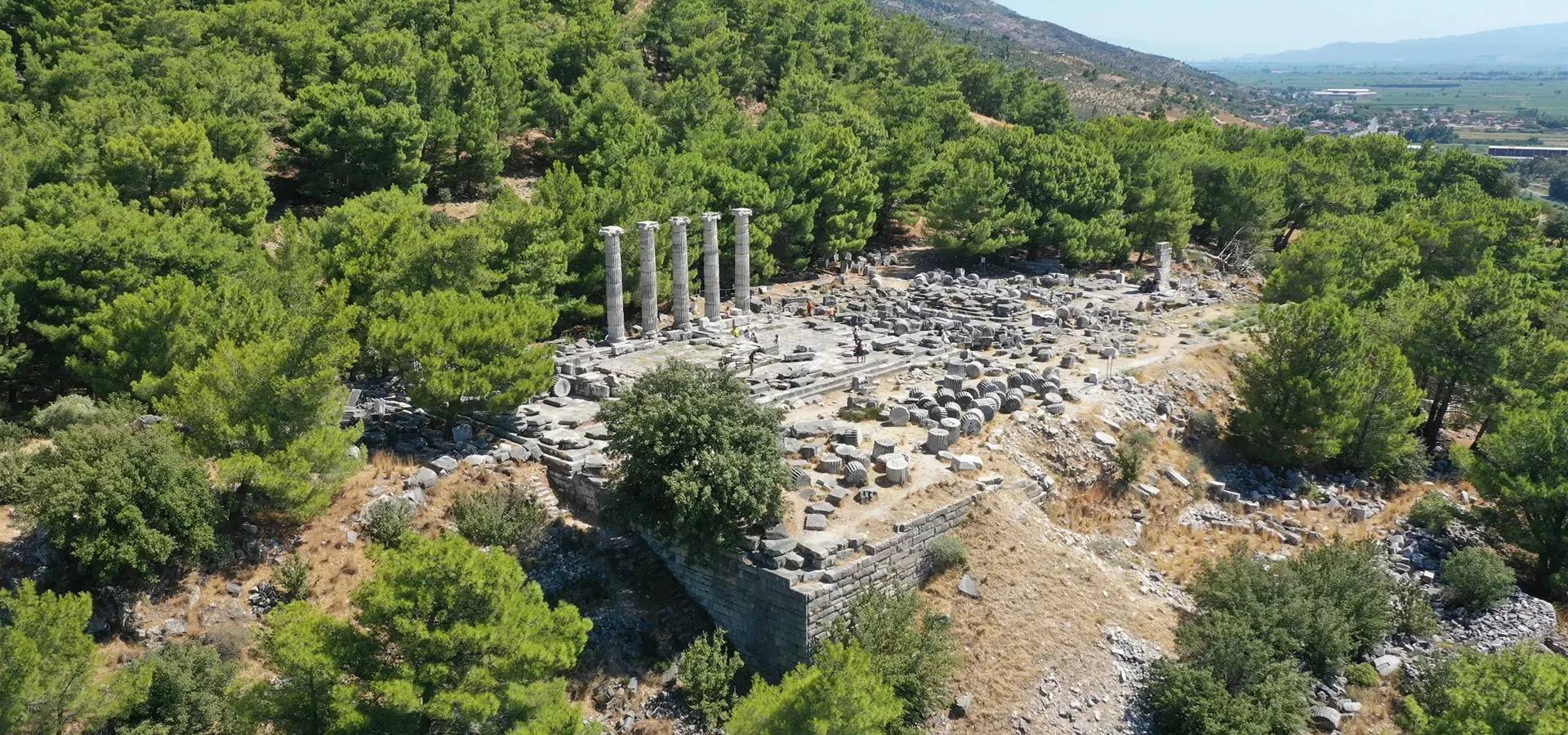
Connect ancient Ionia with one of Kuşadası's most famous natural attractions by combining Priene, Zeus Cave and Dilek Peninsula within one carefully designed private excursion.
Design Your Private Kuşadası Journey