Private Historic Aydın City Tour
Explore Cihanoğlu Mosque, Aydın's Ottoman heritage, the Archaeology Museum and selected historical landmarks with a licensed private guide.
Request Your Private Aydın Tour





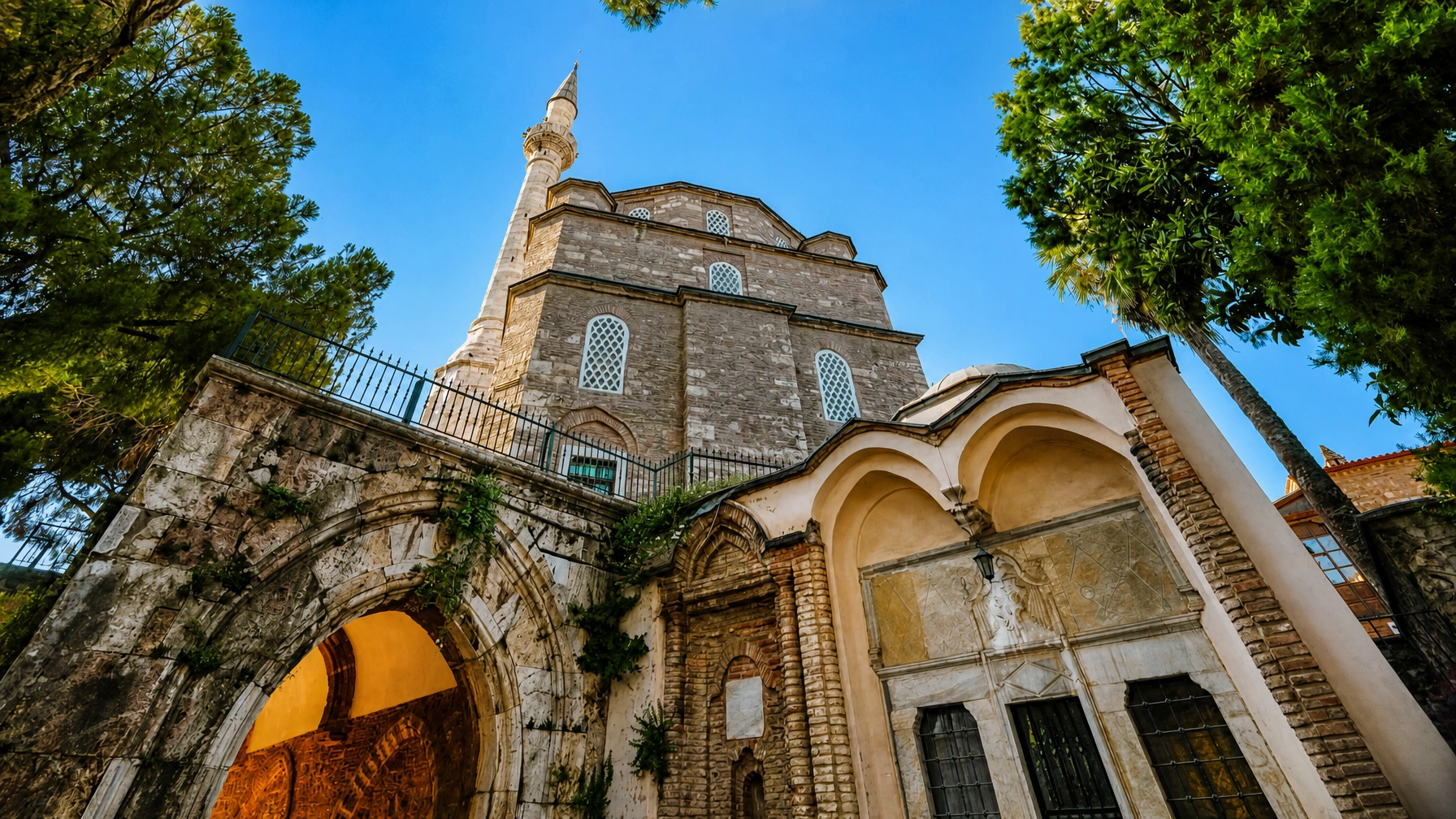
Hidden within the historic urban centre of Aydın stands one of the city's most beautiful surviving monuments from the Ottoman period: Cihanoğlu Mosque.
Built in 1756 by Cihanoğlu Abdülaziz Efendi, the mosque formed the heart of a larger religious and educational complex known as the Cihanoğlu Külliyesi.
The complex originally brought together a mosque, medrese, fountain, sebil and associated structures within a carefully organised architectural ensemble.
From the street, visitors first notice that the mosque occupies an unusually elevated platform.
A flight of fifteen steps climbs toward the prayer hall while older structures occupy the lower level beneath and around the terrace.
Inside, the atmosphere changes completely.
The restrained geometry of a traditional square Ottoman mosque is enriched by Baroque plasterwork, floral forms, curved C and S motifs, medallions and colourful painted decoration.
This combination makes Cihanoğlu Mosque particularly important.
It demonstrates how architectural ideas spreading through the Ottoman Empire during the eighteenth century reached provincial cities such as Aydın and were interpreted through local craftsmanship.
Yet Cihanoğlu is more than an architectural monument.
It survived war, occupation, changing urban life and repeated restoration while continuing to serve the religious community of Aydın.
The mosque was commissioned by Cihanoğlu Abdülaziz Efendi, a member of one of the influential families of the eighteenth-century Aydın region.
Its interior contains some of Aydın's finest surviving examples of eighteenth-century Baroque-inspired decoration.
The mosque once functioned together with a medrese, şadırvan, sebil, fountain and other spaces within a larger social and religious complex.
Cihanoğlu remains an active mosque rather than a museum, preserving continuity between historic architecture and contemporary religious life.
Essential information about one of the most important Ottoman religious monuments in Aydın city centre.
Köprülü–Veysipaşa area, central Efeler district, Aydın, Türkiye.
Open on Google Maps1756, corresponding to 1170 AH according to the foundation inscription above the entrance.
Müderris Cihanoğlu Abdülaziz Efendi.
Classical Ottoman planning enriched by striking eighteenth-century Ottoman Baroque decoration.
Mosque, medrese, şadırvan, sebil, fountain and associated structures formed the historic Cihanoğlu Külliyesi.
An active place of worship and an important historic monument within modern Aydın.
Cihanoğlu Mosque reveals an extraordinary moment when traditional Ottoman architecture encountered new decorative ideas during the eighteenth century.
Aydın preserves archaeological monuments dating back thousands of years, but understanding the city requires looking beyond its ancient past.
The Ottoman period transformed the urban and cultural landscape just as profoundly.
Cihanoğlu Mosque is one of the clearest surviving expressions of this history.
Its architectural plan remains connected with the long tradition of single-domed Ottoman mosques, yet its decoration reflects changing eighteenth-century tastes.
Curving forms, floral motifs, elaborate plasterwork and Baroque-inspired details demonstrate how artistic ideas circulating through the imperial capital were adopted far beyond Istanbul.
The surrounding külliye is equally important.
A mosque complex was not designed only for prayer.
Education, charity, water distribution, accommodation and community life could all become part of the same architectural environment.
Cihanoğlu therefore helps visitors understand both Ottoman architecture and the social organisation of an eighteenth-century Anatolian city.
Cihanoğlu Mosque was constructed in 1756 during a period when influential provincial families played increasingly visible roles in the political, economic and architectural life of Anatolia.
Its founder was Cihanoğlu Abdülaziz Efendi, a member of the Cihanoğlu family associated with the wider Aydın, Koçarlı and Nazilli region.
The inscription above the mosque entrance records the foundation and identifies Abdülaziz Efendi as its patron.
The mosque did not stand alone.
It developed as the centre of a külliye, an Ottoman architectural complex incorporating religious, educational and charitable functions.
The complex included medrese rooms, facilities connected with water distribution and additional structures arranged around the elevated mosque platform.
The architectural ensemble therefore represented both the religious devotion and social status of its patron.
The dated inscription above the entrance records the construction of the mosque during the mid-eighteenth century.
The founders belonged to an influential provincial family active in the wider Aydın region.
The mosque served the spiritual life of the surrounding neighbourhood.
The associated medrese made teaching and religious education part of the complex.
The construction of the mosque is closely associated with Cihanoğlu Abdülaziz Efendi, who commissioned the complex during the eighteenth century.
The Cihanoğulları were among the prominent provincial families of the wider Aydın region during a period when local notables could accumulate considerable political and economic influence.
Such families frequently demonstrated their status through public architecture.
Building a mosque, medrese, fountain or charitable foundation allowed a patron to contribute permanently to the urban community while also establishing a visible family legacy.
Cihanoğlu Mosque should therefore be understood not simply as an isolated religious building but as part of the social history of Ottoman provincial patronage.
Abdülaziz Efendi's name remains inseparable from the monument almost three centuries later.
The prayer hall follows a square plan, approximately 9.5 metres on each side.
A single principal dome covers the central interior.
This arrangement belongs to a long and familiar tradition within Ottoman mosque architecture.
The building materials include rubble stone and brick, producing walls that contrast strongly with the refined decorative programme inside.
The northern side contains a three-part son cemaat yeri — last prayer portico, while the minaret rises near the northwestern corner.
The building's south wall is visually articulated by the outward projection corresponding to the mihrab.
Windows at several levels bring daylight into the prayer hall and help illuminate the decorative surfaces beneath the dome.
The compact square interior creates a concentrated central space beneath the principal dome.
The main dome follows a traditional Ottoman spatial arrangement while its decorative surfaces reveal eighteenth-century taste.
The masonry combines rubble stone construction with brick elements visible in different parts of the complex.
The northern last prayer area is divided into three domed sections.
The slender minaret provides the most vertical element within the otherwise compact architectural composition.
The mosque stands prominently above street level on a substantial raised platform.
One of the most immediately noticeable characteristics of Cihanoğlu Mosque is its position high above the surrounding street.
The site slopes naturally, and the architects used that topography to create a monumental raised platform.
Visitors approach the mosque by a staircase of approximately fifteen steps.
The arrangement gives the relatively compact building a surprisingly commanding presence.
Historic spaces were also created beneath the elevated structure.
Sources record commercial use within the lower level, showing how architecture, urban circulation and economic activity could coexist within the same complex.
The result is a monument that changes dramatically depending on where it is viewed from.
From street level, the masonry platform dominates. From the upper courtyard, the mosque itself becomes the visual centre.
The northern side of the mosque is fronted by a traditional Ottoman son cemaat yeri.
This semi-open area forms an architectural transition between exterior space and the enclosed prayer hall.
At Cihanoğlu Mosque it is organised into three sections covered by small domes.
The domes rest on arches and columns, creating rhythm and depth across the entrance façade.
The transitions beneath these smaller domes use pendentives.
Decorative architectural details provide an early indication of the richer Baroque vocabulary awaiting visitors inside.
The entrance itself is framed by marble elements, while the historic construction inscription remains one of the mosque's most important documentary features.
Entering the mosque reveals an interior very different from the relatively restrained exterior masonry.
The prayer hall is compact, centralised and visually focused upward toward the dome.
The main dome rises above the square room through tromp transitions, an architectural solution used to move from the square walls toward the circular base of the dome.
Multiple rows of windows introduce natural light from different levels.
That light is particularly important because it reveals the textures of the plasterwork and painted decoration covering parts of the interior.
The visual experience develops vertically: from the prayer space and mihrab at ground level toward decorated arches, transition zones and finally the richly ornamented dome.
The decorative programme is what makes Cihanoğlu Mosque particularly memorable.
During the eighteenth century, Ottoman decorative arts increasingly incorporated Baroque and Rococo-inspired forms alongside traditional Islamic and Ottoman motifs.
At Cihanoğlu, this changing artistic language appears in plaster decoration, painted surfaces, architectural details and ornamental compositions.
Vegetal patterns spread across sections of the interior.
Characteristic C-shaped and S-shaped curves create movement and softness very different from the more restrained geometry of earlier Ottoman design.
Medallions and floral arrangements enrich the upper surfaces and dome.
Traditional ornament and eighteenth-century fashion were not treated as opposites.
Instead, they were combined into a distinct local interpretation of Ottoman Baroque taste.
Leaves, flowers and vegetal compositions soften the architectural surfaces.
Flowing curved forms are among the most recognisable characteristics of Ottoman Baroque decoration.
Circular and oval ornamental compositions create visual focal points across the interior.
The decorated upper surfaces transform the dome into the visual climax of the prayer hall.
Three-dimensional ornamental forms add depth, shadow and movement to architectural details.
The decoration demonstrates how broader Ottoman artistic fashions were reinterpreted by craftsmen working in western Anatolia.
The dome provides the strongest visual focus inside the mosque.
Its importance comes not from extraordinary scale but from the density and elegance of its decoration.
Ornamental bands, floral forms, medallion-like compositions and repeating patterns create an almost textile-like surface overhead.
Windows around the upper levels introduce changing daylight into the composition.
At different times of day, shadows and highlights alter the appearance of the decoration.
Visitors accustomed to the monumental dimensions of Istanbul's imperial mosques may find Cihanoğlu particularly interesting because its artistic impact is achieved within a much more intimate interior.
As in every mosque, the southern wall forms the spiritual focus of the interior.
The mihrab indicates the direction of Mecca and organises the orientation of congregational prayer.
Beside it stands the minbar, used for the sermon during Friday and festival prayers.
These elements should be viewed not simply as decorative objects but as functioning parts of a living religious building.
The surrounding ornament helps visually emphasise this sacred direction while the open central prayer space remains relatively uncluttered.
The contrast between functional simplicity at floor level and increasingly elaborate decoration overhead is one of the mosque's most elegant architectural effects.
Above the principal entrance is one of the mosque's most valuable historical features: its construction inscription.
The inscription records the date 1170 AH, corresponding to 1756, and names Abdülaziz Efendi as the charitable patron responsible for the building.
Such inscriptions were an important part of Ottoman architecture.
They documented patronage, preserved the construction date and connected architecture with ideas of charity, prayer and remembrance.
For historians, inscriptions can provide evidence more direct than later written traditions.
At Cihanoğlu Mosque, the inscription anchors the building firmly within the social world of eighteenth-century Aydın.
To understand Cihanoğlu properly, visitors should look beyond the prayer hall.
The mosque formed the centre of a wider külliye.
In Ottoman cities, külliyes combined religious architecture with institutions serving education, charity and daily community needs.
At Cihanoğlu, the historic complex included the mosque, medrese rooms, a şadırvan, sebil, fountain and related architectural spaces.
Different parts of the complex were arranged across the sloping site around the elevated platform.
The ensemble shows that eighteenth-century religious architecture was deeply integrated into ordinary urban life.
The spiritual and architectural centre of the complex.
Rooms associated with religious learning and education surrounded parts of the courtyard.
The courtyard fountain served ritual preparation while becoming an important decorative feature in its own right.
A charitable water-distribution structure formed another component of the architectural ensemble.
Public access to water represented both practical infrastructure and charitable patronage.
Commercial and circulation spaces beneath the elevated mosque connected the complex directly with surrounding city life.
Medrese rooms occupied portions of the northern and eastern sides of the complex.
Their presence demonstrates that Cihanoğlu was intended to serve not only congregational worship but also religious education.
Traditional medrese cells generally provided relatively simple spaces for students and teachers, organised around a shared courtyard.
The historic rooms at Cihanoğlu underwent modifications and restoration during the twentieth century.
The medrese was repaired in the 1950s and adapted for educational and accommodation purposes.
Although later intervention altered parts of the original arrangement, the survival of the medrese remains essential for understanding the original scale and social role of the complex.
The courtyard şadırvan is one of the most interesting decorative elements associated with the complex.
A şadırvan provides water for ablution before prayer, but Ottoman architects frequently transformed these practical structures into elegant architectural focal points.
The Cihanoğlu example displays an unusual combination of traditional form and Baroque-inspired detail.
Its marble basin and supporting elements incorporate ornamental features including fluted and twisted forms, acanthus-like leaves, medallions and curved motifs.
The result is essentially a small architectural composition within the courtyard.
Examining the şadırvan closely helps visitors appreciate the same artistic transition visible inside the mosque itself.
Water structures played an important charitable role within Ottoman urban life.
The Cihanoğlu complex included both a sebil and a fountain associated with the southern side of the elevated platform.
The surviving fountain is connected with Cihanzade Abdülaziz Efendi and bears a later eighteenth-century date.
Its architecture demonstrates the same mixture of traditional Ottoman forms and increasingly elaborate decorative taste visible elsewhere in the complex.
A sebil had a different social purpose from an ordinary fountain.
It was designed specifically for the charitable distribution of drinking water, making generosity permanently visible through architecture.
Such structures remind visitors that the külliye was created around ideas of worship, education and public service.
One of the most intriguing architectural elements of the wider Cihanoğlu complex is a vaulted arcade built against the retaining structure of the elevated platform.
Its pointed arches and proportions differ noticeably from the Baroque decoration of the mosque.
Architectural historians have drawn attention to details that appear to preserve Gothic-influenced characteristics.
Such features should not be interpreted as a complete Gothic building.
Instead, they demonstrate the complexity of architectural exchange across western Anatolia and the eastern Mediterranean.
The region had long maintained connections with the Aegean islands and Mediterranean architectural traditions.
Cihanoğlu Külliyesi therefore contains several historical languages at once: classical Ottoman planning, Baroque decoration and unusual details recalling older regional traditions.
The survival of the mosque into the present day was not guaranteed.
During World War I, the building was used as a storage space.
It was subsequently damaged during the Greek occupation of Aydın in the turbulent period following the war.
The monument therefore entered the Republican era with significant conservation needs.
Repairs were undertaken during 1950 and 1967, while the adjoining medrese was also repaired during the 1950s.
A further major restoration was completed in 2010.
Today the mosque is once again used for worship while simultaneously serving as an important element of Aydın's architectural heritage.
The mosque was used for storage rather than its original religious purpose.
The complex suffered damage during the occupation of Aydın.
Post-war restoration helped return the historic structure to use.
Further conservation work continued during the twentieth century.
A major modern restoration renewed the appearance and condition of the monument.
The mosque remains active today rather than surviving only as an archaeological relic.
Cihanoğlu Mosque offers a very different experience from visiting the monumental archaeological sites surrounding Aydın.
Rather than walking through the ruins of an abandoned ancient city, visitors enter a historic building that remains part of everyday urban life.
Begin from street level and observe how the complex rises above the neighbourhood.
Look for the relationship between the retaining walls, lower architectural spaces and the staircase climbing toward the mosque.
Once above, the courtyard provides a clearer understanding of the relationship between mosque and medrese.
Inside, allow your eyes to adjust before examining the dome and decorative surfaces.
The greatest surprise is often the contrast between the relatively modest dimensions of the building and the richness of the ornament.
Observe the complex first from street level to understand how dramatically it responds to the sloping terrain.
The staircase creates a gradual transition from the surrounding city into the mosque complex.
Look for surviving elements belonging to the medrese and water structures.
Notice the three-domed entrance area before entering the prayer hall.
The dome, tromps and decorative upper surfaces contain some of the mosque's finest artistic details.
Remember throughout your visit that Cihanoğlu continues to function as a place of Islamic worship.
Cihanoğlu Mosque offers several very different photographic opportunities within a relatively compact area.
Street-level views emphasise the elevated platform and minaret.
From the upper level, the portico, courtyard and surrounding historic architecture provide more intimate compositions.
Inside, the greatest photographic subject is undoubtedly the decorated dome.
Look for symmetry between the dome, upper windows and tromps.
Details of floral ornament, plaster relief and curved Baroque forms are equally rewarding.
Use the raised platform to emphasise the mosque's monumental position above the street.
Frame the slender minaret against the sky or neighbouring historic architecture.
The rhythm of arches and domes creates strong symmetrical compositions.
Photograph upward from the central prayer space to reveal the full decorative programme.
Closer compositions reveal floral motifs, curved ornament and medallions invisible in wider views.
Include the şadırvan and surrounding architecture to show how the mosque belonged to a larger complex.
Cihanoğlu is not simply a historic attraction.
It remains an active mosque, and visitors should approach the building with the same respect given to any functioning place of worship.
Shoes must be removed before entering the carpeted prayer hall.
Shoulders and knees should be covered, and women should cover their hair when entering the prayer space.
Sightseeing is best planned between prayers, especially outside the busy Friday congregational period.
The interior is a sacred space even when no formal prayer is taking place.
Avoid walking immediately in front of anyone who is praying.
Architectural photography is very different from photographing individuals during worship.
The historic setting creates some accessibility limitations.
The mosque was intentionally constructed on a high platform, and the traditional approach includes approximately fifteen steps.
Historic thresholds, courtyard surfaces and architectural level changes may also present difficulties for travellers with reduced mobility.
Because access arrangements can change, visitors requiring step-free entry should confirm current conditions locally before travelling specifically for the interior.
The exterior and parts of the surrounding historic streetscape can still be appreciated even when full access to the elevated prayer hall is difficult.
Enough for an exterior view and a brief look inside when the mosque is accessible.
Comfortable for the courtyard, prayer hall, dome decoration and principal architectural details.
Recommended for architecture enthusiasts who want to study the wider külliye and photograph details carefully.
Allow several hours when combining Cihanoğlu Mosque with other monuments and museums in central Aydın.
The mosque stands within the central Efeler district of Aydın and can be incorporated easily into a historical walking route through the city.
Because Cihanoğlu remains an active place of worship, access should always be planned around religious services.
Prayer schedules, maintenance work and special religious occasions can temporarily affect visitor access.
Cihanoğlu Mosque is located within Aydın city centre in the Efeler district.
Its central position makes it considerably easier to visit than many of Aydın Province's archaeological sites.
Travellers already exploring central Aydın can normally incorporate the mosque into a walking or short taxi route.
Visitors arriving by private vehicle should remember that the surrounding area belongs to an established urban neighbourhood where parking availability can vary.
The mosque lies within the central urban area and can be reached easily by local transport or taxi.
Combine the mosque with Aydın Archaeology Museum for an excellent introduction to both the ancient and Ottoman history of the city.
Cihanoğlu Mosque makes an excellent second stop after exploring the ancient city overlooking modern Aydın.
A private vehicle and guide make it easy to connect central Ottoman monuments with archaeological destinations outside the city.
Explore archaeological discoveries from Tralleis and numerous ancient settlements across the Büyük Menderes region.
Visit the ancient city overlooking modern Aydın and discover monumental Roman remains including the famous Üç Göz structure.
Continue into the Büyük Menderes Valley to explore one of the region's most dramatic ancient urban landscapes.
Discover a major ancient city containing monumental temples, civic architecture and one of western Anatolia's fascinating archaeological landscapes.
Travel deeper into Aydın Province to explore one of Türkiye's most spectacular ancient cities and its celebrated school of sculpture.
Discover ancient cities, Ottoman monuments, mountains, villages, museums, nature and regional cuisine throughout Aydın Province.
Visitors staying in Aydın can combine several very different layers of local history within half a day.
Begin at Cihanoğlu Mosque to explore the city's eighteenth-century Ottoman heritage.
Continue to Aydın Archaeology Museum for objects excavated across the province.
Then travel to Tralleis Ancient City above modern Aydın.
The combination creates an unusually broad historical journey: from Classical and Roman antiquity to Ottoman urban architecture and the modern city.
Discover eighteenth-century Ottoman architecture and the mosque's remarkable Baroque interior.
Place the city's history within the wider archaeological story of the Büyük Menderes Valley.
Finish among the remains of the ancient city overlooking modern Aydın.
The route moves through more than two thousand years of architecture and urban history.
Aydın is internationally associated with extraordinary ancient cities such as Aphrodisias, Nysa, Miletus and Priene.
Yet the history of the region did not end with antiquity.
Byzantine, Turkish principality and Ottoman periods all transformed the Büyük Menderes landscape.
Mosques, bridges, fountains, houses, markets and charitable foundations became essential elements of towns that continued developing long after ancient urban centres declined.
Cihanoğlu Mosque belongs to this later history.
It demonstrates that eighteenth-century Aydın was part of a sophisticated architectural network extending across the Ottoman Empire.
Studying Cihanoğlu alongside Aydın's ancient sites therefore produces a much richer understanding of the region.
The landscape was never frozen in one historical period.
It was continuously rebuilt, reinterpreted and inhabited by successive communities.
Continue discovering the province through our complete Aydın travel guide.
Practical answers about the history, architecture, decoration and visitor experience of Cihanoğlu Mosque in Aydın.
Cihanoğlu Mosque is located in the central Efeler district of Aydın, within the Köprülü–Veysipaşa area near Çankaya Caddesi.
The mosque was built in 1756 during the Ottoman period.
It was commissioned by Müderris Cihanoğlu Abdülaziz Efendi, a member of the influential Cihanoğlu family.
The historic foundation inscription above the entrance records the date 1170 AH, corresponding to 1756.
Its basic plan follows classical Ottoman mosque traditions, while much of its decoration reflects the Ottoman Baroque style of the eighteenth century.
The prayer hall preserves elaborate plaster and painted ornament including floral motifs, medallions and characteristic C- and S-shaped Baroque curves.
No. The central prayer hall is relatively compact, measuring approximately 9.5 by 9.5 metres, but its elaborate decoration gives it considerable visual impact.
Yes. A principal dome covers the square prayer hall, with tromps helping provide the architectural transition toward the dome.
It is the covered last prayer portico in front of the main prayer hall. At Cihanoğlu it consists of three domed sections.
The complex was adapted to sloping terrain and constructed on a substantial elevated platform reached by a staircase.
Historic descriptions record a staircase of fifteen steps leading toward the elevated mosque.
It is the larger Ottoman complex surrounding the mosque and historically included educational, charitable and water-related structures.
Yes. Medrese rooms occupied parts of the complex and demonstrate the importance of religious education alongside worship.
A şadırvan is a courtyard fountain traditionally associated with ablution before prayer. The Cihanoğlu example is also notable for its decorative architecture.
A sebil is a charitable structure designed for distributing drinking water to the public.
Yes. It was used as a storage building during World War I and suffered damage during the Greek occupation of Aydın.
Yes. Important repair campaigns took place during the twentieth century, and another restoration was completed in 2010.
Yes. It remains an active mosque.
Visitors interested in architecture and history can generally visit active mosques respectfully outside prayer periods, subject to current local access arrangements.
Yes. Shoes must be removed before entering the carpeted prayer hall.
Visitors should wear modest clothing covering shoulders and knees. Women should cover their hair while entering the prayer space.
Architectural photography should be discreet and respectful. Never photograph worshippers without permission or disturb prayer.
Around 30–45 minutes is sufficient for most visitors, while architecture enthusiasts may wish to spend longer studying the wider külliye.
Aydın Archaeology Museum and Tralleis Ancient City make particularly good additions to a half-day historical itinerary.
Yes. It is one of the most distinctive Ottoman monuments in Aydın and offers an excellent opportunity to see eighteenth-century Ottoman Baroque decoration away from the better-known imperial monuments of Istanbul.
Never allow sightseeing or photography to interfere with prayer.
Avoid touching painted decoration, plasterwork or fragile historic architectural elements.
Remember that this is first and foremost an Islamic place of worship.
Speak quietly inside the prayer hall and courtyard.
Avoid photographing people without permission and follow any instructions given by mosque staff.
Historic masonry, inscriptions and decorative surfaces should never be climbed, marked or altered.
Discover Ottoman Cihanoğlu Mosque together with Aydın's museums, ancient cities and extraordinary Büyük Menderes heritage with a licensed private guide.
Combine Ottoman architecture with archaeology, local culture and ancient landscapes in a private itinerary designed around your interests.
Explore Cihanoğlu Mosque, Aydın's Ottoman heritage, the Archaeology Museum and selected historical landmarks with a licensed private guide.
Request Your Private Aydın Tour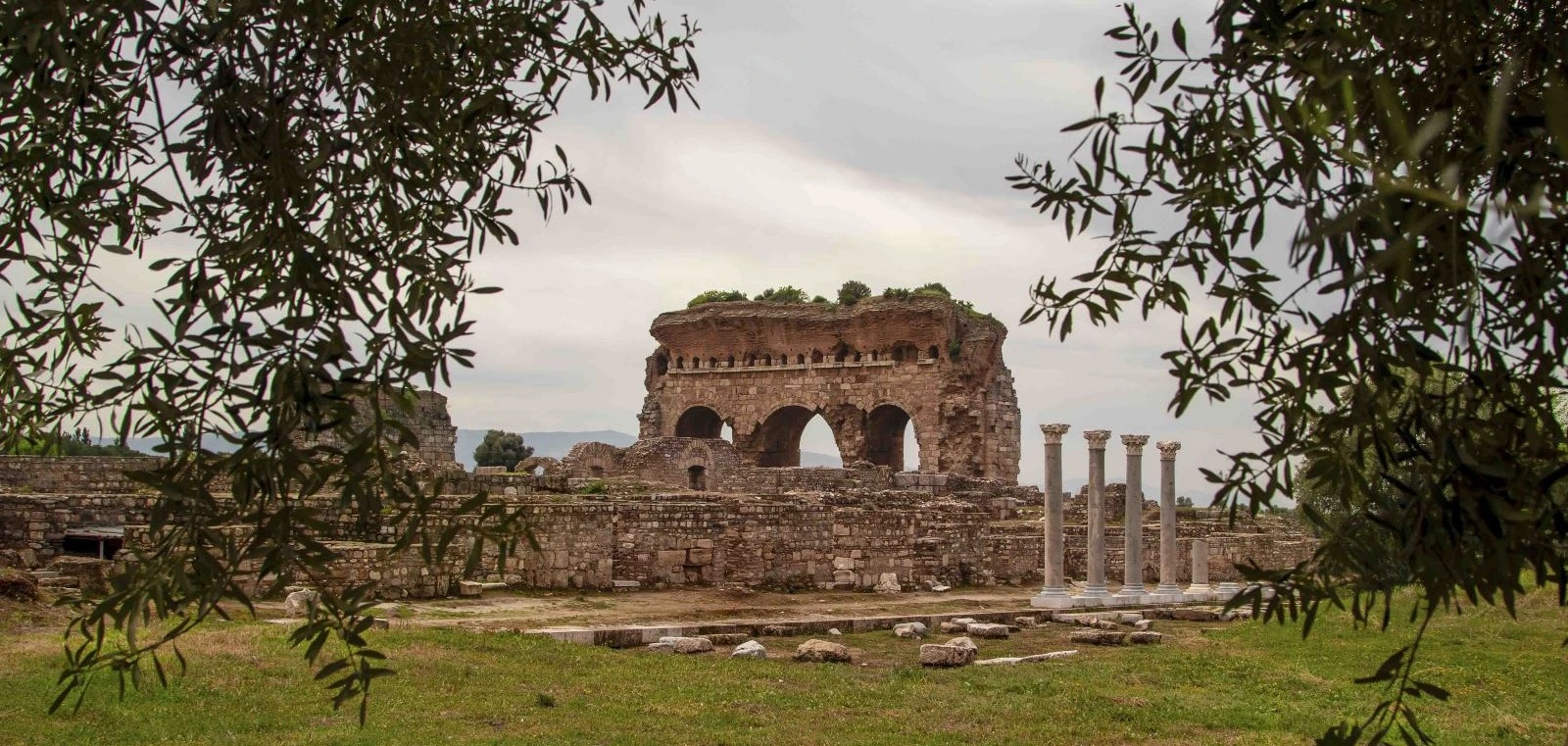
Travel from eighteenth-century Ottoman Aydın to the archaeology of the ancient city of Tralleis and discover how thousands of years of history survive within one modern city.
Design Your Private Aydın Journey