Private Karaburun Villages & Coves Tour
Ask us about a tailor-made day combining village life, scenic coastal roads, hidden swimming bays, local food and the western Aegean landscape.
Request a Custom Tour





The Karaburun Peninsula is one of the most rewarding parts of the İzmir coastline for travelers who enjoy small villages, uncrowded landscapes, clear Aegean water and roads that seem to lead toward nowhere. Beyond Karaburun town and Mordoğan, a network of rural settlements and secluded bays spreads across the peninsula.
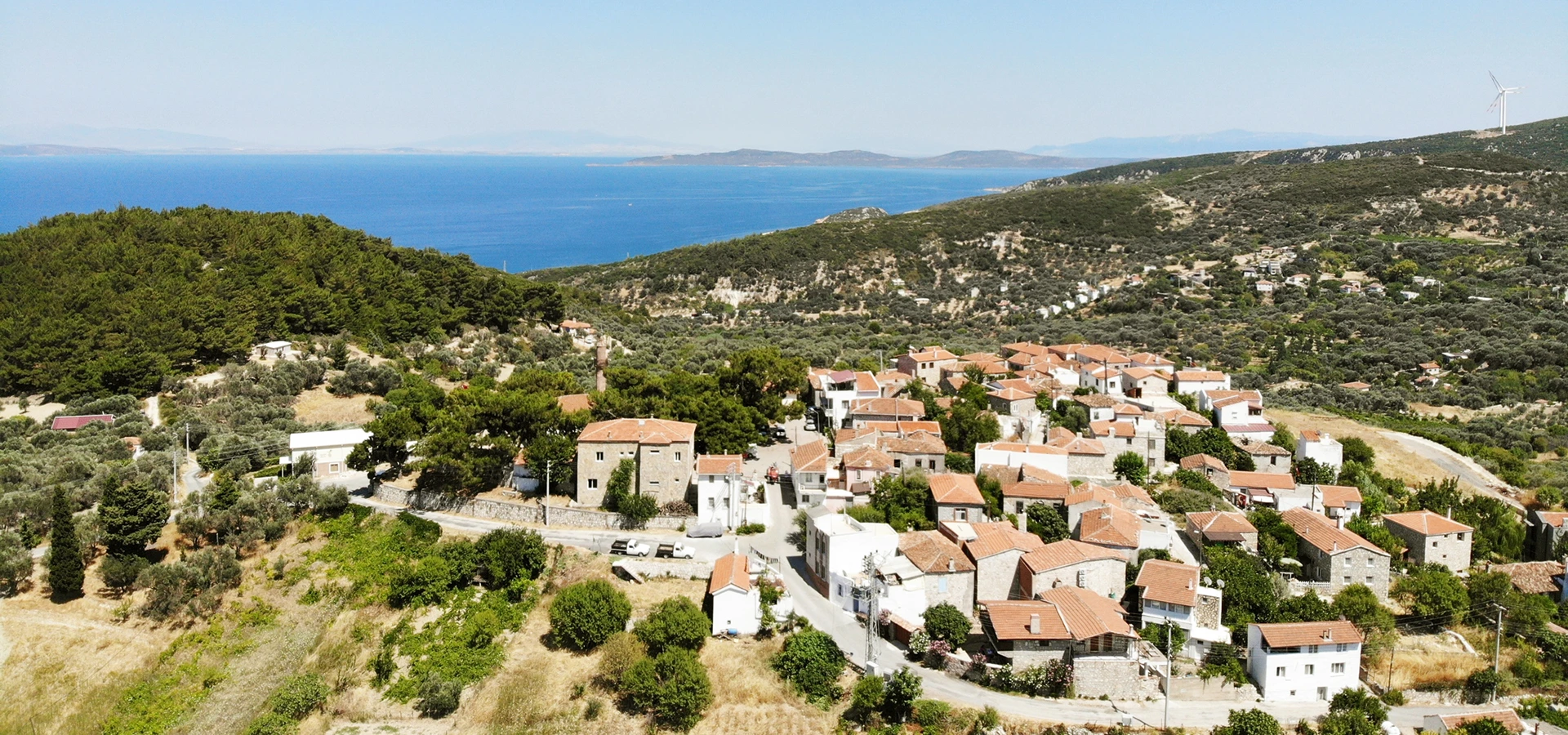
Villages such as Saip, Anbarseki, Kösedere, Eğlenhoca, İnecik, Bozköy, Tepeboz, Sarpıncık, Parlak and Küçükbahçe preserve a slower rhythm shaped by olive trees, vineyards, goat farming, wild herbs, stone houses and the changing seasons. Some stand on hills overlooking the sea, while others hide behind ridges several kilometers inland.
Between them lie some of Karaburun's most attractive swimming places: İncirlikoy, Boyabağı, Mimoza, Kumbükü, Manal, Dolungaz, Ayıbalığı and Badembükü. Some are organized beaches close to settlements, while others retain a much wilder atmosphere with little more than rock, clear water and the sound of the wind.
Exploring these places is less about racing from attraction to attraction and more about experiencing the peninsula itself. A village breakfast, a roadside fountain, an empty stone house, a fisherman repairing nets or a quiet swim can become as memorable as any famous monument.
Discover stone houses, village squares, olive groves and rural Aegean life.
Swim in clear turquoise water far from the large resort beaches.
Drive between mountain ridges, coastal cliffs and expansive Aegean viewpoints.
Leave space for spontaneous stops, local food and places that rarely appear on standard itineraries.
Essential information for exploring the quieter corners of the Karaburun Peninsula.
Karaburun Peninsula, on the Aegean coast west of İzmir in western Türkiye.
Open on Google MapsSmall villages, olive groves, rocky coastlines, fishing communities and quiet rural landscapes.
A mixture of sheltered coves, rocky swimming places, pebble beaches and open Aegean shores.
A private vehicle is the easiest way to combine several villages and remote coves in one day.
One full day for a highlights route; two or three days for slow exploration and swimming.
Spring and autumn for exploration; June to September for warm-weather swimming.
The peninsula rewards travelers who are willing to leave the main road and slow down.
Much of Türkiye's Aegean coast is associated with busy resort towns and famous beaches, but Karaburun still contains large areas where settlements are small, development is limited and the landscape remains the main attraction.
The villages reveal another side of the peninsula. Traditional agriculture remains visible in olive groves, vineyards and small fields, while seasonal products such as artichokes, herbs, grapes, olives and the famous Karaburun narcissus continue to shape local identity.
The coast is equally varied. One road may lead to an organized municipal beach, while the next turns toward a rocky cove where the water is exceptionally clear and almost nothing separates the hills from the sea.
This combination makes the area particularly attractive for road trips, swimming, photography, hiking, village exploration and slow travel. Rather than following a rigid sightseeing checklist, allow the landscape itself to determine the rhythm of the day.
Karaburun's villages are spread across hills, valleys and the coastline. Some can be visited quickly while driving around the peninsula, while others deserve a longer stop for walking, photography or a village meal.
A historic village close to Karaburun town with traditional houses, rural landscapes and views toward the islands offshore. Its lower coastal area, Saipaltı, reflects the village's historic connection with the sea.
A peaceful agricultural settlement surrounded by fertile land, olive trees and vineyards. It is particularly associated with narcissus cultivation and traditional rural production.
One of the peninsula's atmospheric inland villages, with an authentic agricultural character and an excellent position for exploring the northeastern side of Karaburun.
One of Karaburun's larger and older villages, traditionally connected with farming, animal husbandry and vineyards. Its inland location offers a strong contrast to the peninsula's beach settlements.
A quiet rural settlement surrounded by the dry, aromatic landscapes characteristic of the peninsula. It works well as part of a slow inland village drive.
A hillside village surrounded by olive trees, fields and Mediterranean vegetation. Walking routes through the central peninsula pass through this landscape.
A beautiful highland settlement surrounded by open countryside. Its elevated position and nearby roads provide impressive views across the peninsula.
A remote western village best known for the dramatic road leading toward Sarpıncık Lighthouse and the exposed cliffs overlooking the open Aegean Sea.
A traditional village of stone houses on the western side of the peninsula. The road from Parlak toward Badembükü descends through wild countryside toward the sea.
A small settlement in the quieter northern part of the peninsula, surrounded by agricultural land and a rugged coastline far removed from major resort development.
Another remote northern settlement where the dry hills, traditional agricultural landscape and sense of isolation reveal Karaburun at its quietest.
An abandoned former village whose ruined stone houses preserve traces of life before the population exchange. It is reached on foot rather than as a conventional drive-in attraction.
Among Karaburun's most evocative places is Sazak, an abandoned settlement associated with the peninsula's Greek-speaking communities before the population exchange of the early 20th century.
The village was once connected with olive cultivation, vineyards and winemaking. Today its roofless stone structures sit quietly within the surrounding landscape, creating an atmosphere very different from Karaburun's inhabited villages.
Sazak should be approached as a historic landscape rather than an adventure playground. Walls and ruins can be unstable, and visitors should avoid climbing onto structures or removing stones and artifacts.
The western side of Karaburun feels noticeably wilder than the more sheltered eastern coastline, and Sarpıncık is one of the best places to experience that change.
Beyond the village, a rural road leads toward Sarpıncık Lighthouse, built in the 20th century on the exposed western coast. The surrounding landscape opens toward the Aegean, with broad sea views and particularly beautiful late-afternoon light.
This is not a conventional beach stop. The attraction is the feeling of reaching the outer edge of the peninsula: wind, cliffs, open sea and an enormous horizon.
Walk briefly through Sarpıncık and experience one of the peninsula's quieter rural communities.
Continue toward the coast for dramatic views over the western Aegean.
Late-afternoon light can be spectacular when weather and road conditions are suitable.
The western coast is exposed and can be considerably windier than sheltered eastern bays.
Karaburun's coastline changes constantly. Some bays are sheltered and family friendly, others are rocky and ideal for snorkeling, and the western coast can feel completely different from the calmer eastern side.
One of Karaburun's most recognizable swimming places, known for clear turquoise water and a compact sheltered bay close to the district center.
A smaller natural bay framed by rocky slopes. Its clear water and quiet atmosphere make it attractive for travelers looking beyond the busiest beaches.
A convenient swimming area near Karaburun İskele, combining clear water with easy access to the restaurants and facilities of the town.
A quieter coastal setting with a relatively natural shoreline, suited to visitors who prefer simple swimming stops rather than developed beach clubs.
A pleasant bay on the Mordoğan side of the peninsula, popular for its relaxed shoreline and comparatively sheltered swimming conditions.
A rocky and scenic swimming area around Mordoğan, known for clear water and the dramatic meeting of rock and sea.
A more natural coastal stop where turquoise water, rocky shores and undeveloped surroundings create a distinctly wild atmosphere.
A remote western-coast bay below the Parlak area, known for its open landscape, natural shoreline and ecologically sensitive coastal environment.
A broad beach around Mordoğan with convenient access and more facilities than many of Karaburun's isolated coves.
A centrally located Mordoğan beach that works well for travelers who want straightforward access to swimming, cafés and the town.
İncirlikoy, also locally known as Akvaryum Koyu, lies only a few kilometers from Karaburun town and is one of the peninsula's most popular small swimming bays.
The attraction is immediately obvious: clear turquoise water, a compact protected setting and underwater visibility that makes the cove particularly appealing for swimming and snorkeling.
Because the usable shoreline is relatively limited, the bay can feel busy during summer weekends. Arriving early in the morning usually provides a calmer experience and softer light for photography.
For travelers searching for Karaburun's wilder side, Badembükü provides a very different experience from the municipal beaches around Mordoğan and Karaburun center.
The bay lies below Parlak village on the western side of the peninsula. The surrounding hills are open and sparsely developed, while the coastline retains a strong sense of isolation.
Badembükü is also environmentally sensitive. Sand lilies and other coastal vegetation can grow around the shoreline, so vehicles, tents and foot traffic should remain away from protected plants and dune areas.
For visitors who want clear water without spending the entire day on isolated rural roads, Mordoğan provides several of Karaburun's most accessible swimming choices.
The settlement has restaurants, markets, accommodation and a working waterfront, making it easy to combine a morning swim with lunch and further exploration of the peninsula.
A broad and convenient beach suited to a straightforward beach day.
A central swimming option close to Mordoğan's urban facilities.
A more dramatic rocky setting with very clear water.
A relaxed bay that works well for families and leisurely swimming.
See our complete Mordoğan visitor guide for more information about the town, beaches, historic sites, restaurants and surrounding coastline.
The geography of the peninsula creates noticeably different coastal experiences. Understanding this helps when deciding where to swim, especially on windy days.
More settlements, easier access, sheltered bays and a greater concentration of organized beaches, particularly around Mordoğan and Karaburun center.
Wilder, more exposed and more sparsely developed, with broad Aegean horizons and remote landscapes around Sarpıncık, Parlak and Badembükü.
The more accessible eastern bays are generally easier when facilities, short walking distances and food options are priorities.
The western side rewards travelers who value remote scenery, photography and quiet landscapes more than beach infrastructure.
Walk through Saip before descending toward Karaburun İskele, Mimoza or nearby swimming bays.
Combine the district center with one of its clearest and most accessible small coves.
Pair village exploration with the peninsula's dramatic western headland and open Aegean views.
Experience a traditional inland village before descending toward one of Karaburun's wildest coastal areas.
Create an inland cultural loop through agricultural villages away from the main beach route.
Combine the livelier southern settlement with a relaxed bay and an easy seaside lunch.
A satisfying first journey combines the peninsula's more accessible east coast with one or two inland villages and the dramatic western side. Do not attempt to visit every village and beach in one day.
Begin in Mordoğan and continue north toward Kösedere or Eğlenhoca. From there, travel toward Karaburun town for lunch or coffee before visiting Saip and swimming at İncirlikoy.
In the afternoon, continue inland through Bozköy and Tepeboz toward Sarpıncık. If road and weather conditions are good, continue toward the lighthouse for expansive views over the Aegean.
Travelers with additional time can instead head toward Parlak and Badembükü, or leave this section for a separate day so the experience does not become rushed.
Karaburun is famous for clear water, but individual beaches vary considerably in depth, shore material, exposure to wind and available facilities.
Useful at rocky and pebble coves where entering the sea barefoot can be uncomfortable.
Bring a mask for the smaller rocky bays where underwater visibility is often excellent.
Always check the actual sea before swimming. Conditions may differ significantly between opposite sides of the peninsula.
Some rocky coves become deep quickly and may not suit inexperienced swimmers or small children.
Do not assume every bay has showers, toilets, restaurants, umbrellas or lifeguards.
Natural shade can be limited. Carry sun protection when visiting exposed beaches or remote bays.
Karaburun's appeal depends heavily on the survival of its natural coastline. Rocky shores, clear water, Mediterranean vegetation, wild herbs and relatively undeveloped hills create habitats for both terrestrial and marine wildlife.
The wider peninsula is associated with the endangered Mediterranean monk seal. Visitors should never approach seals, enter sea caves where wildlife may be resting, attempt to feed animals or use boats to pursue them for photographs.
Coastal plants are equally vulnerable. In places such as Badembükü, rare and attractive plants including sand lilies can grow close to areas used by beach visitors. Even a vehicle track or repeated foot traffic can damage sensitive habitat.
The villages of Karaburun have long depended on agriculture, animal husbandry, fishing and small-scale production. Those traditions remain an important part of the landscape travelers see today.
Look for Karaburun's distinctive naturally ripened hurma olives and locally produced olive oil.
Karaburun is strongly associated with fragrant narcissus flowers, particularly during the winter growing season.
Local artichokes appear in markets and seasonal Aegean dishes during spring.
The peninsula's hills provide many edible and aromatic herbs used in local cuisine.
Goat cheese and other dairy products reflect the pastoral traditions of the peninsula.
Fishing remains part of coastal life, and simple fish restaurants are an excellent way to finish a day of exploration.
A village-and-cove road trip becomes much more memorable when food is treated as part of the journey. Menus change seasonally, and the simplest local dishes often reflect the peninsula better than elaborate restaurant concepts.
Look for olive-oil vegetables, wild herbs, fava and seasonal salads.
Choose from the day's catch at coastal restaurants around Karaburun and Mordoğan.
Spring is particularly rewarding for locally grown artichokes prepared with olive oil.
Traditional dairy products pair naturally with village bread, tomatoes and herbs.
Village kitchens may offer börek, katmer and other regional pastries.
Small producers are worth seeking out when buying edible souvenirs from the peninsula.
Excellent for village drives, hiking, green landscapes, wildflowers and comfortable temperatures.
Warm enough for swimming while many coves remain calmer than during peak summer.
Best for classic beach weather, but arrive early at popular coves and expect more traffic on weekends.
One of the most enjoyable months, with warm sea temperatures and generally fewer summer crowds.
Ideal for road trips, photography and quiet coastal walks when the weather remains settled.
Beautiful for village life, stormy seascapes and narcissus season, but many summer-oriented coastal businesses may be closed.
Combine Karaburun town, Saip and one nearby swimming cove.
Visit several villages, swim once or twice and reach either Sarpıncık or Parlak.
Explore the eastern villages and coves on one day and the remote western peninsula on another.
Add Mordoğan, longer village lunches, hiking and unhurried swimming stops.
Ideal for travelers who want slow mornings, different beaches each day and time to discover places spontaneously.
Do not begin a long remote peninsula loop with very little fuel.
Save your route before leaving larger settlements, especially when heading toward isolated western bays.
Remote beaches may have no shop or café nearby.
Village roads may be narrow, winding and shared with tractors, animals, bicycles and pedestrians.
The final approach to remote coves or viewpoints can change after storms or road works.
Driving times can be longer than the map suggests because the roads encourage a slower pace.
Small village businesses may not always offer the same payment options as larger tourist towns.
Complete unfamiliar rural and unpaved sections in daylight whenever possible.
The peninsula offers some of the most varied landscape photography around İzmir, from intimate village details to enormous coastal panoramas.
Early light works beautifully with the clear water of sheltered eastern bays.
Look for stone walls, old doors, olive trees, fountains and everyday rural details.
Use the wide western horizon for dramatic landscape compositions.
Photograph the relationship between an undeveloped shoreline and the surrounding hills.
Green fields and flowers provide a completely different palette from high summer.
The western side is particularly rewarding when the sun descends over the Aegean.
Families can enjoy Karaburun very easily when the itinerary focuses on accessible beaches and avoids excessive driving.
Organized beaches around Mordoğan and Karaburun are easier than remote rocky coves.
Combine two villages and one good swimming stop instead of attempting the whole peninsula.
They make pebble and rocky shorelines much more comfortable for children.
Shade can be limited around isolated beaches and inland village roads.
Mordoğan and Karaburun center provide the easiest choice of restaurants and cafés.
Choose calm sheltered water and never rely only on how a bay looked on a previous visit.
Accessibility varies considerably. Village centers and organized beaches can be relatively straightforward, while remote coves, historic lanes and lighthouse routes may involve steep slopes, rough surfaces or unpaved approaches.
Some can be viewed comfortably from vehicle-accessible streets and central squares.
Usually provide more predictable access than natural coves, although facilities vary.
May involve loose gravel, rocks, steep gradients and uneven paths.
Requires walking and is not suitable for visitors needing a smooth step-free route.
The most practical way to reduce walking between widely separated peninsula highlights.
Ask individual beach operators about current ramps, accessible toilets and shoreline access.
Karaburun lies west of İzmir, beyond Urla and the junction toward Çeşme. The main road provides straightforward access to Mordoğan and Karaburun, but the most interesting village-and-cove journeys require turning onto smaller local roads.
The easiest independent option for travelers who want to visit multiple villages and beaches.
Ideal for a relaxed custom itinerary without worrying about parking, navigation or finding rural turnoffs.
Useful for reaching major settlements, but much less practical for linking remote villages and small coves in one day.
Possible for experienced cyclists, but distances, gradients, summer heat and wind require careful planning.
Excellent within villages and on selected hiking routes, but settlements are too widely separated for casual walking between them.
Local boat experiences can reveal sections of coastline difficult to appreciate from the road.
Karaburun works beautifully as part of a wider journey through western İzmir, particularly when combined with Mordoğan, Urla and Çeşme.
Explore the district center, harbor, beaches, restaurants and surrounding coastline.
Discover beaches, waterfront restaurants, local history and the southern gateway to the Karaburun Peninsula.
Combine coastal villages with gastronomy, vineyards, art and one of İzmir's most attractive town centers.
Explore vineyards and countryside south of Karaburun as part of a wider peninsula road trip.
Continue toward beaches, historic Çeşme Castle and the peninsula's livelier resort atmosphere.
Add stone streets, restaurants, boutique shops and traditional Aegean architecture.
Karaburun lies on the Aegean coast west of İzmir, north of Çeşme and west of Urla.
Yes. The rural villages, remote bays, olive groves and western coastline reveal much more of the peninsula's character than the main town alone.
Saip, Anbarseki, Kösedere, Eğlenhoca, Bozköy, Tepeboz, Sarpıncık and Parlak are all interesting, but the best selection depends on your route and available time.
Different villages offer different experiences. Sarpıncık stands out for its dramatic western landscape, while Saip, Parlak, Tepeboz and the inland agricultural villages each have their own character.
Sazak is an abandoned historic village containing ruined stone houses associated with the peninsula's pre-population-exchange history.
The final approach is made on foot rather than as a normal drive-in village visit. Wear appropriate shoes and do not climb unstable ruins.
It stands on the exposed western side of the Karaburun Peninsula, beyond Sarpıncık village, overlooking the open Aegean Sea.
Popular choices include İncirlikoy, Boyabağı, Mimoza, Kumbükü, Manal, Dolungaz, Ayıbalığı and Badembükü.
Akvaryum Koyu is another commonly used name for İncirlikoy, a small clear-water bay close to Karaburun center.
It can become busy during summer weekends because the cove is small. Arriving early usually provides a more comfortable experience.
Badembükü lies on the western side of the peninsula, below the area around Parlak village.
Some beaches contain sand, but many coves have pebbles, rocks or mixed natural shorelines. Water shoes are useful.
Yes. Many rocky coves have clear water and good visibility, making snorkeling one of the simplest ways to enjoy the coastline.
No. Some organized beaches have toilets, showers, umbrellas and food options, while remote bays may have almost no facilities.
A vehicle is strongly recommended if you want to combine several villages, remote viewpoints and small coves in one day.
Major settlements can be reached by public transport, but linking remote villages and coves is considerably easier with a car or private vehicle.
One day is enough for a highlights route, but two or three days provide a much better experience if you want village walks, swimming and the western coastline.
June and September are particularly attractive for combining swimming with exploration. Spring and autumn are excellent for hiking, villages and photography.
Popular beaches and Mordoğan can become busy, particularly on July and August weekends, but the peninsula still contains many quieter rural areas.
Yes. The western coast is generally more exposed, rugged and sparsely developed, with dramatic open-sea views.
The wider Karaburun coast forms part of the habitat of the endangered Mediterranean monk seal. Sightings are never guaranteed, and seals and sea caves should never be approached or disturbed.
Look for hurma olives, local olive oil, goat cheese, artichokes, Aegean herbs, mezes and fresh seafood.
Yes. Winter offers quiet villages, dramatic coastal scenery and the peninsula's narcissus season, although many summer beach businesses close.
Main roads are straightforward, but smaller village and coastal roads may be narrow, winding, steep or occasionally unpaved. Drive slowly and avoid unfamiliar remote sections after dark.
Most remain working residential and agricultural communities rather than purpose-built tourist attractions. That is an important part of their appeal.
Travel slowly. Choose a few villages, one or two coves, a good local meal and enough free time to stop when the landscape catches your attention.
Carry everything away from remote coves, including food packaging, bottles and cigarette ends.
Do not pick sand lilies, wildflowers or other protected vegetation.
Never pursue seals, enter wildlife caves or disturb nesting and resting animals.
Dry Mediterranean vegetation creates serious fire risk during the warmer months. Follow all local restrictions.
Do not block entrances, photograph residents intrusively or enter private gardens and fields.
Buy food, olive oil, local products and meals directly from peninsula businesses whenever possible.
Creating new vehicle tracks damages fragile vegetation and accelerates coastal erosion.
Quiet landscapes are one of Karaburun's greatest qualities. Avoid unnecessary music and disturbance at remote bays.
Explore traditional villages, quiet swimming bays, local food and the dramatic western coastline with a flexible private route designed around your interests and pace.
Choose a relaxed coastal day, a village-focused road trip or a full peninsula exploration combining landscape, culture and swimming.
Ask us about a tailor-made day combining village life, scenic coastal roads, hidden swimming bays, local food and the western Aegean landscape.
Request a Custom Tour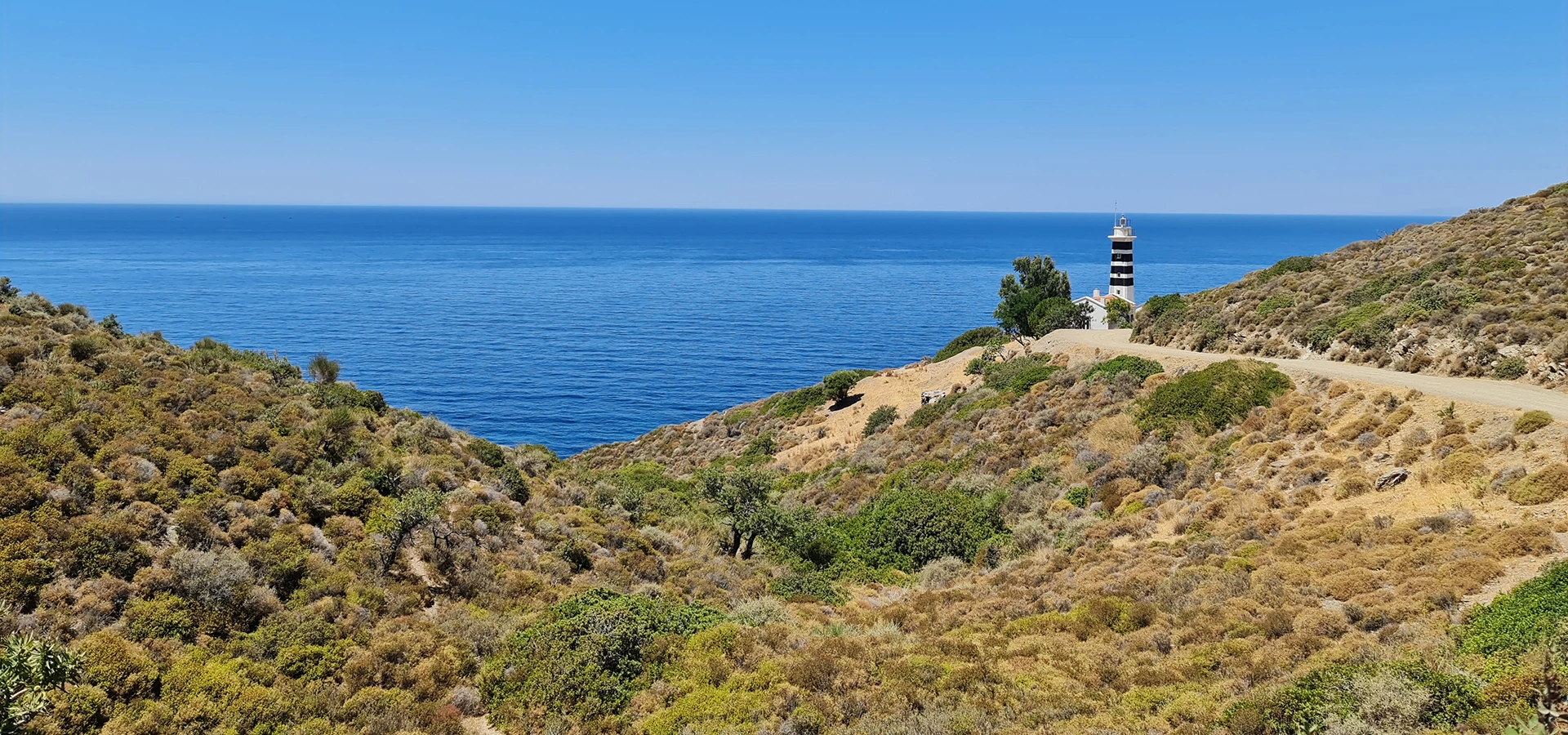
Ask us about a tailor-made day combining Karaburun, Sarpıncık Village, Sarpıncık Lighthouse, remote coastal viewpoints, local villages and the dramatic outer landscapes of the peninsula.
Request a Custom Tour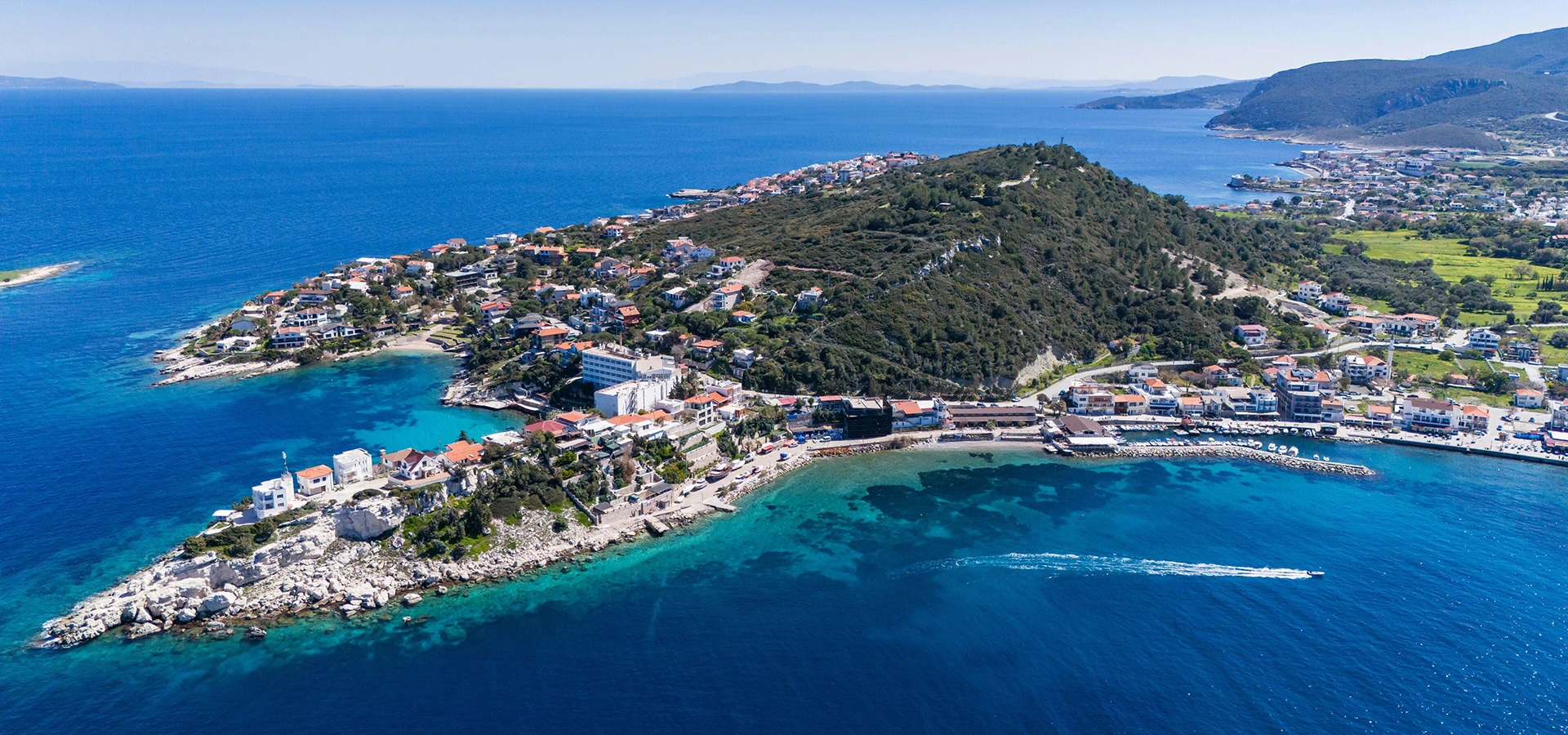
Discover the wider peninsula through clear-water bays, traditional villages, agricultural landscapes, walking routes and some of western İzmir's most remote coastline.
View Karaburun GuideCombine Sarpıncık with beaches, historic villages, archaeology, vineyards and the famous coastal destinations of western İzmir.
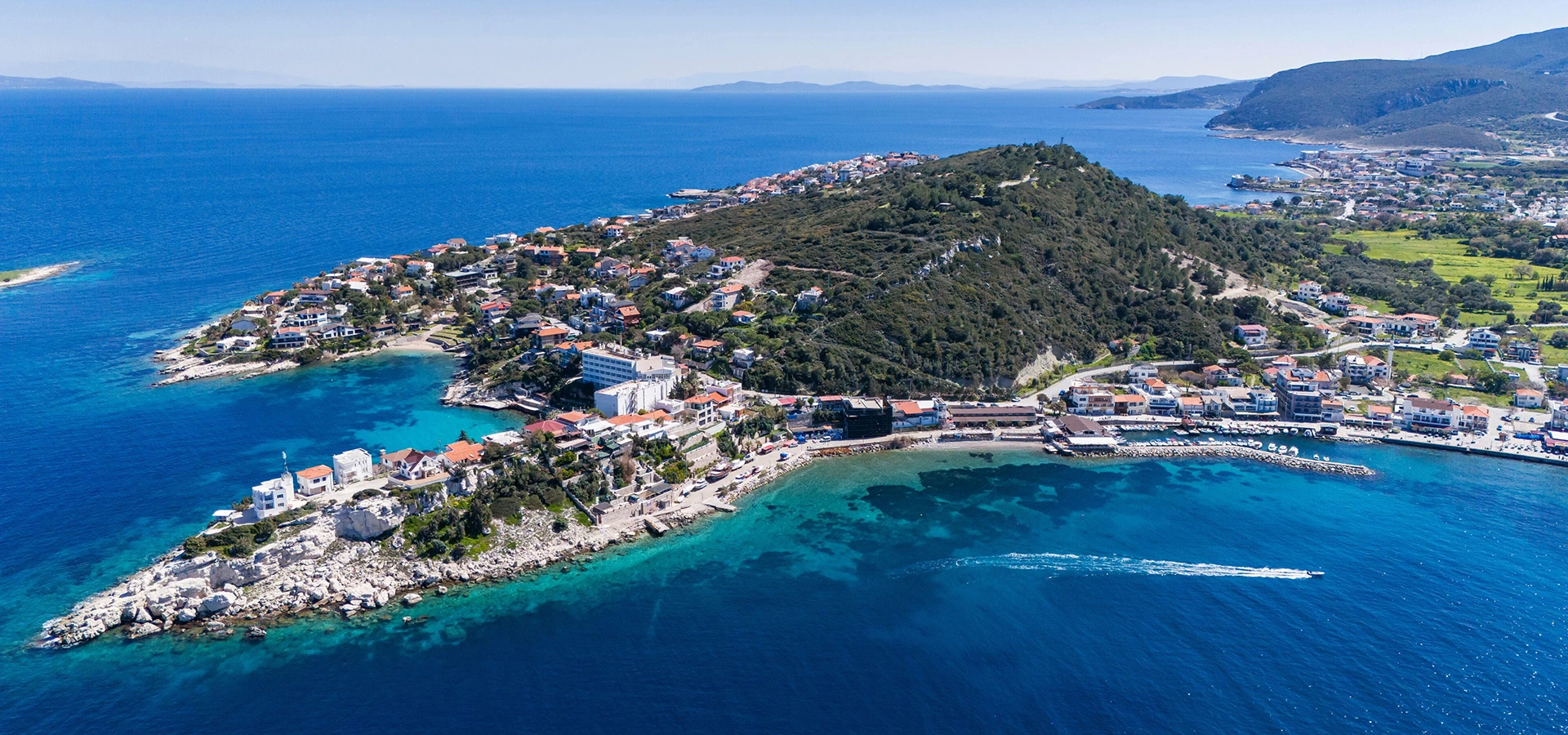
Continue south for clear-water beaches, Old Mordoğan, Ayşe Kadın Mosque, local food, olive landscapes and a relaxed Aegean waterfront.
Explore Mordoğan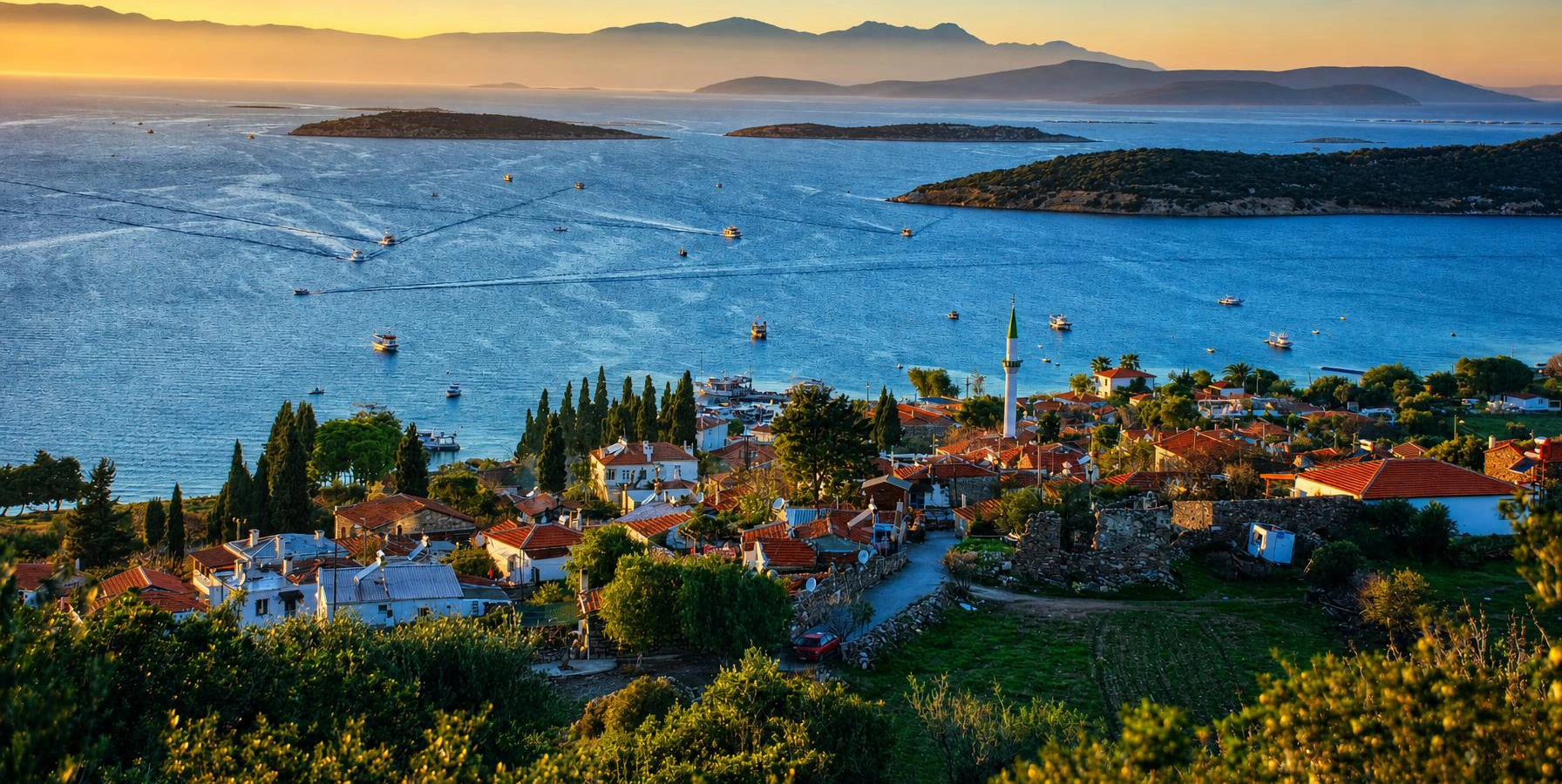
Continue toward ancient Erythrai for archaeological remains, traditional village streets, coastal scenery and another beautiful perspective on the Aegean landscape.
Explore Ildırı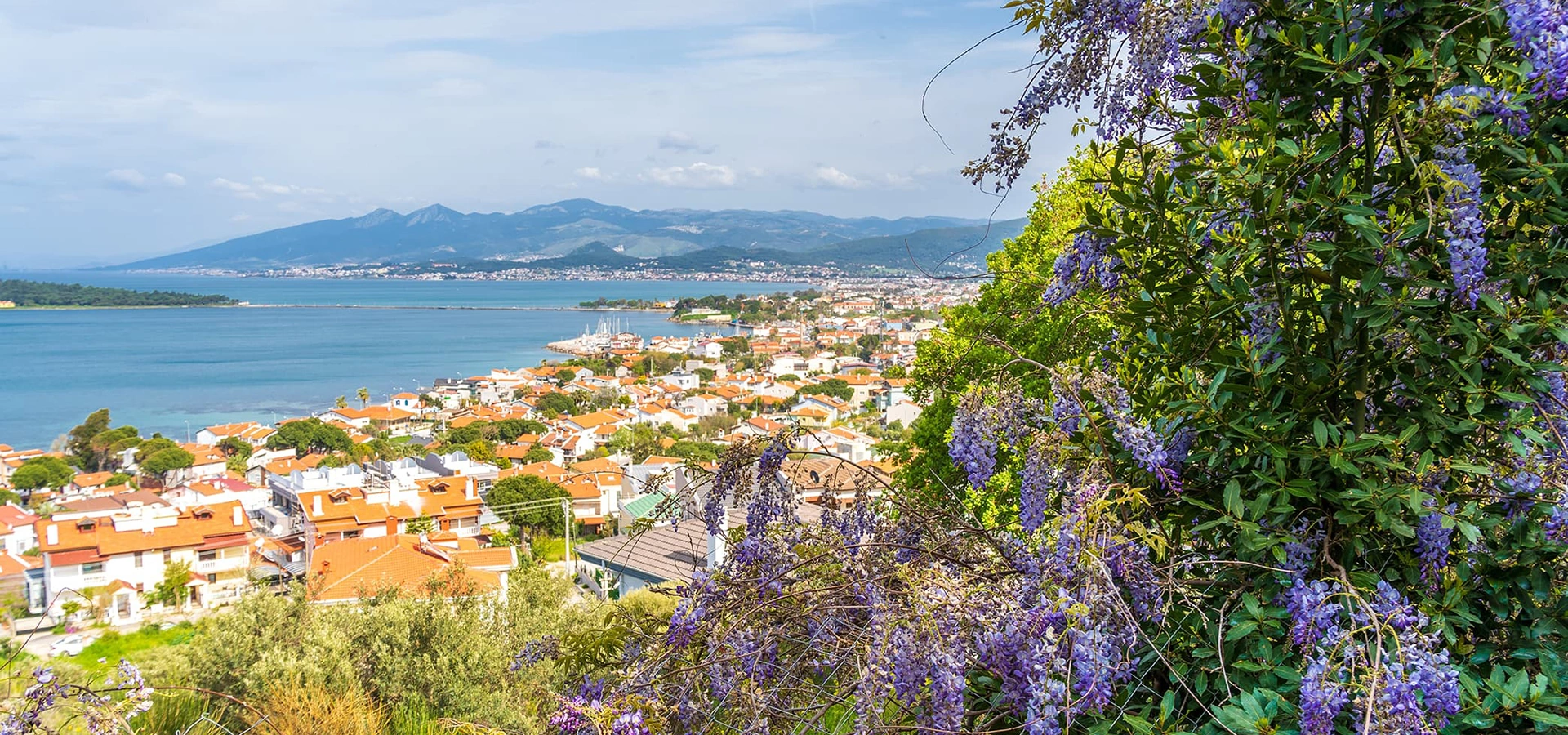
Travel south for ancient Klazomenai, the İskele waterfront, vineyards, creative neighborhoods and one of Türkiye's most exciting Aegean food destinations.
Explore Urla