Thin Peel
One of the most recognisable characteristics of Seferihisar Mandalinası is its relatively thin and smooth peel.
- Texture: Thin
- Surface: Smooth
- Benefit: Easy to peel






Among the orchards of Seferihisar on Türkiye's İzmir Peninsula grows one of the district's most recognisable agricultural products: the famous Seferihisar mandarin.
Known locally as Seferihisar Mandalinası, it belongs primarily to the Satsuma group of mandarins and is prized for its thin peel, delicate segment membranes, flattened shape, aroma and balanced flavour.
Mandarin cultivation became an important part of Seferihisar's agricultural landscape during the twentieth century. Today the fruit is so closely associated with the district that the beginning of the harvest season is traditionally celebrated with the colourful Seferihisar Mandarin Festival.
In 2019, Seferihisar Mandalinası received official geographical-indication protection in Türkiye as a Menşe Adı – Protected Designation of Origin, recognising the relationship between the fruit and the particular environmental conditions of Seferihisar.
Seferihisar is particularly associated with aromatic, thin-skinned Satsuma mandarins.
Seferihisar Mandalinası has been officially registered as a Turkish geographical indication since 2019.
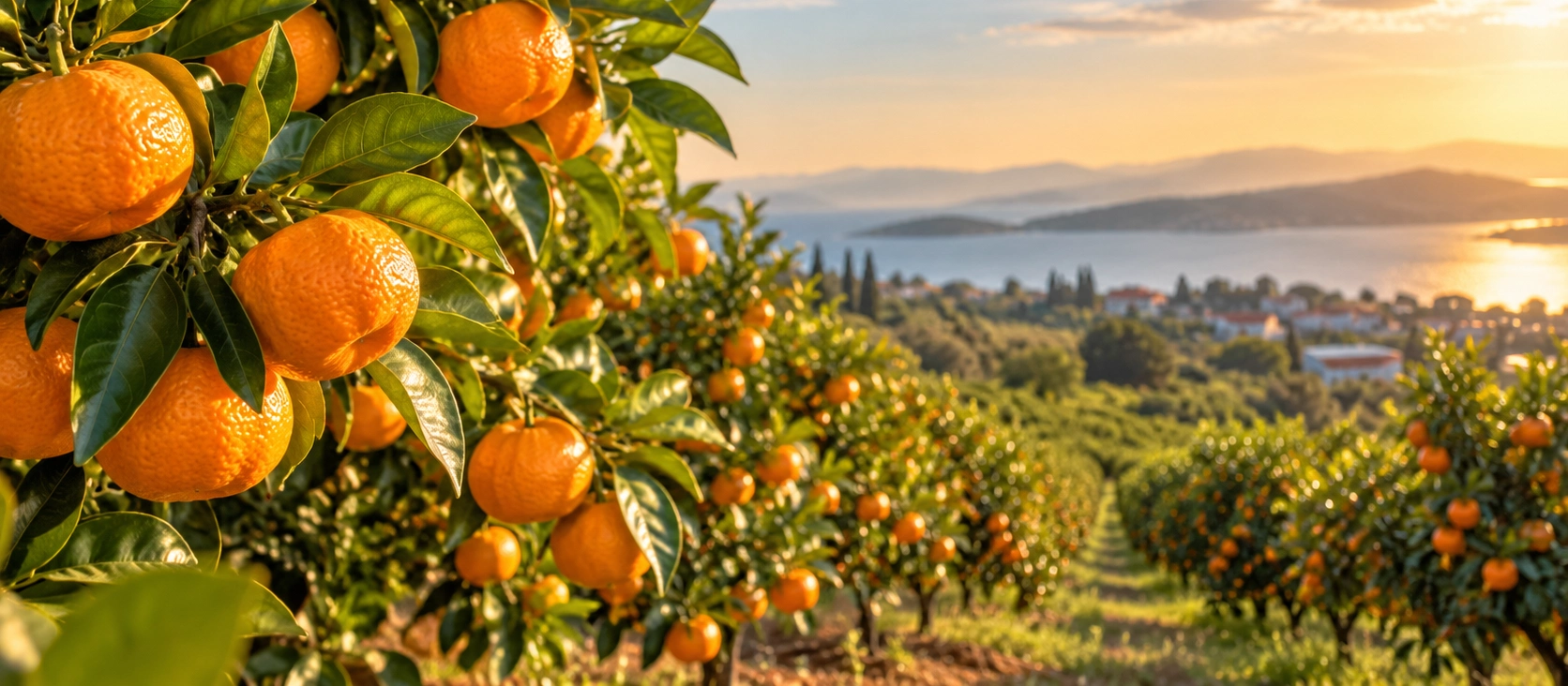
The mandarin season begins in autumn, when orchards across the district turn increasingly yellow and orange.
Mandarin orchards, producers and the annual harvest festival remain important symbols of Seferihisar.
Essential information about one of the best-known agricultural products of the İzmir Peninsula.
The protected growing area lies within Seferihisar district in İzmir Province on Türkiye's Aegean coast.
Open Seferihisar on Google MapsSeferihisar Mandalinası is associated with Satsuma mandarins, particularly valued for their delicate peel and aromatic flavour.
Registered in Türkiye as a Menşe Adı geographical indication under registration number 443.
Harvest begins in autumn, with the widely cultivated Owari variety traditionally harvested from around mid-October.
What began as a twentieth-century agricultural crop became one of the strongest symbols of Seferihisar.
According to the geographical-indication registration, commercial mandarin cultivation in Seferihisar began in 1953, when approximately 600 Satsuma mandarin trees were planted in the district.
The crop proved particularly well suited to the local environment. Orchards expanded and mandarin growing gradually became an important part of Seferihisar's agricultural economy.
Over the following decades, the sight of evergreen citrus trees heavy with yellow-orange fruit became increasingly characteristic of the district's rural landscape.
Satsuma mandarins were not simply another crop. Their suitability to local climatic and geographical conditions allowed Seferihisar producers to develop fruit recognised for thin peel, aroma, texture and natural colour development.
Mandarin growing also shaped local seasonal rhythms. Autumn brought harvesting, sorting, packing and selling, while families and agricultural workers moved through orchards collecting the fruit by hand.
Eventually the mandarin became important enough to inspire a local festival dedicated to celebrating both the fruit and the people who grow it.
This connection was formally recognised when Seferihisar Mandalinası received geographical-indication registration in 2019.
The protected product specification identifies several characteristics that distinguish mandarins grown within the Seferihisar geographical area.
One of the most recognisable characteristics of Seferihisar Mandalinası is its relatively thin and smooth peel.
The fruit displays the characteristic slightly flattened form associated with Satsuma mandarins rather than being perfectly round.
Thin membranes around the individual segments contribute to the tender texture traditionally associated with the fruit.
Taste and aroma are central to the reputation of Seferihisar mandarins and their popularity as fresh fruit.
An important local characteristic is the ability of the fruit to develop its yellow colour naturally while remaining on the tree.
Local topography, humidity, temperature patterns and soils contribute to the particular character of mandarins grown in Seferihisar.
Satsuma mandarins belong to a group of citrus fruits especially appreciated for being easy to peel, aromatic and tender. They are strongly associated with autumn and early winter fruit markets in Türkiye.
Seferihisar's reputation is particularly connected with Satsuma cultivation. Several selections can be found in the district, allowing producers to extend the harvest period.
The most widespread traditional Satsuma variety in Seferihisar, generally entering harvest from around the middle of October.
An earlier-ripening Satsuma selection that can allow fruit to reach the market before the main Owari harvest.
Another early selection cultivated to help extend Seferihisar's mandarin marketing season.
Satsumas are appreciated for peel that separates relatively easily from the juicy segments inside.
The fruit has tender segments surrounded by relatively thin membranes.
Breaking the peel immediately releases the fragrant citrus oils that make mandarins so distinctive.
Seferihisar's success with Satsuma mandarins is closely related to its Mediterranean climate, local topography, autumn temperature patterns and suitable agricultural land.
The registered product specification highlights the connection between local conditions and the fruit's thin skin, flattened shape and natural colour development.
Long warm periods allow citrus trees to develop fruit gradually through the growing season.
Seasonal temperature changes during autumn help the mandarin peel develop its characteristic colour.
Local topography creates productive areas where citrus cultivation can thrive.
Moisture conditions contribute to the environment in which Seferihisar Satsumas develop their recognised characteristics.
Generations of farmers have identified agricultural areas particularly well suited to productive citrus orchards.
Many important orchard areas lie away from direct coastal salt exposure, helping protect sensitive citrus trees.
The connection between fruit and place was officially recognised when Seferihisar Mandalinası was registered by the Turkish Patent and Trademark Office.
A designation of origin establishes a particularly close relationship between a product and its geographical environment. For travellers, this means that the name Seferihisar Mandalinası represents more than a general variety of citrus fruit: it identifies mandarins connected with a defined local production area and recognised characteristics.
Drive through the countryside around Seferihisar during autumn and citrus orchards become an unmistakable part of the landscape.
Evergreen trees create dense areas of deep green foliage. As autumn progresses, hundreds of yellow and orange mandarins appear beneath the leaves, transforming the orchards just before harvest.
Mandarin trees remain green throughout the year, giving orchard landscapes a distinctive character even outside harvest season.
Fragrant citrus flowers appear during the flowering season before developing into small green fruit.
Fruit develops through the warm months while orchards require careful irrigation and agricultural management.
As temperatures change, the fruit gradually develops the yellow-orange tones associated with harvest.
Fruit is carefully collected from the trees before being sorted and prepared for sale.
Mandarin cultivation remains closely connected with farming families, producers and seasonal agricultural work.
Autumn is the most exciting time to experience Seferihisar's mandarin culture. Earlier Satsuma selections can mature first, while the main Owari harvest traditionally begins around mid-October.
Exact harvest timing varies according to variety, weather and orchard conditions, so the season unfolds gradually rather than beginning on a single date.
Earlier varieties may begin approaching maturity while most orchard fruit remains green or partly coloured.
The season gathers momentum and the traditional Owari harvest begins from around the middle of the month.
One of the most characteristic periods for seeing Seferihisar surrounded by freshly harvested mandarins.
Mandarins remain prominent in markets and kitchens as the wider citrus season continues.
The traditional Mandarin Festival is associated with celebrating the harvest and promoting local producers.
Autumn visitors can combine mandarin season with Sığacık, village markets, local foods and the coastline.
Fresh-market mandarins need careful handling. The aim is to collect ripe fruit without damaging the peel or branches and then move it quickly through sorting and packing.
Fruit development, flavour and colour help producers determine when each part of the orchard is ready.
Mandarins are collected carefully to avoid unnecessary bruising or damage to their delicate peel.
Harvested fruit is placed into suitable containers before being transported from the orchard.
Fruit is examined and organised according to quality, appearance and size.
Selected mandarins are prepared for markets, greengrocers and distribution.
Much of the pleasure of Satsuma mandarin lies in eating the fruit fresh while its aroma remains intense.
The appeal of a good Satsuma is not simply sweetness. Its character comes from the balance between juice, natural sugars, gentle acidity and fragrant citrus oils.
Ripe fruit develops a pleasantly sweet flavour that makes it particularly easy to eat fresh.
A light citrus acidity prevents the fruit from becoming one-dimensional or excessively sweet.
Tender segments release abundant juice when bitten or squeezed.
The peel contains aromatic citrus oils that become immediately noticeable as soon as the fruit is opened.
Thin segment membranes contribute to the delicate eating quality associated with Satsuma mandarins.
The combination of sweetness, acidity and citrus fragrance creates a particularly refreshing autumn fruit.
The simplest way to appreciate Seferihisar Mandalinası is also arguably the best: peel a fresh mandarin during harvest season and eat it immediately.
Yet the fruit's juice, zest and fragrance make it useful in many other preparations as well.
Enjoyed directly from the peel, especially during the autumn harvest season.
Ripe mandarins can be pressed into an intensely fragrant seasonal citrus drink.
The fruit can be preserved so that its flavour continues beyond the main harvest season.
Mandarin juice and zest bring fresh citrus aroma to cakes, creams and other sweets.
The aromatic outer peel can add intense citrus fragrance when used appropriately in cooking.
Festival culture has encouraged producers and cooks to experiment with numerous mandarin-based foods and gifts.
Few things demonstrate the importance of the fruit more clearly than the Seferihisar Mandalina Şenliği – Seferihisar Mandarin Festival.
The festival tradition dates back to the twentieth century and was revived as a regular celebration in the 2000s. It was created not simply as entertainment but also as a way to promote Seferihisar mandarins, support producers and strengthen recognition of the crop.
The festival celebrates the season when Seferihisar's orchards produce their famous crop.
Local growers have traditionally competed for recognition of the quality of their mandarins.
Cooking and dessert competitions demonstrate how the fruit can move beyond simple fresh consumption.
The event provides an opportunity to promote farmers, local businesses and Seferihisar agricultural products.
Concerts, performances and community activities turn the harvest celebration into a major local event.
Mandarins, decorations and harvest displays transform the district into a celebration of its most famous fruit.
For visitors, the mandarin may appear to be a colourful seasonal speciality. For Seferihisar's agricultural communities, however, it also represents years of orchard management, harvesting, packing and marketing.
Citrus cultivation has supported generations of agricultural families throughout parts of the district.
Harvest creates work in orchards as well as sorting, packing and transport.
Fresh fruit reaches consumers through neighbourhood markets, shops and direct producer sales.
Seferihisar's mandarins travel far beyond the district through wider commercial distribution.
The fruit has become part of how Seferihisar presents its agricultural character to visitors.
Geographical-indication registration helps connect the reputation of the fruit directly with Seferihisar.
The geographical-indication specification defines a particular production area within Seferihisar district rather than applying the name to every Satsuma grown elsewhere in Türkiye.
The agricultural areas surrounding the district centre form an important part of the protected mandarin landscape.
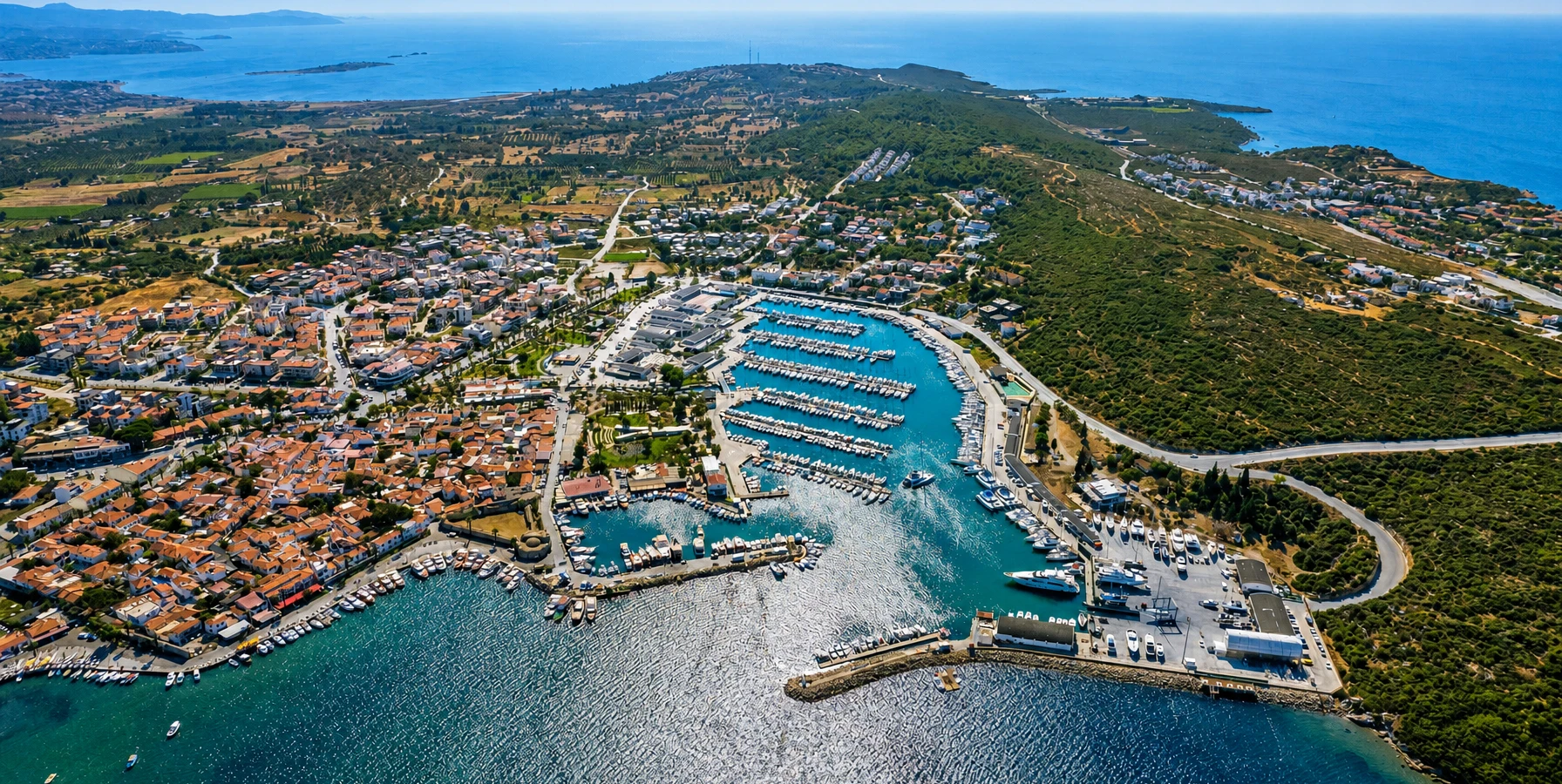
The historic harbour settlement and its surrounding countryside lie within the geographical area connected with the registered product.
Southern parts of Seferihisar contribute to the wider citrus-growing landscape of the district.
Ürkmez and its surroundings are included within the officially defined geographical boundary.
The most atmospheric orchard views are generally found away from the densely built coastal areas.
Seferihisar belongs to the larger agricultural and culinary landscape of western İzmir.
During harvest season, mandarins appear throughout Seferihisar in greengrocers, markets and local producer stalls. Freshness matters more than seeking unnaturally perfect-looking fruit.
Autumn is the natural time to seek locally harvested mandarins with maximum freshness and aroma.
A fragrant citrus aroma is one of the great pleasures of freshly harvested Satsuma fruit.
Choose fruit without extensive bruising, mould or obvious deterioration.
A gently flattened shape is characteristic of Satsuma mandarins.
If buying specifically for the geographical identity, ask whether the mandarins were grown in Seferihisar.
Seasonal markets can provide opportunities to purchase directly from people connected with local agriculture.
Fresh Satsuma mandarins are delicate fruit. Good storage preserves flavour and reduces unnecessary waste.
Excess surface moisture encourages deterioration, so avoid storing wet fruit for long periods.
Do not compress a large quantity of fruit tightly into a sealed container without ventilation.
Remove damaged fruit before deterioration spreads to neighbouring mandarins.
A cool environment helps extend freshness when the fruit will not be eaten immediately.
Fresh fruit is at its most enjoyable while the peel remains intensely fragrant.
Juice, marmalade or desserts provide useful ways to enjoy mandarins that cannot all be eaten fresh.
Seferihisar cuisine is deeply connected with the agricultural landscape surrounding it. Mandarins sit alongside olives, vegetables, herbs, grains, dairy traditions and seafood as part of a remarkably diverse local food identity.
Mandarin season reminds visitors that traditional Aegean food follows the agricultural calendar.
The orchards demonstrate how closely Seferihisar's identity remains connected with farming.
Like many Aegean foods, mandarins need little preparation when the raw ingredient is excellent.
Markets and festivals bring farmers and consumers together around locally grown ingredients.
Jam, marmalade and other preparations allow seasonal abundance to be carried into later months.
The annual festival demonstrates how one agricultural product can become a symbol of an entire district.
During autumn, Seferihisar's mandarin season can become part of a wider journey through the district's markets, historic settlements and beautiful Aegean coastline.
Mandarins become even more interesting when experienced as part of Seferihisar's wider agricultural and culinary landscape.
Begin with the fruit that turns the district orange each autumn and has become one of its strongest agricultural symbols.
Discover Seferihisar's distinctive soft dairy speciality and its connection with the villages around Ulamış.
Olive groves surrounding the district contribute another essential ingredient to the Seferihisar kitchen.
Markets reveal the extraordinary agricultural diversity produced by the wider İzmir Peninsula.
Wild and cultivated greens bring another distinctive dimension to local cuisine.
Sığacık and the surrounding coast connect Seferihisar's agricultural landscape directly with the sea.
October and November are especially atmospheric if your priority is experiencing the local harvest season.
Look for local producers, neighbourhood markets and greengrocers rather than assuming every mandarin comes from Seferihisar.
The easiest way to appreciate the fruit is simply to peel a freshly harvested Satsuma and taste it.
Mandarin groves are working agricultural properties, not public attractions unless specifically opened to visitors.
Never remove fruit from trees unless the farmer or orchard owner has clearly invited you to do so.
Combine the food experience with one of the most atmospheric historic and coastal destinations in Seferihisar.
Mandarins are only one part of Seferihisar's rich agricultural and culinary identity.
The Mandarin Festival does not necessarily fall on the same calendar date every year, so verify the current programme before travelling.
The story of Seferihisar Mandalinası demonstrates how an agricultural product can become inseparable from the identity of a place.
Mandarin orchards represent more than seventy years of organised Satsuma cultivation in the district.
Growing, harvesting, packing and selling fruit supports a wider network of local economic activity.
Citrus orchards contribute to the distinctive rural scenery of Seferihisar.
The protected designation formally links the fruit with a defined part of Seferihisar.
The annual celebration transforms agricultural harvest into a shared expression of local culture.
This is not a historical food preserved only in museums: mandarins continue to be cultivated, harvested, traded and eaten every year.
Once you have tasted Seferihisar mandarins, continue exploring the extraordinary agricultural and culinary traditions of İzmir Province.
Discover the traditional Seferihisar dairy speciality associated particularly with Ulamış and local village food culture.
Explore the remarkable edible greens that form one of the foundations of western Anatolian cuisine.
Taste pleasantly bitter greens traditionally served with olive oil and fresh lemon.
Discover one of the classic salty coastal greens of the Aegean table.
Explore another extraordinary seasonal vegetable tradition of the İzmir Peninsula.
Delicate flowers filled with rice and herbs provide one of the loveliest expressions of Aegean cooking.
Discover the shared plates, olive oil, vegetables, herbs and seafood that define the Aegean table.
Explore Türkiye's historic tradition of fruit, flower, spice and herb-based drinks.
A mandarin-season visit can easily become a full day exploring the cultural landscapes and beautiful coastline of Seferihisar.
Explore narrow streets, stone houses and local food culture inside the historic fortified settlement.
Walk beside the harbour and enjoy one of the district's most attractive coastal settings.
Discover the remains of an important Ionian city only a short distance from modern Sığacık.
Experience the everyday centre of the district and explore shops, cafés and seasonal local produce.
Discover village landscapes and food traditions connected with Seferihisar's agricultural hinterland.
Continue south through coastal landscapes that also form part of the protected mandarin geographical area.
Seferihisar Mandalinası is a geographically protected Satsuma mandarin grown within specified parts of Seferihisar district in İzmir Province.
Seferihisar is especially known for Satsuma mandarins. Owari is the most widespread traditional selection, while earlier selections including Okitsu and Clausellina are also cultivated.
The geographical-indication registration records the beginning of mandarin cultivation in Seferihisar in 1953 with the planting of approximately 600 Satsuma trees.
Yes. Seferihisar Mandalinası was registered in Türkiye as a Menşe Adı geographical indication on 4 July 2019 under registration number 443.
The geographical indication is registered by Seferihisar Municipality.
The registered geographical boundary covers designated areas of Seferihisar including Seferihisar centre, Sığacık, Doğanbey and Ürkmez.
Registered characteristics include a thin and smooth peel, thin segment membranes, the flattened shape typical of Satsuma mandarins and distinctive taste and aroma.
Seferihisar's climatic conditions allow the fruit to develop its yellow colour naturally on the tree, which is specifically recognised among the product's distinguishing characteristics.
The harvest begins during autumn. The widely cultivated Owari variety traditionally starts to be harvested from around mid-October, although earlier varieties can mature sooner.
A good Satsuma combines sweetness with gentle acidity, abundant juice and an intense fresh citrus aroma.
Yes. The thin peel characteristic of Satsuma mandarins generally makes the fruit easy to peel by hand.
Satsumas are generally known for being seedless or having very few seeds, although natural growing conditions can occasionally affect individual fruit.
October and November are particularly rewarding because they coincide with the main autumn harvest period and mandarins become highly visible throughout the district.
Yes. Seferihisar has a long-running Mandarin Festival celebrating the harvest, promoting local producers and introducing visitors to the district's mandarin culture.
The festival is traditionally associated with the autumn harvest period, but the exact date can change from year to year. Visitors should check the current programme before travelling.
Mandarin groves are normally private working agricultural properties. Visit only where orchard owners or organised experiences explicitly allow access.
Only with the permission of the orchard owner. Never enter agricultural land or collect fruit without being invited.
During harvest season, locally grown mandarins can be found at markets, greengrocers, producer stalls and other food outlets around Seferihisar.
Try Armola, seasonal Aegean herbs, olive-oil dishes, local vegetables, seafood, mezes and other products from the agricultural communities surrounding Seferihisar.
Combine your visit with Sığacık, Teos Ancient City, local markets, village landscapes and the coastline around Seferihisar.
Mandarin season offers some of the most colourful agricultural photography on the İzmir Peninsula, especially when deep green leaves contrast with hundreds of yellow-orange fruits.
Photograph ripe mandarins beneath dark evergreen leaves to capture the character of the orchard.
Freshly collected fruit creates a natural image of abundance during the height of the season.
Use soft natural light to reveal the texture, pores and colour variations of the peel.
Open fruit reveals the delicate segments and gives a stronger sense of texture and freshness.
Wide photographs place citrus trees within Seferihisar's broader rural and Aegean landscape.
Mandarin displays and harvest celebrations can provide colourful documentary images of local culture.
Remember that orchards are private agricultural properties. Ask permission before entering, photographing workers at close range or arranging fruit for photographs. Respecting the producer is part of respecting the tradition itself.
Explore Seferihisar through its ancient history, village landscapes, Sığacık, seasonal ingredients, local producers and extraordinary Aegean food traditions.
Custom-designed private touring with professional guiding, comfortable transportation and flexible timing for travellers who want to discover the cultural and culinary landscape of the İzmir Peninsula.
Discover Seferihisar's agricultural heritage through seasonal produce, local food culture, Sığacık and the famous mandarin landscape during harvest season.
Request This Experience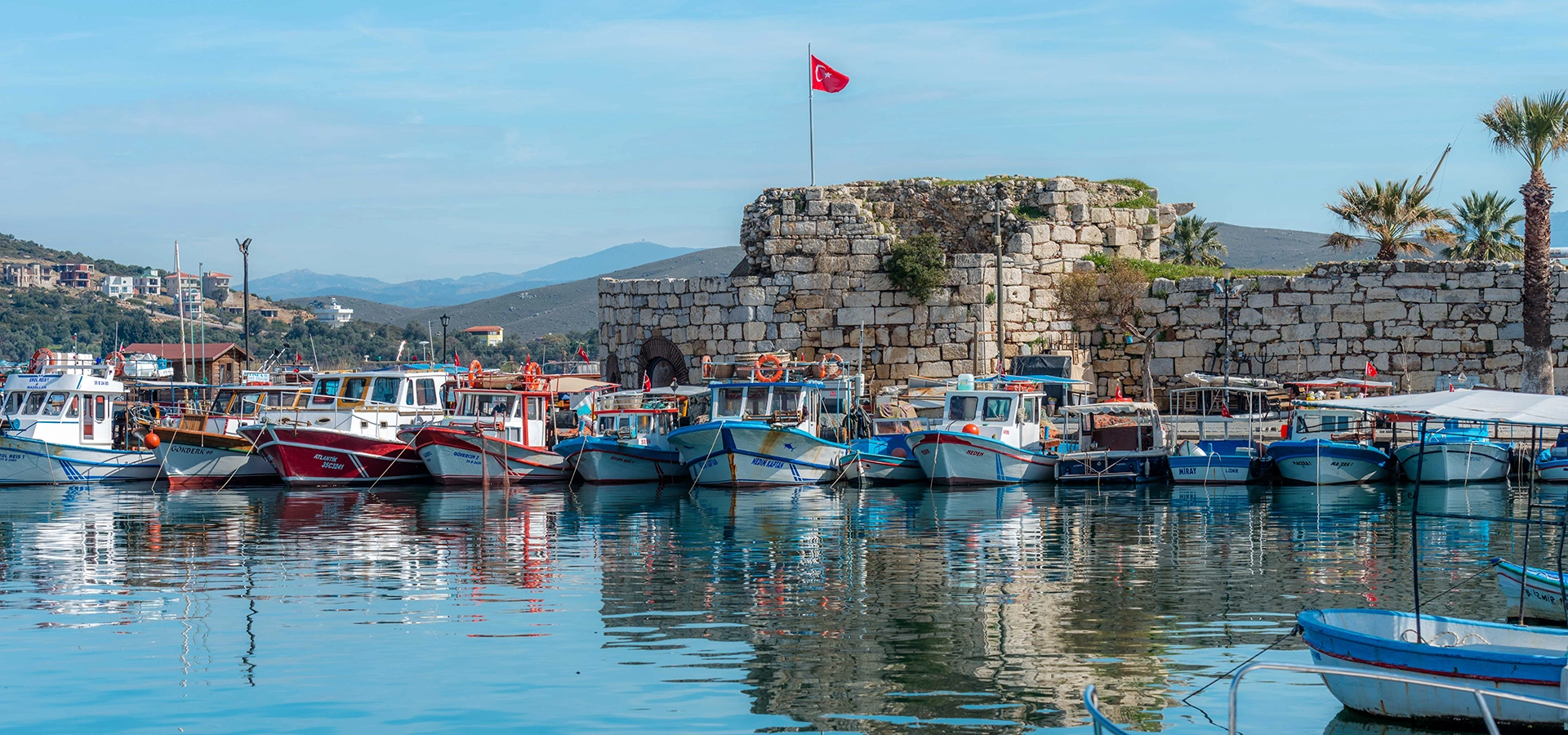
Combine the historic streets of Sığacık with ancient Teos, local markets, Aegean landscapes and the food traditions of Seferihisar.
Design Your ExperienceExtend your journey through Seferihisar and neighbouring parts of the İzmir Peninsula, combining markets, olive oil, local produce, village traditions and the Aegean coast.
Travel through the agricultural landscape of Seferihisar while discovering seasonal fruit, village produce and traditional Aegean flavours.
Design Your Journey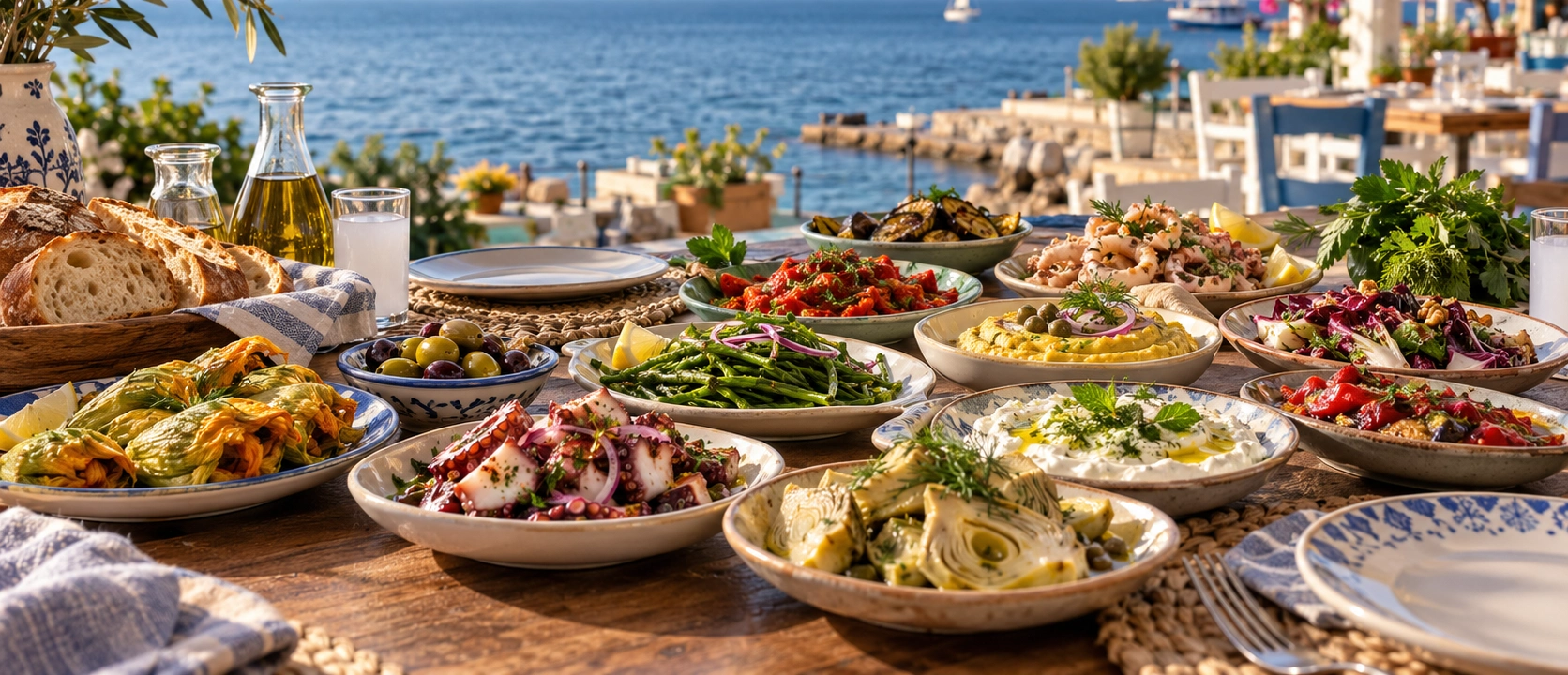
Combine Seferihisar with the wider food traditions of İzmir through olive oil, Aegean herbs, vegetables, mezes, seafood and seasonal regional products.
Request This Tour