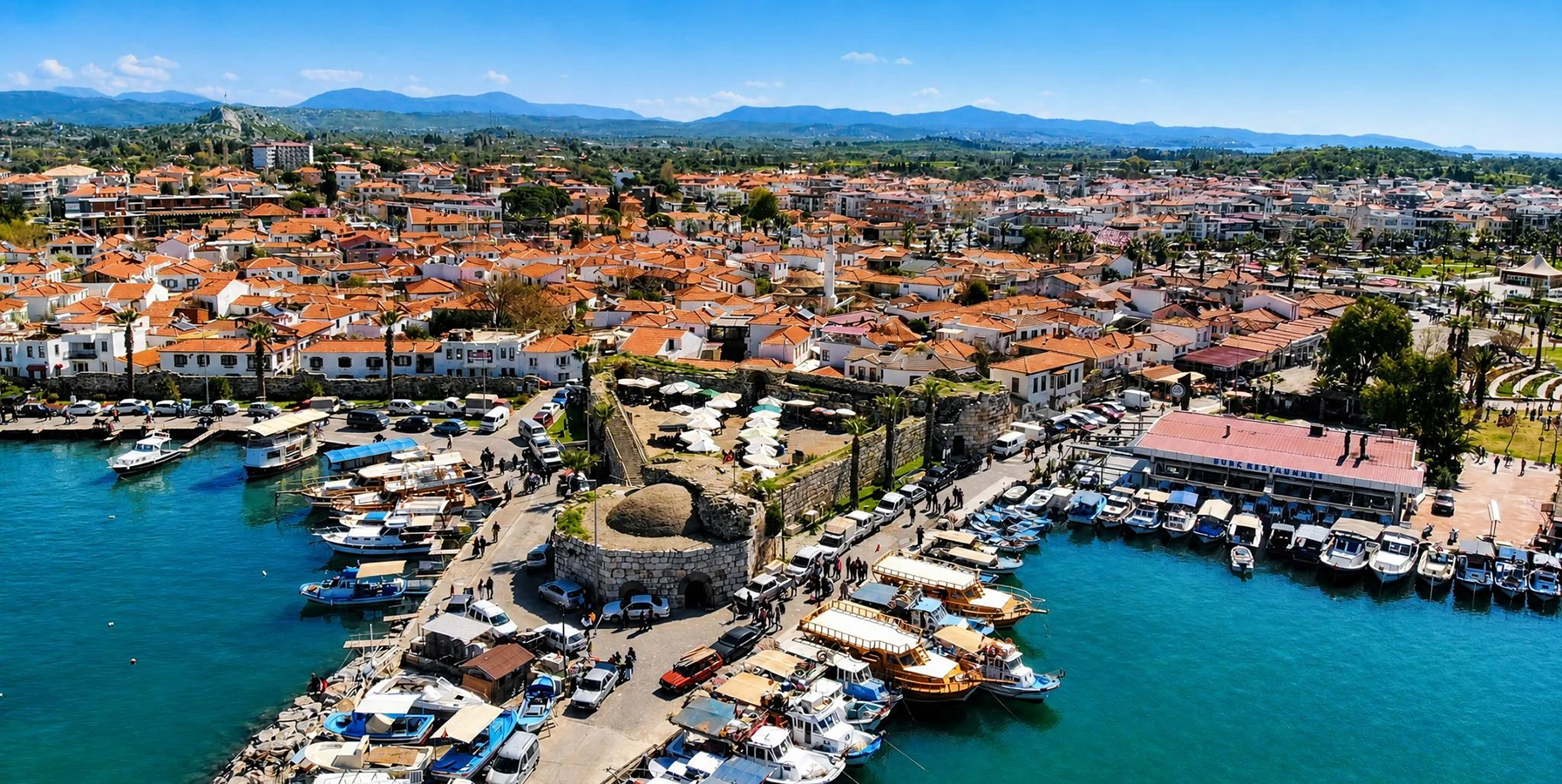
Private Sığacık Castle & Kaleiçi Experience
Explore the castle walls, historic gates, traditional houses, ancient Teos stones, Kaleiçi and the harbor at a comfortable private pace.
Request a Custom Tour





On the edge of the Aegean, only a few kilometers from Seferihisar, stands one of the most atmospheric historic neighborhoods in western Türkiye: Sığacık Castle.
At first glance, the castle appears to be a compact Ottoman fortification beside a picturesque harbor. Walk through its gates, however, and an entirely different world appears. Narrow streets pass between traditional houses, flower-filled courtyards, small cafés, local shops and homes that remain part of everyday village life.
The fortifications seen today took their principal Ottoman form in 1521–1522, during preparations for Sultan Süleyman I's campaign against Rhodes. Ancient stone from nearby Teos was reused in the walls, creating a remarkable physical connection between the ancient Ionian city and the Ottoman maritime world.
Ancient inscriptions and architectural blocks can still be identified within sections of the masonry. Here, Greek and Roman stone was incorporated into an Ottoman fortress that later became surrounded by houses, shops, religious buildings and generations of local life.
That continuity is what makes Sığacık Castle special. This is not simply an archaeological monument. It is a living historic quarter where laundry hangs from balconies, cats sleep beside old doorways, residents sit in shaded courtyards and market stalls appear between centuries-old walls.
Discover the Ottoman fortifications created during the reign of Sultan Süleyman I.
Look closely at the walls for ancient blocks and inscriptions reused from nearby Teos.
Walk through a historic fortified quarter that remains part of everyday community life.
Combine castle streets with the harbor, local food, Teos and the coast.
Essential information for exploring Sığacık Castle, Kaleiçi and the historic waterfront of Seferihisar.
Sığacık, approximately 5 km from central Seferihisar on Türkiye's Aegean coast.
Open on Google MapsThe present fortifications largely took shape in 1521–1522 during the Ottoman period.
Stone and architectural material from nearby Teos Ancient City were reused in the castle walls.
A historic fortified neighborhood where residential and community life still continues.
Allow approximately 1–2 hours for Kaleiçi, longer when combining it with the market and harbor.
Early morning or late afternoon for quieter streets, comfortable walking and beautiful light.
Sığacık combines Ottoman military history, ancient architectural fragments and the intimate atmosphere of a traditional Aegean neighborhood.
Many historic castles are experienced from the outside. You walk around defensive walls, enter a museum and leave.
Sığacık Castle is different. The most interesting part of the experience begins after passing through the walls.
Inside lies Sığacık Kaleiçi, a compact network of streets, traditional houses, courtyards, small restaurants, cafés, shops and local homes. Historic architecture is not separated from daily life; the two exist together.
The castle also creates a remarkable bridge between two very different periods. Its Ottoman fortifications were partly constructed using stone taken from ancient Teos, whose ruins lie only a short distance away.
That means a walk around the walls can reveal ancient inscriptions and worked stone embedded inside a sixteenth-century Ottoman structure. Few places around İzmir demonstrate historical continuity so visibly.
Add the nearby harbor, Sunday producer market, Aegean restaurants, traditional houses and easy access to Teos, and Sığacık Castle becomes much more than a quick historical stop. It is the natural heart of a complete day in Seferihisar.
The protected bay around Sığacık has attracted maritime activity for centuries. Immediately south lies ancient Teos, one of the historic cities of Ionia and an important settlement connected with Aegean trade.
The exact earliest phases of Sığacık's fortifications are less clearly documented than the surviving Ottoman construction. The castle is generally associated with earlier medieval defensive activity before receiving major reconstruction during the Ottoman period.
The decisive chapter came in 1521–1522. During the reign of Sultan Süleyman I, the fortifications were strengthened and reconstructed as the Ottoman navy prepared for operations against Rhodes.
Historical accounts connect the project with the advice of Piri Reis and with naval commander Parlak Mustafa Paşa.
Rather than functioning only as protection for a large urban settlement, Sığacık served an important maritime role. Its sheltered harbor and strategic position made the area useful as a naval base and later as a point connected with customs and maritime control.
As the military importance of the fortress changed, civilian life increasingly developed within and around the walls. Houses, religious buildings and commercial spaces transformed the fortification into the living neighborhood visitors experience today.
The early sixteenth century was a period of intense Ottoman maritime expansion. Control of strategic islands, harbors and sea routes was becoming increasingly important throughout the eastern Mediterranean.
Rhodes, then controlled by the Knights Hospitaller, occupied an important position between Anatolia and Mediterranean shipping routes.
In preparation for the Ottoman campaign against Rhodes, which culminated in 1522, the harbor and fortifications at Sığacık were developed into a more useful maritime position.
The castle therefore belongs to a much larger historical landscape. Its walls were not created simply to protect a small Aegean settlement. They formed part of the maritime infrastructure of an empire expanding its power across the Mediterranean.
One of the most fascinating details of Sığacık Castle is hidden in plain sight.
During construction and reconstruction of the fortifications, material from nearby Teos Ancient City was reused within the castle walls.
This practice, known today as spolia, was common throughout history. Older architectural blocks could provide convenient sources of durable, already-cut building material.
At Sığacık, the result creates a physical connection between the ancient Ionian landscape and the sixteenth-century Ottoman fortress.
While walking beside the walls, look carefully at differences in stone size, surface finish, carving and alignment. Some blocks reveal clearly worked surfaces, and ancient inscriptions associated with Teos have been identified within the masonry.
Worked stone from Teos was incorporated into sections of the Ottoman fortifications.
Some reused stones preserve traces of ancient inscriptions, making the walls themselves part of the historical story.
Reusing earlier architectural material was common across many historical periods and civilizations.
Seeing ancient Teos after the castle makes the relationship between the two sites much easier to understand.
Sığacık Castle was designed first and foremost as a functional fortified maritime position. Its architecture reflects defense, movement, observation and control of access between land and harbor.
The surviving complex includes fortification walls, towers, gateways and interior spaces that later became closely integrated with the residential fabric of Sığacık.
Historical descriptions identify three principal gates traditionally known as Kuşadası, Ayasuluk and Sivrihisar.
The masonry itself is particularly interesting. Different stones, construction phases and reused ancient material create walls that reward slow observation rather than a quick walk past.
Over time, houses were built directly against or close to parts of the fortification. This gradual adaptation created the distinctive relationship between defensive architecture and domestic life visible today.
Heavy masonry defines the historic quarter and preserves evidence of different materials and construction phases.
Historic gates regulate movement between Kaleiçi, the surrounding settlement and the waterfront.
Defensive towers strengthened the maritime fortification and remain important elements of its silhouette.
Ancient blocks from Teos give sections of the walls an archaeological importance beyond their Ottoman construction.
Passing through one of Sığacık's gateways creates the clearest transition between the wider coastal settlement and the enclosed historic quarter.
Historical descriptions refer to three principal gates: Kuşadası Gate, Ayasuluk Gate and Sivrihisar Gate.
Their names reflect geographical connections and the wider network of roads, settlements and regional movement surrounding Sığacık.
Today, the gates are among the most atmospheric places for understanding how the historic neighborhood relates to its defensive walls.
One of the historically named entrances associated with routes extending south along the Aegean coast.
A historic gate name recalling Ayasuluk, the medieval settlement associated with present-day Selçuk.
Another of the traditionally recorded castle entrances within Sığacık's defensive layout.
Look upward and around the masonry rather than simply using the gateways as passages into Kaleiçi.
The greatest pleasure of visiting Sığacık Castle is wandering without a rigid route through Kaleiçi.
Unlike a reconstructed open-air museum, this is still a neighborhood. Historic houses stand beside small pensions, cafés, workshops, restaurants and family homes.
Some streets are barely wide enough for more than pedestrians and small vehicles. Others open unexpectedly into courtyards, small squares or views of the defensive walls.
Bougainvillea, geraniums, wooden shutters, old doorways and stone details give the area much of its visual character.
The best approach is simple: walk slowly, take whichever street looks interesting and allow yourself to become temporarily disoriented. Kaleiçi is compact enough that finding your way back is rarely difficult.
Follow small lanes through the historic residential fabric rather than staying only on the busiest commercial route.
Many traditional houses were organized around private internal courtyards adapted to Aegean domestic life.
Small cafés, restaurants, shops and guesthouses now occupy parts of the historic quarter.
Remember that many doors and courtyards belong to residents rather than visitor attractions.
The domestic architecture inside the walls is as important to Sığacık's atmosphere as the fortifications themselves.
Historic houses were generally constructed in close relationship with one another, creating compact streets and enclosed residential spaces.
Traditional examples include single-storey and two-storey houses, often built with mudbrick, stone and timber elements.
Many contain internal courtyards, which provided privacy, shade and useful outdoor living space during the warm Aegean months.
Two-storey buildings may feature projecting upper sections, wooden shutters and timber architectural details.
Restoration and changing tourism use have transformed some buildings, but the neighborhood still retains a strong sense of its historic residential scale.
Private courtyards are an important feature of traditional Kaleiçi domestic architecture.
Shutters, doors, stairs and projecting architectural elements add warmth to the historic streetscape.
Low-rise buildings and narrow streets create an intimate environment designed around walking.
The houses matter not only for their architecture but because many remain connected with everyday community life.
The interior of Sığacık Castle contains more than houses and defensive architecture. Religious and community buildings reflect the development of a permanent Ottoman settlement inside the fortifications.
The historic Sığacık Mosque dates to the sixteenth-century Ottoman period and is traditionally associated with Parlak Mustafa Paşa.
The complex also includes structures connected with a hamam, mescit and other community functions.
Together, these buildings demonstrate that the castle interior developed into a complete social environment rather than remaining exclusively military.
A sixteenth-century Ottoman religious structure forming an important part of Kaleiçi's historic character.
The presence of a traditional bath reflects the social infrastructure of the Ottoman settlement.
Smaller religious spaces formed part of everyday community life within the fortified quarter.
Religious, residential and commercial activity developed together behind the castle walls.
On Sundays, Sığacık changes dramatically.
The streets around the castle traditionally host the famous Sığacık producer market, one of the best-known expressions of Seferihisar's local-food and Cittaslow culture.
Stalls appear between historic houses selling vegetables, fruit, bread, pastries, cheese, herbs, olive products, homemade dishes and handicrafts.
The setting makes the experience unusual. Rather than occupying a purpose-built market hall, the market becomes intertwined with the narrow streets of the historic castle quarter.
This is one of the best times to experience local food culture, but also the busiest period of the week.
Sunday is traditionally the principal market day in Sığacık Kaleiçi.
Look for seasonal vegetables, fruit, olives, herbs and products from surrounding villages.
Pastries, stuffed vegetables, bread and regional dishes make the market particularly good for food lovers.
Earlier hours are generally easier for walking and photography before the narrow streets become crowded.
The castle cannot really be understood without its relationship to the sea.
Sığacık developed beside a naturally protected bay, and maritime activity shaped the settlement long before tourism became important.
Walk outside the walls and the atmosphere changes immediately. Historic lanes give way to fishing boats, sailing yachts, restaurants, waterfront promenades and wide views across the harbor.
The contrast makes Sığacık especially enjoyable: history inside the walls, maritime life immediately outside them.
Traditional maritime activity remains visible alongside modern recreational sailing.
Sığacık's modern marina continues the settlement's long relationship with sheltered Aegean waters.
Fish, seafood and Aegean mezes are natural choices for lunch or dinner after exploring Kaleiçi.
The harbor becomes particularly pleasant as afternoon heat fades and the waterfront grows livelier.
Pause before entering and examine the relationship between the gateways, walls and surrounding streets.
Look for reused architectural stones and unusual carved surfaces within the fortification masonry.
Notice wooden shutters, upper-storey projections, old doors and compact residential courtyards.
See the historic religious architecture associated with the Ottoman development of Kaleiçi.
Leave the busiest commercial lanes and explore quieter corners of the residential quarter.
Walk around different sections to understand the scale and strategic position of the fortifications.
Experience local producers, regional ingredients and homemade Aegean food between the historic streets.
Finish your visit outside the walls with sea views, boats and a waterfront walk.
Sığacık does not require a rigid sightseeing route, but a simple sequence helps first-time visitors understand the relationship between the fortress, Kaleiçi and the harbor.
Begin outside the walls and spend a few minutes looking at the defensive masonry before entering the historic quarter.
Pass through one of the castle gates and continue slowly through the interior streets. Instead of immediately following the busiest route, take one or two smaller side lanes to discover residential architecture and quieter courtyards.
Continue toward the mosque area and examine the surrounding historical fabric. Then follow the interior streets toward another section of the walls.
Finish by leaving Kaleiçi and walking toward Sığacık Harbor. The waterfront provides the perfect contrast to the enclosed historic streets.
The most rewarding historical itinerary around Sığacık combines the castle with Teos Ancient City.
The two sites are geographically close, but historically separated by many centuries. Together, they tell an extraordinary story about the changing importance of this stretch of Aegean coastline.
At Teos, walk among the remains of an ancient Ionian city with its Temple of Dionysus, theater, agora, city walls and harbor landscape.
Then return to Sığacık Castle and look again at the walls. Some of the stone removed from that ancient landscape became part of the Ottoman fortress.
Visiting the sites together therefore transforms what might seem like two independent attractions into one connected historical journey.
Explore quiet Sığacık Kaleiçi before the streets become busy.
Continue to Teos Ancient City for approximately 1.5–2 hours.
Return toward Sığacık for an Aegean lunch around the harbor.
Continue to the coast or spend more time exploring Seferihisar.
Sığacık Castle works particularly well as the starting point for a relaxed full day around Seferihisar.
Begin early with the castle walls and quiet streets of Kaleiçi. Pause for coffee, then drive toward Teos Ancient City.
After exploring Teos, return to Sığacık for lunch near the harbor.
During summer, spend the afternoon swimming near Sığacık or continue along the wider Seferihisar coast.
Return toward the harbor in the evening for sunset, dinner and another walk around the illuminated waterfront.
Enough only for one gateway, a short Kaleiçi walk and a quick look at the walls.
A reasonable introduction to the streets, houses, walls and harbor.
Ideal for a relaxed walk, photography, coffee and time to examine architectural details.
Combine the castle, Kaleiçi, Sunday market and a long waterfront lunch.
Add Teos Ancient City and a beach or coastal stop.
Stay in Sığacık to experience the historic quarter after day visitors leave.
The best time for quiet streets, architecture and photography before day visitors arrive.
Warm light transforms the walls and the waterfront becomes increasingly atmospheric.
Visit for the famous producer market, but expect much larger crowds and heavier traffic.
Excellent temperatures for walking with green surrounding landscapes and seasonal flowers.
Combine the castle with swimming, but explore Kaleiçi early to avoid the strongest afternoon heat.
Superb for photography, food, comfortable walking and a more relaxed atmosphere after peak summer.
Sığacık is exceptionally photogenic because the visual interest is not concentrated in one monument. The entire historic quarter becomes the subject.
Castle walls, ancient stone, wooden doors, traditional houses, flower-filled streets, market stalls, fishing boats and Aegean light can all be photographed within a very small area.
Use gateways to frame the narrow streets and historic houses beyond.
Look closely for different masonry, ancient blocks and inscriptions associated with Teos.
Early morning provides the cleanest architectural compositions before cafés and shops become busy.
Wooden shutters, aged doors, stone frames and plants create excellent detail photographs.
Sunday provides food, people, local products and documentary street-photography opportunities.
Late sunlight produces warm tones across the castle masonry and waterfront.
Sığacık Castle is relatively easy to include in a family itinerary because the historic quarter is compact and can be combined with food, ice cream, the harbor and a beach.
Ask children to search the castle walls for unusually shaped ancient stones rather than turning the visit into a long history lesson.
Kaleiçi is compact enough for a relaxed family walk without long transfers.
Combine historical walking with time beside the boats and waterfront.
Use morning or late afternoon hours rather than exploring narrow streets during peak heat.
The producer market can become very busy, so keep young children close in narrow streets.
History in the morning and swimming in the afternoon creates an easy family day.
Sığacık Kaleiçi is a historic environment, so visitors should expect varying surfaces, narrow streets and occasional uneven paving.
Stone, paving and uneven sections may be more difficult for some visitors.
Parts of Kaleiçi are compact, and movement becomes more difficult during busy market periods.
Modern waterfront sections are generally easier to navigate than some interior historic lanes.
Large crowds can significantly reduce maneuvering space inside narrow streets.
Cafés and restaurants provide convenient opportunities to divide the walk into shorter sections.
Accessibility can differ between restaurants, historic buildings, guesthouses and other businesses.
Early morning gives you quieter streets, cooler temperatures and easier photography.
Historic streets and paving can be uneven in places.
The producer market creates a wonderful atmosphere but also brings significantly more visitors.
Do not focus only on cafés and houses. Ancient Teos material is one of the castle's most fascinating features.
Some of the most atmospheric corners lie away from the busiest commercial route.
Never enter a courtyard or photograph through windows without permission.
Visiting both places provides much deeper historical context.
Sığacık becomes especially pleasant when day-trip crowds decrease and the harbor lights come on.
Sığacık lies approximately five kilometers from central Seferihisar and is easily reached from İzmir and other destinations on the western Aegean coast.
Sığacık is only a short journey from the district center.
Driving provides the greatest flexibility, especially if you plan to combine Sığacık, Teos and the coast.
Private transfer, rental car or regional public transport connections can be used to reach Seferihisar and Sığacık.
Regional public transport makes Sığacık possible without a car, although onward exploration becomes less flexible.
Particularly useful when combining Sığacık with Teos, villages and beaches.
A convenient option for travelers arriving directly from İzmir, the airport or another Aegean destination.
Sığacık Castle sits at the center of one of the most rewarding historical and coastal areas southwest of İzmir.
Explore the wider village, harbor, restaurants, producer market and Aegean atmosphere surrounding the castle.
Walk through one of ancient Ionia's historic cities and discover the Temple of Dionysus, theater, agora, walls and ancient harbor landscape.
Go beyond Sığacık to discover villages, producer culture, mandarin orchards, beaches and Türkiye's first Cittaslow destination.
Continue north for vineyards, gastronomy, ancient Klazomenai, İskele and creative Aegean neighborhoods.
Explore the vineyard countryside and combine historical sightseeing with one of western İzmir's most distinctive gastronomic routes.
Continue west toward beaches, Çeşme Castle, thermal waters and a livelier Aegean resort atmosphere.
Discover stone houses, windmills, restaurants and one of the İzmir Peninsula's most recognizable historic towns.
Continue into a quieter peninsula of small villages, rugged landscapes and exceptionally clear Aegean coves.
Sığacık Castle is located in Sığacık, a coastal neighborhood of Seferihisar in İzmir Province, western Türkiye.
Sığacık lies approximately five kilometers from central Seferihisar.
The present fortifications largely took shape during the Ottoman period in 1521–1522, during the reign of Sultan Süleyman I.
The major Ottoman construction phase was connected with maritime strategy and preparations surrounding the campaign against Rhodes. The fortress functioned primarily as a maritime position rather than simply as the defense of a large town.
Its major Ottoman reconstruction is associated with the reign of Sultan Süleyman I and naval commander Parlak Mustafa Paşa, with historical accounts also connecting the project with advice from Piri Reis.
The site is generally associated with earlier medieval defensive activity, but the surviving form visitors see today is dominated by the major Ottoman reconstruction of the sixteenth century.
Ancient architectural blocks from nearby Teos were reused as building material during construction of the fortifications.
Ancient stones and inscriptions originating from Teos have been identified within sections of the castle masonry. Look carefully at the walls while walking around the fortifications.
It combines sixteenth-century Ottoman fortifications, reused ancient material and a historic residential neighborhood where everyday life still continues.
Yes. Kaleiçi remains a living neighborhood with homes, small businesses, restaurants and guesthouses inside the historic walls.
Not in the conventional sense. The main Kaleiçi area is a living historic quarter rather than a single enclosed museum building. Individual venues and events may have their own arrangements.
The streets of the historic neighborhood are generally explored as part of the public urban area. Separate venues, events or attractions can have their own admission arrangements.
Allow approximately one to two hours for a relaxed walk through Kaleiçi and around the castle walls. Spend longer if you plan to eat, shop or visit the Sunday market.
Historical descriptions identify Kuşadası, Ayasuluk and Sivrihisar as the principal named gates.
Expect traditional houses, narrow streets, courtyards, historic religious buildings, cafés, restaurants, small shops and everyday residential life.
Sunday is traditionally the main day for the Sığacık Kaleiçi producer market. Confirm locally if the market is essential to your plans, as arrangements can occasionally change.
Yes if you want to experience the producer market and a lively atmosphere. Choose another morning if you prefer quieter streets and easier photography.
Early morning is best for quiet streets and photography. Late afternoon provides beautiful light and an easy transition into dinner around the harbor.
It is particularly rewarding for travelers interested in Ottoman history, traditional architecture, local food, photography and historic neighborhoods that remain part of everyday life.
Yes. The two sites are very close and form the best historical combination in the Seferihisar area.
Teos Ancient City lies only a short distance south of Sığacık, making it easy to combine both places in one itinerary.
Ancient stone from Teos was reused in Sığacık's fortifications. Visiting both sites makes this historical relationship much easier to understand.
Yes. Castle walls, traditional houses, wooden doors, flowers, markets and the nearby harbor provide excellent photographic subjects.
Street photography is possible, but remember that many buildings are private homes. Do not photograph through windows or enter courtyards without permission.
Yes. The historic quarter is compact and can easily be combined with the harbor, food and beach time.
Accessibility varies. Historic streets can include uneven paving and narrow passages, while modern waterfront areas are generally easier to navigate.
Yes. Kaleiçi and the nearby harbor contain numerous cafés, restaurants and places serving seafood and Aegean dishes.
Yes. Several small accommodation properties operate within or around the historic quarter, allowing visitors to experience Sığacık after day-trip crowds have left.
Yes, particularly on weekends and during the Sunday market. Early mornings are considerably quieter.
Yes. The atmosphere is much quieter, and Kaleiçi, local food and the harbor can still make an enjoyable visit outside the beach season.
Comfortable walking shoes are useful for historic paving. During summer, bring sun protection and choose lightweight clothing.
Continue to Teos Ancient City, have lunch around Sığacık Harbor or explore the wider coast of Seferihisar.
Yes. A classic day trip can combine Sığacık Castle, Teos Ancient City, an Aegean lunch and a coastal stop.
Do not rush. Walk through several different streets, study the castle masonry, stop for coffee, continue to the harbor and leave enough time to experience the neighborhood rather than simply photographing it.
Do not block entrances, sit on private steps or enter residential courtyards without permission.
Never climb, scratch, write on or remove material from the historic fortifications.
Reused Teos blocks and inscriptions are part of the protected historical fabric.
Markets provide an excellent opportunity to buy food and handmade products directly from regional producers.
Ask before photographing residents closely and avoid pointing cameras directly into homes.
Historic lanes are narrow. Avoid leaving vehicles, bicycles or belongings where they obstruct residents.
Carry reusable water bottles and bags and dispose of all waste responsibly.
The castle is best experienced as a neighborhood, not as a checklist of monuments.
Explore Sığacık Castle, ancient Teos, local food and the Seferihisar coast with a flexible private experience designed around your interests and pace.
Choose a history-focused visit, a relaxed castle and harbor experience or a complete day combining Sığacık, Teos and the Aegean coast.
Explore the castle walls, historic gates, traditional houses, ancient Teos stones, Kaleiçi and the harbor at a comfortable private pace.
Request a Custom Tour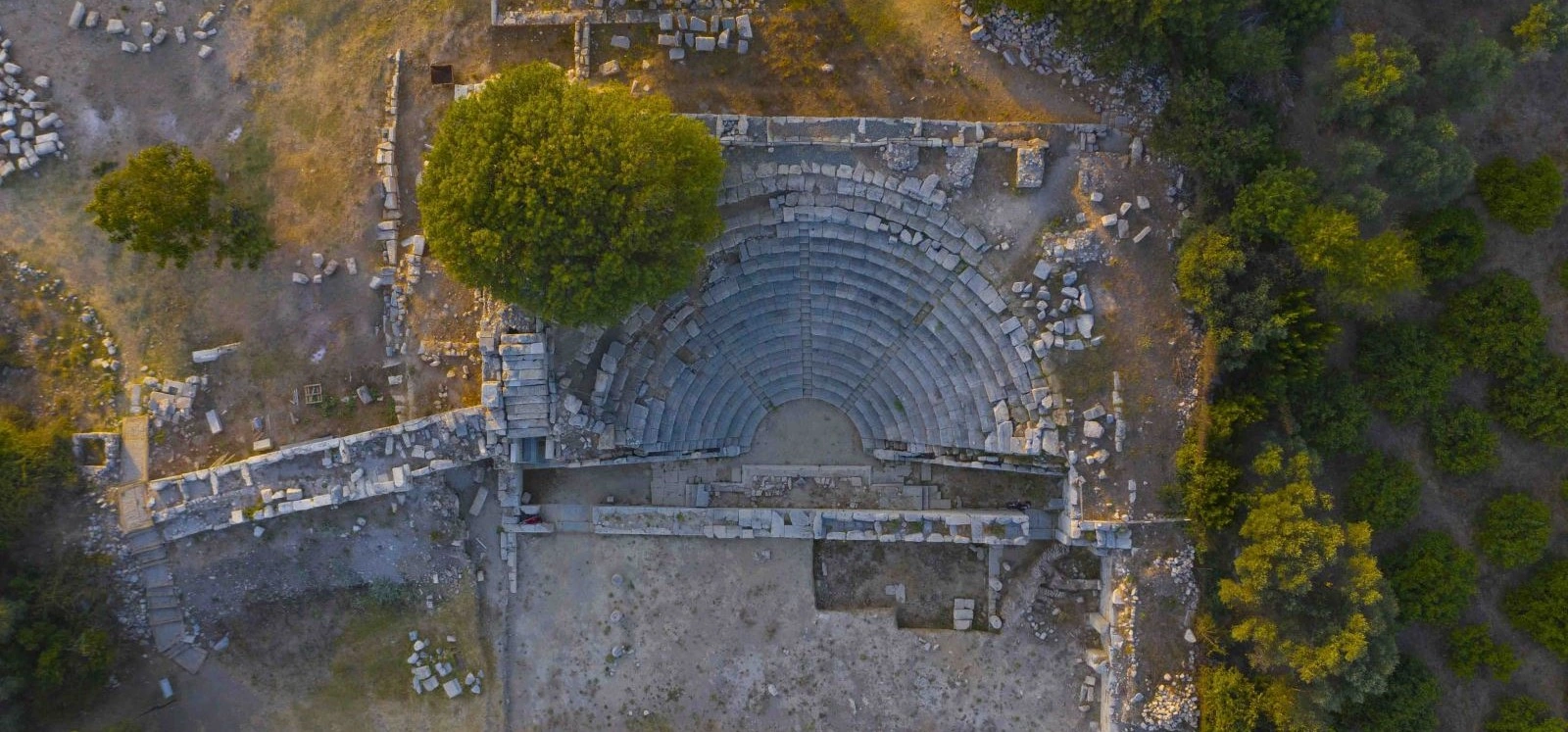
Connect two historical worlds by exploring ancient Teos and the Ottoman fortress built partly with stone from the ancient city.
Request a Custom TourCombine Sığacık Castle with ancient cities, Cittaslow culture, vineyards and the historic towns of the İzmir Peninsula.
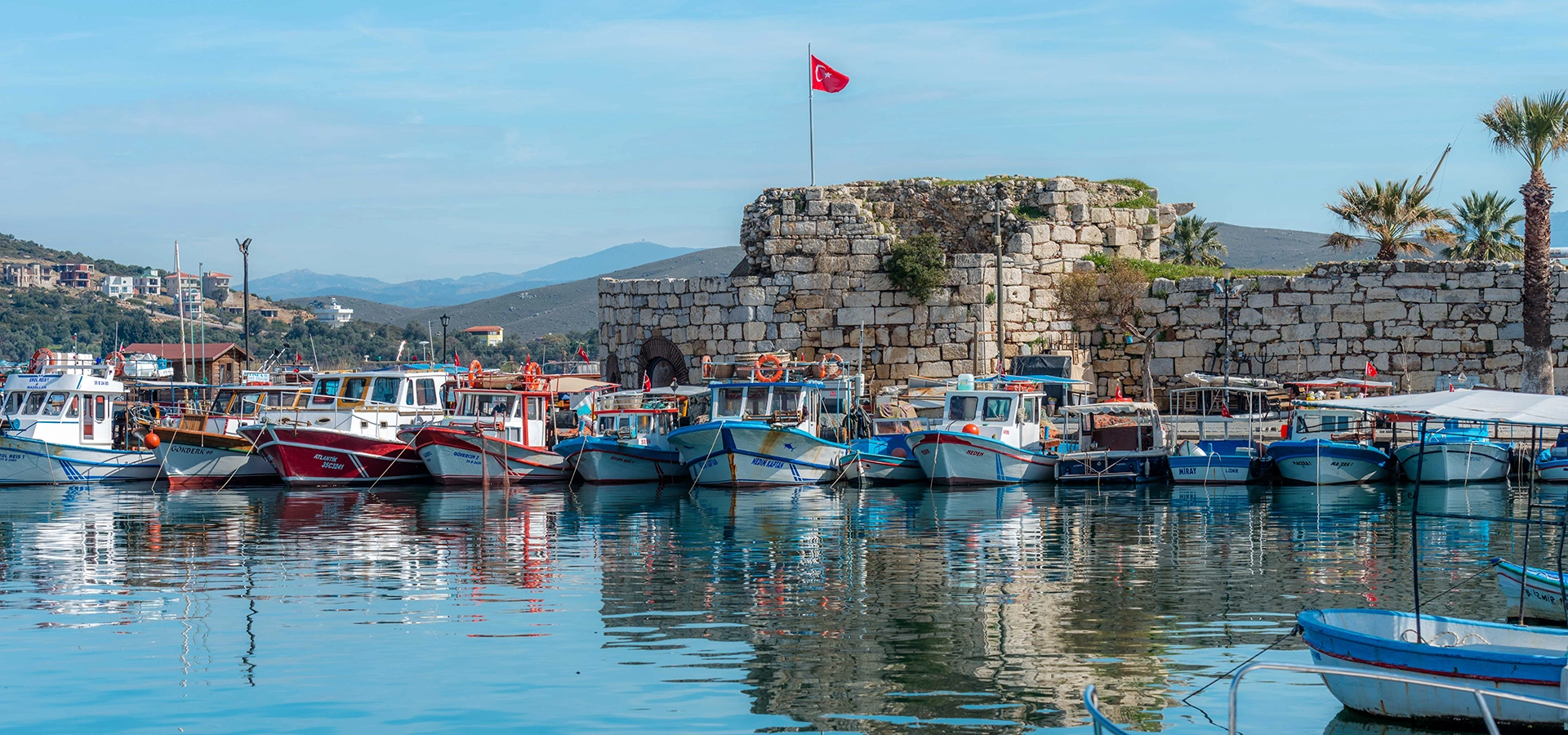
Go beyond the castle to discover the harbor, producer market, restaurants, coast and complete atmosphere of Sığacık.
Explore Sığacık
Discover the ancient city whose stones were later reused within Sığacık Castle, including the Temple of Dionysus, theater and harbor landscape.
Explore Teos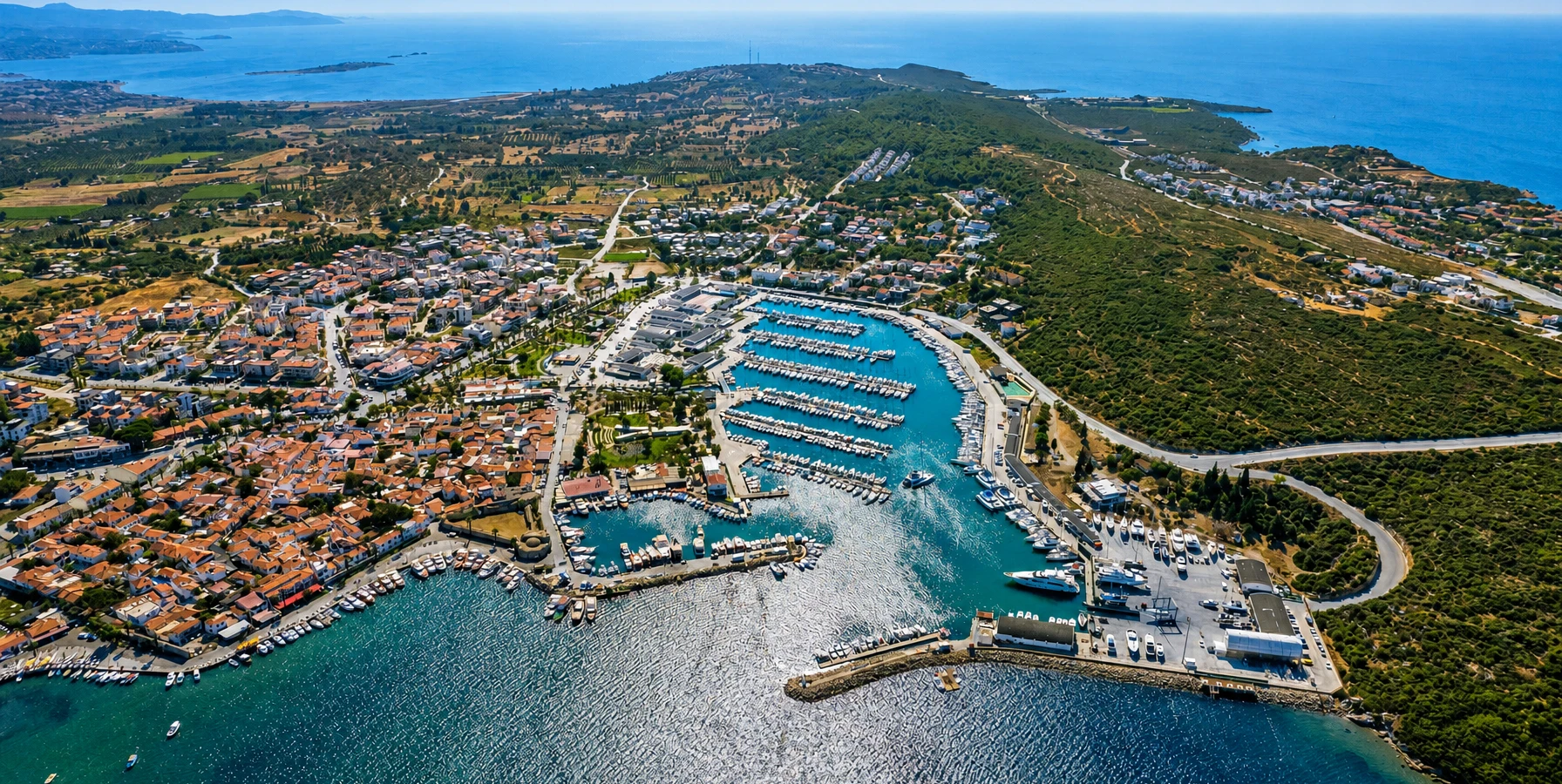
Discover Türkiye's first Cittaslow through villages, local food, mandarin orchards, beaches, Teos and the wider Aegean coastline.
Explore Seferihisar