Private Historic Aydın City Tour
Explore Ramazan Paşa Mosque, Cihanoğlu Mosque, Aydın's historic centre and selected cultural landmarks with a licensed private guide.
Request Your Private Aydın Tour





In the historic commercial centre of Aydın stands a mosque whose story reaches from the late sixteenth-century Ottoman Empire to the turbulent beginnings of the Turkish National Struggle: Ramazan Paşa Mosque.
The first mosque on this site was founded in 1595 by Ramazan Paşa, brother of Üveys Paşa, another important Ottoman patron associated with Aydın.
That sixteenth-century structure, however, is not the building visitors see today.
The original mosque was devastated by the 1899 Aydın earthquake and subsequently reconstructed in 1901 under the patronage of Sökeli Halil Paşa.
The rebuilding gave Ramazan Paşa Mosque a distinctive architectural identity.
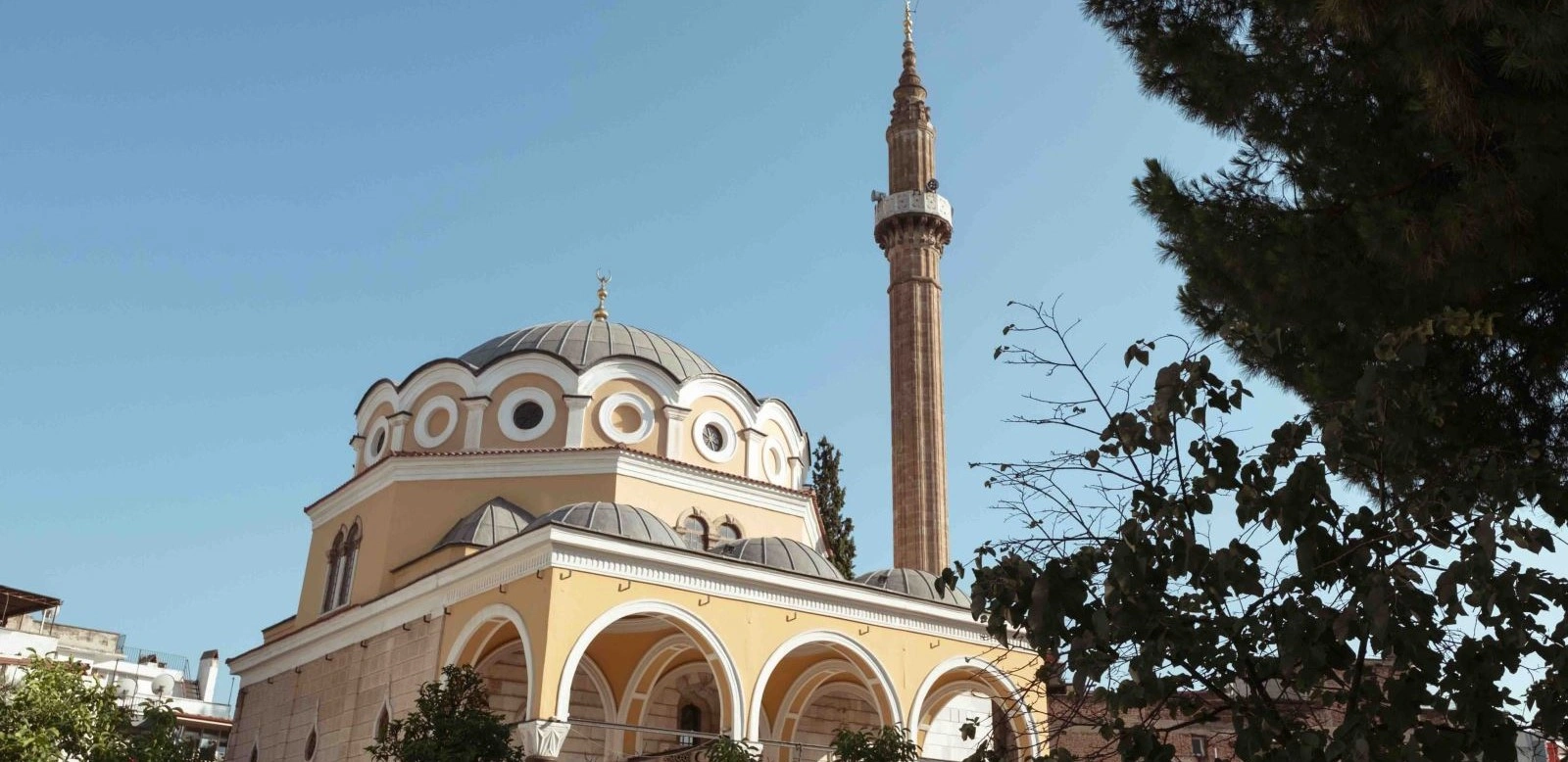
Its traditional square prayer hall and single great dome were combined with Baroque-inspired curves, unusual drop-shaped windows, coloured glass, plaster reliefs and elaborate wood carving.
The result is one of Aydın's most intriguing examples of late Ottoman religious architecture.
Yet architecture tells only part of the story.
On 22 May 1919, during the crisis surrounding the occupation of western Anatolia, an important resistance meeting was held inside the mosque.
Ramazan Paşa Mosque therefore belongs simultaneously to the Ottoman architectural history of Aydın and the memory of Türkiye's National Struggle.
The first mosque was commissioned by Ramazan Paşa, brother of the Ottoman statesman Üveys Paşa.
The present mosque was constructed after the original building was destroyed by the devastating earthquake of 1899.
Plaster reliefs, coloured glass, carved wood and curving decorative forms create one of the mosque's most memorable artistic features.
The mosque became an important gathering place when a resistance meeting was held here during the opening phase of the National Struggle.
Essential information about one of the most historically significant Ottoman mosques in central Aydın.
Ramazan Paşa neighbourhood, central Efeler district, Aydın, Türkiye.
Open on Google Maps1595, during the Ottoman period.
Reconstructed in 1901 after the original mosque was destroyed in the 1899 earthquake.
Ramazan Paşa, brother of Üveys Paşa.
Traditional Ottoman mosque planning enriched with late Ottoman and Baroque-inspired decorative details.
An important local resistance meeting was held inside the mosque on 22 May 1919.
Few monuments in central Aydın combine Ottoman architectural history, disaster, reconstruction and National Struggle memory as powerfully as Ramazan Paşa Mosque.
Ramazan Paşa Mosque is important because its history can be read in several very different layers.
Its origins belong to the late sixteenth-century Ottoman city.
Its present architecture belongs largely to the early twentieth century.
Its historical memory is deeply connected with 1919 and the beginning of organised resistance in Aydın.
The mosque therefore challenges the idea that a historic monument represents only one period.
The building visitors see today carries the name and institutional continuity of a mosque founded in 1595, while physically reflecting the reconstruction undertaken after the catastrophic earthquake of 1899.
Its architectural decoration also illustrates how Ottoman taste had changed dramatically between those two periods.
Baroque-influenced curves, coloured glass and ornamental plasterwork belong to a very different artistic world from the sixteenth century in which the mosque was originally founded.
Ramazan Paşa Mosque is therefore an extraordinary place for understanding how Aydın was repeatedly rebuilt while preserving its historical identity.
The history of Ramazan Paşa Mosque begins in 1595.
According to its historic foundation record, the mosque was commissioned by Ramazan Paşa, brother of Üveys Paşa.
The two brothers became closely associated with the architectural development of Ottoman Aydın.
For approximately three centuries, the mosque served the religious community within the city's commercial centre.
Its original sixteenth-century form did not survive intact.
The decisive event came in 1899, when a destructive earthquake struck Aydın.
Ramazan Paşa Mosque was so severely damaged that the original structure was effectively lost.
A new mosque was subsequently constructed on the site.
The building standing today dates principally from 1901 and is associated with Sökeli Halil Paşa.
Rather than recreating the sixteenth-century structure exactly, the reconstruction incorporated architectural and decorative ideas characteristic of a much later Ottoman period.
Ramazan Paşa establishes the original mosque during the Ottoman period.
The great Aydın earthquake destroys the historic mosque.
A new mosque is constructed under the patronage of Sökeli Halil Paşa.
A resistance meeting held inside gives the mosque an important place in the history of the National Struggle.
The mosque takes its name from Ramazan Paşa, the Ottoman statesman responsible for its original foundation.
Historic sources identify him as the brother of Üveys Paşa, another prominent figure whose name survives through Üveys Paşa Mosque in Aydın.
Ramazan Paşa emerged from the Ottoman administrative world and belonged to a period when high-ranking officials frequently established charitable foundations in their home regions or places with which they maintained strong connections.
A mosque could become the centre of such a foundation.
Through religious buildings, schools and charitable institutions, Ottoman patrons created permanent public services while ensuring that their names remained embedded within urban memory.
More than four centuries later, the name Ramazan Paşa still identifies both the mosque and the surrounding neighbourhood.
The year 1899 marks the greatest architectural rupture in the history of Ramazan Paşa Mosque.
A major earthquake struck Aydın and caused extensive destruction throughout the city.
Historic buildings were particularly vulnerable, and the original Ramazan Paşa Mosque was effectively destroyed.
The loss was significant because the mosque had already stood for approximately three centuries.
Reconstruction presented an important choice.
The builders could attempt to reproduce the earlier sixteenth-century structure, or they could create a new mosque reflecting the architecture and decorative taste of their own period.
The second approach prevailed.
The building completed in 1901 therefore represents both continuity and transformation.
The institution remained Ramazan Paşa Mosque, but much of its visible architecture belonged to the final decades of the Ottoman world.
The present Ramazan Paşa Mosque was constructed in 1901 under the patronage of Sökeli Halil Paşa.
By this period, Ottoman architecture had absorbed centuries of changing artistic influence.
Traditional mosque forms continued to be used, but decorative vocabulary could include Baroque, Rococo and other European-influenced elements.
These developments are clearly visible at Ramazan Paşa Mosque.
The rebuilt structure retained a recognisably Ottoman arrangement: a square prayer hall, large central dome, last prayer portico and minaret.
Its decorative character, however, belongs firmly to a later architectural world.
The contrast makes the mosque particularly valuable for anyone interested in the evolution of Ottoman architecture outside Istanbul.
It shows how provincial architecture could combine established spatial traditions with changing artistic fashion.
Ramazan Paşa Mosque has a square plan constructed primarily from carefully cut stone.
The central prayer hall is covered by a single large dome.
This concentrated arrangement follows a familiar Ottoman mosque tradition in which the dome unifies the entire interior beneath one dominant architectural form.
On the northern side stands the son cemaat yeri, or last prayer portico.
It consists of three sections, each covered by a small dome.
The minaret rises from the northwestern part of the structure.
A şadırvan stands to the north.
The mosque occupies a gently sloping urban site, with the architecture organised on a relatively low platform.
The prayer hall is organised around a compact square central space.
One large dome creates the principal architectural volume above the prayer hall.
Cut-stone masonry gives the exterior a substantial and ordered appearance.
Three small domes cover the last prayer area on the northern side.
The minaret rises beside the northwestern section of the mosque.
A courtyard fountain stands on the northern side of the mosque.
One of the most interesting aspects of Ramazan Paşa Mosque is the contrast between exterior restraint and interior richness.
The cut-stone façades appear relatively disciplined and monumental.
Decoration is concentrated more heavily around architectural openings and within the prayer hall than across the exterior walls.
The western and eastern façades contain two principal levels of windows.
At the lower level are larger openings, while the upper sections include the mosque's characteristic drop-shaped windows.
The southern wall projects outward where the interior mihrab is located.
Above, the circular windows around the drum of the dome are framed by more fluid decorative forms.
This creates a gradual visual transition from the relatively solid stone walls below toward the increasingly decorative architecture of the dome.
Visitors examining Ramazan Paşa Mosque from outside should pay particular attention to its unusual upper windows.
Several are designed in a drop or water-drop form.
These openings immediately distinguish the mosque from many more conservative Ottoman religious buildings.
They contribute to the late Ottoman character created during the 1901 reconstruction.
The windows serve both practical and artistic purposes.
They bring additional daylight into the upper parts of the prayer hall while breaking the otherwise solid surfaces of the stone façades.
Inside, their light contributes to the visibility of the mosque's plaster, glass and painted decoration.
Together with the circular windows around the dome drum, they form one of the building's most memorable visual signatures.
The northern façade of Ramazan Paşa Mosque is preceded by a traditional son cemaat yeri.
This covered area forms an intermediate architectural zone between the exterior courtyard and the enclosed prayer hall.
At Ramazan Paşa Mosque, the portico is divided into three sections.
Each bay is covered by its own small dome.
The transitions toward these domes use pendentives, while the supporting columns have cylindrical shafts and distinctive geometric capitals.
The repeated arches, columns and domes give the northern façade rhythm and depth.
Standing beneath the portico also gives visitors an opportunity to examine the entrance before moving into the much more richly decorated interior.
The principal entrance into the prayer hall contains one of the mosque's important examples of wood craftsmanship.
The wooden door is enriched with carved decorative work.
Its ornament provides an intimate counterpoint to the larger architectural forms of stone, arches and domes surrounding it.
Wood carving was an important component of Ottoman decorative art, appearing in mosque doors, window shutters, Qur'an stands, pulpits and architectural furnishings.
At Ramazan Paşa Mosque, the entrance door becomes part of the sequence leading visitors from the urban exterior into the increasingly elaborate prayer space.
It is worth pausing here before entering.
The interior of Ramazan Paşa Mosque is far richer than its relatively restrained exterior initially suggests.
The square prayer hall creates a concentrated and symmetrical space beneath the large central dome.
The transition from the square walls toward the circular base of the dome is achieved through tromps.
Natural light enters through multiple levels of windows.
The combination of long windows, smaller drop-shaped openings and windows within the dome drum creates changing patterns of illumination throughout the day.
This light reveals the decorative surfaces: plaster relief, coloured glass, wood carving and Baroque-inspired ornament.
The contrast is striking.
The architectural plan remains clear and disciplined, while the decoration introduces colour, movement and visual complexity.
The interior decoration is among the most important artistic features of Ramazan Paşa Mosque.
By the time the present building was constructed in 1901, Ottoman architecture had been interacting with European artistic movements for generations.
Baroque and Rococo influences had entered the decorative vocabulary of mosques, palaces, fountains and other public buildings.
At Ramazan Paşa Mosque, these influences appear particularly clearly around the windows and upper architectural surfaces.
Curved forms soften the strict geometry of the square prayer hall.
Plaster decoration creates depth and shadow.
Coloured glass introduces additional visual richness.
The result is not simply a European building transplanted into Aydın.
Instead, traditional Ottoman spatial organisation and Islamic religious architecture are combined with decorative ideas characteristic of the empire's later artistic period.
Baroque-inspired curves introduce movement around otherwise geometric architectural forms.
Raised plaster ornament creates changing shadows and gives decorative surfaces greater depth.
Decorative glazing modifies the daylight entering the prayer space.
Carved wooden elements demonstrate the continuing importance of traditional craftsmanship.
Window forms themselves become part of the ornamental programme.
The interior reflects the changing artistic environment of the empire around the beginning of the twentieth century.
The great dome dominates the interior composition.
It gathers the entire square prayer hall beneath a single architectural centre.
The transition to the dome is created using tromps, allowing the square base of the building to support the circular dome above.
The drum contains a series of round windows.
These openings are surrounded by decorative Baroque-inspired curves, making the transition zone especially expressive.
Additional daylight entering around the dome creates a sense of vertical movement.
Rather than feeling visually heavy, the upper part of the mosque appears increasingly illuminated as the eye travels upward.
The dome surface itself is organised decoratively, turning the ceiling into the visual climax of the prayer hall.
Light plays an unusually important role inside Ramazan Paşa Mosque.
The prayer hall is illuminated by a combination of long vertical windows, drop-shaped upper openings and circular windows within the dome drum.
The different window levels distribute light across both the lower prayer space and the decorated upper surfaces.
Coloured glass adds another dimension.
Instead of entering only as neutral daylight, some light becomes part of the decorative experience itself.
As the position of the sun changes, the mosque's interior can look subtly different.
Relief decoration becomes more or less pronounced, colours become brighter or softer, and the curvature of Baroque-inspired forms is emphasised through shadow.
For architecture enthusiasts, this interaction between structure, decoration and natural illumination is one of the most rewarding details of the building.
The southern side of the prayer hall contains the mihrab, which identifies the direction of Mecca and establishes the orientation of Islamic prayer.
The mihrab is formed with a rounded arch.
Nearby stands the marble minbar, from which the sermon is delivered during Friday and festival prayers.
On the northern side of the interior is a wooden women's gallery.
These elements are important architectural features, but they should not be viewed only as historic decoration.
They continue to perform their original religious functions.
That continuity is one of the most valuable aspects of visiting an active historic mosque.
The building remains part of Aydın's living religious culture rather than being preserved solely as a museum.
Ramazan Paşa Mosque occupies an important place not only in architectural history but also in the modern political memory of Aydın.
On 22 May 1919, a significant resistance meeting was held inside the mosque.
The gathering took place during the deeply uncertain days surrounding the occupation crisis in western Anatolia.
Mosques historically functioned as more than spaces for daily prayer.
They were also among the principal places where urban communities gathered, heard announcements, discussed public concerns and organised collective action.
Ramazan Paşa Mosque became one such civic gathering place during this critical moment.
The event gives the mosque a special position in the history of Aydın's response to occupation and the developing National Struggle.
Visitors who enter the prayer hall today therefore stand within a space that witnessed both centuries of worship and a decisive period of modern Turkish history.
A resistance meeting took place inside Ramazan Paşa Mosque.
The mosque became a place where local people could gather at a moment of political crisis.
The event permanently connected the mosque with the history of the Turkish National Struggle.
The same prayer hall continues to serve worshippers more than a century later.
One of the most important things for visitors to understand is that Ramazan Paşa Mosque has two different architectural dates.
The year 1595 belongs to the original foundation.
It establishes the mosque's identity, patronage and place within Ottoman Aydın.
The year 1901 belongs to the present structure.
It explains much of what visitors physically see today.
This distinction prevents an easy historical misunderstanding.
The mosque is genuinely a sixteenth-century religious foundation, but it should not be described as an entirely preserved sixteenth-century building.
Its present architecture instead demonstrates the remarkable capacity of historic urban institutions to survive even when their physical structures are destroyed and rebuilt.
That combination makes Ramazan Paşa Mosque considerably more interesting than a monument belonging neatly to only one century.
Visitors interested in Ottoman architecture should see Ramazan Paşa Mosque together with Cihanoğlu Mosque.
The two monuments reveal very different chapters in the architectural history of Aydın.
Ramazan Paşa was originally founded in the late sixteenth century but owes its present appearance largely to the reconstruction of 1901.
Cihanoğlu Mosque belongs to the eighteenth century and demonstrates the spread of Ottoman Baroque decoration within western Anatolia.
Both buildings contain decorative features influenced by changing Ottoman taste, yet their historical development is very different.
Seen together, they demonstrate that Ottoman architecture in Aydın was never static.
It changed through patronage, earthquake, rebuilding, artistic exchange and the changing needs of the city.
Founded in 1595 and reconstructed in 1901 after the 1899 earthquake.
An eighteenth-century Ottoman complex particularly notable for its Baroque architectural decoration.
Ramazan Paşa Mosque offers a very different experience from Aydın Province's large archaeological sites.
There are no extensive ruins, monumental ancient streets or excavated theatres.
Instead, visitors enter a functioning historic mosque located directly within the modern city.
Begin by walking around the exterior.
Observe the relationship between the square stone prayer hall, the minaret, the three-domed portico and the great central dome.
Look carefully at the upper windows, especially the distinctive drop-shaped openings.
Then approach the northern portico and carved wooden entrance.
Inside, the atmosphere changes immediately.
The most rewarding details are above eye level: the dome, window surrounds, plaster decoration and coloured glazing.
Understanding that this interior also hosted the historic meeting of 22 May 1919 adds another layer to the experience.
See how the dome, minaret and stone façades define the mosque within the modern city.
The unusual upper openings are among the building's most characteristic details.
Look at the three small domes, arches and columns before entering.
The decorated wooden entrance preserves an important example of craftsmanship.
Much of the architectural drama is concentrated around the dome and upper windows.
The prayer hall is also a historic space associated with Aydın's resistance movement.
The mosque offers a surprisingly varied range of photographic subjects within a compact urban site.
Exterior compositions can focus on the relationship between the great dome and minaret.
Closer architectural studies can isolate the drop-shaped windows or the circular openings around the dome drum.
The northern portico creates strong repeating forms through its arches, columns and three small domes.
Inside, the principal subject is the relationship between natural light and decorative surfaces.
Coloured glass, plaster relief and curved ornament become more visible as lighting conditions change.
Use a wider composition to show the mosque's overall silhouette within central Aydın.
These unusual openings make excellent architectural detail photographs.
The repeating arches and domes create attractive symmetrical compositions.
Closer photography reveals the carved decoration of the historic wooden door.
An upward view shows the architectural transition from square prayer hall to circular dome.
Look for sunlight revealing coloured glass, plaster relief and Baroque curves.
Ramazan Paşa Mosque remains a functioning mosque.
Its historical importance does not change the fact that its primary purpose is religious worship.
Shoes should be removed before entering the carpeted prayer hall.
Shoulders and knees should be covered, and women should cover their hair inside the prayer space.
Architectural sightseeing is generally most appropriate outside congregational prayer periods.
Speak quietly and remember that individual worship may continue even between formal prayer times.
Do not walk directly in front of someone who is praying.
Architecture can normally be appreciated without intruding on the privacy of worshippers.
Ramazan Paşa Mosque lies within central Aydın, making the surrounding area considerably easier to reach than many remote archaeological attractions in the province.
The historic building, however, contains architectural thresholds, changes in surface and traditional mosque access arrangements that may present difficulties for some visitors.
Conditions can also change when conservation, maintenance or religious activities affect normal entrances.
Travellers requiring completely step-free access should therefore confirm current arrangements locally before making a special journey for the interior.
Even when interior access is difficult, the main architectural form, dome, minaret, portico and unusual windows can still be appreciated from outside.
Enough for an exterior view and a brief respectful look inside when the prayer hall is accessible.
Comfortable for seeing the exterior, portico, dome, windows and principal interior decoration.
Recommended for visitors interested in architecture, photography and the mosque's National Struggle history.
Allow several hours when combining Ramazan Paşa with other monuments and museums in central Aydın.
Ramazan Paşa Mosque stands in the central Efeler district of Aydın, within the historic urban and commercial area of the modern city.
Its central location makes it easy to combine with other cultural attractions.
Because the mosque remains active, visitor access should always be planned around worship.
Prayer times, Friday congregational prayer, religious holidays, maintenance and special events can temporarily affect sightseeing access.
Ramazan Paşa Mosque is located within Aydın city centre in the Efeler district.
Unlike many archaeological attractions scattered throughout the province, the mosque is embedded directly within the modern urban area.
Visitors already exploring central Aydın can normally reach it easily by walking, local public transport or a short taxi journey.
The mosque is also convenient to combine with Aydın's museum and other surviving historic buildings.
The mosque lies directly within the historic commercial centre and is easy to incorporate into a city walk.
Combine Ottoman and modern history at Ramazan Paşa with the archaeological collections of Aydın Museum.
Visiting both mosques provides an excellent introduction to the changing architecture of Ottoman Aydın.
A private guide can connect central Aydın's Ottoman heritage with nearby archaeological sites such as Tralleis.
Discover one of Aydın's most remarkable eighteenth-century Ottoman monuments and its richly decorated Baroque interior.
Explore finds from Tralleis and archaeological sites throughout the Büyük Menderes region.
Visit the ancient settlement overlooking modern Aydın and see its monumental Roman remains.
Continue through the Büyük Menderes Valley to one of Aydın Province's most dramatic ancient urban landscapes.
Discover major temples, civic architecture and the extraordinary archaeological heritage of ancient Magnesia.
Explore ancient cities, Ottoman monuments, museums, villages, mountains, cuisine and natural landscapes throughout Aydın Province.
Central Aydın provides an unusual opportunity to experience several completely different periods of local history within a relatively short distance.
Begin at Ramazan Paşa Mosque.
Its story introduces the late Ottoman city, the 1899 earthquake, early twentieth-century reconstruction and the events of 1919.
Continue to Cihanoğlu Mosque to explore an earlier phase of Ottoman Baroque architecture.
Then visit Aydın Archaeology Museum to place both monuments within the much deeper history of the Büyük Menderes region.
Finish at Tralleis Ancient City, where ancient remains overlook the modern city below.
Discover a mosque connecting Ottoman history, earthquake reconstruction and the National Struggle.
Explore eighteenth-century Ottoman architecture and remarkable Baroque decoration.
See archaeological objects from settlements throughout the province.
Finish among the remains of the ancient city overlooking modern Aydın.
Aydın Province is internationally known for ancient sites such as Aphrodisias, Nysa, Miletus and Priene.
Yet Aydın's history continued for many centuries after the Classical and Roman periods.
Byzantine communities, Turkish principalities, the Ottoman Empire and the modern Republic all transformed the same landscape.
Ramazan Paşa Mosque provides an especially powerful example of this continuity.
Its institutional history begins in 1595.
Its present architectural form emerged after disaster in 1901.
Its prayer hall entered the story of the National Struggle in 1919.
The building therefore connects Ottoman Aydın with the beginnings of modern Türkiye.
Visiting it alongside the province's archaeological monuments reveals something essential about Aydın: the region has never belonged to only one civilisation or one historical period.
It has been continuously inhabited, damaged, rebuilt, remembered and reinterpreted.
Continue exploring through our complete Aydın travel guide.
Practical answers about the history, architecture and visitor experience of Ramazan Paşa Mosque in Aydın.
Ramazan Paşa Mosque is located in central Aydın within the Efeler district and the historic Ramazan Paşa neighbourhood.
The original mosque was founded in 1595 during the Ottoman period.
Not entirely. The original mosque was destroyed in the 1899 earthquake. The building seen today dates principally from its reconstruction in 1901.
The original mosque was commissioned by Ramazan Paşa, who was the brother of Üveys Paşa.
The present building is associated with Sökeli Halil Paşa and was constructed after the destruction caused by the 1899 earthquake.
The present mosque was constructed in 1901.
The sixteenth-century mosque was severely damaged and effectively destroyed by the major Aydın earthquake of 1899.
Its plan follows Ottoman mosque traditions, while much of the interior decoration reflects late Ottoman and Baroque-inspired artistic taste.
Cut stone is the principal material visible in the main structure, with marble, wood, plaster and glass used in architectural and decorative elements.
Yes. A single large dome covers the square prayer hall.
Some upper windows have distinctive drop-shaped forms, while circular windows around the dome drum are surrounded by decorative Baroque-inspired curves.
It is the covered last prayer portico in front of the mosque. At Ramazan Paşa it consists of three sections, each covered by a small dome.
The minaret is positioned on the northwestern side of the mosque.
Yes. A şadırvan associated with ritual ablution stands on the northern side of the mosque.
Important decorative features include plaster relief, coloured glass, carved wood and Baroque-inspired ornamental forms.
The wooden entrance door is particularly notable for its carved decorative work.
Yes. A wooden women's gallery is located on the northern side of the prayer hall.
The mihrab has a rounded arch, while the minbar is made from marble.
An important resistance meeting was held inside Ramazan Paşa Mosque on 22 May 1919 during the opening period of the Turkish National Struggle.
Historically, mosques often functioned as important community gathering places as well as centres of religious worship.
Yes. It remains a functioning mosque and should be visited respectfully as a living place of Islamic worship.
Visitors can normally appreciate active mosques outside prayer periods, subject to local access arrangements and religious services.
Yes. Shoes should be removed before entering the carpeted prayer hall.
Visitors should dress modestly. Shoulders and knees should be covered, and women should cover their hair when entering the prayer hall.
Architectural photography should be discreet. Never photograph worshippers without permission or interrupt prayer.
Around 30 minutes is sufficient for most visitors, while architecture and history enthusiasts may prefer 45 minutes or more.
Start with the great dome and minaret, then examine the unusual drop-shaped windows, three-domed portico and carved wooden entrance.
Look upward toward the dome, decorative window surrounds, plaster reliefs, coloured glass and Baroque-inspired ornament.
Yes. The two mosques make an excellent pair for understanding different periods of Ottoman architecture in Aydın.
Aydın Archaeology Museum, Cihanoğlu Mosque and Tralleis Ancient City are excellent additions to a historical city itinerary.
Historic mosques survive because generations of local communities continue to use, maintain and protect them.
Visitors become temporary guests within that living tradition.
Religious use always takes priority over sightseeing.
Remember that Ramazan Paşa is first and foremost an Islamic place of worship.
Speak quietly both inside the prayer hall and around the entrance.
Avoid photographing worshippers without permission and follow instructions from mosque staff.
Do not touch delicate plasterwork, carved wood or historic architectural surfaces unnecessarily.
Approach the mosque as part of the continuing cultural life of Aydın rather than simply as a sightseeing attraction.
Discover Ramazan Paşa Mosque together with Aydın's Ottoman heritage, museums and ancient cities with a licensed private guide.
Combine Ottoman monuments, National Struggle history, archaeology and the landscapes of the Büyük Menderes Valley in a private itinerary designed around your interests.
Explore Ramazan Paşa Mosque, Cihanoğlu Mosque, Aydın's historic centre and selected cultural landmarks with a licensed private guide.
Request Your Private Aydın Tour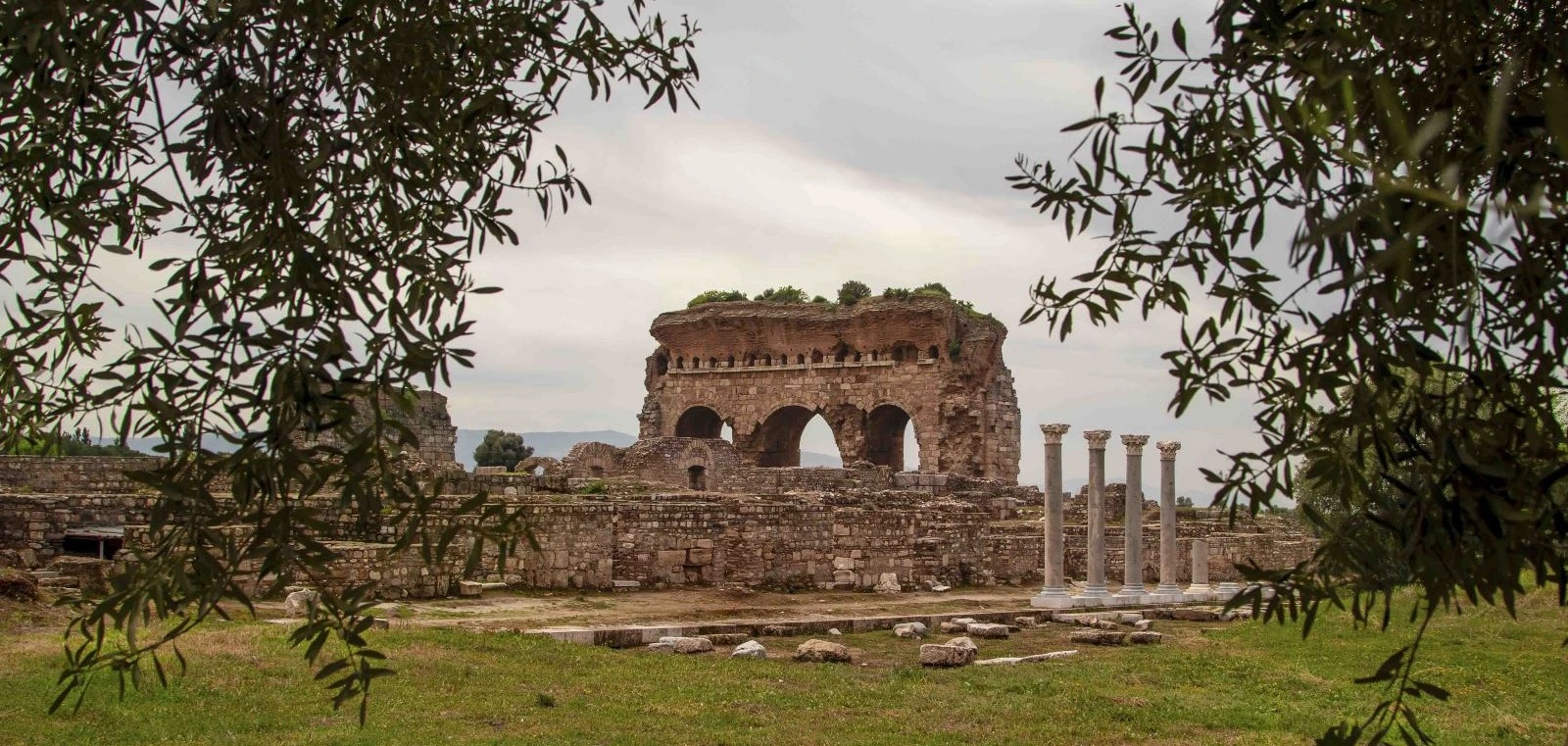
Travel from Ottoman and National Struggle history in central Aydın to the archaeological collections of Aydın Museum and the monumental remains of ancient Tralleis.
Plan Your Private Historical Tour