Aydın Gastronomy, Traditional Turkish Cuisine & Regional Flavors

Çine Köfte – Aydın's Famous Grilled Meatballs

Discover the authentic taste of Çine Köftesi,
a geographically protected culinary specialty from Aydın, Türkiye.

Discover Çine Köfte

Çine Köfte – A Traditional Taste of Aydın's Culinary Heritage

Çine Köfte, known in Turkish as Çine Köftesi, is one of the distinctive regional specialties of Aydın Province in western Türkiye. Originating from the district of Çine, these carefully prepared grilled meatballs are celebrated for their tender texture, rich beef flavor and remarkably simple combination of ingredients.

Unlike many Turkish meatball recipes that depend on numerous spices, herbs or additional ingredients, traditional Çine Köfte emphasizes the natural quality of the meat. Carefully selected beef, a small amount of animal fat, onion, salt and cumin are combined through a particular preparation method before the meatballs are shaped by hand and cooked over glowing charcoal.

The result is a satisfying culinary experience that reflects the relationship between local agriculture, animal husbandry, traditional butchery and regional cooking techniques. Each portion offers an opportunity to appreciate the food culture of southwestern Anatolia.

Recognizing its regional importance, the Turkish Patent and Trademark Office officially registered Çine Köftesi as a geographically indicated product on 29 November 2018. The registration protects the product's distinctive characteristics and its association with the Çine district.

Today, Çine Köfte remains a popular choice among local residents and travelers passing through the Aydın–Muğla region. Whether enjoyed in a traditional roadside restaurant or as part of a wider culinary journey through Aydın, it represents an authentic taste of the region.

Regional Specialty

Discover one of the best-known traditional foods associated with Çine, Aydın.

Geographical Indication

Learn about the officially registered recipe and protected regional identity.

Charcoal Grilling

Explore the cooking technique that creates the characteristic flavor and texture.

Local Food Culture

Experience an important part of Aydın's culinary traditions and hospitality.

Know Before You Taste

Çine Köfte – Quick Facts

Essential information about one of Aydın's most recognizable regional meatball specialties.

📍

Origin

Çine district, Aydın Province, western Türkiye.

Explore Çine on Google Maps
🍖

Main Ingredient

Carefully selected beef, traditionally from specified cattle raised in Çine.

🔥

Cooking Method

Hand-shaped meatballs grilled over prepared charcoal embers.

🏅

Protected Status

Geographical indication registration No. 397, dated 29 November 2018.

🌿

Flavor Profile

Rich beef flavor, gentle cumin seasoning and a tender, juicy texture.

🥗

Serving Style

Served hot, often with bread, grilled vegetables, salads and ayran.


Discover Aydın's Local Food Traditions

What Is Çine Köfte?

A distinctive Turkish grilled meatball whose identity comes from its ingredients, preparation and regional origins.

Çine Köfte is a traditional variety of Turkish köfte, or meatball, associated with the Çine district of Aydın. It belongs to Türkiye's extensive tradition of regional grilled meats, in which individual towns have developed characteristic combinations of ingredients, shapes and cooking techniques.

At first glance, Çine Köfte may resemble other small grilled Turkish meatballs. Its defining characteristics, however, are found in the selection and treatment of the beef, the controlled addition of fat and seasonings, the kneading and resting process, and the use of charcoal heat.

The officially registered preparation contains only five ingredients: minced beef, animal fat, onion, salt and cumin. This restrained recipe allows the flavor of the meat itself to remain central.

The meatballs are relatively small, making them suitable for quick and even grilling. Their carefully prepared texture helps them retain moisture while developing a lightly browned exterior.

For visitors discovering traditional Aydın cuisine, Çine Köfte offers an interesting contrast to the province's olive oil dishes, vegetables, pastries and fruit-based specialties. Together, these foods illustrate the diverse culinary heritage of the Büyük Menderes region and its surrounding districts.


What Makes Çine Köfte Special?

The character of Çine Köfte comes from a combination of factors rather than any single seasoning. The geographical indication specification identifies several details that distinguish the traditional product from ordinary grilled meatballs.

Locally Raised Cattle

The registered product specifies beef from particular cattle raised on pastures within the Çine district.

Selected Meat Cuts

Beef from the rib or shoulder areas provides the foundation for the traditional mixture.

Balanced Fat Content

A measured quantity of animal fat contributes moisture and flavor without dominating the meat.

Simple Seasoning

Onion, salt and cumin complement the beef without overwhelming its natural character.

Careful Grinding

The traditional method uses a specific grinding sequence to distribute fat and onion through the mixture.

Cold Resting

The mixture rests under refrigeration to develop the appropriate consistency before shaping.

Hand Shaping

Each meatball is shaped by hand, with controlled dimensions for consistent cooking.

Charcoal Embers

Cooking over prepared embers creates a lightly grilled exterior while protecting the interior texture.

The essential principle: Traditional Çine Köfte is not defined by strong spices or a complicated sauce. Its identity depends on the quality of the beef, careful preparation and skilled grilling.

The History and Cultural Heritage of Çine Köfte

Çine is an inland district of Aydın, situated along an important route connecting the Aegean region with Muğla and the southwestern coast of Türkiye. Its landscape includes agricultural lands, hills, valleys and mountainous pastures that have long supported rural livelihoods.

Animal husbandry and traditional meat preparation form part of the district's wider agricultural heritage. Çine Köfte reflects this relationship between locally raised cattle and the knowledge of butchers, cooks and restaurant operators.

Across Anatolia, meatball recipes have developed in numerous regional forms. Different communities use specific meat cuts, fat proportions, seasonings and cooking methods to create recognizable local specialties.

In Çine, the distinctive preparation of beef became associated with the district's culinary identity. Local restaurants and roadside eateries helped introduce the meatballs to travelers moving between Aydın and Muğla.

The dish's official recognition came in 2018, when Çine Köftesi received geographical indication registration through an application by Çine Municipality.

This recognition documents the dish's distinguishing characteristics and helps preserve the connection between its traditional preparation and its place of origin.

Regional Roots

The dish developed its identity within Çine's agricultural and culinary environment.

Traditional Craft

Butchery, meat preparation, kneading and charcoal grilling are central to the specialty.

Local Restaurants

Traditional eateries introduced generations of residents and travelers to Çine Köfte.

2013 Application

Çine Municipality applied for geographical indication protection on 24 June 2013.

2018 Registration

The Turkish Patent and Trademark Office registered Çine Köftesi on 29 November 2018.

Living Heritage

The dish remains part of the everyday culinary experience of Çine and the wider Aydın region.

Çine Köfte and Its Geographical Indication Registration

Çine Köftesi holds a registered Mahreç İşareti, a type of Turkish geographical indication identifying a product whose characteristics, reputation or other qualities are associated with a particular geographical location.

The registration identifies the geographical boundary as Çine district, Aydın, and records the ingredients and production method that distinguish the traditional product.

Of particular importance is the specification of beef from cattle raised under defined conditions in Çine. The official document also describes the age and breeds of the cattle, the cuts of meat used, the grinding procedure, refrigeration, shaping and charcoal cooking.

Registered Name Çine Köftesi
Registration Number 397
Registration Date 29 November 2018
Application Date 24 June 2013
Registration Holder Çine Municipality
Geographical Area Çine District, Aydın Province
Indication Type Mahreç İşareti – Geographical Indication
Official reference: The complete registration and production specification can be consulted through the Turkish Patent and Trademark Office – Çine Köftesi . The document is particularly useful for understanding the difference between the registered regional product and simplified home recipes.

Traditional Çine Köfte Ingredients

The official geographical indication registration provides an ingredient list for approximately eight people. The quantities below follow that registered specification.

Minced Beef 1 kilogram
Animal Fat 50 grams
Onion 100 grams
Salt 5 grams
Cumin 5 grams
Yield Approximately 8 servings

Why Are These Ingredients Important?

Beef

The principal ingredient determines the richness, texture and characteristic flavor of the meatballs. The registered preparation specifies selected cuts from locally raised cattle.

Animal Fat

A small proportion of fat improves moisture retention and gives the finished meatballs a satisfying, tender consistency.

Onion

Finely incorporated onion contributes moisture and a gentle savory sweetness without becoming a dominant flavor.

Salt

Salt enhances the natural flavor of the beef and plays a role in developing the mixture's structure during kneading.

Cumin

This familiar Turkish spice adds a mild earthy aroma while allowing the flavor of the beef to remain prominent.

Authentic recipe versus home variations: Some published recipes add breadcrumbs, baking soda, eggs or extra seasonings. These may produce enjoyable meatballs, but they are not part of the five-ingredient formula documented in the official Çine Köftesi geographical indication registration.

Meat Selection and Preparation for Authentic Çine Köfte

The official production method places particular emphasis on the characteristics and treatment of the beef.

The registered product uses meat from male cattle of specified breeds, traditionally between one and one and a half years old, raised on pastures within Çine. The specification identifies rib or shoulder meat and particular feeding conditions.

Once the meat has been prepared under appropriate refrigerated conditions, the grinding process is carefully controlled. A portion of the meat is processed with the animal fat and onion to create an even distribution.

The remainder of the meat is minced separately and then combined with the prepared mixture. This differs from simply grinding every ingredient together repeatedly.

The resulting mixture is kneaded while kept cold, allowing the ingredients to combine without unnecessary warming of the fat.

Selection

Choose appropriate beef cuts with the balance of muscle and fat required by the traditional preparation.

Cold Handling

Keep the meat refrigerated throughout preparation to preserve quality and food safety.

Grinding

Use the specified fine grinding process and avoid unnecessary repeated grinding of the main meat portion.

Mixing

Distribute the onion and fat evenly before incorporating the remaining minced beef.

Kneading

Work the meat mixture thoroughly while preventing excessive warming.

Refrigerated Resting

Allow the prepared mixture to rest under refrigeration before shaping and cooking.

How Is Authentic Çine Köfte Made?

The traditional preparation involves several stages. Although the ingredients are simple, the method requires care and experience to produce the expected texture.

Step 1 – Prepare the Beef

The selected beef is prepared using the controlled chilling and resting procedures specified in the official registration. The meat must remain under suitable refrigerated conditions throughout handling.

Step 2 – Grind the Ingredients

A small portion of meat is finely ground together with the animal fat and onion to distribute them evenly. The remaining beef is minced separately before the components are combined.

Step 3 – Add Salt and Cumin

Salt and cumin are added in measured quantities. These two seasonings support rather than overpower the natural beef flavor.

Step 4 – Knead the Mixture

The ingredients are thoroughly kneaded while kept cold. Proper mixing helps create the cohesive texture associated with traditional Çine Köfte.

Step 5 – Rest Under Refrigeration

The prepared mixture is refrigerated for at least six hours according to the registered method. Traditionally, a mixture prepared in the evening may remain refrigerated overnight.

Step 6 – Shape by Hand

After resting, the meatballs are shaped by hand, with lightly moistened hands helping prevent sticking. The documented dimensions are approximately 3–3.5 centimeters wide and 5–5.5 centimeters long.

Step 7 – Grill Over Charcoal

The meatballs are placed over properly prepared charcoal embers. The official method describes a short cooking period of approximately 2–2.5 minutes under its specified professional grilling conditions, with neither excessive flames nor heavily ashed-over fuel.

Step 8 – Serve Immediately

Once cooked, the meatballs are served hot so diners can enjoy their freshly grilled aroma, tender interior and lightly browned exterior.

Important food safety note: The short grilling time in the official production specification assumes its particular meatball dimensions and cooking conditions. For home preparation, cooking time may differ. Use safe handling procedures and verify that ground beef reaches a safe internal temperature of 71°C (160°F).

What Does Çine Köfte Taste Like?

The first impression of a well-prepared Çine Köfte is its concentrated beef flavor. Because the seasoning is restrained, the quality of the meat and the charcoal-grilling method are especially noticeable.

The exterior should be lightly browned and aromatic, while the interior remains tender and moist. The added fat helps create a pleasantly rich consistency without making the meatballs overly heavy when properly prepared.

Onion contributes subtle savory notes, while cumin provides a gentle earthy background. The charcoal adds a characteristic grilled aroma that distinguishes the traditional restaurant experience from many pan-cooked meatball recipes.

Rich Beef Flavor

The natural flavor of the selected meat forms the foundation of every bite.

Juicy Interior

The fat balance and careful grilling help maintain a moist texture.

Lightly Browned Exterior

Charcoal heat creates a pleasant contrast between the surface and the tender center.

Gentle Seasoning

Cumin and onion contribute flavor without overwhelming the beef.

Charcoal Aroma

Cooking over glowing embers adds the unmistakable character of traditional Turkish grilling.

Best Enjoyed Fresh

Serving immediately preserves the texture, temperature and aroma of the meatballs.

How Is Çine Köfte Traditionally Served?

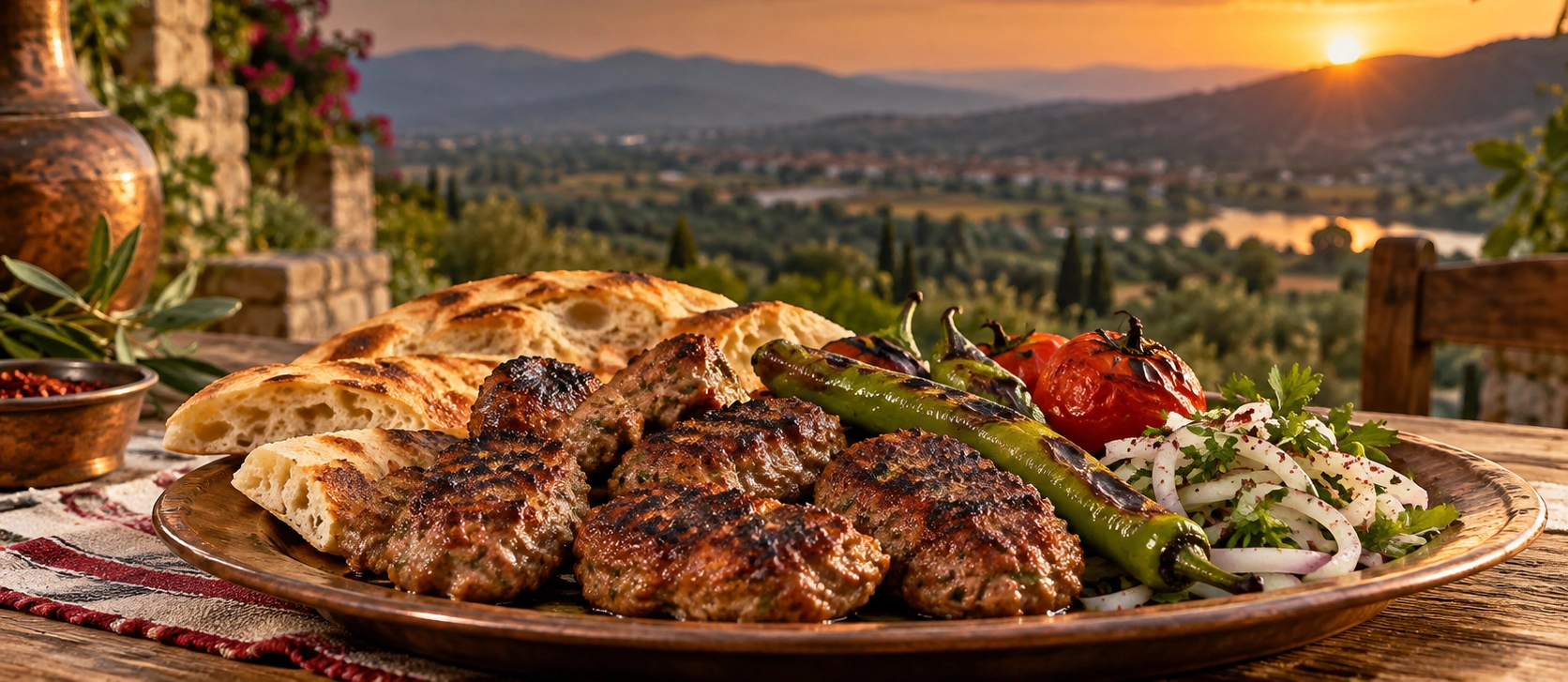
Çine Köfte is typically enjoyed as a freshly grilled main dish. Restaurants may serve it with warm bread, grilled vegetables, salads and other familiar accompaniments from Turkish cuisine.

The presentation varies between establishments, but the emphasis is usually on enjoying the meatballs while they are hot and freshly cooked.

Warm Bread or Pide

Soft bread or Turkish pide complements the grilled meat and can absorb its flavorful juices.

Grilled Tomatoes

Lightly charred tomatoes provide moisture and a pleasant contrast to the richness of the beef.

Grilled Peppers

Charcoal-roasted green peppers add freshness, sweetness and sometimes a mild spicy character.

Onion Salad

Freshly sliced onions, sometimes prepared with sumac, provide a crisp and tangy accompaniment.

Turkish Piyaz

White bean salad may be offered as a side dish, adding freshness and a satisfying texture.

Ayran

This traditional chilled yogurt drink is a popular pairing with grilled Turkish meat dishes.

Local dining tip: Side dishes and presentation differ from restaurant to restaurant. Ask about the accompaniments included with your order, especially if you would like to try regional salads or freshly prepared grilled vegetables.

How Is Çine Köfte Different from Other Turkish Köfte?

Türkiye has many regional meatball specialties. Although they share a common foundation of minced meat, their seasonings, preparation methods, shapes and serving traditions can differ considerably.

Çine Köfte

Associated with Aydın's Çine district, this specialty emphasizes selected beef, measured animal fat, onion, salt, cumin and a documented charcoal-grilling technique.

İnegöl Köfte

Originating from İnegöl in Bursa Province, this meatball is known for its relatively restrained seasoning and characteristic compact shape.

Tekirdağ Köfte

A regional specialty from Thrace, often associated with elongated meatballs, a particular minced-meat mixture and distinctive accompaniments.

Akçaabat Köfte

This Black Sea specialty is recognized for its local meat tradition, preparation method and characteristic grilled flavor.

İzmir Köfte

Unlike charcoal-grilled Çine Köfte, İzmir Köfte is commonly prepared with potatoes, tomatoes and peppers in a tomato-based cooking sauce.

Kasap Köfte

Butcher-style meatballs vary by establishment and commonly emphasize freshly minced meat and straightforward seasoning.

Exploring these regional differences reveals the remarkable variety of Turkish cuisine. The word köfte refers to a broad family of preparations rather than a single standardized recipe.

Çine Köfte stands out because its officially registered identity includes both a defined geographical relationship and a detailed traditional production method.

Can You Make Çine Köfte at Home?

You can prepare meatballs inspired by Çine Köfte in a home kitchen, even without access to the precise cattle, specialized grinding equipment or charcoal-grilling conditions used in the registered regional method.

For a home adaptation, begin with good-quality beef containing an appropriate amount of fat. Keep the mixture chilled, incorporate finely prepared onion, season lightly with salt and cumin, and knead thoroughly.

After resting the mixture under refrigeration, shape it into small meatballs. Cook over a suitably heated grill or in a well-preheated heavy pan, following appropriate ground-meat food safety guidance.

The resulting dish can capture some of the flavor and texture of traditional Çine Köfte, although it should be understood as a home interpretation rather than a geographically certified product.

Choose Good Beef

The quality and fat balance of the minced meat are fundamental to the finished result.

Keep Ingredients Cold

Refrigerated preparation helps maintain the mixture's consistency.

Avoid Over-Seasoning

Use a restrained quantity of seasonings to keep the focus on the beef.

Rest the Mixture

Allow enough refrigerated resting time before shaping and cooking.

Shape Consistently

Similar-sized meatballs cook more evenly and are easier to handle.

Control the Heat

Avoid uncontrolled flames and cook thoroughly without excessively drying the meat.

For the most authentic experience: Enjoy Çine Köftesi in its home district, where restaurants specializing in the regional dish offer the opportunity to experience its traditional character.

Where to Eat Çine Köfte in Aydın

The most natural place to discover Çine Köfte is Çine district, southeast of Aydın city. The district is associated with traditional meat restaurants and roadside eateries serving travelers along the Aydın–Muğla corridor.

Restaurants specializing in grilled meats may prepare Çine Köfte alongside other local dishes, making it possible to experience several expressions of the region's culinary traditions in one meal.

Çine Town Center

The town itself is an excellent starting point for a traditional lunch. Look for established local restaurants that specialize in grilled meat and ask whether they prepare Çine Köftesi according to the registered regional method.

Aydın–Muğla Road

For travelers driving between Aydın and Muğla, Çine provides a convenient opportunity to enjoy a local meal. Roadside meat restaurants form part of the regional travel experience, particularly for visitors exploring southwestern Türkiye by car.

Aydın City and Surrounding Districts

Çine Köfte may also appear on menus elsewhere in Aydın Province. However, restaurants outside the district can differ in ingredient sourcing and production methods, so not every dish sold under a similar name necessarily follows the geographical indication specification.

Choose a Specialist

Look for a restaurant known for freshly prepared grilled meat dishes.

Ask About Preparation

Restaurants may be able to explain the meat selection, seasoning and charcoal cooking method.

Order Freshly Grilled

Çine Köfte is best experienced immediately after preparation.

Try Regional Sides

Ask about seasonal salads, local vegetables and traditional accompaniments.

Allow a Proper Lunch Stop

A relaxed meal offers a more enjoyable experience than a hurried roadside break.

Confirm Current Details

Restaurant hours, menus, prices and availability may change throughout the year.

Finding restaurants: Search for Çine Köftesi restaurants in Çine on Google Maps to explore current locations and visitor reviews. This guide does not rank individual restaurants or guarantee their geographical indication compliance.

Çine Köfte and the Food Culture of Aydın

Aydın's cuisine is closely connected to its Mediterranean climate, fertile agricultural lands, olive groves, orchards and longstanding rural traditions. The province is especially associated with figs, olives, olive oil, vegetables, herbs and regional meat dishes.

Çine Köfte contributes a distinctive grilled-meat tradition to this diverse culinary landscape. While many Aegean dishes highlight vegetables and olive oil, Çine Köfte reflects another important part of the region's food culture: livestock farming and the skills of traditional meat preparation.

Dining in Türkiye is also an important social experience. Meals provide opportunities for conversation, hospitality and the sharing of local specialties.

A lunch centered around freshly grilled Çine Köfte can therefore become more than a simple food stop. It offers visitors an approachable introduction to the everyday culinary identity of inland Aydın.

Rural Heritage

The specialty reflects the region's connection with livestock farming and agricultural landscapes.

Traditional Butchery

Meat selection and grinding techniques remain essential to the identity of the dish.

Charcoal Cooking

Grilling over embers represents a familiar and enduring element of Turkish food culture.

Regional Hospitality

Local restaurants introduce visitors to traditional flavors in a relaxed dining environment.

Protected Traditions

Geographical indication registration documents the relationship between food and place.

Culinary Tourism

Traditional specialties give travelers another reason to explore destinations beyond major tourist centers.

Including Çine Köfte in Your Aydın Travel Itinerary

Çine Köfte is particularly appealing to travelers following an inland route through Aydın Province or continuing toward Muğla and the southwestern coast.

The district can be included in a cultural or culinary itinerary combining regional food, rural scenery and local heritage.

Option 1 – A Traditional Lunch in Çine

Travel to Çine and enjoy freshly grilled meatballs at a local restaurant. Allow time for a relaxed meal and a short exploration of the town before continuing your journey.

Option 2 – Çine Food and Local Heritage

Combine a traditional Çine Köfte lunch with cultural places in the surrounding district. Visitors interested in archaeology may explore the wider Çine area, including its ancient settlements and archaeological heritage.

Option 3 – Aydın Regional Gastronomy Journey

Plan a broader culinary route featuring Çine Köfte alongside Aydın figs, Memecik olive oil, regional desserts and other traditional dishes. This approach offers a more complete understanding of the province's food culture.

Destination Çine, Aydın Province
Main Experience Traditional Çine Köftesi tasting
Suggested Meal Time Approximately 45–90 minutes
Combine With Local heritage, nearby archaeological sites and regional food experiences
Travel Style Self-drive, private vehicle or tailor-made culinary excursion
Travel planning: If you are passing through the region, choose a restaurant and sightseeing stops that fit your actual route. Rural archaeological sites may require additional driving, advance planning and appropriate access arrangements.

Best Time to Enjoy Çine Köfte

Çine Köfte is not a seasonal dish. It can be enjoyed throughout the year wherever it is freshly prepared and available.

The most comfortable season for a broader culinary journey depends on whether you plan to combine your meal with outdoor attractions, archaeological sites or countryside sightseeing.

Spring

Comfortable temperatures and green landscapes make spring ideal for combining local food with sightseeing.

Summer

Enjoy Çine Köfte as a lunch stop, but consider the afternoon heat when planning outdoor activities.

Autumn

Milder weather creates pleasant conditions for exploring Aydın's countryside and local restaurants.

Winter

A freshly grilled plate of köfte provides a satisfying meal during cooler travel days.

Lunch

A midday meal is particularly convenient when traveling between Aydın and Muğla.

Dinner

Evening dining may be possible at restaurants offering regular dinner service; verify their current hours.

Practical Tips for Trying Çine Köfte

Trying an unfamiliar regional specialty is one of the pleasures of traveling through Türkiye. A few simple tips can help make your Çine Köfte experience more enjoyable.

Look for Fresh Preparation

Choose a restaurant where the köfte is grilled to order whenever possible.

Ask About the Recipe

Find out whether the establishment follows the traditional Çine Köftesi preparation method.

Check Portion Sizes

Meatball counts and serving weights vary, so ask before ordering.

Enjoy It Hot

Freshly grilled meatballs are generally at their best immediately after serving.

Try Ayran

The chilled yogurt drink provides a classic pairing for Turkish grilled meats.

Ask About Side Dishes

Salads, grilled vegetables, bread and additional appetizers may be priced separately.

Check Current Prices

Menu prices change, particularly with meat costs. Confirm current prices before ordering.

Plan Your Stop

Allow enough time for ordering, grilling and enjoying a relaxed meal.

Dietary Information About Çine Köfte

Traditional Çine Köftesi is a meat-based dish. The registered ingredient list contains beef, animal fat, onion, salt and cumin.

Because restaurant recipes and preparation practices may differ, visitors with food allergies, intolerances or particular dietary requirements should always check ingredients directly with the restaurant.

Contains Meat

Traditional Çine Köfte is made primarily from beef and is not suitable for vegetarian or vegan diets.

Gluten Considerations

The registered recipe contains no wheat ingredients, but restaurant variations, bread accompaniments and cross-contact may introduce gluten.

Dairy Considerations

The official ingredient list contains no milk products, although sides such as ayran contain dairy.

Spice Sensitivity

The registered preparation includes cumin. Ask the restaurant about its actual seasoning if you have sensitivities.

Halal Requirements

Ask the restaurant directly about meat sourcing, slaughter certification and preparation if halal verification is important to you.

Food Allergies

Always inform restaurant staff about severe allergies and confirm ingredients and possible cross-contact.

Important: Geographical indication registration describes a traditional production specification; it is not an individual restaurant's allergen declaration or food safety certification.

Frequently Asked Questions About Çine Köfte

What is Çine Köfte?

Çine Köfte, or Çine Köftesi, is a traditional Turkish grilled meatball associated with the Çine district of Aydın Province. The registered preparation uses minced beef, animal fat, onion, salt and cumin.

Where does Çine Köfte come from?

It originates from Çine, a district of Aydın Province in western Türkiye.

Why is Çine Köfte famous?

It is appreciated for its distinctive meat selection, simple seasoning, careful preparation and charcoal-grilled flavor. Its regional identity is also recognized through an official geographical indication.

Is Çine Köfte geographically protected?

Yes. Çine Köftesi received Turkish geographical indication registration No. 397 on 29 November 2018.

Who registered Çine Köftesi?

The geographical indication was registered following an application by Çine Municipality.

What meat is used in authentic Çine Köfte?

The registered method specifies beef from particular cattle raised in the Çine district, using selected rib or shoulder cuts.

What ingredients are in Çine Köfte?

The official ingredient list contains minced beef, animal fat, onion, salt and cumin.

Does traditional Çine Köfte contain breadcrumbs?

Breadcrumbs are not included in the officially registered recipe. Some home-style or restaurant variations may use them.

Does Çine Köfte contain eggs?

Eggs are not part of the official five-ingredient preparation. Always confirm restaurant ingredients when dietary restrictions apply.

Is Çine Köfte spicy?

The registered recipe is not particularly spicy. Cumin provides a gentle aromatic flavor rather than strong heat.

How is Çine Köfte cooked?

Traditional Çine Köfte is hand-shaped and grilled over prepared charcoal embers.

Why is the meat mixture rested?

Refrigerated resting allows the mixture to develop the consistency required for shaping and cooking. The registered method specifies a resting period of at least six hours.

How large are traditional Çine meatballs?

The geographical indication specification describes meatballs approximately 3–3.5 centimeters wide and 5–5.5 centimeters long.

How long does Çine Köfte take to cook?

The registered professional charcoal-grilling procedure describes approximately 2–2.5 minutes under specified conditions. Home cooking times can vary, and ground meat should always reach a safe internal temperature.

What does Çine Köfte taste like?

It has a rich beef flavor, a tender and juicy texture, mild cumin seasoning and a lightly smoky character from charcoal grilling.

What is traditionally served with Çine Köfte?

Common accompaniments may include bread or pide, grilled tomatoes, peppers, onions, salads and ayran. Exact side dishes vary by restaurant.

Where can I eat authentic Çine Köfte?

Çine district in Aydın is the natural destination for trying this regional specialty. Traditional meat restaurants and roadside eateries are good places to begin looking.

Can I find Çine Köfte outside Çine?

Restaurants elsewhere may offer dishes called Çine Köfte, but their ingredients and production methods may not fully match the registered geographical indication specification.

Can I make Çine Köfte without a charcoal grill?

Yes. A home adaptation can be cooked in a heavy grill pan or on another suitable cooking surface, although the charcoal aroma and traditional cooking characteristics will differ.

Is Çine Köfte gluten-free?

The official registered ingredient list contains no wheat-based ingredients. However, restaurant variations, accompaniments and kitchen cross-contact may introduce gluten, so visitors with celiac disease or allergies must confirm directly.

Is Çine Köfte halal?

The dish is traditionally beef-based, but visitors who require specific halal certification should verify the restaurant's meat sourcing and preparation procedures.

What is the difference between Çine Köfte and İnegöl Köfte?

Both are regional Turkish grilled meatballs, but Çine Köfte has its own geographically registered meat sourcing, ingredient proportions, preparation process and charcoal-grilling method.

Is Çine Köfte available throughout the year?

Yes. It is not a seasonal specialty, although individual restaurant opening schedules and availability may vary.

Is Çine Köfte worth trying?

Yes, particularly for travelers interested in authentic regional Turkish cuisine. It offers a flavorful introduction to Aydın's traditional meat preparation and charcoal-grilling culture.

Responsible Culinary Tourism in Çine

Experiencing traditional food can support local businesses and encourage appreciation of regional culinary knowledge. A thoughtful approach helps preserve the authenticity of these experiences.

Support Local Businesses

Consider established family-run restaurants and regional food producers when planning your visit.

Appreciate Traditional Methods

Learn about the preparation techniques that distinguish Çine Köfte from ordinary grilled meatballs.

Respect Local Hospitality

Approach restaurant staff and local residents with courtesy and an interest in their culinary traditions.

Avoid Food Waste

Order portions appropriate to your appetite and ask about serving sizes when uncertain.

Value Authenticity

Understand the distinction between registered regional preparation and recipes inspired by the original dish.

Explore Beyond Famous Destinations

Visiting smaller districts such as Çine helps spread the benefits of tourism across the region.

Private Aydın Culinary & Cultural Experiences

Explore the traditional food culture of Aydın, discover local specialties such as Çine Köfte and combine regional gastronomy with history, archaeology and countryside experiences through a tailor-made journey.

Explore Çine and Aydın with Wow Cappadocia

Our team can help you plan private experiences shaped around your interests, with comfortable transportation, knowledgeable local guidance where arranged, and no compulsory shopping stops.

Continue Discovering Aydın's Culinary Heritage

From locally produced olive oil and famous figs to traditional celebration dishes, Aydın offers an extraordinary variety of regional flavors.