Custom Aydın Culinary & Cultural Experience
Ask about a personalized visit exploring regional food traditions, local markets and the historical attractions of inland Aydın, subject to local availability.
Request a Custom Experience





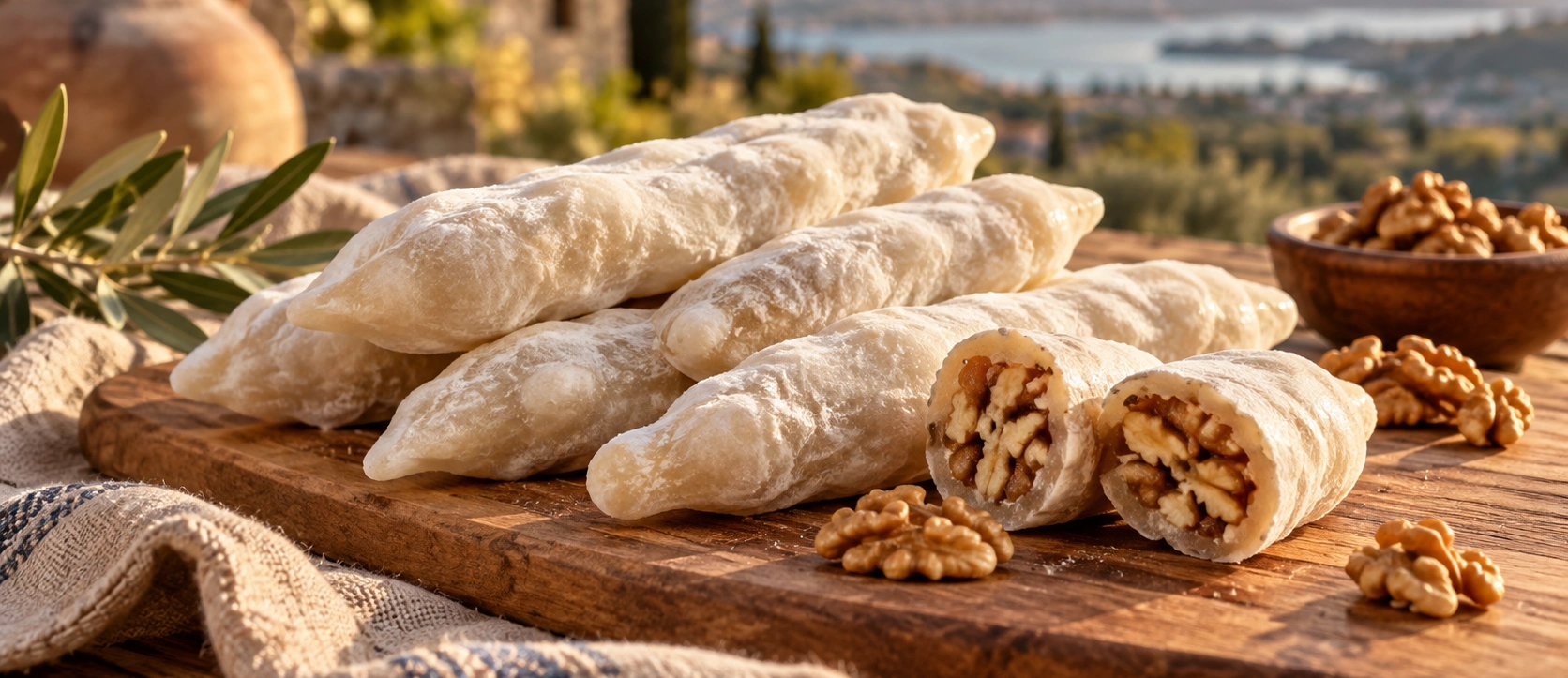
Bozdoğan Sausage with Walnuts, known locally as Bozdoğan Cevizli Sucuğu, is one of the distinctive traditional sweets of Aydın Province in western Türkiye. Its unusual English name comes from its elongated, sausage-like appearance, but the product contains no meat. It is a confection made from walnuts, wheat starch, white sugar and water.
Unlike the dark, grape-based walnut sausages found in many parts of Anatolia, the Bozdoğan specialty has a characteristic matte, cream-white appearance. Walnut kernels form the center, while a sweet starch mixture creates a soft coating around them. The result is a traditional dessert distinguished by its shape, texture, subtle sweetness and walnut flavor.
The sweet is associated with the districts of Bozdoğan and Nazilli, where its preparation has been passed down through generations. Local accounts trace the tradition to the period before the establishment of the Turkish Republic, when families made the confection as a nourishing treat, particularly for children during difficult times.
In recognition of its regional identity and traditional production, Bozdoğan Cevizli Sucuğu received a Turkish geographical indication on November 30, 2020. Today, it represents an important part of Aydın's culinary heritage and can still be encountered through local confectioners, producers and selected neighborhood markets.
A protected regional confection officially registered in 2020.
Traditionally made from walnuts, wheat starch, sugar and water.
A distinctive appearance that separates it from grape-based varieties.
A sweet associated with family kitchens and local food craftsmanship.
Essential information about one of Aydın's most unusual traditional confections.
Bozdoğan and Nazilli districts, Aydın Province, western Türkiye.
Explore Bozdoğan on Google MapsTraditional walnut confection made with a sweetened wheat-starch coating.
Walnut kernels, wheat starch, white granulated sugar and water.
Matte cream-white exterior, typically thicker in the middle and tapered at both ends.
Approximately 15 centimeters according to the registered product description.
Turkish geographical indication, registration number 611, dated November 30, 2020.
Despite its unusual name, this Aydın specialty is a traditional sweet rather than a savory sausage.
The Turkish term cevizli sucuk literally means "sausage with walnuts" or "walnut sausage." In culinary usage, however, it refers to a category of sweets in which walnuts are surrounded by a thickened, sweet coating and shaped into elongated pieces.
Bozdoğan's version is especially recognizable because its coating is prepared from water, white sugar and wheat starch rather than the grape juice or molasses commonly associated with similar confections in other regions.
During preparation, walnut kernels are threaded onto food-safe string. The walnut strings are dipped repeatedly into a cooked, thickened starch mixture and suspended to dry between coatings. This traditional technique gradually creates the familiar cylindrical form.
When finished, the sweet has a pale exterior surrounding the walnut centers. The starch coating provides gentle sweetness and a soft texture, while the walnuts contribute a richer, slightly earthy flavor and a contrasting bite.
Visitors exploring the culinary traditions of Aydın will discover that Bozdoğan Cevizli Sucuğu reflects a local preference for straightforward ingredients, patient preparation and recipes connected to everyday family life.
Many Turkish regions have their own walnut-based confections, but the Bozdoğan variety is distinguished by a particular combination of ingredients, appearance and production techniques.
The characteristic cream-white exterior makes this variety noticeably different from dark grape-based walnut sweets.
The registered recipe uses four basic ingredients rather than a complex collection of flavorings.
Cooking the mixture, dipping the walnut strings and controlling the drying process require attention and practical experience.
Its traditionally thicker center and slimmer ends create a form resembling a short sausage.
Its history connects household food traditions in Bozdoğan and Nazilli with contemporary local confectionery.
Official registration recognizes the relationship between the product, its method of preparation and its place of origin.
The origins of Bozdoğan Cevizli Sucuğu are associated with the domestic food traditions of Aydın's inland districts. According to the geographical indication registration, the sweet was already known locally before the foundation of the Republic of Türkiye in 1923.
During periods of war and scarcity, local families prepared the confection at home, particularly as a way of providing children with a sweet containing walnuts. Its ingredients were relatively simple, and the preparation depended on methods that could be carried out in a household kitchen.
Over time, the tradition moved beyond family production. Local confectioners and market vendors began preparing and selling the sweet, allowing a familiar household food to reach a wider public.
Like many traditional Anatolian specialties, its cultural importance extends beyond flavor. The sweet recalls the experiences of earlier generations and the ways families adapted familiar ingredients to meet everyday needs.
The registration of Bozdoğan Cevizli Sucuğu in 2020 marked an important step in documenting and protecting its regional identity. Today, its traditional production method remains an essential part of the product's character.
The confection was already known in the region and prepared in local households.
Historical accounts associate its preparation with efforts to nourish children during difficult years.
Family production gradually developed into commercial preparation and sales through local markets.
The application for geographical indication protection was submitted.
Bozdoğan Cevizli Sucuğu received official registration under number 611.
The specialty continues to represent traditional food craftsmanship in Bozdoğan and Nazilli.
The protected recipe is notable for its uncomplicated ingredient list. Unlike many commercially available sweets, the traditional Bozdoğan preparation does not require added flavorings, coloring agents or food additives.
Walnuts form the center of the confection and supply its defining nutty flavor and textural contrast.
Wheat starch thickens the cooked mixture and helps form the characteristic smooth, pale coating.
Sugar provides the sweetness of the confection without introducing the dark color of grape molasses.
Clean drinking water, traditionally associated with local sources, forms the liquid base of the mixture.
Making Bozdoğan Cevizli Sucuğu requires more than combining the ingredients. The confection depends on the consistency of the cooked starch mixture, careful coating of the walnuts and controlled drying.
The registered production specification published by the Nazilli Chamber of Commerce describes the following traditional method.
Walnut kernels are arranged on a strong string suitable for contact with food. The string must support the weight of the confection during dipping and drying.
Water, white granulated sugar and wheat starch are mixed together before cooking to create the sweet coating.
The ingredients are heated with continuous stirring until the mixture becomes thick and develops the required consistency.
Strings of walnut kernels are immersed in the cooked mixture so that a layer of sweet starch coats the walnuts.
The coated strings are suspended in an appropriate clean environment until the coating has dried sufficiently for another dipping.
The dipping process is repeated three or four times, gradually increasing the thickness of the sweet surrounding the walnuts.
Once the desired coating has formed, the strings are hung again and allowed to reach the appropriate finished texture.
The finished confection is protected from contamination, excessive moisture, strong odors and direct sunlight until it is ready to eat.
For visitors interested in traditional Turkish cooking, the officially registered preparation offers a useful insight into the confection's basic formula.
The following measurements are based on the product specification registered by the Nazilli Chamber of Commerce. They describe the ingredients used for the sweet coating and a minimum quantity of walnuts, rather than a standardized number of finished pieces.
First, mix the water, wheat starch and sugar thoroughly. Cook while stirring continuously until a thick, uniform consistency is achieved. Thread the walnuts onto suitable food-safe string and dip them into the cooked mixture.
Hang the coated walnuts to dry. Once sufficiently dry, dip them again and repeat the process until the traditional layered coating has formed. Allow the final coating to dry under hygienic conditions before consumption.
Exact drying conditions depend on the environment, the coating thickness and the producer's technique. Commercial production should follow the registered specification and appropriate food-safety requirements.
Bozdoğan Cevizli Sucuğu offers a different tasting experience from the fruit-based walnut sausages that visitors may already know. Its sweetness comes from white sugar, while the walnut kernels provide the dominant natural flavor.
The starch coating is relatively mild, allowing the walnuts to remain noticeable. The finished texture depends partly on the drying process and the freshness of the confection.
A straightforward sugar-based sweetness without the fruity, concentrated flavor of molasses.
The walnut center adds a recognizable nutty taste and a pleasant contrast to the surrounding coating.
The cooked starch creates a smooth, tender exterior whose consistency changes slightly with drying and storage.
The traditional product has a subdued, matte appearance rather than the glossy darkness of many grape-based versions.
Cutting a piece reveals the walnuts enclosed within the pale sweet mixture.
The combination of starch, sugar and walnuts gives the confection a relatively uncomplicated flavor profile.
Visitors to Türkiye may encounter several sweets that resemble long strings of sausage. Although they share a similar appearance, their ingredients and regional identities can be quite different.
In eastern and central Anatolia, walnut sweets may be known by regional names such as köme, orcik or other local terms. Their ingredients, textures and production traditions should not automatically be treated as identical.
Bozdoğan Cevizli Sucuğu belongs to this broader family of traditional walnut confections while maintaining its own protected identity through its pale color, starch-based preparation and association with Aydın.
Bozdoğan Cevizli Sucuğu is a geographically indicated Turkish product, registered by the Turkish Patent and Trademark Office through an application submitted by the Nazilli Chamber of Commerce.
The product holds a mahreç işareti, a geographical indication category associated with products whose reputation, characteristics or identity are connected to a defined place.
The registration identifies Bozdoğan and Nazilli districts of Aydın as the geographical production area and documents the ingredients, distinguishing physical features and traditional production requirements.
Because the registered product is associated with specialized preparation skills and regional knowledge, its production stages must take place within the designated geographical area to qualify under the protected name.
Unlike mass-produced packaged sweets available across Türkiye, traditional Bozdoğan Cevizli Sucuğu is closely associated with local producers and regional market culture.
Travelers interested in tasting the confection should begin by exploring local food shops and markets in Bozdoğan or Nazilli. Availability can change according to the producer, market schedule and freshness of the product.
Ask local confectioners and food retailers whether they have freshly prepared Bozdoğan Cevizli Sucuğu.
Traditional neighborhood markets and regional food vendors can be useful places to ask for the specialty.
Seek out producers who identify their products by the traditional registered name and preparation method.
Shops specializing in regional Aydın foods may be able to recommend suppliers or explain seasonal availability.
The confection has also been sold by vendors at markets outside Bozdoğan and Nazilli, although locations vary.
Because its recommended shelf life is short, confirm when the product was prepared and how it has been stored.
Appearance, ingredients and producer information can help visitors identify the traditional confection. Because it is a short-shelf-life food, freshness and hygienic handling are particularly important.
The registered product is characterized by a matte cream-white surface rather than a dark fruit-based coating.
Traditional ingredients are wheat starch, water, white sugar and walnut kernels.
Check for Bozdoğan or Nazilli production details and the registered geographical indication name.
Choose a product protected from dust, insects and unnecessary handling.
Freshness matters because the traditional confection is not intended for indefinite room-temperature storage.
Look for clean, dry storage away from direct sunlight and sources of strong odors.
Bozdoğan Cevizli Sucuğu can be enjoyed on its own as a simple sweet snack. Its walnut center and pale coating make it an interesting addition to a small tasting selection of regional foods.
Enjoy a small portion on its own to appreciate the contrast between the walnut center and the starch coating.
Slice the confection into manageable portions to reveal the walnuts and make sharing easier.
Try serving it alongside unsweetened Turkish tea as a pleasant tasting combination.
A small piece can provide a sweet contrast to the distinctive bitterness of Turkish coffee.
Compare it with other traditional Aydın confections to discover differences in ingredients and textures.
Serve small portions and explain the history of the recipe, particularly its connection to earlier household traditions.
One of the most important differences between this product and some commercially dried walnut confections is its relatively short recommended consumption period.
The registered specification describes storage in clean, dry environments protected from direct sunlight and unwanted odors. It also gives recommended consumption periods according to storage temperature.
These periods come from the registered product description, not from an assessment of every individual manufacturer's packaging or storage conditions. Follow any stricter instructions provided by the producer, and discard the product if spoilage is suspected.
Traditional foods often preserve historical experiences that are not recorded in monuments or museums. Bozdoğan Cevizli Sucuğu is particularly interesting because its recognized history is closely connected to household nourishment during difficult periods.
The sweet illustrates how ordinary ingredients could become a recognizable local specialty through generations of experience. Its preparation required patience and practical skill rather than expensive or unfamiliar ingredients.
As local trade developed, the confection became more widely available and helped maintain a connection between older home-based recipes and contemporary market culture.
Its geographical indication now provides a formal record of the traditional composition and production process, supporting the preservation of knowledge that might otherwise gradually disappear.
A traditional confection associated with household preparation and memories passed between generations.
Local historical accounts connect the sweet with efforts to provide children with food during periods of scarcity.
Knowledge of mixing, heating, dipping and drying has helped preserve the confection's identity.
Regional vendors and confectioners have played a role in introducing the sweet to later generations.
Geographical indication registration strengthens awareness of Bozdoğan and Nazilli's food traditions.
The specialty demonstrates how regional Turkish cooking can produce very different results from similar-looking foods.
There is no officially defined visitor season for Bozdoğan Cevizli Sucuğu. Its availability depends on local production and retail schedules rather than a fixed tourist calendar.
Nevertheless, the experience of searching for this sweet can be combined with exploring the rural landscapes, markets and agricultural traditions of Aydın.
Comfortable weather makes it pleasant to explore inland Aydın towns and their local food shops.
Visit markets earlier in the day and pay particular attention to the storage of perishable sweets in hot weather.
The agricultural atmosphere of the season offers an interesting backdrop for exploring Aydın's regional ingredients.
Local shops and markets may still offer the product, depending on production schedules and demand.
Regional markets can be rewarding places to explore local flavors, but confirm schedules and product availability.
When possible, purchase the confection soon after preparation to experience it within its recommended consumption period.
Although this confection may not be as internationally familiar as Turkish delight or baklava, tasting it offers an opportunity to discover another side of Turkish culinary culture.
Bozdoğan and Nazilli belong to the inland Aydın region, where local agricultural traditions, family recipes and regional markets contribute to a varied food heritage.
Travelers can combine an interest in Bozdoğan Cevizli Sucuğu with visits to small-town markets, traditional food shops and other local attractions, depending on their route through western Türkiye.
Learn about the inland Aydın district associated with this unique confection and its local traditions.
Discover another regional sweet and explore the diversity of traditional desserts in Aydın.
Learn about a traditional ceremonial dish that represents another dimension of Aydın's food heritage.
Explore a traditional savory specialty and the region's distinctive slow-cooking techniques.
Continue your culinary journey with another characteristic dish from the Aydın region.
Discover another district where agricultural landscapes and local traditions shape regional identity.
Trying a regional specialty is often more rewarding when visitors understand its background and know what to expect. A few practical considerations can make the experience easier.
Ask for Bozdoğan Cevizli Sucuğu rather than simply "walnut sausage" to avoid confusion with other varieties.
Look for the characteristic cream-white appearance described in the geographical indication registration.
Confirm the traditional four-ingredient recipe, particularly if you have food allergies or dietary restrictions.
Ask the vendor when the product was made and how long it can safely be stored.
Start with a small piece to appreciate the mild starch coating and walnut center.
Choose sellers who can explain the product's origin and traditional preparation.
The contrast between the pale coating and the walnut center makes this confection especially interesting for food photography. Simple compositions can highlight the traditional product without distracting from its appearance.
Photograph a carefully cut piece to reveal the walnuts surrounded by the cream-white coating.
Soft daylight helps preserve the delicate pale color without harsh reflections.
Show the elongated form with its traditionally thicker middle and tapered ends.
Place a few walnut halves nearby to visually communicate the confection's main ingredient.
Natural materials, ceramic plates and simple table settings can complement a regional food photograph.
Request permission before photographing vendors, production areas or people working in local food shops.
Bozdoğan Cevizli Sucuğu contains walnuts, which provide fats and other nutrients, but the traditional recipe also includes substantial quantities of white sugar and wheat starch.
It is therefore best understood as a sweet confection rather than a substitute for a balanced meal. Its historical association with childhood nourishment reflects the circumstances in which families traditionally prepared it, not a modern nutritional recommendation.
Walnuts contribute fats, flavor and texture to the finished product.
White granulated sugar is a principal ingredient, so portion size matters.
Wheat starch is part of the traditional recipe, so gluten-related suitability should not be assumed.
The word "sausage" refers only to appearance; the traditional confection contains no meat.
The registered method excludes added food additives and flavoring substances.
Check the manufacturer's labeling and preparation conditions, especially if you have allergies or dietary restrictions.
Bozdoğan's food heritage can be explored alongside the natural landscapes, rural settlements and historical sites of inland Aydın. The following destinations provide ideas for travelers building a broader regional itinerary.
Discover the district's landscapes, local culture and traditional identity within the greater Menderes region.
Explore the reservoir landscapes and natural scenery around Bozdoğan.
Learn about the historic fortifications and mountain heritage of the Bozdoğan area.
Discover an archaeological site connected with the ancient history of inland Caria.
Explore an architectural landmark associated with the historical landscape near Nazilli.
Continue exploring the less-visited archaeological heritage of Aydın's interior.
It is a traditional sweet from Aydın made by coating threaded walnut kernels with a cooked mixture of wheat starch, white sugar and water.
Its registered Turkish name is Bozdoğan Cevizli Sucuğu.
No. It is a sweet confection. The word sucuk refers to its sausage-like shape, not to its ingredients.
It is associated with the Bozdoğan and Nazilli districts of Aydın Province in western Türkiye.
Its traditional coating is made from water, white sugar and wheat starch rather than dark grape-based ingredients, producing a cream-white appearance.
No. The officially registered Bozdoğan recipe does not include grape molasses or grape juice.
The traditional ingredients are walnut kernels, wheat starch, white granulated sugar and water.
Walnuts are threaded onto string and dipped into a thick cooked mixture of starch, sugar and water. The strings are hung to dry, and the coating process is repeated several times.
The registered production method describes repeating the dipping process approximately three or four times.
It combines a mild, sweet starch coating with the distinctive nutty flavor and texture of walnuts.
The registered product description gives a typical length of approximately 15 centimeters.
Its traditional form has a thicker central section and narrower ends, contributing to the sausage-like appearance reflected in its name.
Local accounts and the geographical indication registration describe it as a confection known in the region since before the Turkish Republic was founded in 1923.
Historical accounts associate its household preparation with efforts to feed children during periods of war and food scarcity.
Yes. It was registered as a Turkish geographical indication on November 30, 2020, with registration number 611.
The registration was obtained by the Nazilli Chamber of Commerce.
The registered production area covers the Bozdoğan and Nazilli districts of Aydın Province.
Visitors can ask local confectioners, regional food shops and selected markets in Bozdoğan, Nazilli and other parts of Aydın. Availability should be confirmed locally.
The registered specification recommends consumption within four days of production at room temperature or seven days under refrigeration, provided appropriate storage conditions are maintained.
Refrigeration is recommended when keeping it beyond the shorter room-temperature period. Always follow the producer's instructions and consider the product's freshness and handling conditions.
Do not assume so. The traditional recipe contains wheat starch, and suitability for a gluten-free diet depends on verified ingredients, testing and production conditions.
The four ingredients in the registered traditional recipe are plant-derived. However, anyone following a strict vegan diet should confirm the ingredients and production practices of the specific product.
No. Walnuts are a principal ingredient and pose a risk to people with relevant tree-nut allergies.
Its historical connection with childhood nourishment is well documented locally. Today, parents should consider the added sugar, walnut allergy risks and the potential choking hazard posed by nuts or chewy pieces for young children.
Yes, if it can be transported and stored safely within its short recommended consumption period. It is not an ideal souvenir for lengthy journeys without appropriate storage.
For travelers interested in regional Turkish food, it offers an unusual confection with a distinctive appearance, straightforward ingredients and an important connection to Aydın's local culinary heritage.
Regional food heritage depends on the people who continue preparing traditional products. Travelers can help support these traditions by showing interest in authentic production and treating local markets and producers with respect.
When possible, choose products made by identifiable regional businesses and traditional confectioners.
Recognize that regional recipes can differ significantly even when products share a similar name or appearance.
Obtain permission before documenting production activities, shop interiors or market vendors.
Buy quantities you can consume safely, considering the confection's relatively short recommended shelf life.
Traditional production requires practical knowledge and repeated hands-on preparation.
Help distinguish the traditional cream-white Bozdoğan confection from grape-based walnut sausages produced elsewhere.
Discover the food traditions, rural landscapes, archaeological heritage and historic towns of western Türkiye through thoughtfully planned private travel experiences.
Contact our team to discuss a customized itinerary combining regional gastronomy, culture and sightseeing according to your interests.
Ask about a personalized visit exploring regional food traditions, local markets and the historical attractions of inland Aydın, subject to local availability.
Request a Custom Experience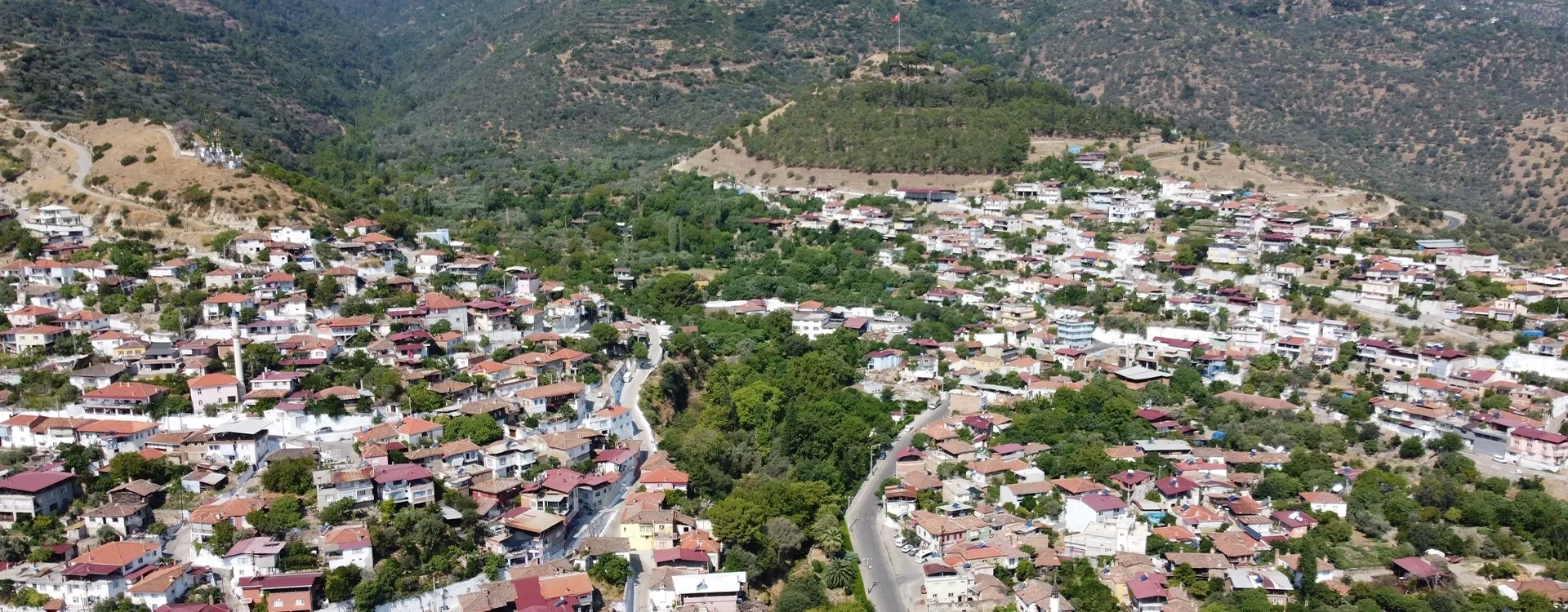
Explore the district behind this geographically indicated sweet, including its natural setting, historical landmarks and regional identity.
View Bozdoğan GuideFrom regional sweets to ceremonial dishes, explore the remarkable diversity of Aydın's culinary heritage.
Discover another distinctive traditional sweet associated with the food culture of the Nazilli region.
Explore Snow HalvaExplore a traditional dish connected with shared meals, celebrations and the cultural heritage of Aydın.
Discover Dedebağ KeşkeğiLearn about a regional cooking tradition and another memorable example of Aydın's culinary diversity.
Explore Dalama Tandırı