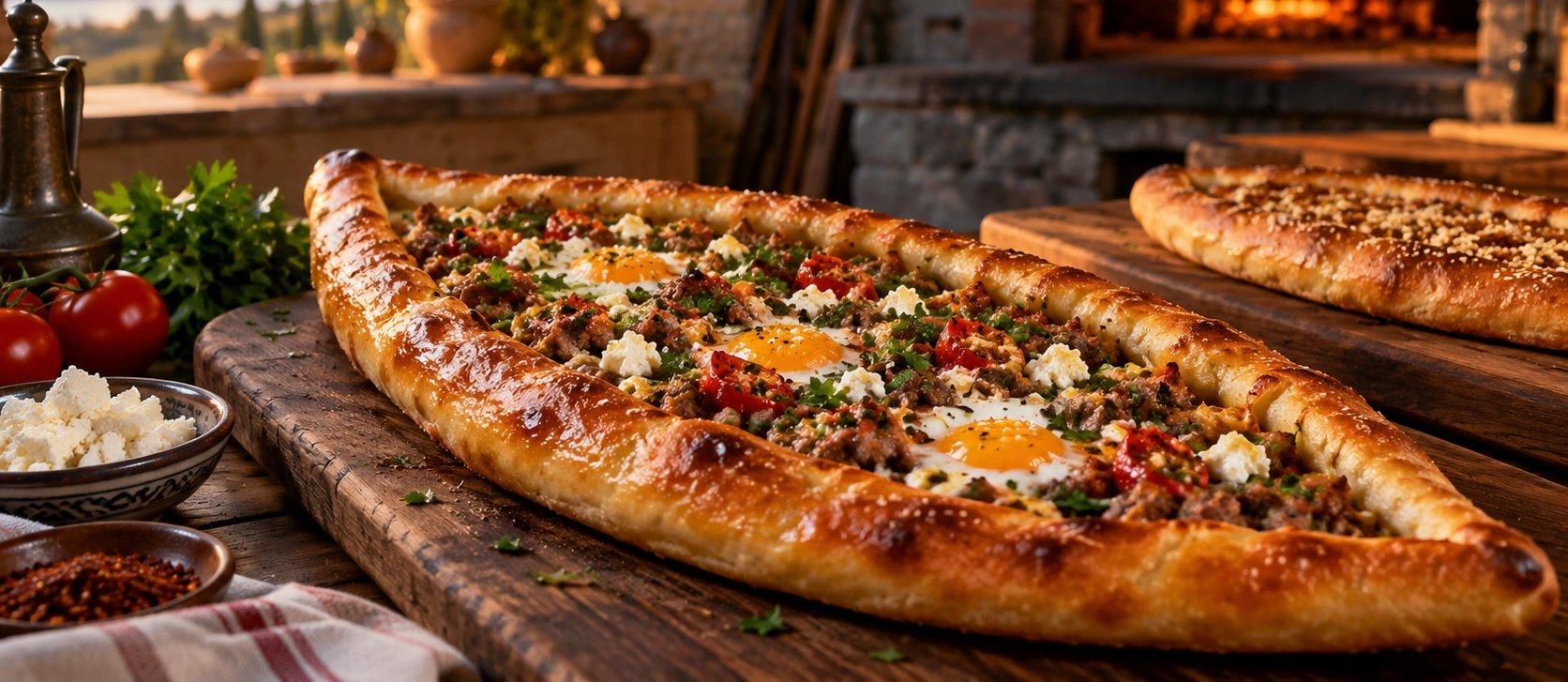
Söke Pide
Discover the savory baked specialty that forms an important part of Söke's local food culture.
Explore Söke Pide





Söke Kulak Tatlısı is a traditional Turkish dessert from Söke, in Aydın Province, in western Türkiye. Made from thinly rolled wheat-flour dough, a fragrant filling of walnuts, roasted sesame seeds, sugar and roasted chickpeas, and a rich sugar syrup, it represents a distinctive expression of the region's culinary heritage.
Unlike many familiar Turkish syrup desserts, Kulak Tatlısı is especially recognizable for its unusual filling and carefully arranged pastry. The dough is rolled around the prepared mixture, cut into thick sections, placed upright in a baking tray and baked until golden. Warm syrup is then poured over the pastry, creating a dessert that combines sweetness, nuttiness and layers of delicate dough.
The dessert has a longstanding place in Söke's traditional food culture. Its preparation calls for patience, particularly when rolling the dough thinly and shaping the filled pieces. These techniques help distinguish the authentic local specialty from other syrup-soaked pastries found throughout Türkiye.
On 25 July 2025, Söke Kulak Tatlısı was officially registered as a Turkish geographical indication under registration number 1755, recognizing its established reputation and connection with Söke.
For travelers discovering the culinary traditions of the Aegean region, Söke Kulak Tatlısı offers an opportunity to appreciate how everyday ingredients, family cooking knowledge and skilled preparation can become an important part of local identity.
Officially registered in Türkiye in July 2025.
Walnuts, sesame, sweetened chickpeas and roasted chickpeas.
Thin dough rolled, cut and arranged upright before baking.
A distinctive dessert reflecting local culinary knowledge.
Essential information about one of Söke's distinctive traditional desserts.
Söke district, Aydın Province, western Türkiye.
Explore Söke on Google MapsTraditional oven-baked pastry sweetened with sugar syrup.
Walnuts, roasted sesame, sugar, sweetened and unsalted roasted chickpeas.
Turkish geographical indication No. 1755, registered 25 July 2025.
Baked in the oven and finished with warm sugar syrup.
The registered production specification describes one tray serving approximately 20 people.
A carefully prepared pastry that combines the rich ingredients and traditional techniques of Söke's regional cuisine.
Söke Kulak Tatlısı, sometimes described in English as Söke Ear-Shaped Dessert, belongs to the broad family of Turkish syrup-soaked pastries. Its identity comes from a particular combination of ingredients and preparation techniques rather than from syrup alone.
The dough is made using wheat flour, olive oil, salt and water. It is kneaded until moderately soft, rested, and rolled into thin circular sheets. A mixture of ground walnuts, roasted sesame seeds, sweetened roasted chickpeas, unsalted roasted chickpeas and sugar is distributed over the dough.
The filled sheet is rolled into a long cylinder and divided into thick sections. These sections are arranged vertically in a baking tray, allowing their rolled layers and filling to form the dessert's distinctive appearance.
A heated mixture of olive oil and butter is added before baking. Once the pastry has developed its golden color, sugar syrup flavored with a small amount of lemon juice is poured over it.
The finished dessert brings together soft syrup-soaked pastry, aromatic toasted ingredients and a rich filling. Its flavor is especially distinctive because roasted chickpeas and sesame appear alongside the more familiar walnuts.
Rather than being an ordinary version of baklava, Söke Kulak Tatlısı is a separate regional specialty with its own documented ingredients, shaping method and geographical identity.
The culinary traditions of Söke developed in the fertile landscapes of western Anatolia, where agriculture, local markets and home cooking have long shaped the region's food culture.
Situated within the wider Büyük Menderes agricultural region, Söke is especially associated with wheat production and a diverse collection of traditional dishes and baked goods. This environment provides an important context for understanding local flour-based specialties.
Söke Kulak Tatlısı has a longstanding reputation within the district. Its precise date of invention and the identity of its original creator are not documented in the official geographical indication registration. Nevertheless, the dessert's established local reputation and specialized preparation were important considerations in its recognition.
Traditional preparation requires more than simply combining ingredients. Rolling the pastry evenly, distributing the filling and forming the characteristic pieces call for experience and manual skill.
The dessert is associated with home cooking, hospitality and local food traditions, including occasions when families prepare substantial trays of sweets to share.
Its continuing cultural importance can also be seen in local efforts to celebrate Söke's traditional cuisine. During a municipal culinary competition in May 2024, Kulak Tatlısı was among the featured dishes, alongside Kulak Çorbası, Çalkama and Şevketi Bostan.
A traditional dessert with a longstanding reputation in Söke's culinary culture.
Its preparation preserves techniques of dough rolling, filling and shaping.
Wheat, olive oil and other pantry ingredients reflect the broader culinary environment of Aydın.
Local culinary events help introduce traditional Söke dishes to new generations.
Söke Chamber of Commerce applied for geographical indication protection on 25 September 2023.
The dessert received Turkish geographical indication registration on 25 July 2025.
In Turkish, kulak means "ear" and tatlısı means "dessert." The name can therefore be translated literally as "Ear Dessert," although the original Turkish name is more useful when ordering or discussing the specialty locally.
The name is generally associated with the shape of the pastry after rolling and cutting. The curved layers of the finished pieces can suggest an ear-like appearance.
However, the official geographical indication specification focuses on the ingredients and distinctive shaping technique rather than establishing a definitive historical explanation for the name.
One of the most important recent milestones in the dessert's history was its official registration by the Turkish Patent and Trademark Office on 25 July 2025.
The registered geographical indication is classified as a Mahreç İşareti, a Turkish designation recognizing products whose reputation, identity or characteristics are associated with a particular geographical area.
The registration was obtained by the Söke Chamber of Commerce, reflecting organized efforts to protect the dessert's recognized local identity and production traditions.
The registered specification establishes the ingredients, preparation method and characteristics associated with the authentic dessert. It also states that all production stages of the geographically indicated product must take place within the Söke district.
This recognition helps preserve traditional culinary knowledge while providing a documented standard for producers and consumers.
The official geographical indication specification describes a traditional production batch of approximately 20 servings, or one baking tray. The following ingredient quantities are based on that registered method.
1–1.5 kg suitable wheat flour, 100–150 ml olive oil, 8–9 g salt and sufficient water to produce a moderately soft dough.
Additional wheat flour and starch are used when rolling the dough into thin circular sheets.
100–150 g walnuts provide a rich, nutty flavor and contribute to the texture of the filling.
240–250 g roasted sesame seeds contribute a distinctive toasted aroma.
170–180 g sweetened roasted chickpeas and 170–180 g unsalted roasted chickpeas are included in the filling.
100–150 g granulated sugar is combined with the ground filling ingredients.
200–250 ml olive oil and 40–50 g butter form the heated mixture poured over the pastry before baking.
1–1.5 kg sugar, 1–1.5 liters water and 1–1.5 teaspoons lemon juice are used to prepare the syrup.
Preparing authentic Söke Kulak Tatlısı involves several stages. The registered method emphasizes the consistency of the dough, the fine grinding of the filling and the characteristic upright arrangement of the rolled pastry.
Combine wheat flour, olive oil, salt and enough water to form a moderately soft dough. Knead until the ingredients are well incorporated.
Allow the dough to rest at room temperature for approximately 10 minutes before dividing it into portions.
Grind walnuts, roasted sesame, sweetened chickpeas and unsalted roasted chickpeas into a fine mixture. Add granulated sugar and combine thoroughly.
Divide the dough into portions of approximately 250 g. Use flour and starch to roll each portion into a circular sheet about 36 cm wide and 3 mm thick.
Distribute the prepared nut, sesame and chickpea filling across the surface of the rolled pastry.
Roll the filled dough into a cylinder using a rolling pin, then cut it into pieces approximately three finger-widths thick.
Position the cut pieces vertically in a baking tray, with the rolled layers and filling forming the characteristic pattern.
Heat the specified olive oil and butter mixture and pour it over the arranged pastry before baking.
Bake in an oven preheated to approximately 200°C for 20–30 minutes, following the registered preparation method.
Boil sugar and water, then add lemon juice. Keep the prepared syrup hot for the finishing stage.
Rest the baked pastry at room temperature for approximately five minutes, then pour the hot syrup over it.
Wait until the pastry has absorbed the syrup, then serve. Traditional production favors preparing and consuming the dessert on the same day.
Although Türkiye has a remarkable variety of syrup desserts, Söke Kulak Tatlısı can be distinguished by several important characteristics.
Evenly rolled pastry is essential for developing the layered structure of the finished dessert.
Walnuts, roasted sesame and two types of roasted chickpeas create a recognizable local flavor.
Cut pastry sections are placed vertically, making the filled layers visible and shaping the appearance of each piece.
The heated fat mixture contributes richness and assists in developing the baked pastry's texture.
The syrup is poured over the baked dessert after a short resting period.
Careful rolling, filling and shaping are essential features of the traditional preparation.
Söke Kulak Tatlısı brings together several layers of flavor. Its sweetness comes from both the filling and the sugar syrup, while roasted ingredients provide depth and a pleasantly toasted character.
Walnuts contribute a rich nutty taste. Roasted sesame adds a warm and aromatic quality, while the combination of sweetened and unsalted roasted chickpeas gives the filling a distinctive roasted-legume character.
The pastry itself has a delicate layered structure. After baking and absorbing syrup, the dough becomes tender and sweet while the ground filling continues to provide texture.
A rich syrup sweetness balanced by the toasted filling ingredients.
Roasted sesame, walnuts and baked pastry provide the characteristic fragrance.
Layered pastry with a tender syrup-soaked consistency and fine ground filling.
A satisfying traditional dessert with a more complex filling than many familiar syrup pastries.
Both Söke Kulak Tatlısı and baklava are traditional Turkish sweets that combine pastry, fat and sugar syrup. However, their ingredients and shaping methods are significantly different.
Baklava generally features stacked layers of very thin pastry. Söke Kulak Tatlısı uses filled dough sheets rolled into cylinders and cut into upright sections.
Baklava commonly contains walnuts or pistachios. Söke Kulak Tatlısı uses walnuts, roasted sesame, sweetened chickpeas and unsalted chickpeas.
The rolled and vertically arranged pieces of Kulak Tatlısı create a presentation distinct from classic layered baklava.
Söke Kulak Tatlısı has a specifically documented geographical association with Söke, Aydın.
For visitors already familiar with Turkish baklava, trying Kulak Tatlısı is an excellent way to discover another expression of Anatolia's pastry-making traditions.
Traditional desserts have an important place in Turkish hospitality. Preparing a large tray of sweets can be an expression of care, generosity and the pleasure of sharing food with relatives, friends and visitors.
In Söke, Kulak Tatlısı represents more than the ingredients used to prepare it. It also reflects the knowledge required to produce thin pastry, combine local flavors and maintain a recognizable traditional method.
The dessert has associations with family gatherings, special occasions and local culinary traditions. Its role within Söke cuisine is also reflected in community food events that celebrate regional recipes.
In May 2024, Söke Municipality reported that Kulak Tatlısı was one of the dishes featured in a local traditional food competition. Such events provide opportunities for experienced home cooks to demonstrate their knowledge and for the wider community to appreciate regional cooking.
Geographical indication recognition adds another dimension to this heritage by formally recording how the dessert is prepared and why it is associated with Söke.
Travelers interested in tasting traditional Söke Kulak Tatlısı should begin in Söke town and the surrounding district of Aydın.
Unlike widely standardized Turkish desserts sold throughout the country, regional specialties may be made by particular local cooks, pastry producers or food establishments rather than being available at every dessert shop.
Availability can vary by producer, season and demand. It is therefore worthwhile to ask locally or arrange an order ahead of time instead of assuming the dessert will always be ready for immediate purchase.
Ask local bakeries and dessert specialists whether they prepare Söke Kulak Tatlısı using the traditional rolled and baked method.
Restaurants specializing in Söke's regional cuisine may be able to recommend a local producer or arrange a traditional dessert.
Local food festivals, community events and cooking competitions can offer opportunities to discover traditional Söke dishes.
For groups or special occasions, ask whether a fresh tray can be ordered in advance from a local producer.
The registered production method specifies that the dessert should be served after the freshly baked pastry has absorbed its syrup. It also describes production and consumption on the same day.
This makes freshness an important consideration when seeking the traditional taste and texture.
Enjoy the dessert after the syrup has been absorbed and the pastry is ready to serve.
Because it is a rich syrup dessert, smaller portions can be a pleasant way to appreciate the filling and texture.
Unsweetened Turkish coffee offers an enjoyable contrast to the rich sweetness of the dessert.
A glass of traditional black tea makes a simple accompaniment to an afternoon dessert break.
Its tray-based preparation makes the dessert naturally suitable for sharing among family members or guests.
Ask the producer how to transport and store the pastry, particularly if you plan to enjoy it later in the day.
A little preparation can make the experience more rewarding, particularly because this traditional specialty may not be available at every pastry shop.
Use "Söke Kulak Tatlısı" when speaking with local producers to distinguish it from other desserts.
Look for an oven-baked rolled pastry filled with walnuts, sesame and roasted chickpeas.
Ask when the dessert was prepared. The registered specification describes same-day production and consumption.
Contact producers beforehand, especially when visiting outside local festivals or arranging desserts for a group.
The traditional recipe contains wheat gluten, walnuts, sesame and butter. Travelers with allergies should confirm the ingredients directly.
Buying from traditional producers helps sustain the food knowledge associated with the dessert.
The dessert's distinctive rolled construction makes it particularly interesting for food photography. Its golden-brown pastry, textured filling and glossy syrup provide plenty of visual detail.
Photograph the complete tray to show the repeated upright pieces and traditional arrangement.
Focus on the cut layers, ground filling and toasted surface of the pastry.
Soft natural light can reveal the warm sheen of syrup across the baked dough.
With permission, document the rolling, filling, cutting and tray arrangement stages.
Include a simple ceramic plate, Turkish tea or coffee to create a welcoming culinary composition.
A portrait of the producer at work can help communicate the human skill behind this regional specialty.
Söke Kulak Tatlısı is one part of a much broader regional food culture. The fertile agricultural landscapes of Aydın have contributed to a cuisine that combines wheat-based foods, olive oil, vegetables, fruit, traditional breads and distinctive local dishes.
For visitors interested in culinary exploration, Söke offers an opportunity to discover several regional specialties during the same visit.
Discover one of Söke's best-known savory specialties, rooted in the district's wheat and baking traditions.
Explore a fragrant sesame-paste pastry that reflects another side of Söke's traditional bakery culture.
Learn about the locally celebrated traditional bread and its distinctive preparation.
Discover Söke's traditional twice-baked bread and its place in local food heritage.
Explore the celebrated figs of Aydın and their importance in regional agriculture and gastronomy.
Learn about another characteristic agricultural product of Aydın's diverse landscape.
Combining these specialties creates a richer picture of Söke and Aydın, from everyday breads and savory pastries to distinctive regional desserts.
If you are traveling through Aydın or passing between the ancient sites of western Türkiye, consider allowing time to discover the local cuisine of Söke.
Begin with a traditional breakfast or bakery visit featuring regional bread. Later, sample Söke-style pide or another local savory dish before exploring the town's food shops and markets.
For the sweet part of your visit, arrange to try Söke Kulak Tatlısı from a producer familiar with the traditional preparation method. A glass of Turkish tea or coffee provides an enjoyable finish.
Unlike a historical monument or museum, Söke Kulak Tatlısı does not have one official visitor entrance or standardized public timetable. It is a regional food specialty prepared by individual producers.
Its availability and price may vary according to the establishment, serving size and production schedule. Visitors should contact local providers directly before planning a tasting.
A culinary stop in Söke can be combined with the remarkable natural and archaeological landscapes of western Aydın. The wider region is especially appealing to travelers interested in ancient civilizations, traditional villages and Aegean scenery.
Explore the remains of an influential ancient Greek city, including its impressive theater and archaeological heritage.
Discover the monumental sanctuary and ancient oracle associated with the city of Miletus.
Enjoy coastal scenery, forest landscapes, beaches and the natural heritage of the Aegean coast.
Walk through a beautifully preserved village known for its traditional stone architecture and peaceful atmosphere.
Combine extraordinary lakeside landscapes with the archaeological remains of ancient Heracleia.
Discover a popular Aegean coastal destination with beaches, historic attractions and access to western Anatolia's ancient cities.
Söke Kulak Tatlısı is a traditional Turkish syrup dessert made from thinly rolled wheat dough filled with walnuts, roasted sesame, sugar and two kinds of roasted chickpeas. The dough is rolled, cut, arranged upright, oven-baked and finished with sugar syrup.
It originates from the Söke district of Aydın Province in western Türkiye, where it has an established place in traditional food culture.
The literal translation is "Ear Dessert." Its name is commonly associated with the curved shape of the rolled and cut pastry.
Its combination of walnuts, sesame, sweetened and unsalted roasted chickpeas, thin rolled dough and distinctive baking method gives it an identity separate from other Turkish syrup desserts.
Yes. The Turkish Patent and Trademark Office registered Söke Kulak Tatlısı as a Mahreç İşareti geographical indication on 25 July 2025, under registration number 1755.
The geographical indication was registered by Söke Chamber of Commerce, following an application submitted on 25 September 2023.
The officially registered Söke Kulak Tatlısı is oven-baked. The traditional specification describes baking the prepared pastry at approximately 200°C for 20–30 minutes before adding hot syrup.
The filling contains walnuts, roasted sesame seeds, granulated sugar, sweetened roasted chickpeas and unsalted roasted chickpeas.
Yes. Both sweetened and unsalted roasted chickpeas, known in Turkish as leblebi, are included in the traditional filling.
Yes. The traditional recipe contains walnuts and sesame, along with wheat flour and butter. Anyone with food allergies should verify the ingredients and possible cross-contact with the producer.
The traditional registered recipe is not vegan because it contains butter. A modified plant-based version would differ from the registered ingredient specification.
No. The traditional dessert is prepared using wheat flour and is therefore unsuitable for people who must avoid gluten.
No. Both are syrup desserts, but Söke Kulak Tatlısı has a different filling and shaping method. Its pastry is rolled into filled cylinders, cut and arranged upright before baking.
No. Kulak Çorbası is a different traditional dish associated with Söke. Kulak Tatlısı is a sweet oven-baked pastry finished with syrup.
The dessert is served after the baked pastry has absorbed its sugar syrup. Its registered production method favors preparing and consuming it on the same day.
Unsweetened Turkish coffee or traditional black tea can provide a pleasant contrast to the sweet and nutty pastry.
Begin by asking traditional dessert producers, bakeries and regional restaurants in Söke, Aydın. Since availability varies, contacting a producer in advance is recommended.
Some local producers may accept advance tray orders. The official production specification describes a typical tray serving approximately 20 people, but portion sizes and commercial arrangements should be confirmed directly.
Yes. Home cooks can follow the traditional ingredients and preparation method. However, the protected Söke geographical indication has specific production requirements, including that all stages take place within the registered geographical area.
Absolutely, particularly for travelers interested in regional Turkish food. Its unusual filling, distinctive pastry shape and documented local heritage make it an interesting alternative to more familiar Turkish desserts.
Discovering local cuisine can make travel more meaningful, especially when visitors take the time to understand the people and techniques behind traditional foods.
Support cooks and businesses maintaining Söke's documented culinary specialties.
Recognize the patience and skill required to roll, fill and shape the pastry.
Use the traditional Turkish name when discovering and discussing regional foods.
Ask permission before photographing commercial kitchens or food preparation.
Choose a suitable quantity and follow advice about freshness and storage.
Introduce others to Söke's distinctive cuisine and the people who preserve it.
From traditional pastries and regional breads to ancient cities and spectacular Aegean landscapes, discover the cultural and culinary diversity of western Türkiye.
Continue exploring the district's culinary identity through traditional baked goods and regional specialties.
Discover the savory baked specialty that forms an important part of Söke's local food culture.
Explore Söke Pide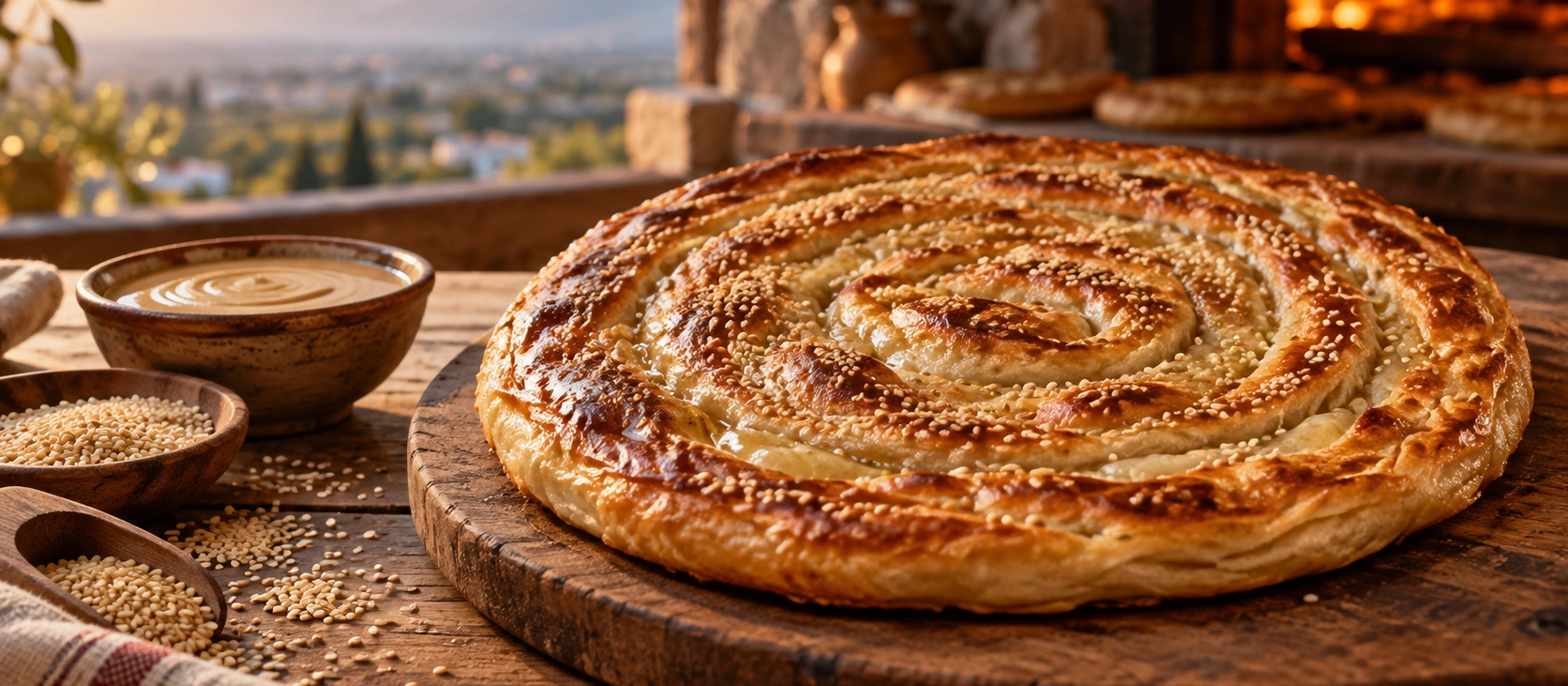
Explore another distinctive pastry from Söke, celebrated for its rich sesame flavor.
Discover Tahinli Pide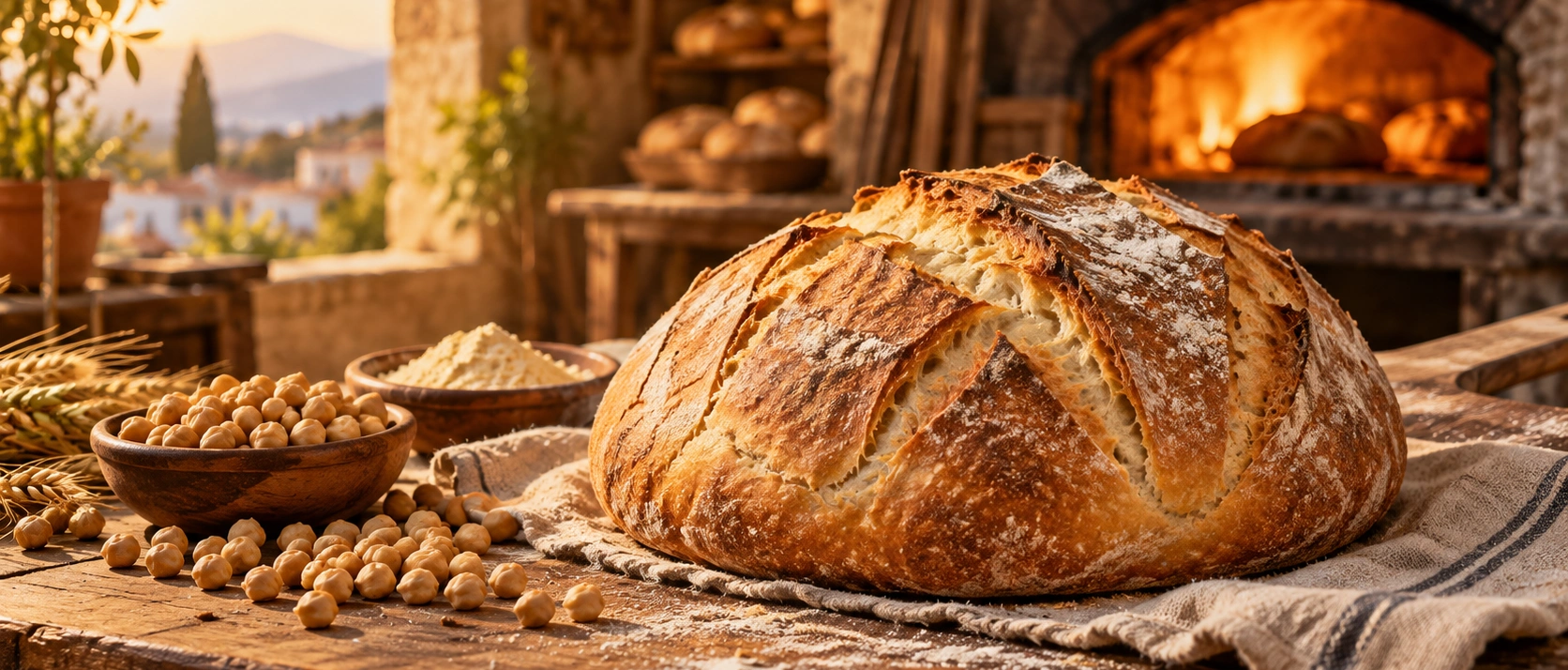
Learn about the traditional bread and craftsmanship behind one of Söke's important baked specialties.
Explore Traditional BreadCombine memorable flavors with extraordinary archaeological sites and cultural landscapes.
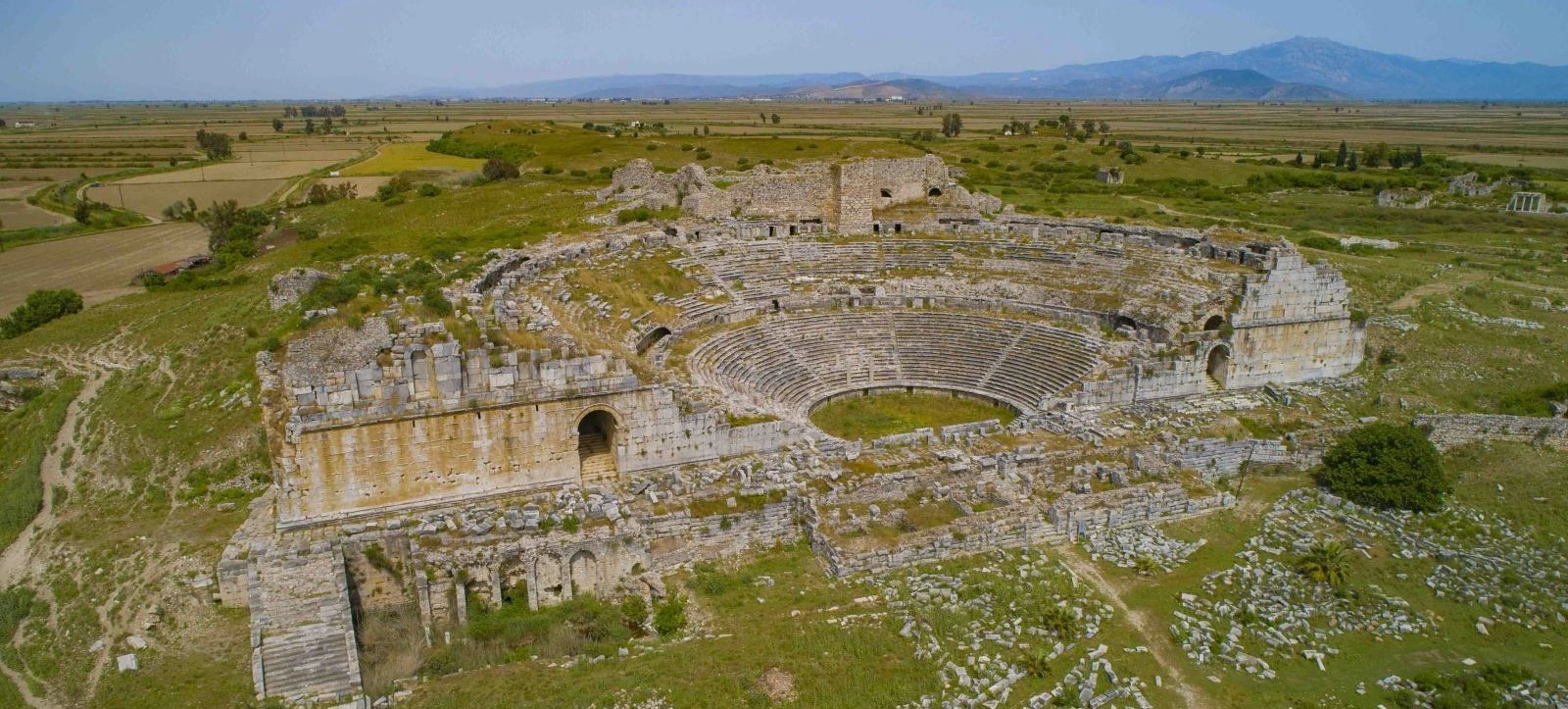
Explore an influential ancient center of philosophy, trade and urban civilization.
Discover Miletus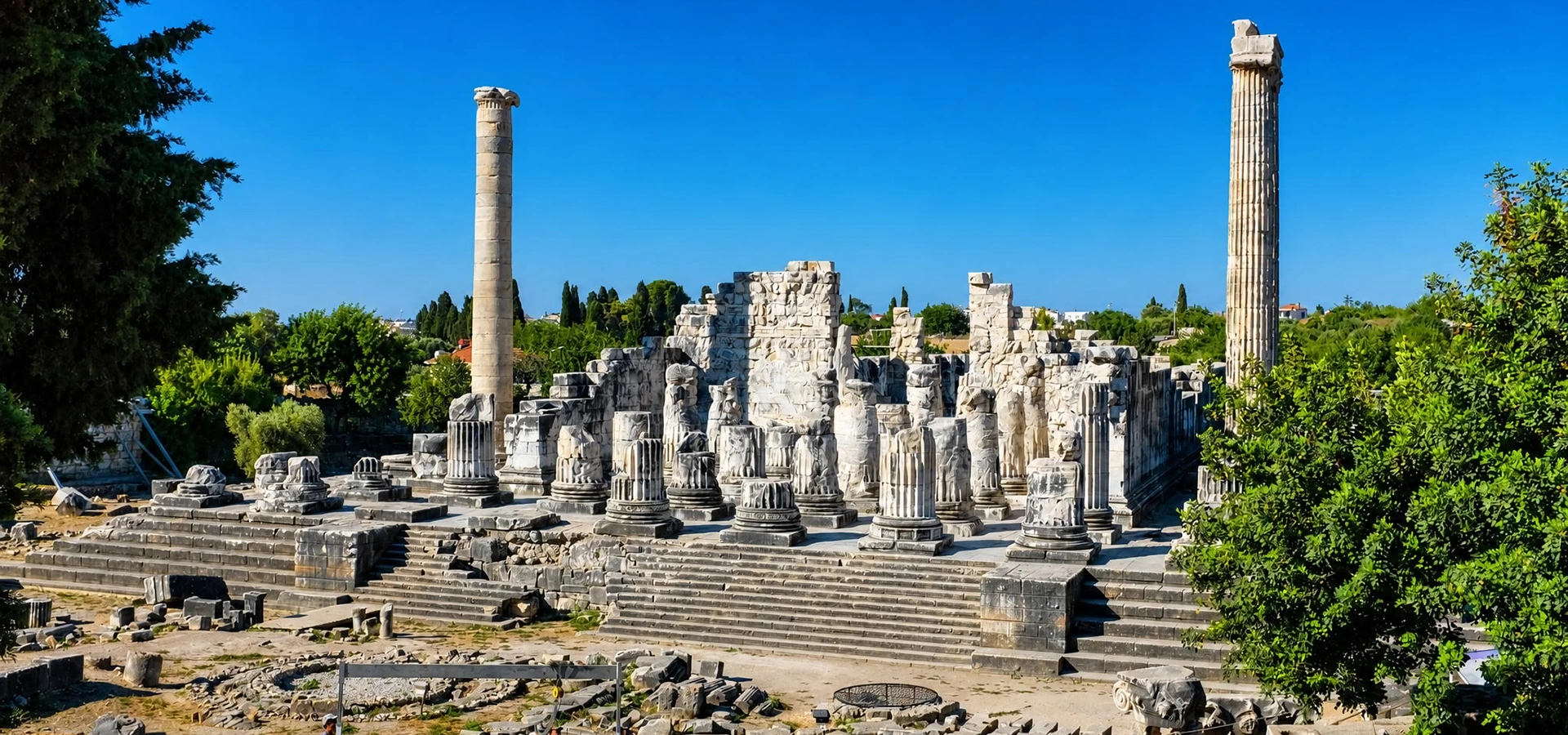
Visit one of the ancient world's remarkable religious sanctuaries.
Explore Didyma
Ask us about personalized private sightseeing across western Türkiye, with licensed guiding and no compulsory shopping stops.
Request a Private Experience