Generous Sesame Tahini
Sesame tahini is the defining ingredient, providing the rich, nutty flavour and characteristic richness of the sweet pide.
- Main ingredient: Sesame tahini
- Flavour: Rich and nutty
- Use: Inside the dough and as a topping






Söke Tahinli Pide, known in Turkish as Söke Tahinli Pidesi, is one of the most distinctive traditional sweet baked specialities of Aydın Province in western Türkiye. Closely associated with the district of Söke, this delicious preparation combines fermented wheat dough, generous quantities of sesame tahini, granulated sugar, and butter.
Unlike the familiar savoury varieties of Turkish pide, Söke Tahinli Pidesi is a sweet bakery speciality distinguished by its rich sesame flavour and carefully developed dough texture. Its character comes not only from the ingredients but also from an unusual traditional preparation technique involving rolling, wrapping, coiling, and reopening the dough.
During preparation, sesame tahini and sugar are distributed through the dough before it is shaped again. Additional tahini, sugar, and butter are applied before baking, helping create a rich and fragrant finished product.
This distinctive method requires the experience of skilled bakery masters. The dough must be handled carefully so that the tahini mixture is distributed effectively while maintaining the characteristic circular form of the finished pide.
Söke Tahinli Pidesi represents an important part of the traditional food culture of Söke and the wider Aydın region. It may be enjoyed during everyday meals and is also associated with hospitality, family gatherings, weddings, religious holidays, and local celebrations.
Its cultural importance received official recognition when Söke Tahinli Pidesi was registered as a geographically indicated product on 18 January 2024 by the Turkish Patent and Trademark Office, under registration number 1521.
Although its name and reputation are particularly connected with Söke district, the officially registered geographical production boundary covers Aydın Province.
This complete guide explores the history, culinary significance, geographical-indication recognition, traditional ingredients, handmade preparation methods, distinctive sesame filling, baking techniques, serving customs, local food culture, and practical visitor recommendations associated with Söke Tahinli Pidesi.
Generous quantities of sesame tahini create the distinctive nutty flavour of this traditional sweet pide.
Fermented wheat dough is carefully rolled, wrapped, coiled, and reopened by experienced bakers.
The prepared pide is baked at approximately 250°C, preferably in a traditional stone-based oven.
Söke Tahinli Pidesi received geographical-indication registration number 1521 in January 2024.
Essential information about one of the most distinctive traditional sweet bakery specialities of Türkiye's Aegean region.
Söke district, Aydın Province, western Türkiye.
Open Söke on Google MapsWheat flour, sesame tahini, granulated sugar, butter, yeast, water, and salt.
Approximately 250°C for around 10 minutes, preferably using a stone-based oven.
Registration No. 1521, officially registered on 18 January 2024.
Explore the relationship between sesame, traditional dough-making, local hospitality, and the culinary identity of Söke.
Located in western Aydın Province, Söke is a historic agricultural district situated near the fertile Büyük Menderes Plain. Its surrounding region is associated with farming, traditional markets, rural food production, and a rich variety of local dishes.
Wheat-based breads and pastries have occupied an important place in Anatolian food culture for generations. Across Türkiye, local bakers developed distinctive ways of preparing fermented dough, creating regional specialities according to available ingredients, culinary preferences, and inherited craftsmanship.
Tahini, a rich paste made from ground sesame seeds, has also been an important ingredient in Turkish and wider Anatolian cuisine. Its characteristic aroma and natural oil content make it particularly suitable for breads, pastries, sweets, and other traditional preparations.
Within this broader culinary tradition, Söke developed its own recognisable sweet tahini pide.
The speciality combines relatively simple ingredients with a preparation method that requires considerable skill. Rather than merely spreading a sweet topping across an ordinary flatbread, bakers distribute tahini and sugar through the dough by wrapping, coiling, and reopening it.
This technique gives Söke Tahinli Pidesi its characteristic structure and distinguishes it from many other traditional sweet baked products.
The speciality became closely associated with local bakery craftsmanship and the hospitality traditions of Söke and Aydın.
Its place in the region's culinary culture extends beyond everyday consumption. Söke Tahinli Pidesi is also associated with special occasions, including weddings, religious holidays, festivals, and gatherings where traditional foods are shared.
In modern times, growing interest in regional Turkish cuisine has helped bring greater attention to distinctive local products, including those protected by geographical indications.
The official registration of Söke Tahinli Pidesi on 18 January 2024 documented its ingredients, preparation method, recognised geographical association, and characteristic production techniques.
Today, Söke Tahinli Pide represents more than a sweet bakery product. It reflects the continuation of traditional food craftsmanship and the relationship between regional ingredients, experienced bakers, and the culinary heritage of Aydın.
Several important ingredients and preparation techniques distinguish geographically indicated Söke Tahinli Pidesi from ordinary sweet breads and pastries.
Sesame tahini is the defining ingredient, providing the rich, nutty flavour and characteristic richness of the sweet pide.
Granulated sugar is combined with tahini to create the characteristic sweetness of the finished speciality.
Traditional yeast dough provides the flexible foundation needed for the distinctive rolling and wrapping process.
The dough is spread with tahini and sugar, wrapped, coiled, and reopened to distribute the filling through its structure.
Unlike the familiar boat-shaped savoury Turkish pide, Söke Tahinli Pidesi is formed into a characteristic rounded shape.
Butter is added with tahini and sugar before baking, enriching the taste and finished texture of the pide.
The registered preparation recommends baking in a suitable oven, preferably with a stone base, to support even cooking.
Söke Tahinli Pidesi has an officially registered identity that documents its traditional ingredients and production methods.
Söke Tahinli Pidesi received official geographical-indication recognition from the Turkish Patent and Trademark Office (TÜRKPATENT) on 18 January 2024.
The registration identifies the speciality as a traditional baked product associated with Söke and defines the ingredients, production characteristics, and geographical relationship that distinguish it.
Söke Tahinli Pidesi
1521
18 January 2024
27 March 2023
Söke Chamber of Commerce (Söke Ticaret Odası).
Mahreç İşareti, a Turkish geographical-indication designation.
Aydın Province, Türkiye.
Traditional pide, bakery products, pastries, and sweets.
The registration documents a traditional product whose reputation and preparation are connected with its geographical origin.
It specifies the principal ingredients, dough preparation, distinctive shaping technique, baking procedure, and other characteristics associated with Söke Tahinli Pidesi.
The geographical-indication specification identifies Aydın Province as the registered production area, even though the product is especially associated with Söke district.
This distinction is important because the registered geographical boundary is wider than Söke town itself.
The geographical-indication designation is a Turkish national registration and should not be confused with a separate European Union geographical-indication registration.
For visitors interested in the documented preparation and protection of this speciality, the official registration is available through TÜRKPATENT.
View the Official Söke Tahinli Pidesi Geographical-Indication Registration
One of the most appealing characteristics of Söke Tahinli Pidesi is its relatively simple ingredient list.
The traditional recipe combines wheat flour, water, yeast, salt, sesame tahini, sugar, and butter. However, the generous proportions of tahini and sugar, combined with the traditional shaping technique, distinguish the speciality from ordinary sweet bread.
The geographical-indication specification provides the following approximate quantities for a preparation serving 15 people.
These quantities describe the traditional registered preparation. They are particularly useful for understanding how much sesame tahini and sugar contribute to the characteristic flavour of Söke Tahinli Pidesi.
The recipe also demonstrates the difference between this speciality and a conventional lightly sweetened bread. Here, sesame tahini is a principal ingredient rather than a minor flavouring.
The generous butter content adds richness, while fermentation and experienced dough handling help develop the finished structure.
Tahini is a thick paste produced by grinding sesame seeds. It is valued in Turkish and wider Middle Eastern cuisines for its distinctive nutty flavour, smooth consistency, and natural richness.
In Söke Tahinli Pidesi, tahini performs several important roles.
Sesame tahini creates the recognisable flavour that defines the speciality.
The oils naturally present in sesame help contribute to the rich texture of the filling.
Tahini combines with granulated sugar to create the characteristic sweet sesame mixture.
Spreading tahini before wrapping the dough helps distribute its flavour throughout the prepared pide.
The sesame aroma becomes particularly noticeable as the pide bakes.
Generous sesame tahini distinguishes this sweet pide from other regional bakery products.
The combination of sesame tahini and white granulated sugar is central to the registered preparation.
Tahini brings rich, nutty flavours, while sugar provides the pronounced sweetness associated with Söke Tahinli Pidesi.
When distributed through fermented wheat dough, these ingredients create a different eating experience from a sweet pastry in which the filling is simply placed on top.
Additional tahini and sugar are applied before baking, reinforcing the speciality's characteristic flavour.
Traditional Söke Tahinli Pidesi begins with a yeast-based wheat dough prepared from flour, water, salt, and baker's yeast.
The dough needs sufficient elasticity to withstand several stages of rolling, wrapping, and reopening.
Its preparation therefore requires careful kneading and resting before the sweet sesame mixture is added.
One of the distinguishing characteristics of Söke Tahinli Pidesi is that the dough undergoes more manipulation than an ordinary flatbread.
After the initial shaping, it is spread with tahini and sugar, wrapped, coiled, and reopened.
Dough that is insufficiently prepared may be difficult to handle during these stages.
Experienced bakers use their knowledge of dough texture, resting, and shaping to obtain the desired result.
Perhaps the most interesting aspect of Söke Tahinli Pidesi is its distinctive shaping process.
While many pastries are prepared by enclosing a filling or spreading ingredients across a flat base, the traditional Söke method distributes the sesame mixture through the dough using several carefully controlled stages.
After the initial preparation and resting, the dough portions are rolled into circular shapes.
The registered production method describes an initial circular opening of approximately 20 centimetres.
Sesame tahini and granulated sugar are spread across the prepared dough.
The mixture provides the distinctive sweetness and sesame flavour that will be distributed during the subsequent shaping process.
The dough is carefully rolled around the tahini and sugar mixture.
This stage begins incorporating the sweet filling into the structure of the dough rather than leaving it only on an exposed surface.
The wrapped dough is arranged into a coil.
This characteristic shaping stage is one of the most distinctive parts of the traditional preparation.
The coiled dough is carefully opened again to obtain the final circular form.
This process distributes the tahini mixture through the prepared dough and helps create its characteristic arrangement.
Before baking, butter and additional tahini and sugar are applied to the prepared pide.
The completed dough is then ready for the oven.
Forms the initial circular dough base.
Distributes the sesame tahini and granulated sugar.
Encloses the sweet sesame mixture within the dough.
Creates the characteristic wrapped dough arrangement.
Shapes the prepared dough into its final circular form.
Adds the final butter, tahini, and sugar before baking.
The successful completion of these stages depends heavily on the experience of the baker.
This is why the geographical-indication specification places particular importance on the skill required during shaping and preparation.
Once the tahini-filled dough has been shaped and finished with butter, sugar, and additional sesame tahini, it is ready for baking.
The officially documented preparation recommends using an oven suitable for food production, preferably with a stone base.
A stone-based oven can help distribute heat evenly and support the development of the finished texture.
A suitable oven, preferably with a stone baking surface.
Approximately 250°C according to the traditional registered method.
Around 10 minutes, depending on oven conditions.
Sesame tahini, granulated sugar, and butter are applied before baking.
A baked circular pide with a rich sesame topping and golden colour.
The finished pide is traditionally rested for approximately 15–20 minutes.
Baking is an important final stage because the oven must cook the dough while allowing the tahini, sugar, and butter to develop their characteristic flavour.
The preferred stone-based baking surface helps promote even cooking.
The actual baking time may vary according to the oven, the thickness of the prepared pide, and production conditions.
An important and sometimes overlooked feature of traditional Söke Tahinli Pidesi is the resting period after baking.
According to the registered preparation, the finished pides are arranged without stacking and allowed to rest for approximately 15–20 minutes.
The resting stage allows the freshly baked products to settle before presentation.
Individual completed portions generally weigh approximately 200 grams, although minor variations may occur.
Söke Tahinli Pidesi has a distinctive flavour created by its generous quantities of sesame tahini, granulated sugar, butter, and fermented wheat dough.
Its taste is noticeably different from the savoury Turkish pides that many international visitors already know.
Sesame tahini provides a pronounced nutty character.
Granulated sugar creates the characteristic sweet taste of the pide.
Butter adds richness to the dough and topping.
Fermented wheat dough provides the base for the sweet sesame mixture.
The wrapping and coiling technique creates a distinctive distribution of tahini through the dough.
The sesame mixture develops an appealing aroma during baking.
The overall impression is sweet, rich, sesame-forward, and satisfying.
For visitors who enjoy traditional pastries containing tahini, Söke Tahinli Pidesi offers an especially interesting regional variation.
Its generous sesame content makes it a substantial sweet speciality rather than a lightly flavoured bread.
Söke is associated with two separately registered pide specialities: traditional savoury Söke Pidesi and sweet Söke Tahinli Pidesi.
Although both represent the bakery culture of the district, their ingredients, shapes, production methods, and flavours are very different.
Type: Sweet pide.
Main ingredients: Wheat dough, sesame tahini, granulated sugar, and butter.
Shape: Circular.
Preparation: Dough is rolled, wrapped, coiled, and reopened.
Oven: Preferably stone-based, approximately 250°C.
Flavour: Sweet, nutty, and buttery.
Registration: No. 1521, 2024.
Type: Savoury pide.
Main filling: Roasted minced beef, tomatoes, eggs, parsley, and çökelek.
Shape: Open oval.
Preparation: Two separately prepared filling mixtures are combined.
Oven: Oak-fired stone oven.
Flavour: Savoury, rich, and buttery.
Registration: No. 1248, 2022.
One of the most enjoyable ways to experience Söke's culinary identity is to sample both specialities.
A traditional savoury Söke Pidesi can provide the main meal, followed by a portion of sweet tahini pide.
For a complete guide to the district's savoury speciality, explore our dedicated article:
Discover Traditional Söke Pide – Ingredients, History, and Preparation
Traditional sweet baked products are closely connected with hospitality and food-sharing customs in Türkiye.
Söke Tahinli Pidesi occupies a recognisable place within the culinary traditions of Aydın Province, where local bakeries and regional foods contribute to the identity of individual districts.
The geographical-indication specification describes the speciality as a product enjoyed during everyday meals and also served on special occasions.
Söke Tahinli Pidesi can be enjoyed as a traditional sweet baked food during ordinary daily meals.
Sweet bakery products provide opportunities for sharing traditional regional flavours.
The registered speciality is associated with hospitality during weddings and other important occasions.
Traditional foods such as tahini pide may be offered during festive holiday gatherings.
Regional celebrations provide opportunities to showcase distinctive Aydın food traditions.
Experienced bakers preserve the characteristic dough handling and shaping methods.
The preparation of Söke Tahinli Pidesi demonstrates how skilled bakers can transform a small number of familiar ingredients into a recognisable regional speciality.
The most distinctive stage is the manipulation of the dough after adding the sesame mixture.
Successfully wrapping, coiling, and reopening the dough requires practical experience that cannot be understood from an ingredient list alone.
This traditional craftsmanship is an important part of the speciality's identity.
Aydın is known for numerous regional products, including olive oil, figs, traditional pastries, local breads, and distinctive pide preparations.
Söke Tahinli Pidesi contributes to this wider culinary diversity by representing a sweet tradition based on wheat dough and sesame.
For culinary travellers, discovering these regional differences provides an opportunity to understand how local ingredients and traditional skills shape Turkish food culture.
Söke Tahinli Pidesi is generally best enjoyed warm, after the traditional resting period following baking.
The characteristic sweet sesame filling and butter-enriched dough make it a satisfying speciality that can be enjoyed on its own or shared.
One particularly satisfying way to experience Söke's traditional pide culture is to begin with savoury Söke Pidesi and finish with the sweet tahini version.
The contrast between the rich roasted-meat filling of the savoury pide and the nutty sweetness of Söke Tahinli Pidesi demonstrates the versatility of the district's baking traditions.
Yes. Its circular shape allows it to be sliced into portions and shared among family members or friends.
Visitors who are sampling several local specialities may prefer to order one portion for sharing, depending on individual appetite and the restaurant's serving size.
Sweet bakery products made with sesame tahini appear in several Turkish regional culinary traditions.
Although these specialities may share familiar ingredients, they can differ significantly in shaping, dough preparation, filling distribution, and presentation.
A geographically indicated circular sweet pide prepared with a distinctive rolling, coiling, and reopening technique.
A broader category of traditional sweet tahini pastries, often prepared in spiral or rolled shapes depending on the region.
Various regional breads use sesame tahini as a filling or topping, with different dough textures and methods.
Sweet flatbread preparations may use sugar or other fillings without following Söke's specific registered production technique.
The distinguishing feature of Söke Tahinli Pidesi is not simply the presence of tahini.
Its geographical-indication registration defines a particular combination of ingredients, preparation stages, wrapping technique, and baking practices.
Visitors interested in authentic regional food should therefore ask specifically for Söke Tahinli Pidesi rather than assuming that every sweet tahini pastry represents the registered speciality.
The most meaningful place to explore the tradition of Söke Tahinli Pidesi is Söke district itself.
Although the registered production boundary covers Aydın Province, Söke remains the district most closely associated with the speciality's name and reputation.
Explore local pide restaurants and traditional bakery establishments serving regional sweet specialities.
Look for bakeries preparing freshly made pide using traditional dough preparation methods.
Ask whether the restaurant serves Söke Tahinli Pidesi in addition to its savoury pide varieties.
The registered geographical production area also includes the wider province of Aydın.
When visiting a local bakery, ask whether the tahini pide is prepared according to the traditional Söke method.
The characteristic preparation involves fermented wheat dough, generous sesame tahini and sugar, wrapping and coiling, reopening, and a final topping of tahini, sugar, and butter.
Because bakery menus and daily production schedules can vary, it is advisable to confirm that Söke Tahinli Pidesi is available before making a special journey.
Find Söke Tahinli Pide Bakeries and Restaurants on Google Maps
Use the traditional Turkish name to distinguish the registered speciality from other sweet tahini pastries.
Freshly prepared tahini pide offers an appealing combination of sesame aroma and baked dough.
The characteristic rounded form distinguishes it from many familiar savoury pide varieties.
Traditional bakers may be able to explain the rolling, wrapping, and reopening method.
Allow for the traditional post-baking resting period before enjoying the finished pide.
The registered recipe contains generous quantities of both sesame tahini and granulated sugar.
Sharing a portion is a convenient way to sample the speciality alongside other local dishes.
Discover the district's separate roasted-beef and egg pide tradition.
Sesame tahini is a principal ingredient and makes the speciality unsuitable for people with sesame allergies.
Restaurant schedules, production quantities, portions, and prices may change.
Although Söke Tahinli Pidesi is a meat-free speciality, its traditional ingredients include several common food allergens.
Travellers with allergies or dietary restrictions should confirm ingredients and preparation conditions directly with the bakery or restaurant.
Sesame tahini is one of the principal ingredients. The traditional speciality is unsuitable for people with sesame allergies.
The traditional dough uses wheat flour and therefore contains gluten.
The registered preparation contains butter and is not dairy-free.
The registered recipe does not contain meat, but it includes butter and is therefore not vegan.
Granulated sugar is a major ingredient. The finished pide is a distinctly sweet bakery speciality.
Bakeries may use shared ovens, preparation surfaces, and utensils for other foods.
The traditional recipe does not require eggs or meat, but individual establishments may offer adaptations or other tahini pastries with different ingredients.
Visitors with food allergies should not rely solely on the product name or general recipe. Always ask the establishment about its exact ingredients and cross-contact precautions.
Söke Tahinli Pidesi forms part of Aydın's wider culinary heritage, which includes distinctive regional breads, savoury pides, sweet pastries, agricultural products, and traditional dishes.
Discover the district's geographically indicated savoury pide with roasted minced beef, eggs, parsley, and çökelek.
Explore the traditional pide varieties and bakery culture of Nazilli.
Discover another celebrated regional pide tradition from Aydın.
Explore the distinctive traditional pide-making heritage of Bozdoğan.
Learn about the characteristic ingredients and baking traditions associated with Karacasu.
Discover one of Aydın's most celebrated agricultural specialities.
Explore the olive-growing heritage of Aydın's fertile landscapes.
Discover another traditional sweet speciality associated with the region's culinary culture.
Söke is conveniently located for exploring some of western Aydın's most remarkable archaeological sites, traditional villages, natural landscapes, and coastal destinations.
A culinary visit can therefore be combined with a wider journey through the history and scenery of the Aegean region.
Explore the remarkable remains of one of ancient Ionia's most influential cities.
Discover one of the ancient world's most impressive sacred sanctuaries.
Walk through atmospheric historic streets lined with traditional stone houses.
Explore protected wetland landscapes and opportunities for birdwatching.
Discover dramatic lakeside scenery and the remains of ancient Heracleia.
Experience beautiful coastal scenery, forests, beaches, and protected natural habitats.
Combine traditional Söke flavours with the seaside atmosphere of this popular Aegean destination.
Discover the coastal landscapes and historical heritage of one of Aydın's best-known destinations.
Visitors exploring the ancient cities of Miletus and Didyma, the traditional village of Old Doğanbey, or the natural landscapes of the Büyük Menderes Delta can include a Söke bakery stop in their itinerary.
Combining local gastronomy with historical and natural attractions offers an enjoyable way to discover the cultural diversity of western Türkiye.
Söke district, Aydın Province, western Türkiye.
Accessible by road from Kuşadası, Didim, Aydın, and surrounding destinations.
The speciality may be enjoyed throughout the year, depending on individual bakery schedules.
Ask specifically for traditional Söke Tahinli Pidesi.
Enjoy warm after the traditional resting period.
Rich sesame tahini, pronounced sweetness, and buttery dough.
Traditional savoury Söke Pidesi with roasted minced beef and egg.
Miletus, Didyma, Old Doğanbey, Lake Bafa, and the Büyük Menderes Delta.
Söke occupies a useful position between the coastal destinations of Kuşadası and Didim and several important historical and natural attractions.
A personally designed private itinerary can include an archaeological visit, scenic countryside exploration, and an opportunity to enjoy regional food at a local establishment.
Travellers particularly interested in culinary traditions may prefer to combine both geographically indicated Söke pide specialities during the same journey.
For the most rewarding experience, allow sufficient time to explore the area rather than treating the meal as merely a quick roadside stop.
The distinctive appearance and handmade preparation of Söke Tahinli Pidesi provide appealing opportunities for culinary photography.
Capture the circular dough before the tahini mixture is added.
Photograph the rich sesame mixture being distributed across the dough.
Document the distinctive wrapping and coiling technique performed by experienced bakers.
Capture the golden finished pide with its rich sesame topping.
Highlight the relationship between baked wheat dough and the sweet tahini mixture.
Photograph the finished pide alongside Turkish tea or other regional specialities.
For the most authentic visual story, photographs of the actual preparation process can be particularly valuable.
Always obtain permission before photographing bakery workers, customers, or private preparation areas.
Söke Tahinli Pide is a traditional sweet baked speciality associated with Söke district in Aydın Province. It is prepared using fermented wheat dough, sesame tahini, granulated sugar, and butter.
It is called Söke Tahinli Pidesi.
It is traditionally associated with Söke district in Aydın Province, western Türkiye.
Yes. Söke Tahinli Pidesi is officially registered by the Turkish Patent and Trademark Office under geographical-indication registration number 1521.
The registration was completed on 18 January 2024.
The registration holder is the Söke Chamber of Commerce, known in Turkish as Söke Ticaret Odası.
The geographical-indication specification identifies Aydın Province as the registered production boundary.
It is a sweet speciality prepared with generous quantities of sesame tahini and granulated sugar.
The registered recipe includes wheat flour, water, sesame tahini, white granulated sugar, butter, salt, and baker's yeast.
Sesame tahini is the defining flavour ingredient. Its generous quantity creates the characteristic nutty richness of the speciality.
The wheat dough is kneaded, rested, divided into portions, and rolled into circular shapes before the sweet sesame mixture is added.
The traditional method involves spreading tahini and sugar across the dough, rolling and coiling it, and then reopening it into a circular shape.
The technique distributes the sesame tahini and sugar through the dough and creates the characteristic structure of the finished pide.
The traditional registered method recommends using a suitable oven, preferably one with a stone baking surface.
The documented preparation describes baking at approximately 250°C.
The registered method describes approximately ten minutes of baking, although actual times can vary according to oven conditions.
The traditional method includes a resting period of approximately 15–20 minutes, with the finished pides arranged without stacking.
The completed baked pide generally weighs around 200 grams, although individual portions may vary.
It is particularly enjoyable warm, following the traditional post-baking resting period.
Yes. Its circular shape makes it convenient to slice into smaller portions for sharing.
Yes. The traditional recipe contains wheat flour and therefore contains gluten.
Yes. Sesame tahini is one of its main ingredients. It is not suitable for people with sesame allergies.
Yes. Butter is part of the registered traditional recipe.
The registered recipe does not contain meat, making it generally compatible with lacto-vegetarian diets. However, it contains butter and is not vegan.
Not exactly. Although both may contain sesame tahini, Söke Tahinli Pidesi has its own registered combination of ingredients and distinctive shaping and production methods.
Traditional Söke Pidesi is a savoury speciality made with roasted minced beef, eggs, parsley, and çökelek. Söke Tahinli Pidesi is a sweet speciality based on sesame tahini, sugar, butter, and wheat dough.
It may be enjoyed at different times of day according to personal preference and the bakery's serving schedule.
Yes. The geographical-indication documentation associates the speciality with everyday meals and special occasions such as weddings, holidays, and festivals.
Traditional bakeries and pide restaurants in Söke district are a natural starting point for discovering the speciality. Confirm current availability before visiting.
Yes. Söke is conveniently situated for exploring destinations such as Miletus, Didyma, Old Doğanbey Village, Lake Bafa, and the Büyük Menderes Delta.
Yes. Söke offers opportunities to discover distinctive regional food traditions, including two separately registered pide specialities, while exploring the surrounding cultural and natural heritage.
Discover Söke Tahinli Pidesi and the remarkable cultural heritage of western Aydın through personalised private journeys combining regional gastronomy, archaeology, natural landscapes, and local traditions.
Discover traditional bakeries, local flavours, and the culinary identity of Söke through flexible private arrangements.
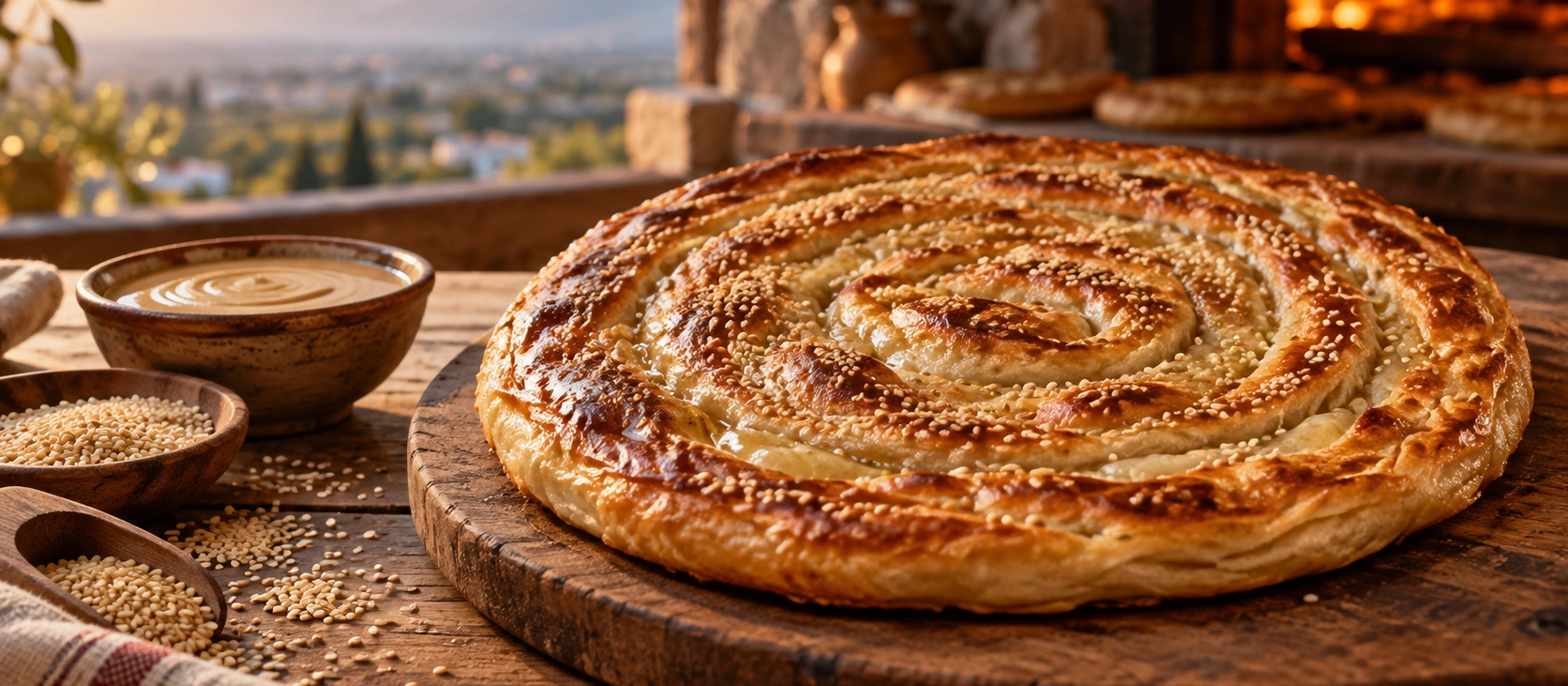
Explore the traditional sweet tahini pide culture of Söke, with an opportunity to enjoy this distinctive sesame-rich speciality at a local bakery or restaurant.
Request This Experience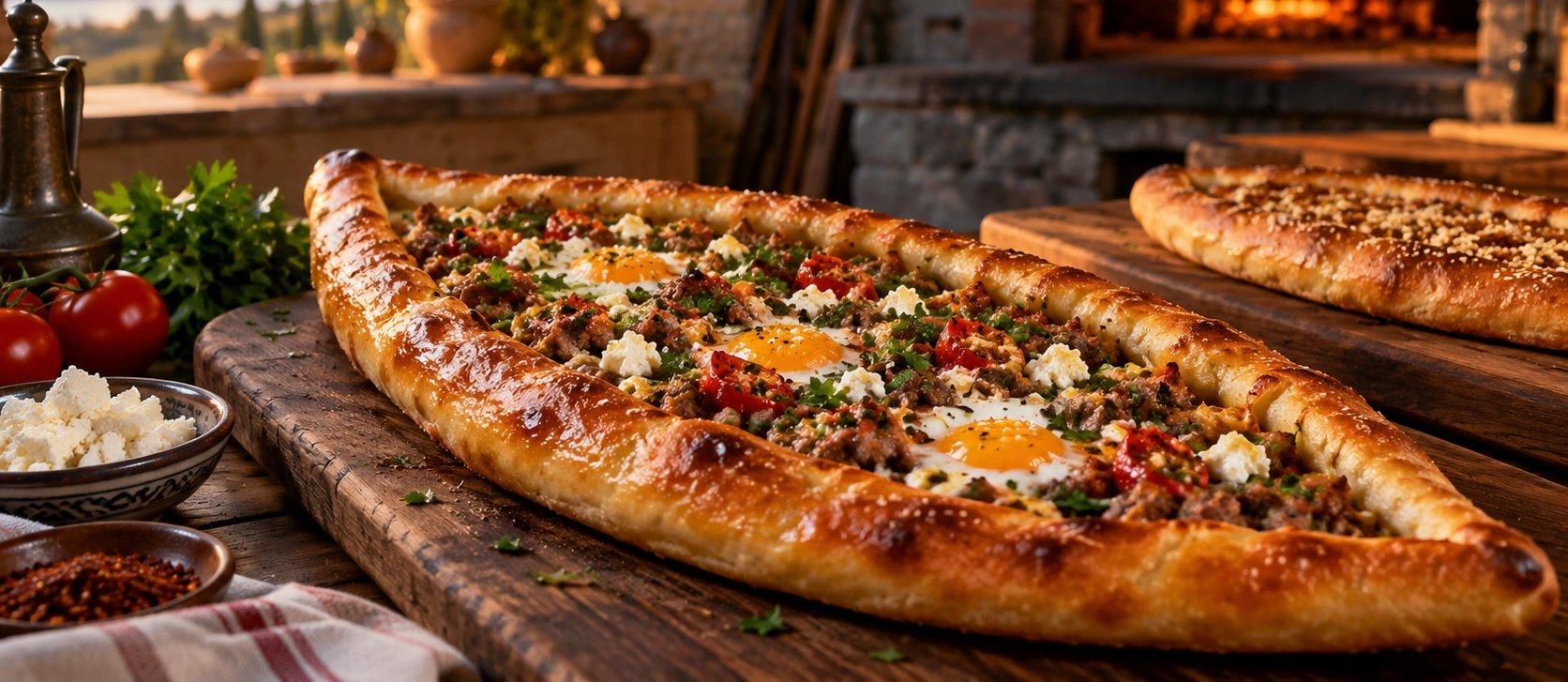
Discover both of Söke's geographically indicated pide traditions, from the famous roasted-beef savoury pide to the rich and sweet sesame tahini speciality.
Plan Your Food ExperienceCombine Söke's food heritage with the spectacular archaeological sites and landscapes of western Aydın.
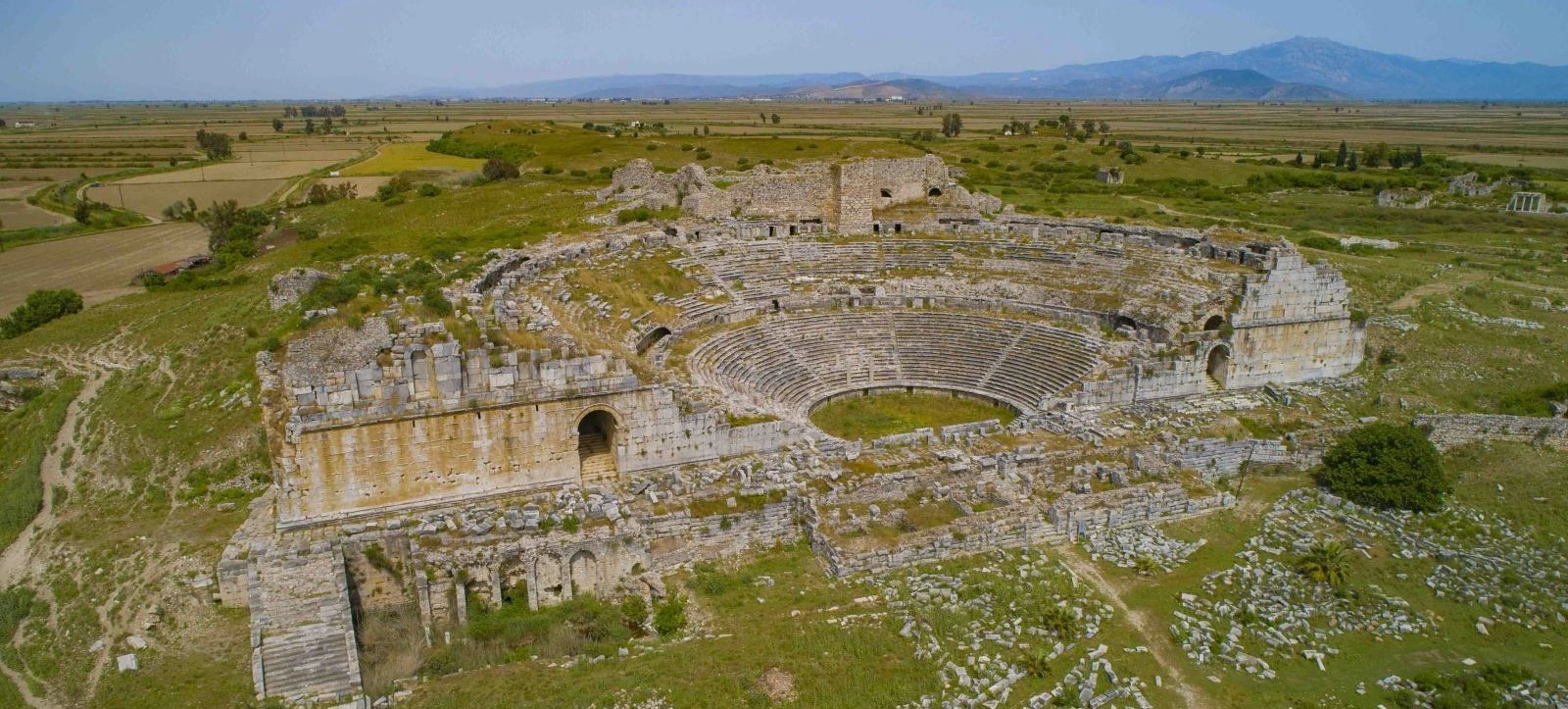
Explore the extraordinary ancient heritage of Miletus and Didyma before discovering the traditional food specialities of Söke through a personalised private journey.
Request a Private Tour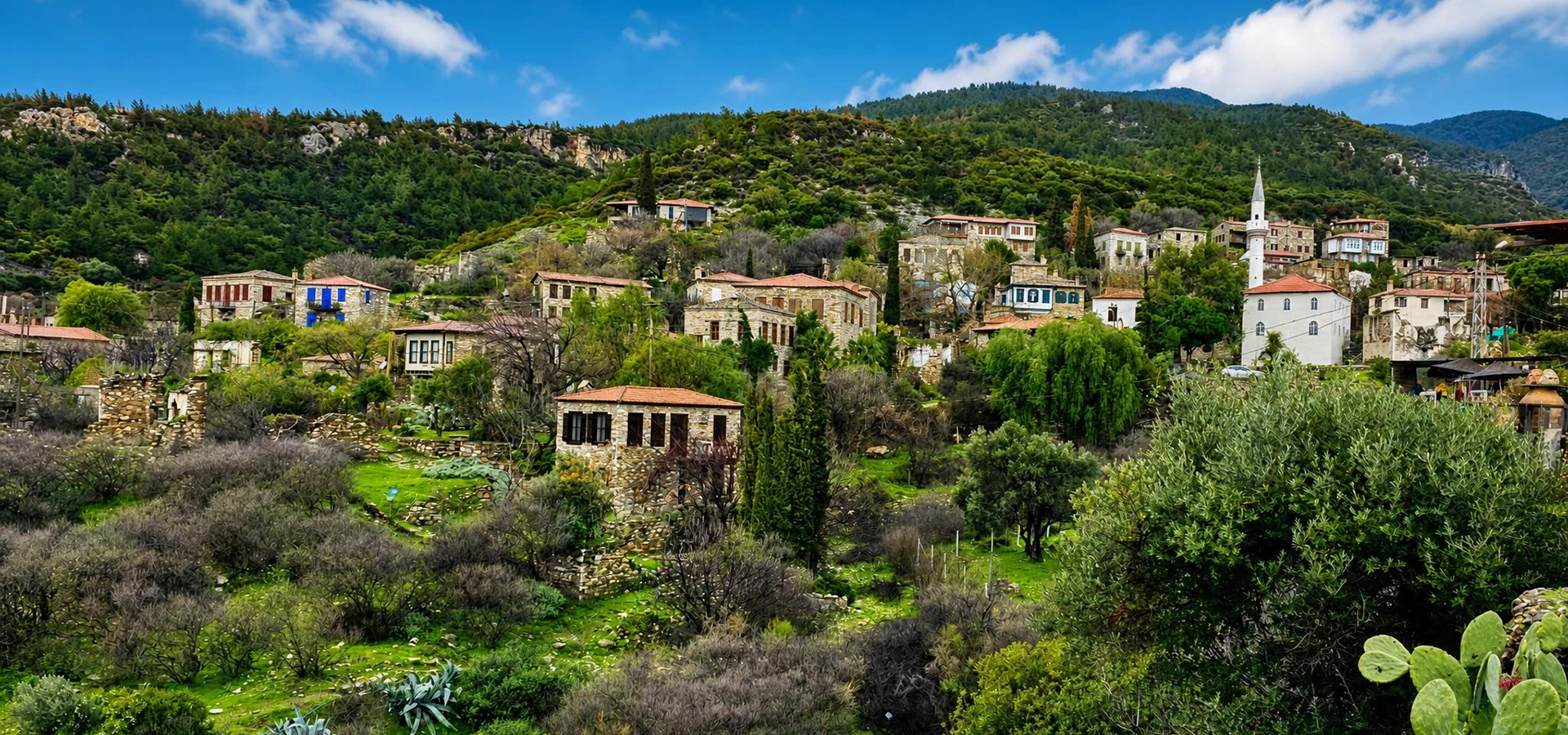
Discover Old Doğanbey Village, the Büyük Menderes Delta, and the scenic countryside of western Aydın, complemented by traditional regional food experiences.
Design Your Journey