Private Ottoman Aydın Heritage Tour
Explore Bey Mosque, Ramazan Paşa Mosque, Cihanoğlu Mosque, Nasuh Paşa Complex and selected historic landmarks of central Aydın with a licensed private guide.
Request Your Private Aydın Tour





Standing close to Aydın Train Station in the centre of modern Efeler, Bey Mosque is one of the city's most distinctive surviving Ottoman monuments.
The mosque is also known as Süleyman Bey Camii after the patron who commissioned it.
According to its historic foundation records, the mosque was built in 1683 by Süleyman Bey, a member of an important Ottoman provincial family connected with Aydın.
Its architecture belongs to the classical Ottoman tradition.
A square prayer hall constructed largely from carefully worked stone is covered by a single great dome rising above a sixteen-sided drum.
To the north, a three-bay portico forms the traditional son cemaat yeri, or last-congregation space, while a slender minaret rises beside the mosque.
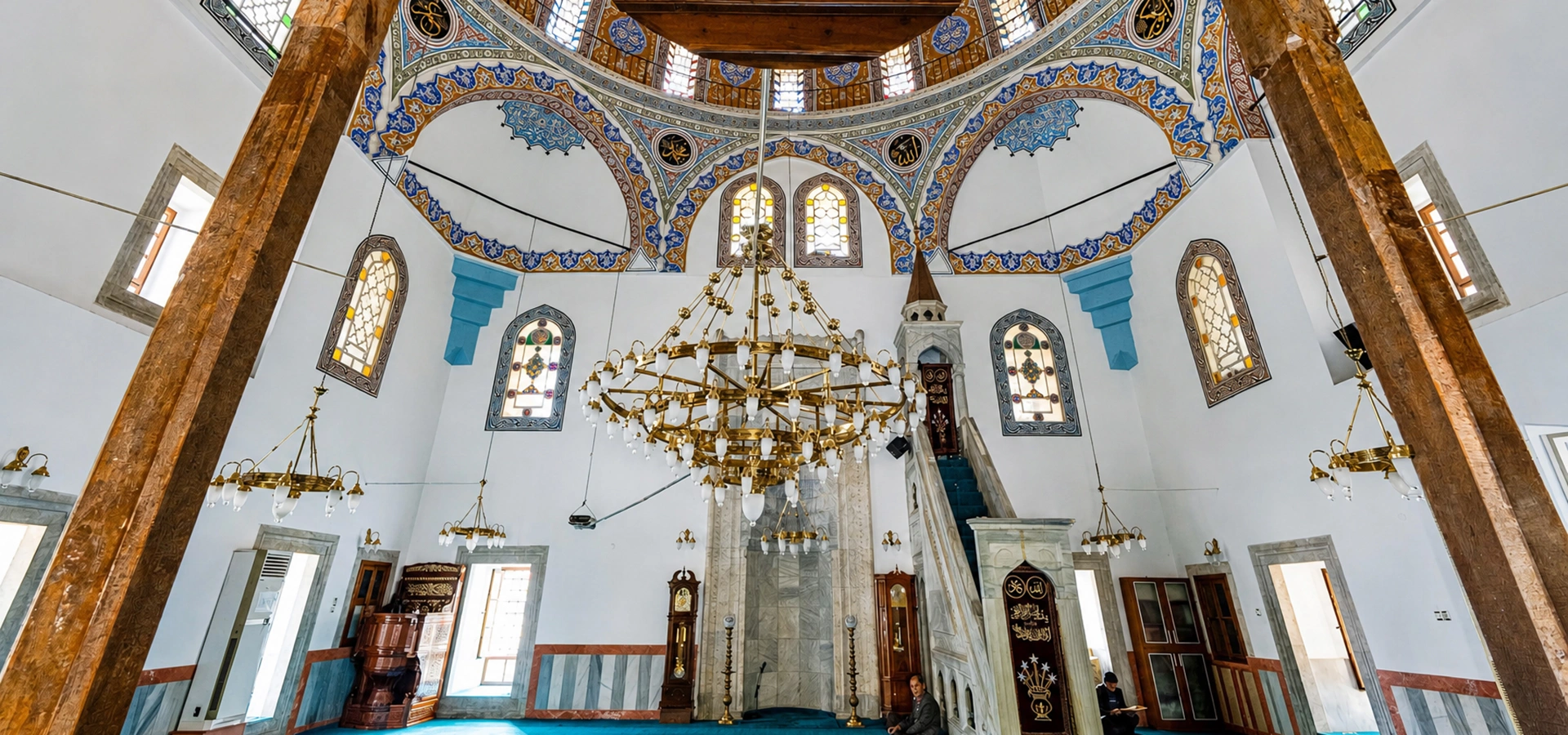
Inside, visitors encounter a restrained stone mihrab, an ornamented marble minbar, windows arranged across several levels and decorative work within the dome.
Yet Bey Mosque is important for more than architecture.
Its minaret became part of one of the most dramatic episodes in Aydın's liberation during the Turkish National Struggle.
On 7 September 1922, a machine-gun position in the mosque's minaret was reportedly preventing Turkish nationalist forces from advancing toward the station and city centre.
According to accounts preserved in Aydın's local historical memory, Yörük Ali Efe silenced the position, helping clear the way during the liberation of the city.
The mosque therefore connects two very different chapters of Aydın's past: the refined architectural world of the seventeenth-century Ottoman city and the turbulent events that shaped modern Türkiye.
The mosque was commissioned by Süleyman Bey and is one of the important surviving seventeenth-century Ottoman monuments of central Aydın.
A square prayer hall, monumental central dome and balanced stone architecture define the building.
The great dome rises above a polygonal drum that brings additional light into the prayer hall.
The mosque's minaret became part of the fighting during Aydın's liberation on 7 September 1922.
Essential information about the historic Süleyman Bey Mosque in central Aydın.
Cumhuriyet neighbourhood, close to Aydın Train Station in central Efeler.
Open on Google Maps1683, during the Ottoman period.
Süleyman Bey, a member of an important Ottoman provincial family.
Square-plan, single-domed classical Ottoman mosque.
A monumental central dome carried above a sixteen-sided drum.
The minaret played a memorable role during Aydın's liberation on 7 September 1922.
Bey Mosque brings together classical Ottoman architecture, the history of Aydın's prominent families and one of the city's most memorable National Struggle stories.
At first sight, Bey Mosque appears to be a relatively restrained Ottoman monument.
Its architecture is balanced, symmetrical and dominated by a single central dome.
Its significance, however, extends far beyond its appearance.
The mosque preserves an important example of seventeenth-century Ottoman religious architecture in western Anatolia.
It also belongs to the network of monuments associated with powerful local families who helped shape Ottoman Aydın through religious and charitable foundations.
Most unusually, the building later became directly connected with the military events of 7 September 1922.
The minaret, normally a symbol of worship and the urban skyline, temporarily became part of the battlefield during the final struggle for control of the city.
Few historic monuments in Aydın connect Ottoman architectural history and the Turkish National Struggle so vividly within one building.
Bey Mosque was constructed in 1683.
Its historic foundation documentation identifies Süleyman Bey as the patron responsible for the building.
Süleyman Bey belonged to an influential Ottoman family closely connected with Aydın.
He is described as the grandson of Üveys Paşazade Mehmet Bey and the son of Mustafa Paşa, Governor-General of Algiers.
The mosque was established during a period when Aydın was an important regional centre within the fertile Büyük Menderes basin.
Its classical architectural language reflects the continuing influence of the great Ottoman building traditions developed during the previous century.
The mosque survived into the modern period, but not without major damage.
In 1899, a powerful earthquake affected Aydın and seriously damaged the minaret.
The upper part of the minaret was subsequently rebuilt.
Further damage occurred during the period of Greek occupation and the Turkish National Struggle.
The mosque's minaret became directly involved in fighting during the liberation of Aydın in September 1922.
A substantial restoration campaign was later carried out between 1954 and 1956, with efforts made to recover the historic architectural character of the building.
Süleyman Bey commissions the mosque in Ottoman Aydın.
A major earthquake damages the minaret and leads to later reconstruction.
The minaret becomes part of the fighting during the liberation of Aydın.
The mosque and minaret undergo an important restoration campaign.
The historic name Süleyman Bey Camii preserves the identity of the man who commissioned the monument.
Süleyman Bey belonged to a prominent Ottoman provincial family.
Historical descriptions identify him as the grandson of Üveys Paşazade Mehmet Bey and the son of Cezayir Beylerbeyi Mustafa Paşa.
This family background places the mosque within a broader tradition of elite Ottoman patronage in Aydın.
Prominent administrators and local notables frequently established mosques, schools, fountains, commercial buildings and charitable foundations.
Such monuments served practical religious and social purposes while also connecting the patron's name permanently with the city.
More than three centuries later, Süleyman Bey's name continues to survive through one of central Aydın's best-known historic mosques.
Visitors may encounter two names for the same monument: Bey Camii and Süleyman Bey Camii.
Süleyman Bey Camii refers directly to the mosque's patron.
Bey Camii, meaning approximately "the Bey's Mosque", became the shorter and more familiar local name.
Today, both names are widely used.
Official cultural sources also identify the monument using both forms, making Bey Mosque / Süleyman Bey Mosque the clearest description for international visitors.
Bey Mosque belongs to the architectural tradition of the single-domed Ottoman mosque.
Its principal prayer hall is approximately square in plan.
Above this compact geometric space rises a dominant central dome.
The walls are constructed principally from carefully worked cut stone, giving the exterior a strong and disciplined appearance.
The mosque does not depend on an excessively complex arrangement of subsidiary domes.
Instead, its architectural effect comes from clarity, proportion and the relationship between the square prayer hall and the circular dome above.
To the north stands a three-bay entrance portico, while the minaret occupies the north-western part of the building.
The result is a monument that clearly communicates the architectural principles of the classical Ottoman mosque tradition.
A compact geometric interior provides the foundation for the monumental dome.
One dominant dome defines both the exterior silhouette and interior spatial experience.
Precisely worked masonry gives the mosque its monumental and durable character.
The northern last-congregation area creates a transitional space before the prayer hall.
The single-balcony minaret rises beside the north-western part of the mosque.
The building relies on clarity and geometry rather than excessive architectural complexity.
The most important architectural feature of Bey Mosque is its large central dome.
Rather than appearing to rise directly from the square walls, the dome is elevated above a polygonal transitional structure.
This drum has sixteen sides.
The geometry creates an elegant transition between the rectangular mass of the mosque below and the curved dome above.
Openings within the upper parts of the building also allow daylight to enter from above.
This vertical lighting helps prevent the prayer hall from feeling heavy despite the substantial stone construction.
From outside, the drum gives the dome greater height and visibility within Aydın's urban skyline.
From inside, the dome creates a strong sense of unity, drawing attention upward from the prayer floor toward the decorated ceiling.
On the northern side of Bey Mosque stands the traditional Ottoman son cemaat yeri, or last-congregation portico.
The space is divided into three principal bays.
Tall pointed arches carried by stone supports create a dignified entrance façade.
Architecturally, the portico performs an important transitional function.
It separates the open urban environment from the enclosed sacred interior.
It also provides a sheltered space immediately outside the main prayer hall.
For photographers, the repeated arches create some of the mosque's strongest exterior compositions.
The interior of Bey Mosque is organised around a single unified prayer space.
The central dome gives the room its strongest architectural identity.
Windows positioned within the main walls and higher architectural levels bring daylight into the interior.
The qibla wall is marked by the mihrab, indicating the direction of Mecca.
Nearby stands the marble minbar, from which the Friday sermon is traditionally delivered.
Decorative painting around the dome adds colour to an interior otherwise dominated by pale stone, white wall surfaces and the geometry of the architecture.
The resulting atmosphere is calm and relatively restrained, allowing the monumentality of the dome to remain the principal visual focus.
Two of the most important features inside every Ottoman mosque are the mihrab and minbar.
At Bey Mosque, the mihrab is made from cut stone.
Its design is relatively restrained, allowing the architectural form of the prayer hall to remain dominant.
The minbar, by contrast, is constructed from marble.
Decorative carving appears particularly beneath the staircase.
The contrast between the simple stone mihrab and the more carefully worked marble minbar creates one of the most interesting details of the mosque's interior.
The cut-stone niche marks the qibla and direction of prayer.
The marble pulpit is used for the Friday sermon.
Decorative treatment beneath the minbar staircase rewards closer inspection.
Architectural proportion rather than excessive ornament provides much of the mosque's visual strength.
The architectural structure of Bey Mosque is relatively disciplined, but its upper interior contains decorative painting that introduces colour and visual richness.
The decoration visible within the dome has been renewed over time in a manner intended to reflect seventeenth-century Ottoman decorative character.
Floral, geometric and calligraphic elements help articulate the transition between walls, drum and dome.
Visitors should therefore distinguish between the mosque's seventeenth-century architectural structure and decorative surfaces that have experienced later renewal and restoration.
This layered history is common in functioning religious monuments, where repeated repair campaigns form part of the building's continuing life.
Historic descriptions of Bey Mosque record a women's gallery within the building.
It is reached by a narrow stair from outside.
This circulation arrangement is one of the architectural details that helps visitors understand how worship space was organised within the historic mosque.
The stair itself should be approached carefully, especially where historic steps are narrow or steep.
The minaret is one of the most historically important parts of Bey Mosque.
Architecturally, it has a polygonal shaft and a single balcony, or şerefe.
Like the mosque itself, however, the minaret has experienced a complicated history of destruction and reconstruction.
The 1899 Aydın earthquake caused serious damage, including the collapse of the upper part of the minaret.
Repairs followed, but historical descriptions note that the resulting form differed significantly from the original.
The minaret was later damaged again during the period of Greek occupation.
Between 1954 and 1956, it was restored together with the mosque in an attempt to recover more of its historic appearance.
Its greatest historical significance, however, comes from the events of 7 September 1922.
Aydın's historic architecture was deeply affected by the major earthquake of 1899.
Bey Mosque was among the monuments that suffered damage.
The mosque's minaret was particularly affected, with its upper section collapsing.
Repairs were subsequently undertaken above the balcony level.
These interventions, however, did not reproduce the earlier form exactly.
The earthquake is important for understanding not only Bey Mosque, but several historic monuments across Aydın.
It explains why parts of buildings founded centuries earlier may display later architectural forms, materials or decorative treatments.
The most dramatic chapter in the history of Bey Mosque occurred during the Turkish National Struggle.
By September 1922, the military situation in western Anatolia was changing rapidly.
On 7 September 1922, Turkish nationalist forces were advancing into Aydın.
Historical accounts describe Greek troops using high points within the city, including minarets, as defensive positions.
A machine gun positioned on the Bey Mosque minaret covered approaches toward the station and neighbouring streets.
The position made movement toward the city centre extremely difficult.
According to the account preserved in Aydın's official historical narrative, Yörük Ali Efe and his companions took cover nearby while attempting to overcome the position.
Yörük Ali Efe eventually fired on the machine-gun position and silenced it.
With the obstacle removed, the nationalist advance could continue.
The event permanently connected Bey Mosque with Aydın's liberation on 7 September 1922.
The name Yörük Ali Efe occupies an important place in the history of resistance in the Aydın region.
He became one of the best-known figures associated with the Kuva-yi Milliye movement in western Anatolia.
His connection with Bey Mosque comes from the final liberation of Aydın in September 1922.
The episode involving the machine gun positioned in the minaret transformed the mosque into more than an architectural monument.
It became part of the city's collective memory of occupation, resistance and liberation.
Visitors familiar with this story see the minaret differently.
Instead of viewing it only as the vertical architectural element from which the call to prayer is traditionally given, they can also recognise it as a physical witness to one of the decisive moments in modern Aydın's history.
Bey Mosque has survived more than three centuries, but the monument visible today is the result of both original construction and later intervention.
Damage from the 1899 earthquake altered the minaret.
Further deterioration and destruction occurred during the occupation and National Struggle period.
An important restoration campaign was undertaken between 1954 and 1956.
The mosque and its damaged minaret were repaired with the intention of bringing the monument closer to its historic form.
As with many living religious monuments, maintenance and repair have continued to be necessary over time.
The building should therefore be understood as both a seventeenth-century monument and a continuously used place of worship.
Several local and official descriptions repeat a tradition that Bey Mosque may have been constructed by one of the craftsmen or architects associated with the tradition of Mimar Sinan.
No securely documented architect's name, however, is normally given for the building.
The attribution should therefore be treated cautiously rather than presented as a confirmed fact.
What can be seen clearly is the mosque's architectural relationship with the classical Ottoman tradition that Sinan and his architectural world helped establish.
The square prayer hall, single dominant dome, clear stone construction and balanced proportions all belong to that larger architectural vocabulary.
A rewarding visit to Bey Mosque involves looking at several architectural layers rather than focusing only on the dome.
Notice how a simple geometric prayer hall creates the foundation for the entire building.
Look upward to understand how the sixteen-sided drum raises the dome above the main walls.
The three-bay northern entrance creates a ceremonial transition into the mosque.
Compare the restrained stone mihrab with the more elaborate marble minbar.
Remember that its appearance reflects earthquake damage, reconstruction, wartime destruction and later restoration.
Its location beside Aydın's station district connects Ottoman history directly with the modern city.
Bey Mosque is particularly rewarding because it is not isolated from the modern city.
It remains closely connected with the everyday movement of central Aydın.
Approaching from the station area, visitors encounter the mosque as a prominent historic presence within the urban landscape.
The stone façade and tall entrance arches immediately distinguish it from the surrounding modern buildings.
Inside, the atmosphere changes.
The large dome, high-level windows and broad prayer space create a calmer environment.
Because the building remains an active mosque, the experience is different from visiting a museum.
Prayer always takes priority, and visitors should explore quietly and respectfully.
Those interested in modern Turkish history should spend additional time outside studying the minaret and considering its role during the events of 1922.
Begin with the three-bay northern entrance and its strong pointed arches.
The dome and polygonal drum reveal the architectural logic of the building.
Notice the restrained cut-stone treatment on the qibla wall.
Look closely at the carved details beneath the marble staircase.
Its restored form preserves memories of both the 1899 earthquake and the events of 1922.
Continue through central Aydın to nearby Ottoman monuments and historic streets.
Bey Mosque offers excellent opportunities for architectural photography.
The most visually powerful exterior feature is the three-bay entrance portico.
Its repeated pointed arches, stone supports and deep shadows produce strong symmetrical compositions.
A wider angle can include the portico, dome and minaret within the same frame.
Closer photographs reveal the texture of the cut-stone masonry.
Inside, the central dome provides the strongest composition, especially when photographed together with the high windows and decorative painting.
The marble minbar, stone mihrab and architectural transitions beneath the dome are also worth studying in detail.
Use the three arches to create balanced and symmetrical images.
Step back far enough to show the principal elements of the Ottoman silhouette together.
Closer photographs reveal the precision and weathering of the historic masonry.
Photograph upward to capture the relationship between decoration, windows and architectural geometry.
Look for the decorative carving beneath the staircase.
Exterior compositions including the surrounding station district help explain the mosque's urban setting.
Bey Mosque is both a protected historic monument and an active Islamic place of worship.
Visitors are generally welcomed, but sightseeing should always remain secondary to religious activity.
Avoid entering for sightseeing during congregational prayer whenever possible.
Clothing should respectfully cover shoulders and knees when entering the mosque.
Shoes should be removed before stepping onto the carpeted prayer area.
Remember that individuals may be praying even outside formal prayer times.
Never photograph worshippers at close range without permission.
Temporary access arrangements may change according to religious activity.
Bey Mosque has the advantage of a very central urban location.
It is significantly easier to reach than many archaeological sites elsewhere in Aydın Province.
The mosque stands close to major streets, the station district and central pedestrian routes.
Visitors should nevertheless remember that this is a historic building.
Traditional thresholds, stone surfaces and differences in floor level may require additional care.
The historic stair leading toward the women's gallery is narrow and should not be considered suitable for visitors with limited mobility.
Anyone requiring completely step-free access should confirm current arrangements locally before visiting.
Enough for a quick exterior look at the portico, dome and minaret.
Comfortable for most visitors who also want to see the prayer hall and architectural details.
Recommended for visitors interested in architecture, photography and the National Struggle story.
Allow several hours when combining Bey Mosque with Aydın's other Ottoman monuments, museum and Tralleis.
Bey Mosque stands in the Cumhuriyet neighbourhood of Efeler, central Aydın, close to Aydın Train Station.
Its location makes it one of the easiest historic monuments to incorporate into a walking tour of the city.
Because it remains an active mosque, visitor access should always respect daily prayers, Friday worship and any temporary religious activities.
Bey Mosque is located in central Efeler, close to Aydın Train Station.
Its central position makes it accessible on foot from many parts of the city centre.
Visitors arriving by rail can reach the mosque very easily from the station area.
Local buses, minibuses and taxis also serve the surrounding central streets.
Because several other historic monuments lie nearby, Bey Mosque works particularly well as part of a walking exploration of Ottoman Aydın.
The mosque stands very close to the station area and is one of the easiest historic landmarks to reach on foot.
Most central locations can be connected with the mosque by walking, local transport or a short taxi journey.
The two monuments can easily be combined within the same historic city walk.
A licensed guide can connect Bey Mosque with Aydın's other Ottoman monuments, museum and ancient Tralleis.
Explore another major Ottoman mosque whose foundation dates to 1595 and whose present appearance reflects reconstruction after the 1899 earthquake.
Discover one of Aydın's outstanding eighteenth-century Ottoman monuments and its distinctive Baroque decorative character.
See how an Ottoman külliye combined religious, educational, commercial and social functions within one charitable foundation.
Discover archaeological finds from Tralleis and important ancient settlements throughout the Büyük Menderes region.
Visit the monumental ruins of ancient Tralleis overlooking the modern city of Aydın.
Discover ancient cities, Ottoman monuments, museums, villages, mountains, cuisine and natural landscapes throughout Aydın Province.
Bey Mosque is an excellent starting point for exploring the historical layers of central Aydın.
Begin with Bey Mosque and examine its classical Ottoman architecture, seventeenth-century foundation and National Struggle history.
Continue to Ramazan Paşa Mosque, whose history reaches back to the late sixteenth century.
Then visit Cihanoğlu Mosque to compare Bey Mosque's classical architectural restraint with the richer decorative language of the eighteenth century.
Continue to Nasuh Paşa Complex for a broader understanding of Ottoman education, commerce, bathing and religious life.
Finish with Aydın Archaeology Museum or Tralleis Ancient City to travel much further back into the ancient history of the region.
Begin with seventeenth-century classical Ottoman architecture and the dramatic story of 1922.
Explore an older Ottoman foundation transformed by earthquake reconstruction.
Compare Baroque-influenced religious architecture with a multi-purpose Ottoman külliye.
Finish by connecting Ottoman Aydın with the city's much older Greek and Roman past.
Visitors interested in Ottoman Aydın should ideally explore Bey Mosque together with Ramazan Paşa Mosque, Nasuh Paşa Complex and Cihanoğlu Mosque.
Each monument reveals a different stage in the architectural and social development of the city.
Ramazan Paşa preserves the identity of a late sixteenth-century foundation, although much of its present appearance belongs to later reconstruction.
Bey Mosque represents the seventeenth-century continuation of classical Ottoman architectural principles.
Nasuh Paşa, built in 1708, shows how a külliye could integrate education, worship, commerce and public services.
Cihanoğlu demonstrates the increasingly decorative architectural vocabulary of the eighteenth-century Ottoman world.
Seen together, these monuments provide an unusually rich introduction to several centuries of Ottoman urban history within a compact part of Aydın.
Foundation dating to 1595 with major later reconstruction.
1683 – classical single-domed Ottoman architecture and National Struggle history.
An important eighteenth-century Ottoman mosque with a strongly decorative architectural character.
Aydın Province is famous for extraordinary ancient cities such as Aphrodisias, Nysa, Miletus, Priene and Didyma.
Yet these ancient ruins represent only part of the region's story.
Aydın continued to develop through the Byzantine period, the Turkish principalities, the Ottoman Empire and the Republic of Türkiye.
Bey Mosque provides an important physical connection with seventeenth-century Ottoman Aydın.
Its later history then carries the visitor directly into the creation of modern Türkiye.
The same building therefore preserves evidence belonging to two dramatically different historical worlds: Ottoman provincial society and the National Struggle of the early twentieth century.
This continuity makes Bey Mosque an especially valuable stop for anyone who wants to understand Aydın as a living historical city rather than simply a gateway to ancient ruins.
Useful answers for planning a visit and understanding the architecture and history of Süleyman Bey Mosque.
Bey Mosque is located in the Cumhuriyet area of central Efeler, Aydın, close to Aydın Train Station.
Yes. Bey Camii and Süleyman Bey Camii are two names for the same historic mosque.
The mosque was built in 1683 during the Ottoman period.
The mosque was commissioned by Süleyman Bey.
The 1683 date is associated with Süleyman Bey's historic foundation documentation.
It belongs to the classical Ottoman architectural tradition.
The mosque has an approximately square prayer hall covered by a single central dome.
The dome rises above a sixteen-sided drum positioned over the main body of the mosque.
Cut stone is the principal visible construction material.
Yes. A three-bay last-congregation portico stands on the northern side of the mosque.
The mihrab is made from cut stone and has a relatively restrained design.
The minbar is marble and contains decorative carving beneath its staircase.
Yes. Historic descriptions record a women's gallery reached by a narrow stair from outside.
The dome interior contains decorative work renewed over time in a style associated with seventeenth-century Ottoman ornament.
He was a member of an important Ottoman provincial family and the patron who commissioned the mosque in 1683.
Some local sources repeat this attribution, but no securely documented architect is generally identified, so the claim should be treated as a traditional attribution rather than confirmed authorship.
Yes. The major Aydın earthquake of 1899 damaged the mosque's minaret.
Its upper section was rebuilt, although historical descriptions note that the reconstruction differed from the earlier form.
Yes. The mosque and particularly its minaret suffered further damage during the occupation and National Struggle period.
A machine-gun position in the minaret was used to resist nationalist forces advancing into Aydın during the city's liberation.
Official local historical accounts describe Yörük Ali Efe silencing the machine-gun position in the minaret during the liberation of Aydın.
An important restoration of the mosque and minaret took place between 1954 and 1956.
Yes. It remains an active mosque and place of worship.
Visitors can normally appreciate the mosque outside prayer periods, provided that religious activity and local access rules are respected.
Yes. Shoes should be removed before entering the carpeted prayer area.
Modest clothing is appropriate for all visitors entering the active mosque.
Around 20 to 30 minutes is comfortable for most visitors, while history and architecture enthusiasts may prefer approximately 45 minutes.
Yes. The three-bay portico, central dome, minaret, stonework and interior architectural details provide excellent subjects.
Yes. The two historic mosques are excellent complementary stops for understanding Ottoman Aydın.
Ramazan Paşa Mosque, Cihanoğlu Mosque, Nasuh Paşa Complex, Aydın Archaeology Museum and Tralleis Ancient City are excellent additions.
Bey Mosque has survived earthquake, occupation, war, restoration and more than three centuries of continuous urban change.
Its preservation depends not only on conservation work but also on respectful behaviour from everyone who enters the building.
Prayer and religious activity always take priority over sightseeing.
Avoid touching fragile stone, marble and decorative surfaces unnecessarily.
Do not photograph worshippers without permission.
Speak quietly and keep mobile phones silent inside the prayer hall.
Remove shoes where required and respect dress expectations for an active religious space.
The building is both a sacred place and an important witness to Aydın's Ottoman and National Struggle heritage.
Discover Bey Mosque together with Aydın's Ottoman monuments, National Struggle history, museum and ancient heritage with a licensed private guide.
Combine Ottoman architecture, National Struggle history, archaeology and the landscapes of the Büyük Menderes Valley in a private itinerary designed around your interests.
Explore Bey Mosque, Ramazan Paşa Mosque, Cihanoğlu Mosque, Nasuh Paşa Complex and selected historic landmarks of central Aydın with a licensed private guide.
Request Your Private Aydın Tour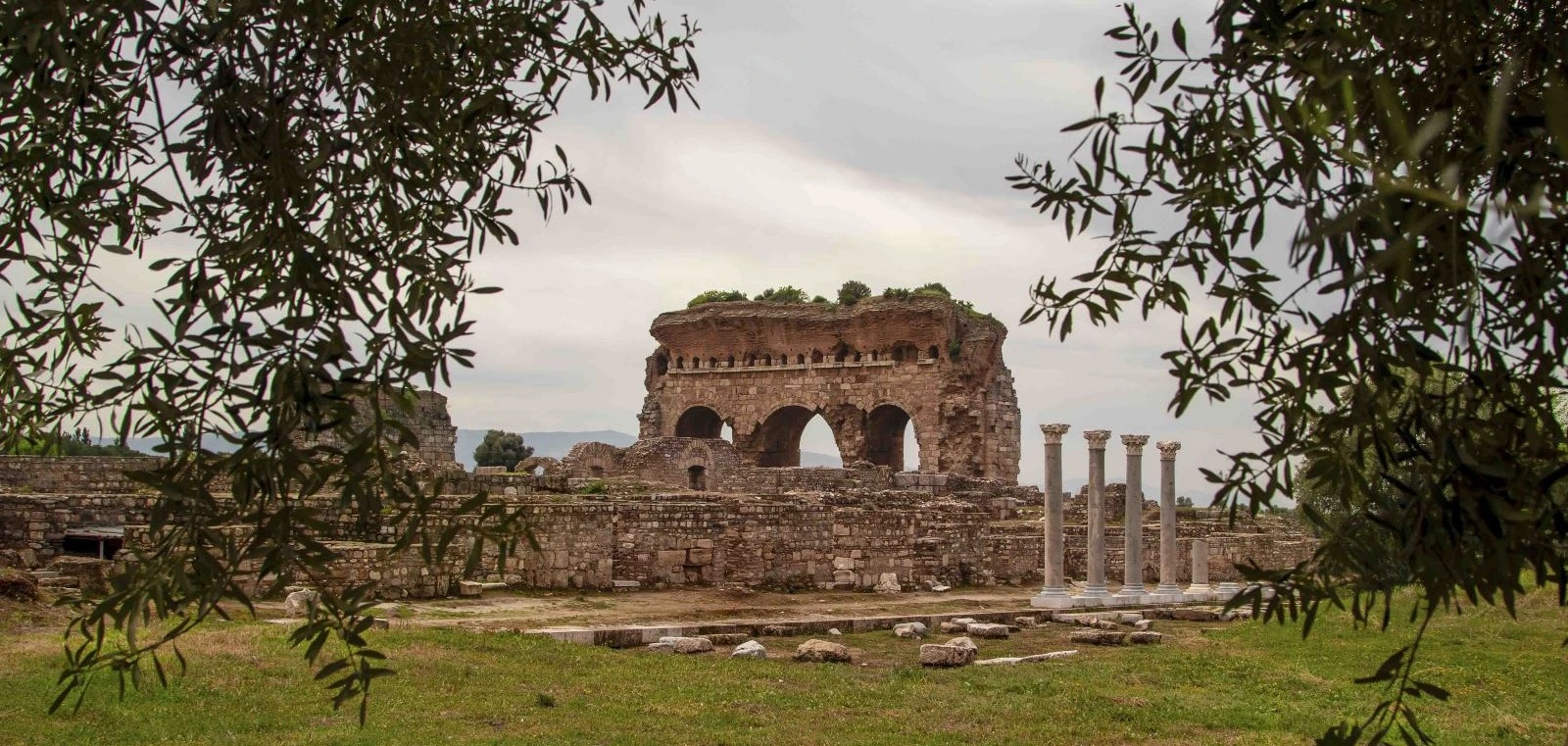
Travel from the Ottoman architecture and National Struggle history of Bey Mosque to the archaeological collections of Aydın Museum and the monumental remains of ancient Tralleis overlooking the modern city.
Plan Your Private Historical Tour