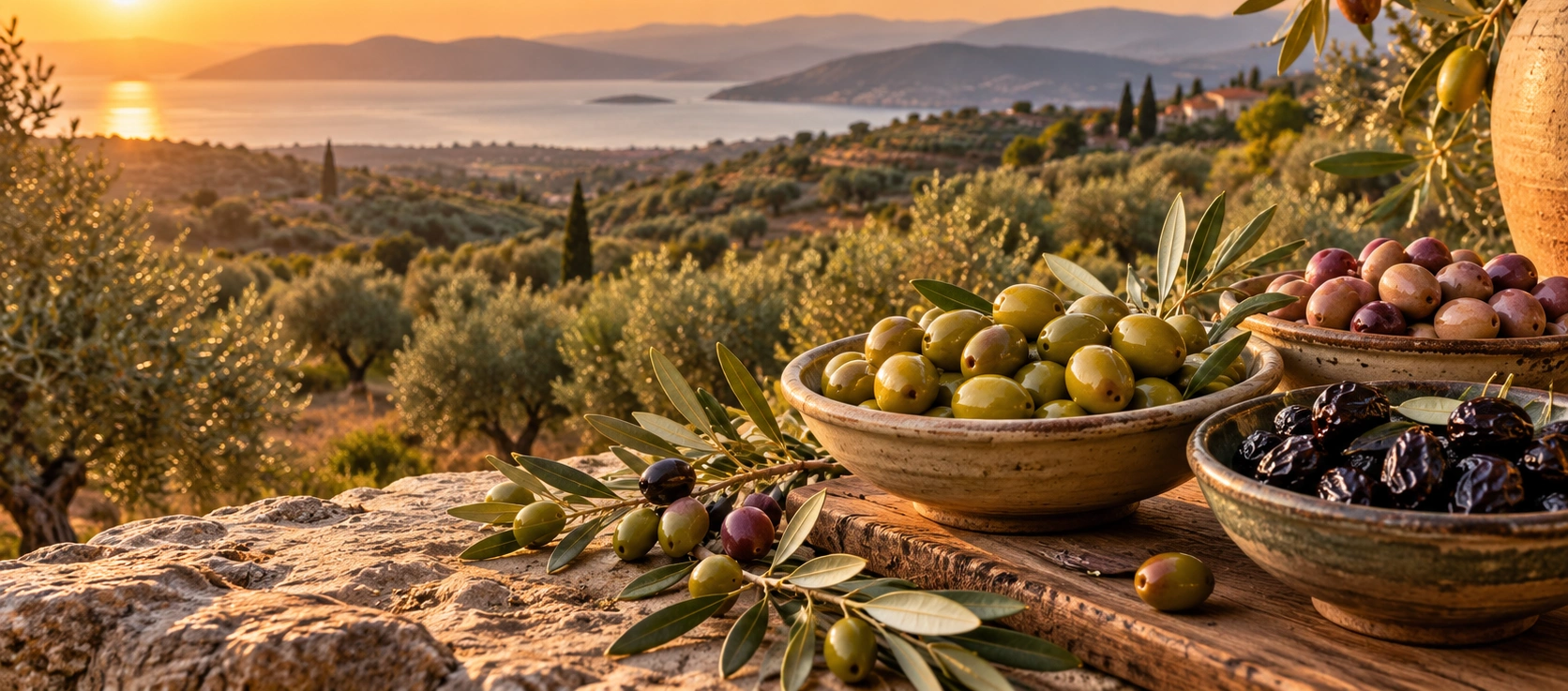
Aydın Agricultural Heritage, Aegean Gastronomy & Protected Designation of Origin

Aydın Memecik Olives – The Protected Table Olives of the Aegean

Discover the distinctive green, pink and black Memecik olives of Aydın,
where centuries of olive-growing heritage meet authentic Aegean flavors.

Discover Aydın Memecik Olives

Aydın Memecik Olives – A Living Taste of the Aegean

Aydın Memecik Olives, officially registered under the Turkish name Aydın Memecik Zeytini, represent one of the distinctive agricultural products of western Türkiye. Grown from the Memecik olive variety within Aydın Province, these table olives are appreciated for their characteristic aroma, recognizable bitterness, substantial fruit and connection to the agricultural traditions of the southern Aegean.

The Memecik variety has long been cultivated across the fertile valleys, hillsides and mountainous landscapes of western Anatolia. In Aydın, olive groves form an important part of the rural environment, linking village communities with agricultural practices that have continued through generations.

Unlike some olive varieties intended primarily for table consumption, Memecik olives have a dual purpose. Their relatively high oil content makes them valuable for olive oil production, while selected fruits are also prepared as table olives through fermentation, brining and other appropriate processing methods.

One of the defining characteristics of Aydın Memecik Olives is their diversity of maturity stages. Depending on harvesting time, the olives may be classified as green, pink or black. These colors reflect the natural development of the fruit and influence the preparation of different table olive products.

The fruits are generally large and oval, with a small protrusion at the tip that is associated with the Memecik variety. Their characteristic bitterness is connected in part with naturally occurring phenolic compounds, making appropriate processing essential before the olives are ready to eat.

The geographical environment of Aydın plays an important role in their identity. The region's Mediterranean climate, seasonal temperature differences, agricultural soils and local growing practices contribute to the qualities recognized in the protected designation.

In recognition of this geographical relationship, Aydın Memecik Zeytini received Turkish geographical indication registration on May 7, 2021, under registration number 749.

The product subsequently gained international recognition when the European Union registered Aydın Memecik Zeytini as a Protected Designation of Origin (PDO) in 2025, under Commission Implementing Regulation (EU) 2025/470.

Today, Aydın Memecik Olives are more than a regional food. They represent a connection between traditional olive cultivation, the natural landscapes of the Büyük Menderes Basin and the culinary identity of the Turkish Aegean.

For travelers interested in authentic Turkish gastronomy, discovering these olives provides an opportunity to explore a product shaped by the land, local knowledge and the changing seasons.

Distinctive Memecik Variety

Large, oval olives with a characteristic small protrusion at the fruit's tip.

Three Maturity Colors

Prepared from green, pink and black olives harvested at different stages.

Protected Geographical Origin

Registered in Türkiye in 2021 and recognized as an EU PDO in 2025.

Authentic Aegean Heritage

A traditional agricultural product connected to Aydın's olive groves and cuisine.

Know the Regional Specialty

Aydın Memecik Olives – Quick Facts

Essential information about one of the Aegean Region's geographically protected table olive products.

📍

Geographical Origin

Aydın Province, Aegean Region, western Türkiye.

Explore Aydın on Google Maps
🫒

Olive Variety

Memecik, a traditional olive variety of the southern Aegean.

🎨

Olive Colors

Green, pink and black, depending on fruit maturity.

🌿

Distinctive Characteristics

Large oval fruit, recognizable bitterness and characteristic aroma.

🏅

Turkish Registration

Geographical indication number 749, registered May 7, 2021.

🇪🇺

European Recognition

European Union Protected Designation of Origin, registered in 2025.


Understanding a Protected Aegean Product

What Are Aydın Memecik Olives?

Traditional table olives produced from the Memecik variety within the protected geographical boundaries of Aydın Province.

Aydın Memecik Zeytini is the protected name for table olives obtained from Memecik olive trees belonging to the species Olea europaea L. and grown in Aydın Province.

The Memecik variety is widely cultivated in western Türkiye and is particularly associated with the agricultural landscapes of the southern Aegean.

Although Memecik olives are important for olive oil production, they can also be processed into table olives. In this form, the harvested fruits undergo appropriate preparation to reduce their natural bitterness and develop the desired edible characteristics.

The fruits are generally oval and relatively large, with a small protrusion at one end. This feature is characteristic of the variety and contributes to its recognizable appearance.

Depending on the degree of maturity, the olives can be harvested and prepared in green, pink or black forms.

The protected designation identifies more than the botanical variety. It connects the fruit's characteristics with Aydın's geographical environment, local cultivation practices and the production requirements established in the official registration.

Therefore, not every Memecik olive grown elsewhere in Türkiye can be marketed under the protected name Aydın Memecik Zeytini.

The designation refers to a defined product whose geographical origin, variety, production process and relevant characteristics must comply with its registered specification.

Why Are Aydın Memecik Olives Special?

Aydın Memecik Olives are distinguished by the combination of their fruit characteristics, naturally occurring phenolic compounds, geographical origin and regional agricultural heritage.

Their identity reflects both the biological properties of the Memecik variety and the environmental conditions found within Aydın Province.

Large Oval Fruits

Memecik olives are known for their relatively substantial size and elongated oval appearance.

Characteristic Fruit Tip

A small protrusion at the end of the olive is one of the recognizable morphological features of the variety.

Three Maturity Stages

Green, pink and black olives provide different possibilities for traditional table olive preparation.

Pronounced Natural Bitterness

The raw fruit contains compounds responsible for bitterness, making proper processing necessary.

Distinctive Phenolic Composition

The registered product description identifies particular phenolic compounds associated with the olive's chemical profile.

Protected Aegean Origin

Turkish and European registrations recognize the olive's geographical relationship with Aydın Province.

What makes the product distinctive? Aydın Memecik Zeytini combines a recognizable olive variety, characteristic fruit morphology, particular chemical properties and production practices connected with Aydın's agricultural environment.

What Is the Memecik Olive Variety?

Memecik is one of the important olive varieties cultivated in the Aegean Region of Türkiye.

It is particularly associated with Aydın and neighboring olive-growing areas, including parts of Muğla and İzmir.

The variety belongs to the cultivated olive species Olea europaea L. and is adapted to Mediterranean agricultural environments characterized by seasonal summer dryness and relatively mild winters.

Memecik olives are valued for both their oil content and their suitability for certain types of table olive preparation.

Traditional Aegean Variety

Memecik has a longstanding relationship with the olive-growing landscapes of western Anatolia.

Adaptation to Dry Conditions

The variety is recognized for its ability to grow in areas experiencing seasonal heat and limited rainfall.

Dual-Purpose Fruit

Memecik olives can be used for the production of olive oil or processed for table consumption.

Established Olive Groves

Traditional Memecik trees are found across plains, hillsides and mountainous agricultural terrain.

Recognizable Morphology

The olive's oval shape and small terminal protrusion help distinguish the fruit.

Regional Economic Importance

Memecik cultivation supports agricultural production, rural livelihoods and the broader olive economy of Aydın.

The Memecik variety alone does not establish geographical authenticity. Olives sold under the protected Aydın Memecik Zeytini name must satisfy the registered requirements.

What Does Aydın Memecik Zeytini Mean?

The registered Turkish name identifies the geographical origin, olive variety and agricultural product.

Aydın

The province in western Türkiye where the protected olives originate and the specified production activities are carried out.

Memecik

The traditional olive variety used for the registered product.

Zeytini

The Turkish word form identifying the olives belonging to the named geographical and varietal designation.

Sofralık Zeytin

The Turkish term for table olives, distinguishing olives prepared for eating from olives used primarily for oil extraction.

The English expression Aydın Memecik Olives is a convenient translation for international visitors, while Aydın Memecik Zeytini remains the registered geographical indication.

Understanding this distinction is useful when purchasing local products or reviewing protected-origin labels.

Where Are Aydın Memecik Olives Grown?

The protected geographical area of Aydın Memecik Zeytini covers Aydın Province in western Türkiye.

The province extends across fertile agricultural valleys and mountainous landscapes associated with the Büyük Menderes River and the wider Aegean environment.

Olive cultivation takes place in numerous districts, often on sloping terrain and hillsides where the Memecik variety has traditionally been grown.

The protected geographical boundary includes all 17 administrative districts of Aydın Province.

Efeler

The administrative center of Aydın Province, surrounded by agricultural landscapes and olive-growing communities.

Koçarlı

A district with traditional rural settlements and landscapes reflecting Aydın's agricultural heritage.

Çine

A southern district where agricultural valleys and surrounding hills form part of the regional olive-growing environment.

Bozdoğan

An inland district with mountainous terrain, cultivated valleys and traditional farming communities.

Nazilli

An important agricultural center in the eastern Büyük Menderes Valley.

Söke

A western Aydın district connecting cultivated plains with the wider Aegean landscape.

The complete protected geographical area includes Efeler, Bozdoğan, Buharkent, Çine, Germencik, İncirliova, Karacasu, Karpuzlu, Koçarlı, Köşk, Kuyucak, Kuşadası, Nazilli, Söke, Sultanhisar, Didim and Yenipazar.

Geographical protection: The registered boundary covers Aydın Province as a whole. However, geographical location alone does not authorize every producer or olive product to use the protected name. Compliance with the product specification is also required.

How Does Aydın's Climate Shape Memecik Olives?

Aydın is characterized predominantly by a Mediterranean climate, with hot, relatively dry summers and generally mild, wetter winters.

These conditions have supported olive cultivation throughout the region and have contributed to the adaptation of local olive varieties.

The Büyük Menderes Valley forms an important geographical corridor connecting inland agricultural areas with the Aegean coast.

Local environmental conditions, including temperature variations, wind patterns, soils and seasonal rainfall, contribute to the development of Memecik olive fruits.

Mediterranean Summers

Warm and dry summer conditions form part of the agricultural environment to which Memecik trees are adapted.

Mild Winter Conditions

Relatively mild winters allow olive cultivation across suitable areas of the province.

Seasonal Rainfall

Winter and spring precipitation contributes to the annual growth cycle of olive trees.

Day-Night Temperature Differences

Autumn temperature variation is identified in the registered documentation as a factor associated with fruit development and color changes.

Regional Winds

Local air movements, including winds connected with the valley and surrounding mountains, form part of the geographical environment.

Agricultural Soils

Suitable soil characteristics, including mineral composition and drainage, influence olive tree development.

The official product description links Aydın's geographical conditions with the physical and chemical characteristics of Memecik olives.

Nevertheless, environmental conditions are not the only factors determining harvest quality. Tree management, agricultural practices, harvesting and subsequent processing also play important roles.

The History of Olive Growing in Aydın

Olive cultivation has a long history throughout the Mediterranean and Aegean regions, where olives and olive oil became important agricultural products in ancient societies.

Western Anatolia formed part of the wider Mediterranean world in which olive trees contributed to food production, trade, household activities and cultural traditions.

The landscapes now forming Aydın Province contain the remains of ancient cities and settlements connected with agricultural production and regional commerce.

Through Byzantine, Turkish and Ottoman periods, agricultural communities continued cultivating the fertile valleys and hillsides of western Anatolia.

Olive trees became enduring features of the rural landscape, while local farmers developed experience in pruning, harvesting, grafting and preserving agricultural products.

The cultivation of Memecik olives reflects this broader historical relationship between farming communities and the natural environment of the southern Aegean.

Ancient Aegean Agriculture

Olives were among the important cultivated crops of the wider ancient Mediterranean and western Anatolian world.

Byzantine and Medieval Traditions

Olive cultivation continued within changing political and economic landscapes.

Ottoman Agricultural Heritage

Olive groves and agricultural trade remained important features of western Anatolia's rural economy.

Village Farming Knowledge

Practical expertise in olive cultivation, grafting and fruit preparation was transmitted through generations.

Modern Agricultural Production

Traditional knowledge increasingly operates alongside mechanized harvesting and controlled processing methods.

Modern Geographical Protection

Turkish registration in 2021 and EU recognition in 2025 established formal protection for the regional product name.

Historical perspective: The long history of olive cultivation in Aydın should not be confused with a precisely documented ancient origin for today's protected Aydın Memecik Zeytini. The modern registration defines a contemporary geographical product and its recognized characteristics.

What Do Aydın Memecik Olives Look Like?

Aydın Memecik Olives have recognizable physical characteristics that contribute to their distinct identity.

The registered Turkish product specification describes Memecik as a relatively large olive with an oval shape and a small protrusion toward the tip of the fruit.

The size and appearance of individual olives can vary according to agricultural conditions, fruit maturity and the particular harvest.

Oval Shape

The fruit has an elongated, generally oval form characteristic of the Memecik variety.

Small Terminal Protrusion

A recognizable small projection appears at the end of the fruit and is associated with the Memecik name.

Average Fruit Weight

The Turkish registration records an average olive weight of approximately 4.78 grams.

Average Fruit Count

The registered description identifies approximately 200 olives per kilogram.

Flesh-to-Stone Ratio

The Turkish specification records a flesh-to-stone ratio of approximately 7.53.

Variable Fruit Color

The olive changes from green toward pinkish and darker tones as it develops and matures.

These figures describe characteristic values in the registered documentation rather than guaranteeing that every individual olive has identical dimensions or weight.

Physical appearance can provide useful clues about the variety, but authentic geographical identification also depends on origin and compliance with the registration requirements.

Green, Pink and Black Aydın Memecik Olives

One of the notable characteristics of Aydın Memecik Zeytini is its association with three principal olive colors: green, pink and black.

These colors correspond to different stages of fruit maturity and provide opportunities for distinct table olive preparations.

The registered European product description identifies these three forms as part of the protected olive's recognized identity.

Green Memecik Olives

Harvested before full ripeness, generally when the fruit has developed a suitable green or yellowish-green appearance.

Pink Memecik Olives

Represent an intermediate maturity stage as the fruit begins changing color between green and fully darkened.

Black Memecik Olives

Obtained from olives allowed to reach a more advanced stage of ripeness before harvesting.

Different Harvest Stages

The desired finished product influences when the olives are collected from the trees.

Different Processing Methods

Brining, fermentation and other permitted treatments can produce distinct table olive styles.

Natural Color Development

Fruit pigmentation changes during ripening, although processing can also affect the appearance of the final product.

Important distinction: Green, pink and black describe olive maturity categories. The eventual flavor, texture and appearance also depend on the processing method used after harvesting.

Green Aydın Memecik Olives

Green Aydın Memecik Olives are prepared from fruits harvested before full maturity.

The Turkish geographical indication document describes green table olive harvesting when the fruit has developed a yellowish-green appearance, generally during September and October.

At this stage, the olives retain much of their green coloration and contain naturally bitter compounds that must be reduced through appropriate processing.

Green olives can be prepared through suitable brining and fermentation methods, with the precise method influencing their final taste and texture.

Earlier Harvesting

Green olives are generally collected before the fruit reaches advanced ripeness.

Green or Yellow-Green Appearance

The fruit displays characteristic early-maturity colors before the transition toward pink or black.

Firm Fruit Structure

Earlier-harvested olives may retain a firmer texture, although processing conditions also influence the finished product.

Natural Bitterness

Fresh green olives require appropriate preparation to become palatable.

Brine Preparation

The Turkish specification describes a brine concentration of approximately 5–6% for green table olive preparation.

Aegean Culinary Uses

Prepared green olives can be served at breakfast, with regional appetizers or as part of traditional olive assortments.

Pink Aydın Memecik Olives

Pink Memecik olives represent an intermediate stage of maturity as the fruit begins changing from green toward darker colors.

The pink classification reflects the changing pigmentation of the olive skin during ripening.

Depending on the particular fruit and maturity stage, the appearance may include pinkish, reddish or purplish tones.

As with other raw olives, appropriate processing is necessary before these fruits are ready for consumption.

Intermediate Maturity

Pink olives develop during the natural transition between earlier green stages and fuller ripeness.

Changing Pigmentation

Natural pigments produce the recognizable pinkish or reddish appearance of the ripening fruit.

Varied Sensory Character

Ripening can influence bitterness, aroma and texture, although processing remains important.

Table Olive Processing

Suitable fermentation and preservation methods transform the fruit into an edible table olive.

The pink stage demonstrates the diversity of the Memecik variety and illustrates how changing harvest maturity creates different possibilities for table olive production.

Black Aydın Memecik Olives

Black Aydın Memecik Olives are associated with more advanced stages of fruit ripeness.

As the olives mature, their skin gradually becomes darker, eventually developing the characteristic deep coloration associated with mature black olives.

The Turkish product specification indicates that harvesting olives intended for black table olive preparation generally begins during November and December, depending on maturity and seasonal conditions.

After harvesting, the olives must undergo appropriate preparation to reduce bitterness and achieve suitable eating characteristics.

Advanced Fruit Maturity

Black olives are generally harvested after the fruit has developed its characteristic mature coloration.

Natural Darkening

The fruit changes color as it ripens on the tree.

Fermented Preparation

Black olives can undergo natural or other permitted fermentation processes.

Distinctive Table Olive Character

The final taste and texture depend on fruit maturity, curing method and fermentation conditions.

Traditional Breakfast Food

Prepared black olives are a familiar component of Turkish breakfast and regional food culture.

Protected Origin

Authentic Aydın Memecik Zeytini must satisfy the geographical and production requirements of its designation.

Black table olives should not be confused with all dark-colored olive products. The method of processing and the actual origin of the fruit determine whether a product qualifies for the protected designation.

How Are Aydın Memecik Olive Trees Cultivated?

Memecik olive cultivation involves traditional agricultural knowledge combined with suitable modern orchard management.

The official Turkish specification describes cultivation practices including grafting, pruning, fertilization and harvesting.

Many Memecik trees are cultivated on sloping or mountainous terrain where olive farming forms an important part of local agricultural life.

Grafting

Memecik olive trees may be propagated through grafting, including the use of suitable rootstocks and traditional wild olive trees.

Tree Development

Young trees require appropriate management to establish healthy growth and productive branch structures.

Pruning

Pruning supports canopy management, tree renewal, harvesting access and balanced fruit production.

Soil Management

Suitable soil conditions and agricultural practices contribute to long-term orchard productivity.

Water Management

Although Memecik is adapted to seasonal dryness, water availability can influence growth and fruit development.

Harvest Planning

Farmers select harvest timing according to fruit maturity, intended use and seasonal agricultural conditions.

The success of olive cultivation depends on maintaining productive trees while responding to changes in weather, soil conditions, agricultural resources and market requirements.

When Are Aydın Memecik Olives Harvested?

The harvest period for Aydın Memecik Olives depends largely on the intended use of the fruit and its stage of maturity.

Olives selected for green table olive preparation are generally harvested earlier than those intended for black table olive processing.

The Turkish geographical indication specification identifies September and October as typical months for green table olive harvesting, while the harvesting of olives for black table use generally begins during November and December.

The exact timing may change according to weather, agricultural location and the development of the fruit.

September

Earlier green table olive harvesting may begin when the fruit reaches suitable maturity.

October

Green olive harvesting continues in suitable groves, depending on the season.

November

Later-maturing olives may be harvested for black table olive production.

December

Harvesting of mature fruit may continue according to variety development and weather conditions.

Fruit Maturity

Color development and fruit condition help determine the appropriate harvest stage.

Intended Product

The choice between table olives and olive oil influences agricultural harvesting decisions.

Harvest season: September through December represents the general period described in the Turkish registration for different Memecik olive uses. It should not be interpreted as a fixed harvesting schedule for every individual producer or agricultural year.

Traditional and Modern Harvesting of Memecik Olives

Harvesting methods affect the condition of olives and can influence their suitability for table olive processing.

Traditional harvesting practices in western Anatolia include hand collection and various methods of removing fruit from trees.

Modern mechanical systems are also used where the terrain and orchard conditions allow.

The Turkish registration notes that striking branches with poles can damage shoots and contribute to undesirable effects on subsequent production. It therefore recommends mechanical harvesting methods as an alternative.

Hand Harvesting

Careful manual collection can help reduce unnecessary damage to olives intended for table consumption.

Mechanical Harvesting

Appropriate mechanical equipment can improve harvesting efficiency under suitable orchard conditions.

Fruit Protection

Reducing bruising and physical damage helps maintain suitable raw material for subsequent processing.

Sorting After Harvest

Olives can be examined to separate unsuitable or damaged fruit before curing.

Transport to Processing

Harvested olives should be handled in a way that minimizes deterioration before preparation.

Seasonal Labor

Harvesting remains an important seasonal agricultural activity in Aydın's olive-growing communities.

How Are Aydın Memecik Table Olives Produced?

Freshly harvested Memecik olives generally cannot be eaten directly because of their natural bitterness.

To produce table olives, the fruits undergo a sequence of preparation stages designed to reduce bitterness, develop the desired taste and achieve suitable preservation characteristics.

The Turkish geographical indication specification describes stages including selection, separation, cleaning, brining, fermentation, aeration and packaging.

1. Harvesting

Memecik olives are collected when they reach the appropriate maturity for the intended table olive product.

2. Initial Sorting

The harvested fruit is examined and unsuitable olives are separated.

3. Cleaning

Leaves, twigs, soil and other unwanted materials are removed from the harvested olives.

4. Brine Preparation

Suitable brining solutions are prepared according to the intended olive processing method.

5. Bitterness Reduction

Natural or assisted processes reduce the olives' original bitterness.

6. Fermentation

Appropriate fermentation allows the olives to develop their characteristic edible properties.

7. Final Quality Selection

Finished olives are examined for texture, appearance, defects and suitability for consumption.

8. Packaging

The prepared olives are packed under appropriate hygienic and preservation conditions.

The particular processing route depends on whether the olives are green, pink or black and which permitted preparation method is used.

Although traditional knowledge plays an important role, appropriate hygiene, controlled processing and compliance with applicable food standards are essential to the finished product.

Natural Fermentation of Aydın Memecik Olives

Natural fermentation is one of the recognized methods used in Aydın Memecik table olive production.

In this process, the olives are placed directly into a suitable brine without first undergoing a separate alkaline debittering treatment.

Over time, the combination of the brine environment and fermentation gradually changes the characteristics of the fruit.

The Turkish geographical indication specification describes a natural fermentation period of approximately four to six months.

Direct Brining

Olives are placed into brine as part of the natural fermentation process.

Gradual Debittering

The fruit's natural bitterness is reduced progressively during processing.

Fermentation Development

Changes occurring within the controlled brine environment contribute to the olives' final characteristics.

Extended Preparation

The registered Turkish method describes a fermentation process lasting around four to six months.

Flavor Formation

The processing conditions influence the finished aroma, bitterness and overall taste of the olives.

Quality Management

Hygienic equipment and controlled processing conditions are important for producing suitable table olives.

Fermentation note: A traditional fermentation period does not mean that any homemade brine method automatically produces a safe or authentic PDO product. Commercial preparation must follow applicable food safety standards and the relevant protected-product requirements.

Fermented, Naturally Fermented and Other Memecik Olive Preparations

Table olives can be classified according to both their degree of maturity and the method used to process them.

The European published product description recognizes naturally fermented and other fermented methods, as well as categories of olives processed through oxidation.

Each method affects the final taste, appearance and texture.

Natural Fermentation

Olives undergo fermentation through suitable brine or other natural curing environments without prior alkaline debittering.

Alkaline-Assisted Processing

Appropriate alkaline treatment can be used to reduce bitterness before or during subsequent preparation stages.

Brine Fermentation

Saltwater conditions contribute to preservation and the development of suitable eating characteristics.

Dry Salt Treatment

Salt-based processing is among the traditional approaches described within broader table olive preparation methods.

Oxidation-Related Methods

Some table olive processing methods use controlled oxidation, which must be distinguished from natural ripening on the tree.

Finished Table Olives

The chosen method should result in olives that satisfy applicable quality and food safety requirements.

For consumers, understanding the processing method provides a more accurate picture of a product than relying solely on the color of the olives.

Why Are Raw Aydın Memecik Olives Bitter?

Fresh olives contain naturally occurring substances that create a strong bitter taste.

This bitterness is one of the reasons olives generally require curing or another appropriate preparation method before they can be eaten comfortably.

Memecik olives are recognized for their characteristic phenolic composition, which contributes to their natural sensory profile.

Processing reduces the intensity of bitterness and allows the finished olives to develop their intended eating characteristics.

Natural Phenolic Compounds

Fresh olives contain a range of phenolic substances that contribute to their bitterness and chemical properties.

Raw Fruit Bitterness

Unprocessed olives are generally too bitter for ordinary direct table consumption.

Role of Fermentation

Fermentation and related processing changes help transform olives into a palatable food.

Controlled Debittering

Suitable preparation reduces excessive bitterness while allowing desirable characteristics to develop.

Balanced Finished Flavor

A prepared olive may retain a characteristic degree of bitterness without being unpleasantly harsh.

Quality and Safety

Proper processing must address the complete quality and preservation requirements, not simply improve taste.

Understanding bitterness: Bitterness in fresh olives is natural. However, the presence or absence of bitterness alone does not establish the safety, authenticity or quality of a finished table olive product.

How Is Brine Used in Aydın Memecik Olive Production?

Brine plays an important role in many methods of table olive preparation.

A suitable saltwater environment supports the processing and preservation of the fruit while influencing fermentation and the final taste.

The Turkish geographical indication specification identifies different brine concentrations according to the production method.

Green Olive Brine

The Turkish registration describes a brine concentration of approximately 5–6% for green table olive preparation.

Fermented Black Olive Brine

The registered processing method describes an initial brine concentration of approximately 10% for a particular fermented black olive preparation.

Water Quality

Water used for fermentation must be suitable for food processing and free from harmful contamination.

Fermentation Conditions

Suitable temperature and acidity conditions support controlled olive processing.

Salt and Flavor

Salt contributes to the finished product's taste as well as its preservation environment.

Finished Product Compliance

Salt content and pH must comply with the relevant Turkish Food Codex requirements for table olives.

The figures identified in the registration describe particular production methods and should not be treated as universal instructions for preparing olives at home.

Safe fermentation requires appropriate management of salt, acidity, temperature, hygiene and other relevant factors.

What Do Aydın Memecik Olives Taste Like?

Aydın Memecik Olives are recognized for their characteristic bitterness and aroma.

The precise flavor depends on the maturity of the fruit, the processing method, fermentation conditions and subsequent storage.

Properly prepared olives should have the expected taste and smell associated with their processing style and be suitable for eating.

Characteristic Bitterness

The fruit naturally contains bitter compounds, some of which may contribute to the finished olive's distinctive character.

Developed Olive Aroma

Fermentation and preparation influence the recognizable aroma of the edible olives.

Salty Notes

Brined products may have a noticeable salty character depending on the preparation and finished composition.

Fruit Texture

The texture may vary with maturity, curing method and handling of the fruit.

Green Olive Character

Earlier-harvested olives can display distinct firmness and flavor qualities after processing.

Black Olive Character

Later-maturing olives may offer a different sensory experience depending on the processing method.

Individual products may vary in their balance of bitterness, saltiness and fermented aromas. The official geographical indication describes the expected identity of the product rather than requiring every batch to taste identical.

Phenolic Compounds in Aydın Memecik Olives

Aydın Memecik Olives contain naturally occurring phenolic compounds that contribute to their distinctive chemical and sensory characteristics.

These substances are among the components discussed in the Turkish geographical indication specification and the European Union's published product description.

The registered documentation specifically refers to compounds including luteolin-7-glycoside, rutin, trans-cinnamic acid and certain anthocyanin compounds.

Luteolin-7-Glycoside

A phenolic compound identified in the registered chemical characterization of the Memecik olive.

Rutin

A naturally occurring flavonoid included among the compounds discussed in the official documentation.

Trans-Cinnamic Acid

An additional phenolic constituent recorded in the product specification.

Cyanidin-3-Glycoside

A compound associated with the anthocyanin group of natural plant pigments.

Cyanidin-3-Rutinoside

Another anthocyanin compound identified in the geographical indication documentation.

Environmental Influence

The registered description relates the phenolic characteristics to the olive variety and environmental conditions of Aydın.

Phenolic composition is influenced by biological and environmental factors, including fruit maturity, cultivation conditions and processing.

Scientific interpretation: The presence of particular phenolic compounds does not automatically establish a medical benefit or authorize a specific nutritional health claim. Such claims require appropriate scientific evidence and compliance with applicable regulations.

Technical Characteristics of Aydın Memecik Olives

The Turkish geographical indication registration provides descriptive measurements and characteristics associated with the Memecik olive.

These details help distinguish the product and support geographical indication controls.

Official Product Name Aydın Memecik Zeytini
Product Category Table olives
Botanical Species Olea europaea L.
Olive Variety Memecik
Geographical Area Aydın Province, Türkiye
Maturity Colors Green, pink and black
General Fruit Shape Oval, with a small protrusion at the tip
Average Fruit Weight Approximately 4.78 g
Average Fruit Count Approximately 200 olives per kilogram
Flesh-to-Stone Ratio Approximately 7.53
Fruit Length-to-Width Index Approximately 1.4–1.5
Reported Oil Content Approximately 24.5% in the Turkish product description
Natural Fermentation Period Approximately 4–6 months in the registered Turkish method
Turkish Geographical Indication Menşe Adı, registration number 749
European Protection Protected Designation of Origin (PDO), 2025
Technical reference: Measurements and representative composition values are drawn from the Turkish geographical indication registration. They describe the registered product and should not be mistaken for laboratory measurements of a particular package of olives.

What Is the Natural Composition of Memecik Olives?

Like other olives, Memecik fruit contains natural oils, water, fiber, proteins, carbohydrates, minerals and various plant compounds.

The official European product description discusses the chemical composition of Aydın Memecik Zeytini as one of the elements relevant to its geographical identity.

The relatively high oil content of Memecik olives helps explain why the variety is important both for table olive production and for extracting olive oil.

Natural Oil Content

Memecik olives contain a substantial natural oil fraction, supporting their use as a dual-purpose variety.

Fatty Acids

The olive's natural lipid fraction contains fatty acids characteristic of olive fruit.

Phenolic Substances

Various naturally occurring phenolic compounds contribute to chemical characteristics and bitterness.

Dietary Fiber

The fruit contains naturally occurring fiber as part of its plant structure.

Plant Proteins

Olives contain small quantities of natural protein.

Mineral Constituents

The fruit contains mineral substances that form part of its natural composition.

Processing changes the composition of the edible product, particularly in relation to salt, moisture and some water-soluble compounds.

For accurate nutritional information about a purchased product, consumers should consult the individual package label.

Turkish Geographical Indication Registration of Aydın Memecik Olives

Aydın Memecik Zeytini is officially registered in Türkiye as a geographical indication under the category Menşe Adı, corresponding to a designation of origin.

The Turkish Patent and Trademark Office registered the product on May 7, 2021, under registration number 749.

The registered holder is Aydın Ticaret Borsası, the Aydın Commodity Exchange.

The registration establishes the protected name, geographical boundary, characteristic product features and relevant production and inspection requirements.

Registered Product Aydın Memecik Zeytini
English Name Aydın Memecik Olives
Registration Number 749
Application Number C2019/082
Application Date July 16, 2019
Registration Date May 7, 2021
Registration Holder Aydın Ticaret Borsası – Aydın Commodity Exchange
Geographical Indication Type Menşe Adı
Product Group Processed and unprocessed fruits and vegetables
Protected Geographical Area Aydın Province, Türkiye
Required Olive Variety Memecik
Protected Product Table olives

The registration provides a formal framework for identifying and protecting the product's geographical identity.

It does not mean that every olive grown in Aydın may automatically use the protected name.

European Union PDO Recognition of Aydın Memecik Olives

In 2025, Aydın Memecik Zeytini received formal protection in the European Union as a Protected Designation of Origin (PDO).

The registration was established through Commission Implementing Regulation (EU) 2025/470, adopted on March 5, 2025, and published in the Official Journal of the European Union on March 12, 2025.

This European protection recognizes the registered relationship between the table olives, their geographical origin and the natural and human factors contributing to their characteristic qualities.

The protected name entered the European Union register of geographical indications.

Official Protected Name

Aydın Memecik Zeytini is the name recognized in the European Union geographical indication system.

Protected Designation of Origin

The registration grants PDO status, rather than the separate Protected Geographical Indication category.

Registration Year

2025, through Commission Implementing Regulation (EU) 2025/470.

Defined Geographical Area

The registered production area is Aydın Province in Türkiye.

Recognized Product Identity

The registration identifies the Memecik variety and characteristic table olive qualities connected with Aydın.

Protected Product Labeling

The published European specification includes requirements concerning the protected name, producer identification and PDO logo.

What Does PDO Status Mean for Aydın Memecik Olives?

The Protected Designation of Origin system identifies products whose qualities or characteristics are essentially linked to a particular geographical environment.

For Aydın Memecik Zeytini, this identity involves the Memecik variety, the agricultural environment of Aydın and the human knowledge associated with production.

Defined Geographical Origin

The protected product must originate from the geographical area established by the registration.

Specified Olive Variety

The registered table olives are derived from the Memecik olive variety.

Recognized Product Features

The protected designation identifies particular physical, chemical and sensory characteristics.

Production Requirements

Relevant production processes must comply with the official protected-product specification.

Geographical Verification

Controls and inspection arrangements support protection of the registered designation.

Protection Against Misuse

PDO registration protects the designated name against certain forms of improper commercial use.

PDO recognition therefore represents something more specific than a general statement that an olive is grown somewhere in the Aegean Region.

Aydın Memecik Olives vs. Aydın Memecik Olive Oil

Aydın Memecik Zeytini and Aydın Memecik Zeytinyağı are related but legally distinct geographical products.

Both derive from the Memecik olive variety and share a connection with Aydın Province. However, their finished forms, production methods and registrations are different.

Aydın Memecik Zeytini

Protected table olives prepared from Memecik fruits according to the relevant geographical indication requirements.

Aydın Memecik Zeytinyağı

Protected extra virgin olive oil obtained through appropriate extraction from Memecik olives grown in Aydın.

Table Olive Processing

Focuses on preparing the fruit for eating through methods such as brining, curing and fermentation.

Olive Oil Extraction

Focuses on separating the natural oil from the olive fruit through mechanical or other permitted physical processes.

Turkish Registration Numbers

Table olives: No. 749, registered in 2021. Olive oil: No. 535, registered in 2020.

European PDO Recognition

Olive oil received EU PDO status in 2024, while table olives received EU PDO status in 2025.

These registrations protect two different agricultural products and should not be treated as interchangeable.

To discover the separate history and characteristics of the olive oil, explore our dedicated guide to Aydın Memecik Olive Oil.

The Role of Aydın Memecik Olives in Turkish Cuisine

Olives have an important place in the culinary traditions of Türkiye, particularly in regions connected with Mediterranean and Aegean agriculture.

Prepared green and black olives are familiar components of Turkish breakfast tables, where they are served alongside cheese, fresh vegetables, bread and other local foods.

In the Aegean Region, olives also complement a wide range of vegetable-based dishes, appetizers and simple seasonal meals.

Aydın Memecik Olives represent this culinary heritage through a geographically protected product closely connected with regional olive cultivation.

Traditional Turkish Breakfast

Prepared olives are served alongside cheeses, tomatoes, cucumbers, eggs and freshly baked bread.

Aegean Appetizers

Olives complement regional meze selections and other small dishes commonly served before meals.

Olive Assortments

Different olive colors and processing styles can be presented together for a varied tasting experience.

Fresh Salads

Pitted or sliced olives may be added to appropriate salads for a savory accent.

Village-Style Meals

Olives are often enjoyed with seasonal foods and the simple ingredients characteristic of rural Aegean cuisine.

Local Food Culture

The presence of olives on everyday tables reflects the longstanding importance of olive trees to regional agriculture.

The culinary importance of olives extends beyond individual recipes. They are part of the broader food culture through which agricultural traditions remain visible in everyday life.

What Foods Pair Well with Aydın Memecik Olives?

Prepared Memecik olives can be served with a variety of foods commonly associated with Turkish and Mediterranean cuisine.

The best pairings depend on the type of olive, its saltiness, bitterness and fermentation style.

White Cheese

Traditional Turkish white cheese provides a familiar accompaniment to green or black olives.

Fresh Tomatoes

Ripe tomatoes provide a refreshing contrast to the savory character of brined olives.

Cucumbers

Fresh cucumber offers crispness and freshness alongside seasoned olive preparations.

Fresh Bread

Rustic bread and traditional Turkish breakfast breads complement olive assortments.

Fresh Herbs

Parsley, thyme and other herbs can add aromatic contrast to selected olive preparations.

Olive Oil and Lemon

Appropriate prepared olives can be served with a little olive oil and lemon for additional flavor.

For an informal tasting, try presenting several properly prepared Memecik olive styles alongside plain bread, water and mild accompanying foods.

How to Taste Aydın Memecik Olives

A simple tasting can help visitors recognize the differences between green, pink and black Memecik table olives.

For a meaningful comparison, choose properly prepared edible olives and consider how fruit maturity and processing influence the finished product.

1. Select Different Styles

Choose suitable green, pink or black olive products when available.

2. Observe the Appearance

Notice the color, fruit shape, surface and characteristic oval form.

3. Assess the Aroma

Smell the olives and consider whether their aromas are clean and appropriate to the processing style.

4. Taste a Small Portion

Notice saltiness, characteristic bitterness and other flavor impressions.

5. Evaluate the Texture

Observe whether the fruit is firm, tender or soft according to its type and preparation.

6. Compare the Finish

Consider how long the flavors remain noticeable and which olive style you prefer.

Tasting preferences are personal, and different preparation methods can produce distinctive edible products from the same olive variety.

Tasting tip: Rinse your mouth with water between samples. Avoid confusing the natural bitterness of olives with undesirable signs of spoilage, such as unpleasant odors or visible mold.

How to Identify Authentic Aydın Memecik Olives

Travelers interested in purchasing authentic Aydın Memecik Olives should examine product information carefully.

The geographical indication refers to a specific protected product and should not be confused with any generic package of olives from western Türkiye.

Check the Official Name

Look for the registered designation Aydın Memecik Zeytini rather than only a general reference to Memecik olives.

Examine Geographical Origin

Authentic protected olives must originate from the defined Aydın production area.

Review the Producer Details

Identify the producer or responsible food business through the information supplied on the package.

Look for Appropriate GI Markings

Check whether geographical indication and PDO symbols are presented in accordance with applicable requirements.

Inspect the Packaging

Choose appropriately sealed and labeled products with suitable food information.

Use Reputable Retailers

Established producers and reliable food retailers can help consumers obtain clear product information.

Packaging design and the appearance of the olives alone cannot conclusively establish their geographical authenticity.

What Should You Look for on an Aydın Memecik Olive Label?

Food labels help consumers identify the product, its producer, relevant ingredients and any protected geographical designation.

The published European specification identifies particular labeling elements connected with the PDO registration.

Protected Product Name

The registered name Aydın Memecik Zeytini identifies the geographical product.

Producer Identification

The published EU description requires appropriate producer name and address or equivalent identification.

PDO Logo

The European product description includes the European Union PDO logo among its labeling requirements.

Food Ingredients

Review the ingredient declaration for brine, salt, added flavorings or other permitted ingredients.

Net Quantity

Examine the declared net weight and, when relevant, drained weight of the packaged olives.

Storage and Date Information

Read any storage instructions and applicable date markings supplied by the producer.

Labeling should be assessed according to the market where the product is sold and the applicable food regulations.

Consumer reminder: A protected product label is useful only when the claim is genuine and the producer meets the relevant geographical indication requirements. Decorative references to Aydın or the Aegean are not equivalent to certification.

How Should Aydın Memecik Olives Be Stored?

Proper storage helps preserve the quality and suitability of table olives after processing and packaging.

Storage requirements depend on the type of preparation, packaging and preservation method used.

The Turkish registration discusses controlled storage conditions during production, including temperatures of approximately 7–10°C and relative humidity of 80–85% for certain table olive storage circumstances.

Consumers should follow the specific storage instructions provided on their purchased product rather than applying commercial production conditions indiscriminately.

Follow Package Instructions

Use the temperature and handling guidance provided by the manufacturer.

Maintain Clean Containers

Use suitable food-safe containers and avoid introducing unnecessary contamination.

Protect from Heat

Excessive heat can negatively affect the quality of many prepared olive products.

Respect Refrigeration Instructions

Some products require refrigeration, particularly after opening.

Use Clean Serving Utensils

Clean utensils help reduce contamination when removing olives from containers.

Observe Product Condition

Do not consume olives showing signs of spoilage or conditions inconsistent with the manufacturer's instructions.

Storage reminder: Shelf life and storage requirements vary according to processing and packaging. Follow the producer's instructions and relevant food safety guidance, especially after opening.

Nutritional Characteristics of Aydın Memecik Olives

Memecik olives are a plant-derived food containing natural fats, fiber and other substances associated with olive fruit.

The nutritional composition of the edible product depends partly on maturity and processing, particularly the ingredients and salt used during preparation.

As with other table olives, individual products can differ substantially in sodium content and serving size.

Plant-Derived Fats

Olives naturally contain lipids, including fatty acids characteristic of olive fruit.

Dietary Fiber

Olives contain naturally occurring fiber as part of their plant structure.

Phenolic Constituents

Memecik olives contain phenolic compounds discussed in the official geographical indication documents.

Variable Sodium Levels

Brining and curing can increase salt content, making individual product labels important.

Serving Size

Portion size affects the amount of energy, fat and sodium consumed.

Plant-Based Food

Olives themselves are plant-derived, although prepared products should be checked for additional ingredients where necessary.

Nutrition note: A geographical indication identifies a product's origin and registered characteristics. It does not provide a universal nutritional analysis or establish that every finished product has the same salt, fat or phenolic content.

Olive Groves and Rural Life in Aydın

Olive groves form an important part of the agricultural scenery of Aydın Province.

Across valleys, hillsides and rural settlements, olive trees help define landscapes that have supported agricultural communities for generations.

Memecik cultivation is particularly connected with the southern Aegean environment, where olive trees are grown alongside other important regional crops.

For visitors, these landscapes provide a different perspective on the region beyond its ancient cities and coastal destinations.

Traditional Olive Groves

Established olive-growing landscapes demonstrate the importance of the crop within Aydın's rural environment.

Mountain and Hillside Farming

Many agricultural areas occupy sloping terrain and landscapes surrounding the region's valleys.

Village Agriculture

Olive cultivation remains connected with rural communities and seasonal agricultural activities.

Autumn Harvest Traditions

The olive harvest provides opportunities to understand the changing agricultural rhythm of the region.

Regional Food Heritage

Table olives and olive oil connect local agricultural production with the everyday cuisine of Aydın.

Cultural Landscapes

The olive-growing countryside forms part of the broader historical and environmental character of western Anatolia.

Travelers interested in agricultural traditions may be able to arrange educational visits or tastings with suitable producers, subject to seasonal conditions and advance availability.

How Can Travelers Experience Aydın Memecik Olives?

Discovering Aydın Memecik Olives can form part of a wider journey through the agricultural and culinary heritage of western Türkiye.

Depending on arrangements and local availability, visitors may explore olive-growing landscapes, regional food markets or agricultural businesses connected with olive production.

Experiences should be organized respectfully and with permission from the relevant landowners or producers.

Olive Grove Visits

Learn about olive cultivation and the agricultural environment where Memecik trees are grown.

Seasonal Harvest Experiences

Understand how harvesting changes according to fruit maturity and intended product.

Table Olive Tastings

Explore differences between prepared green, pink and black olive styles when suitable products are available.

Regional Food Markets

Discover the wider variety of agricultural products and traditional foods associated with Aydın.

Aegean Culinary Experiences

Combine olive tastings with opportunities to discover regional breakfasts and seasonal dishes.

Heritage Sightseeing

Explore the ancient cities and historic settlements that surround Aydın's agricultural landscapes.

Travel planning: Olive groves and production facilities are often private agricultural properties. Visits, demonstrations and tastings should be confirmed in advance, and harvest-related experiences depend on the season.

Responsible Olive Tourism in Aydın

Travel experiences connected with olive cultivation should respect the agricultural work, private property and local communities that maintain the region's olive-growing traditions.

Visitors can contribute positively by choosing reputable local producers and learning about the production process without interfering with agricultural activities.

Respect Private Property

Enter olive groves and processing facilities only with appropriate permission.

Support Local Producers

Consider purchasing authentic regional products through reputable agricultural businesses.

Follow Harvest Safety Rules

Keep a safe distance from agricultural equipment and follow instructions during authorized visits.

Respect the Olive Trees

Avoid damaging branches, removing fruit without permission or disturbing working agricultural areas.

Learn About Authentic Products

Understand the importance of geographical indications rather than relying only on general regional marketing claims.

Travel with Local Awareness

Recognize that olive landscapes are productive agricultural environments as well as places of scenic beauty.

Frequently Asked Questions

Aydın Memecik Olives – Frequently Asked Questions

Answers to common questions about the origin, varieties, production, flavor and protected status of Aydın Memecik Zeytini.

What are Aydın Memecik Olives?

They are geographically protected table olives obtained from the Memecik olive variety grown within Aydın Province in western Türkiye and prepared according to the relevant product specification.

Where do Aydın Memecik Olives come from?

The protected geographical area covers Aydın Province in the Aegean Region of Türkiye.

Are Aydın Memecik Olives geographically protected?

Yes. Aydın Memecik Zeytini is registered in Türkiye as a Menşe Adı geographical indication and is also recognized as a European Union Protected Designation of Origin.

What is the Turkish registration number?

Aydın Memecik Zeytini was registered by the Turkish Patent and Trademark Office under number 749 on May 7, 2021.

When did Aydın Memecik Olives receive EU PDO status?

The European Union registered the protected name in 2025 through Commission Implementing Regulation (EU) 2025/470.

What does Memecik mean?

Memecik is the name of a traditional olive variety associated with the southern Aegean. The variety's small protrusion at the tip of the fruit is a recognizable characteristic mentioned in its registered description.

What colors can Aydın Memecik Olives have?

The protected product is associated with green, pink and black olives, depending on the degree of fruit maturity.

Are pink Memecik olives a separate olive variety?

No. Pink describes an intermediate maturity stage of the Memecik olive rather than an entirely different botanical variety.

What shape are Memecik olives?

The fruit is generally large and oval, with a small protrusion at the tip.

How large are Aydın Memecik Olives?

The Turkish registration describes an average fruit weight of approximately 4.78 grams and around 200 olives per kilogram.

When are green Memecik olives harvested?

Green table olives are generally harvested during September and October when the fruit reaches the desired stage of maturity.

When are black Memecik olives harvested?

Olives intended for black table preparation are generally harvested later, with the Turkish specification describing harvesting beginning during November and December.

Can Memecik olives be used to make olive oil?

Yes. Memecik is a dual-purpose variety used both for table olives and for producing olive oil.

Why are raw Memecik olives bitter?

Fresh olives contain naturally occurring bitter substances, including phenolic compounds. Appropriate processing reduces bitterness and makes the olives suitable for table consumption.

Can raw Aydın Memecik Olives be eaten directly from the tree?

Fresh Memecik olives are generally too bitter for ordinary direct consumption and require appropriate preparation before eating.

How are Aydın Memecik Olives processed?

Production can involve sorting, cleaning, brining, bitterness reduction, fermentation, final selection and packaging, according to the relevant processing method.

How long does natural fermentation take?

The Turkish registration describes a natural fermentation period of approximately four to six months.

Are all black Memecik olives naturally fermented?

No. Different table olive processing methods exist, including natural fermentation and other permitted techniques. Product color alone does not identify the method used.

Do Aydın Memecik Olives contain salt?

Many prepared table olive products contain salt because brine is used during processing. The final salt content varies by product and should be checked on the package label.

Are Memecik olives and Aydın Memecik Olive Oil the same product?

No. Aydın Memecik Zeytini refers to protected table olives, while Aydın Memecik Zeytinyağı identifies protected extra virgin olive oil. They have separate Turkish registrations and EU PDO recognition.

Are Aydın Memecik Olives suitable for Turkish breakfast?

Yes. Properly prepared table olives can be served as part of a traditional Turkish breakfast alongside cheese, vegetables, bread and other foods.

Are Aydın Memecik Olives vegan?

Olives themselves are plant-derived. Consumers following a strict vegan diet should review the ingredients and preparation details of individual packaged products.

How should packaged Memecik olives be stored?

Follow the manufacturer's storage instructions, particularly those concerning refrigeration and handling after opening.

How can I recognize authentic Aydın Memecik Zeytini?

Look for the protected product name, appropriate geographical indication markings, producer identification and reliable information about the olive's origin.

Where can tourists purchase Aydın Memecik Olives?

Visitors can look for appropriately labeled products through reputable local food producers, agricultural businesses and specialty food retailers. Availability varies by location and season.

Can visitors experience the Memecik olive harvest?

Some agricultural producers may be able to arrange authorized educational visits or seasonal experiences, subject to availability and advance arrangements.

Why are Aydın Memecik Olives important to regional culture?

They connect olive cultivation, Aydın's agricultural landscape, local food traditions and the knowledge of producers with a geographically protected product identity.

Explore the Olive-Growing Heritage of Aydın with Wow Cappadocia

Discover the traditional olive groves, regional cuisine, ancient cities and rural landscapes of Aydın through thoughtfully planned private travel experiences.

Private Aydın & Western Türkiye Experiences

Contact our team to discuss a personalized itinerary combining cultural sightseeing, Aegean gastronomy and opportunities to learn about local agricultural traditions. Producer visits and tastings are subject to availability and advance arrangements.

Continue Discovering Aydın's Agricultural and Culinary Heritage

Explore more geographically protected products, traditional recipes and agricultural specialties that reflect the rich food heritage of Aydın Province.

Aydın Fig

Learn about the famous figs of Aydın and the agricultural landscape behind one of the region's internationally recognized products.

Explore Aydın Fig